A bad cable can waste valuable setup time, create intermittent noise, or send you troubleshooting the wrong piece of equipment. The best audio cable testers make it easier to identify opens, shorts, miswiring, and connection faults before they become a bigger problem.
This roundup compares 10 options ranging from compact single-purpose testers to versatile tools designed for professional audio, lighting, speaker, and network connections.
Best 10 Audio Cable Testers Picks for 2026
Versatile Cable Check
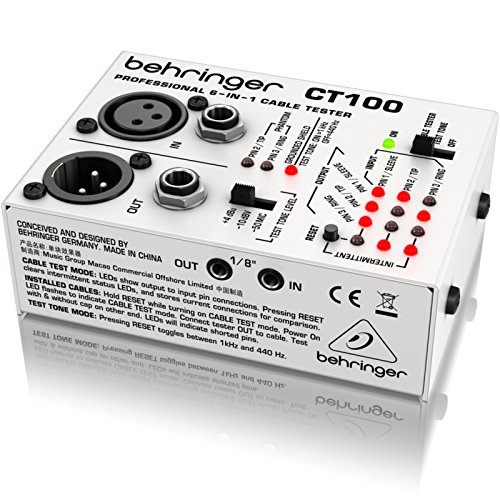
- Three testing modes
- Supports many connector types
- Checks continuity and phantom power
Best For: Mixed audio setups and general cable troubleshooting
Signal Testing on the Go
Xvive AT-1 Portable Audio Tester
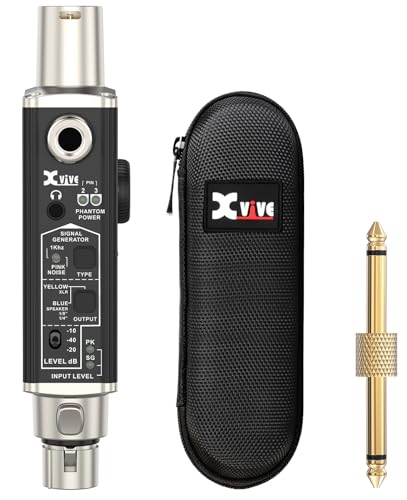
- Generates sine wave or pink noise
- Tests three XLR pins
- Includes monitoring outputs and case
Best For: Portable live-sound signal verification
Advanced Multi-Format Testing
dbx CT-3 Advanced Cable Tester

- Tests cables up to eight pins
- Handles audio, data, and lighting formats
- Supports installed-cable testing
Best For: Professional benches with diverse connector types
Solo XLR Diagnostics
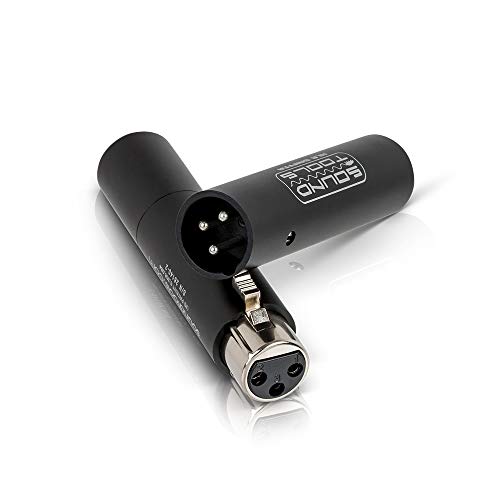
- Tests XLR and three-pin DMX
- Supports one-person remote testing
- Compact aluminum housing
Best For: Fast stage and studio XLR checks
Versatile Speaker Test Coverage

- Tests audio, speaker, DMX, and network connections
- Supports 2-, 4-, and 8-pole SpeakON cables
- Battery-powered continuity and ohmmeter testing
Best For: Broad connector coverage in live-sound and installation kits
Professional Multi-Format Testing
Hosa CBT-500 Audio Cable Tester
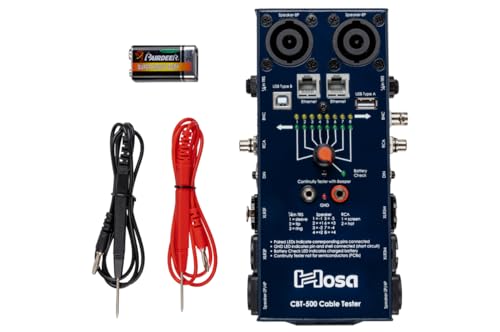
- Tests XLR, BNC, Ethernet, and SpeakON cables
- Uses battery-powered ohmmeter testing
- Includes a limited lifetime warranty
Best For: Mixed audio and installation cable inventories
LED-Guided 15-in-1 Testing
MFL. MF-CT20 15-Plug Cable Tester

- LEDs show conductor connection status
- Can support up to 13 cables at once
- Metal casing and broad audio connector compatibility
Best For: Visual troubleshooting in recording and live-performance setups
Pro Multi-Cable Pick
Cable Guy Multi-Function Tester
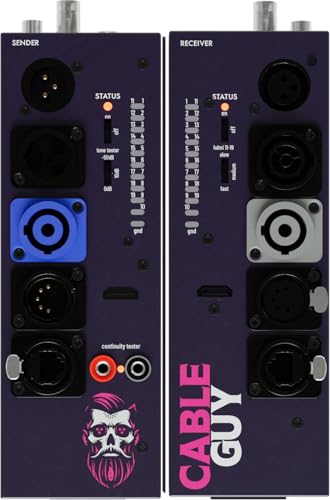
- Tests audio, video, networking, and power cables
- Separated units enable through-wall testing
- Steel housing with quick LED feedback
Best For: Professional and permanent-installation cable testing
Audio Setup Value

- Supports up to 13 cable connections
- LEDs help locate continuity problems
- Compact metal casing and eight-way switch
Best For: Recording and live-performance audio troubleshooting
Installed-Cable Specialist
MFL Detachable Advanced Tester

- Split design tests installed and long cables
- Covers 11 listed connector types
- Ten-way switch with LED indicators
Best For: Technicians testing long, preinstalled, and mixed cables
Versatile Cable Check – Behringer CT100
The Behringer CT100 is a practical choice when you need one of the more flexible audio cable testers for routine troubleshooting. Its three test modes cover loose cables, installed cables, and test-tone checks, while the LED display keeps operation straightforward.
Best For: Home studios, PA setups, musicians, and technicians checking a broad mix of common audio cables.
Pros:
- Tests XLR, TRS, RCA, MIDI, and several other standard connector formats.
- Supports cable, installed-cable, and test-tone modes.
- Includes continuity, intermittent-contact, phantom-power, and ground-shield checks.
- Compact, battery-powered design with an intuitive LED display.
Cons:
- Its feature set may be more than needed for users who only test basic XLR cables.
- The supplied notes do not specify battery life or included spare batteries.
Choose the CT100 if connector versatility and multiple diagnostic modes matter more than having a dedicated signal generator. It is a strong all-purpose option for mixed audio environments.
Signal Testing on the Go – Xvive AT-1 Portable Audio Tester
The Xvive AT-1 combines cable testing with signal generation, making it a useful pick among audio cable testers for live rigs and portable workflows. It can generate a 1 kHz sine wave or pink noise, monitor signals, and provide visual phantom-power checks.
Best For: Audio professionals who need portable XLR testing, signal verification, and headphone or speaker monitoring.
Pros:
- Generates 1 kHz sine waves or pink noise at selectable output levels.
- Checks all three pins of XLR cables for connectivity.
- Provides 1/4-inch and 1/8-inch monitoring outputs.
- Visually indicates phantom power from 24V through 52V ranges and includes a carry case.
Cons:
- The cable-testing details focus on XLR connections rather than a wide range of connector formats.
- Its 0.38 kg weight is higher than some compact, basic testers.
The AT-1 is best suited to users who want more than a continuity check. Its signal-generation and monitoring functions make it especially useful for tracing problems through an audio chain.
Advanced Multi-Format Testing – dbx CT-3 Advanced Cable Tester
The dbx CT-3 is an advanced option for technicians who work with more than standard audio leads. As audio cable testers go, it stands out for supporting cables up to eight pins, testing installed cables with its two-piece chassis, and generating test tones.
Best For: Studios, production teams, and technical benches handling audio, video, data, and lighting-related connectors.
Pros:
- Tests cables with up to eight pins.
- Supports a broad range of formats, including BNC, DIN, DMX, MIDI, RCA, RJ11, RJ45, TRS, TS, XLR, and banana connectors.
- Two-piece chassis enables testing of installed cables.
- Includes a test-tone generator and adapter-style connection flexibility.
Cons:
- At 2.2 pounds, it is less lightweight than pocket-sized testers.
- It uses corded electric power and lists a minimum operating voltage of 9 volts.
- The extensive format support may be unnecessary for simple home cable checks.
If your work involves varied connector types or installed runs, the CT-3 offers broader coverage than a basic tester. Its larger, corded design makes it better suited to a workshop or fixed technical station.
Solo XLR Diagnostics – SoundTools XLR Sniffer/Sender
The SoundTools XLR Sniffer/Sender is a compact choice for fast XLR and three-pin DMX checks. For technicians comparing audio cable testers, its remote-end design is particularly useful because one person can diagnose a cable with immediate LED feedback.
Best For: Live-sound technicians and studio users who need quick, independent XLR or three-pin DMX troubleshooting.
Pros:
- Tests XLR and three-pin DMX cables with instant LED feedback.
- Allows remote-end testing without a second person.
- Lightweight, pocket-friendly aluminum housing is designed for stage and studio use.
- Includes an A23 battery for operation.
Cons:
- Its testing scope is focused on XLR and three-pin DMX cables.
- The supplied notes do not describe test-tone generation or phantom-power measurement.
The Sniffer/Sender is a focused tool rather than a broad multi-connector analyzer. Choose it when portability, ruggedness, and solo cable checks are the main priorities.
Versatile Speaker Test Coverage – Elite Core OSP CT-04C
The Elite Core OSP CT-04C is a practical choice for audio cable testers when your setup includes speaker, studio, and networking connections. It checks continuity across 1/4-inch TRS, XLR, RCA, MIDI/DIN, SpeakON, mini stereo, RJ45 CAT5e, and 3- or 5-pin DMX cables.
Best For: Audio users who need broad connector coverage, including speaker and DMX cables.
Pros:
- Supports a wide range of common audio and related connectors.
- Includes 2-, 4-, and 8-pole SpeakON compatibility.
- Battery-powered design with ohmmeter or continuity testing.
- Compact yellow housing measures 8 x 5 x 3 inches.
Cons:
- At 1.8 pounds, it is not the lightest option listed.
- The notes specify a one-year warranty.
Choose the CT-04C if connector versatility is more important than a minimal feature set. Its coverage makes it suitable for varied live-sound and installation kits.
Professional Multi-Format Testing – Hosa CBT-500 Audio Cable Tester
The Hosa CBT-500 is a multi-format option among audio cable testers, designed for checking connections such as XLR, 75-ohm BNC, Ethernet, and SpeakON cables. Its battery-powered ohmmeter design provides a straightforward way to inspect cable wiring.
Best For: Users who need a dedicated tester for audio, Ethernet, BNC, and SpeakON cable types.
Pros:
- Supports XLR, 75-ohm BNC, Ethernet, and SpeakON connections.
- Uses ohmmeter-based testing.
- Battery-powered and specified for a 9-volt DC minimum operating voltage.
- Includes a limited lifetime warranty.
Cons:
- Its listed dimensions are relatively large at 11.85 x 5.95 x 3.2 inches.
- The supplied notes do not list connector support beyond the stated formats.
The CBT-500 is a sensible pick when your cable inventory extends beyond standard audio leads. Its stated format support and limited lifetime warranty add practical value for recurring maintenance work.
LED-Guided 15-in-1 Testing – MFL. MF-CT20 15-Plug Cable Tester
The MFL. MF-CT20 offers a hands-on approach to audio cable testers with LED indicators, a 10-way selector switch, and support for up to 13 cables at the same time. Its metal casing and broad connector compatibility suit troubleshooting in recording and live-performance setups.
Best For: Musicians, technicians, and home-studio users who want visual continuity checks across many cable types.
Pros:
- LED indicators help identify conductor connection problems.
- Supports up to 13 cables simultaneously.
- Compatible with TRS, XLR, RCA, DIN, SpeakON, and other listed audio ports.
- Compact metal casing measures 7.77 x 4.23 x 2.46 inches.
Cons:
- The required battery is not included.
- The 10-way switch may require manual selection during testing.
- The supplied notes list CE compliance but no warranty.
Consider the MF-CT20 if visible LED feedback and simultaneous testing are priorities. It combines broad compatibility with a rugged, compact enclosure, though you will need to provide the battery.
Pro Multi-Cable Pick – Cable Guy Multi-Function Tester
For shoppers comparing audio cable testers, the Cable Guy offers broad compatibility for audio, lighting, networking, and installation work. LED indicators provide quick continuity feedback, while the separated sender and receiver support through-wall testing.
Best For: Professional audio, lighting, networking, and permanent-installation testing.
Pros:
- Tests 3-pin and 5-pin XLR, HDMI, RJ45, powerCON, TRS, RCA, and BNC cables.
- LED indicators provide immediate continuity feedback.
- Two-piece design supports through-wall testing.
- Durable steel housing is suited to frequent professional use.
Cons:
- Requires two 9V batteries, which are not included.
- Its broad professional feature set may be more than needed for basic audio-only checks.
This is the strongest choice when one tester needs to cover multiple cable standards and installed runs. Its steel construction and flexible two-piece layout add practical value for demanding setups.
Audio Setup Value – MFL 13-Plug Cable Tester
The MFL 13-Plug is a straightforward option among audio cable testers, combining multiple connection types with LED continuity indicators. Its compact metal casing and eight-way switch make it useful for recording, live performance, and general audio troubleshooting.
Best For: Musicians, recording setups, and live-performance cable checks.
Pros:
- Supports testing up to 13 cable connections.
- LED indicators help identify conductor and continuity problems.
- Eight-way switch selects the connection to test.
- Strong, compact metal casing is designed for long-term use.
Cons:
- Battery is required but not included.
- Its supplied notes do not specify a detachable sender-and-receiver design for through-wall testing.
Choose this model if your priority is a compact, dedicated audio cable checker with broad plug coverage. It focuses on essential continuity troubleshooting without the installation-oriented split design of some alternatives.
Installed-Cable Specialist – MFL Detachable Advanced Tester
For audio cable testers that need to reach preinstalled or long cable runs, the MFL Detachable Advanced Tester uses separate sender and receiver units. It covers a wide selection of audio, networking, video, and control connectors, with LED indicators for conductor checks.
Best For: Installed, long, and mixed-connector cable testing.
Pros:
- Split sender-and-receiver design supports preinstalled and long cables.
- Tests connectors including RJ45, RJ11, HDMI, Speakon, XLR, RCA, BNC, DIN, TRS, DMX, and Banana.
- Ten-way switch helps select connections for testing.
- Metal casing is compact and rugged.
Cons:
- Battery is required but not included.
- Its broad connector coverage may be unnecessary for simple audio-only users.
This model stands out for installation work because its detachable chassis can be separated around existing or lengthy cable runs. It is a practical fit for technicians handling varied connectors across audio and electronic systems.
How We Picked the Best Audio Cable Testers
We focused on practical diagnostic capability, connector coverage, portability, operating simplicity, and suitability for real-world audio work. The selection includes compact testers for basic XLR and instrument-cable checks, as well as broader multi-connector models for production crews, installers, and repair benches.
We also considered whether a tester supports solo operation, provides clear LED or switch-based results, accommodates speaker or lighting connections, and offers a useful balance between price and flexibility. A larger connector count is not automatically better; the right choice depends on the cables you actually handle.
Quick Comparison
| Best For | What to Look For |
|---|---|
| Home studios and basic maintenance | Simple operation, XLR and 1/4-inch support, compact size |
| Live sound technicians | Fast fault identification, rugged housing, broad connector coverage |
| Lighting and production crews | Support for DMX, power, HDMI, or other production connectors |
| Speaker-system work | Compatibility with speaker connectors and dependable continuity testing |
| Cable repair and installation | Line-finding features, detachable sections, and clear indicators |
Key Buying Factors for Audio Cable Testers
Connector Compatibility
Start by listing the cables in your kit. Common connections include XLR, TRS, TS, RCA, speaker plugs, and 3-pin DMX. Multi-function models can be valuable for production environments, but extra sockets add little value if you only test microphone and instrument cables.
Test Modes and Fault Detection
Look for clear identification of continuity, open conductors, shorts, crossed pins, and shielding problems. A cable tester that lets you select pins manually can help isolate intermittent faults, while automatic scanning is faster for routine checks.
Portability and Construction
Technicians who travel between venues should prioritize a compact, battery-powered design with controls that are easy to use in dim backstage conditions. For a workshop, a larger unit with more connectors may be preferable. Check battery access and whether the tester feels sturdy enough for regular transport.
Ease of Reading Results
Bright LEDs, logical numbering, and an uncomplicated layout reduce mistakes. If you often work alone, choose a model with a sender and receiver arrangement or a design that allows both ends of a cable to be connected at the same time.
Who Should Buy Which Audio Cable Testers?
Choose a compact basic tester if you mainly maintain microphone, patch, and instrument cables at home or in a small studio. Choose a professional multi-function tester if you support live events and need to check several connector types quickly. Choose a speaker-focused model for installations, touring rigs, or systems that regularly use speaker cables. Choose a line finder or detachable design if you diagnose cables installed in racks, stages, or other locations where identifying the far end matters.
Before buying, match the tester’s connector list to your actual inventory, then prioritize readable results and dependable handling over an impressive feature count. The best Audio Cable Testers are the ones you will keep available and use before every important setup.