Choosing the right bike computer can make every ride easier, safer, and more efficient. The best commercial-grade bike navigation computers combine dependable GPS, clear mapping, and ride data you can trust in tough conditions.
Whether you want long-range navigation, advanced training tools, or simple route guidance, this roundup helps you narrow the field fast and pick the model that fits your riding style.
Best 10 Commercial-Grade Bike Navigation Computers Picks for 2026
Premium GPS Cycling Computer
Garmin Edge 1050 premium touchscreen navigator

- 3.5-inch vivid color touchscreen
- Up to 60 hours in battery saver mode
- Road hazards, messaging, and built-in speaker
Best For: Riders who want a flagship GPS computer with advanced navigation and coaching
Touchscreen Route Planner
iGPSPORT BSC500 touchscreen GPS bike computer

- 3.3-inch touchscreen with button control
- Dual-band L1/L5 positioning
- Voice navigation and automatic rerouting
Best For: Riders who want clear navigation, route imports, and simple operation
Easy-Use GPS Navigator
Garmin Edge Explore 2 simple touchscreen navigator

- 3-inch glove- and rain-friendly touchscreen
- Preloaded road, off-road, and indoor profiles
- LiveTrack, GroupTrack, and incident detection
Best For: Touring and everyday riders who want simple navigation and easy setup
Performance GPS Navigator
Hammerhead Karoo touchscreen bike computer

- 3.2-inch touchscreen with clean interface
- Multi-band GNSS for accurate tracking
- Works with SRAM AXS, e-bikes, and ANT+ lights
Best For: Performance-focused cyclists who want accurate navigation and strong device integration
Compact Button-Control GPS

- Multi-band GNSS for improved positioning accuracy
- Up to 26 hours of battery life; 42 in saver mode
- ClimbPro, power guide, and stamina insights
Best For: Cyclists who want a compact, button-controlled Garmin with advanced navigation and adaptive training
Premium Touchscreen Navigator

- Vivid color touchscreen with high-resolution display
- Up to 20 hours battery life; 60 in saver mode
- GroupRide, incident detection, Garmin Pay, and speaker
Best For: Riders who want a premium Garmin touchscreen computer with strong battery life and smart connectivity
Touchscreen Trail Navigator
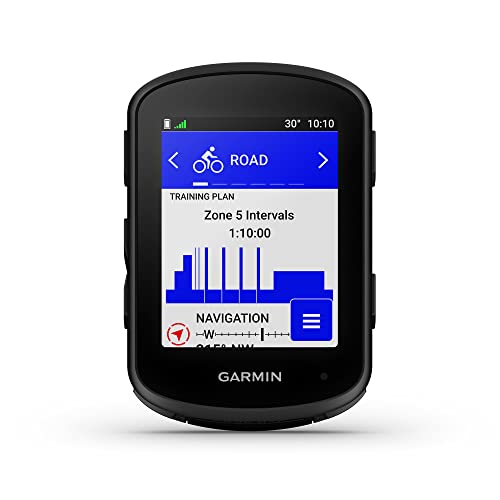
- Touchscreen plus button control for flexible use
- Multi-band GNSS for better positioning accuracy
- Up to 26 hours battery life; 32 in saver mode
Best For: Cyclists who want a compact Garmin with touchscreen control plus button backup
Flagship Endurance Navigator
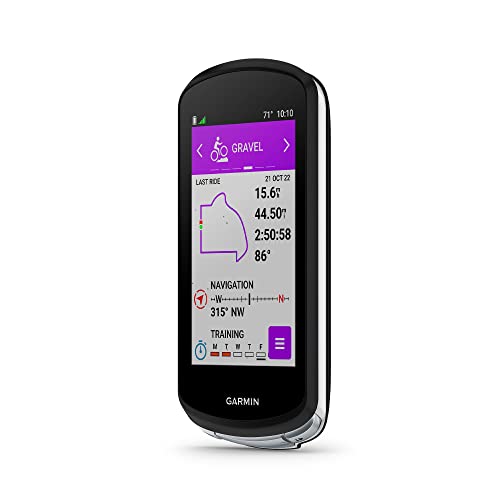
- Solar charging extends battery life up to 100 hours.
- Multi-band GNSS boosts accuracy in tough conditions.
- Power guide and stamina tools support training rides.
Best For: endurance riders who want top-tier navigation and maximum battery life
Compact Feature-Rich Navigator
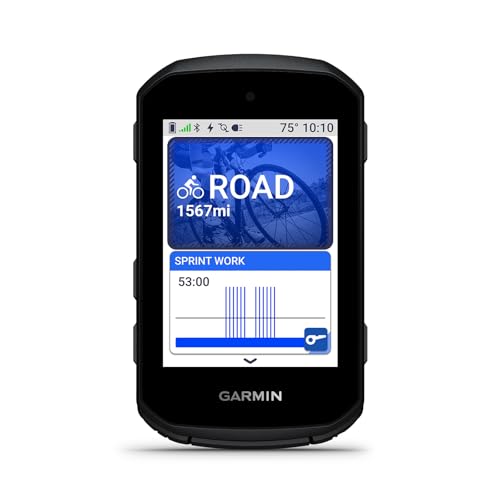
- Touchscreen and button controls in a compact body.
- Smart fueling alerts and built-in speaker add convenience.
- Trailforks maps and live ride features improve awareness.
Best For: connected riders who want a compact touchscreen cycling computer
Button-Controlled Trail Companion
- Button-only control keeps operation simple while riding.
- Trailforks maps and Forksight mode improve route visibility.
- Garmin Coach adapts plans to training load and recovery.
Best For: riders who prefer button controls and trail-ready mapping
Premium GPS Cycling Computer – Garmin Edge 1050 premium touchscreen navigator
If you want commercial-grade bike navigation computers that also cover training and ride awareness, the Garmin Edge 1050 sits near the top of the stack. Its vivid 3.5-inch color touchscreen, built-in speaker, and broad navigation tools make it a strong choice for riders who want one device to handle route planning, performance tracking, and live ride features.
Best For: Riders who want a premium, highly connected GPS bike computer with advanced navigation and training tools.
Pros:
- Large 3.5-inch touchscreen with responsive on-device course creation
- Up to 20 hours of battery life, or up to 60 hours in battery saver mode
- Road hazard alerts, live locations, in-ride messaging, and incident detection with a compatible smartphone
- Built-in speaker adds workout prompts, navigation cues, and a loud bike bell
Cons:
- Best features depend on pairing with a compatible smartphone and accessories
- Premium capabilities may be more than casual riders need
- Advanced coaching and power features require compatible sensors
Overall, the Edge 1050 is built for riders who want a flagship navigation computer with deep data, planning, and connectivity features in one unit. It is a strong pick when visibility, guidance, and ride awareness matter as much as raw mapping.
Touchscreen Route Planner – iGPSPORT BSC500 touchscreen GPS bike computer
The iGPSPORT BSC500 is a practical option in commercial-grade bike navigation computers if you want a large screen, turn prompts, and route tools without a complicated setup. Its 3.3-inch touchscreen, dual-band positioning, and voice navigation make it a solid fit for riders who value clear guidance and straightforward route management.
Best For: Riders who want an easy-to-read navigation computer with turn reminders and route import support.
Pros:
- 3.3-inch touchscreen plus button control for flexible operation
- Dual-band L1/L5 positioning and support for multiple satellite systems
- Route import from the iGPSPORT app, Strava, Komoot, and route files
- Voice navigation, turn reminders, and automatic rerouting when off course
Cons:
- Battery life is not stated in the supplied notes
- Less brand recognition than some premium competitors
- Training features are useful, but the platform is more navigation-focused
For riders who want reliable turn-by-turn help and flexible route planning, the BSC500 delivers a lot of value. It leans toward ease of use and navigation accuracy rather than high-end premium extras.
Easy-Use GPS Navigator – Garmin Edge Explore 2 simple touchscreen navigator
The Garmin Edge Explore 2 is a straightforward choice among commercial-grade bike navigation computers for riders who want dependable mapping without a steep learning curve. It pairs a sunlight-readable 3-inch touchscreen with preloaded activity profiles, ride-type maps, and useful safety features for road, trail, and eBike use.
Best For: Riders who want a simple, map-first GPS cycling navigator for everyday rides and touring.
Pros:
- 3-inch touchscreen designed to be glove- and rain-friendly
- Preloaded road, off-road, and indoor activity profiles
- Ride-type maps with popular roads, trails, searchable POIs, and eBike routing
- Supports LiveTrack, GroupTrack, incident detection, and Varia accessories
Cons:
- 16-hour battery life is shorter than some higher-end models
- Fewer advanced training features than performance-focused computers
- Some sensors and accessories are sold separately
The Edge Explore 2 makes sense when you want dependable navigation and practical ride awareness instead of a feature-heavy training platform. It is especially appealing for riders who prioritize simplicity, mapping, and everyday usability.
Performance GPS Navigator – Hammerhead Karoo touchscreen bike computer
The Hammerhead Karoo is aimed at riders who want commercial-grade bike navigation computers with a clean interface and strong positioning. Its 3.2-inch touchscreen, multi-band GNSS, and broad connectivity support make it well suited to cyclists who care about fast map use, accurate tracking, and device integration.
Best For: Performance-minded cyclists who want a touchscreen GPS computer with precise navigation and broad connectivity.
Pros:
- 3.2-inch touchscreen with intuitive hardware and software design
- Multi-band GNSS for accurate tracking in varied environments
- Supports SRAM AXS products, e-bikes, and ANT+ lights
- Ample memory storage and extended battery life for longer rides and faster map rendering
Cons:
- 15-hour battery life is solid, but not class-leading
- Connectivity emphasis may be more than casual riders need
- Bundle-focused positioning may not suit buyers wanting a very simple computer
Karoo is a strong fit if you want a refined ride computer that balances navigation, data management, and ecosystem support. It stands out for accuracy and software-driven usability rather than basic route display alone.
Compact Button-Control GPS – Garmin Edge 540
For riders looking at commercial-grade bike navigation computers, the Garmin Edge 540 is a compact option that prioritizes dependable routing, training guidance, and ride data over extra screen flash. Its button-based control, multi-band GNSS positioning, and ride-specific maps make it a strong fit when you need navigation that stays usable in challenging conditions.
Best For: Cyclists who want a compact, button-controlled Garmin with advanced navigation and adaptive training features.
Pros:
- Multi-band GNSS improves positioning accuracy in difficult environments.
- Up to 26 hours of battery life, or up to 42 hours in battery saver mode.
- ClimbPro, power guide, stamina insights, and workout prompts support structured riding.
- Ride type-specific maps highlight popular roads, trails, and searchable points of interest.
Cons:
- Button controls may be less intuitive than a touchscreen for some riders.
- Several training metrics require compatible power meter and heart rate monitor accessories.
The Edge 540 is a practical pick if you value navigation accuracy and training support in a smaller package. It is especially appealing for riders who want reliable performance without moving up to a larger touchscreen unit.
Premium Touchscreen Navigator – Garmin Edge 1050
The Garmin Edge 1050 is built like a premium choice among commercial-grade bike navigation computers, combining a vivid color touchscreen with long battery life and a wide set of ride and safety tools. It is designed for riders who want clear map visibility, connected features, and training guidance in one high-end unit.
Best For: Riders who want a premium Garmin touchscreen computer with strong battery life, training tools, and smart connectivity.
Pros:
- High-resolution vivid color touchscreen improves map and data visibility.
- Up to 20 hours of battery life, or up to 60 hours in battery saver mode.
- Adaptive training plans, ClimbPro, stamina tracking, and power guidance support performance riding.
- Smart features include GroupRide messaging, live location sharing, incident detection, notifications, Garmin Pay, and a built-in speaker/bike bell.
Cons:
- Premium feature set may be more than casual riders need.
- The bundle includes extras, so the package may be more complex than a standalone unit.
If you want a top-tier navigation computer with strong visibility and a deep feature list, the Edge 1050 stands out. It is especially compelling for endurance riders who want longer battery performance plus modern smart connectivity.
Touchscreen Trail Navigator – Garmin Edge 840
The Garmin Edge 840 sits in the sweet spot for commercial-grade bike navigation computers if you want both touchscreen convenience and button backup. It brings the same core navigation, ride tracking, and training features as a serious performance computer, while adding a control setup that works well across varied riding conditions.
Best For: Cyclists who want a compact Garmin with touchscreen control plus button backup for navigation and training.
Pros:
- Touchscreen plus button control offers flexible operation on the bike.
- Multi-band GNSS improves positioning accuracy in challenging environments.
- Up to 26 hours of battery life, or up to 32 hours in battery saver mode.
- ClimbPro, power guide, stamina insights, and daily workout prompts support structured training.
Cons:
- Advanced training features depend on compatible power meter and heart rate monitor gear.
- Touchscreen controls may be less ideal in some wet or rough riding situations.
The Edge 840 is a well-rounded choice for riders who want more control options than a button-only computer. It is a strong fit for cyclists who split time between navigation, training, and everyday ride tracking.
Flagship Endurance Navigator – Garmin Edge 1040 Solar
For riders comparing commercial-grade bike navigation computers, the Garmin Edge 1040 Solar stands out as a long-haul option built for serious planning, tracking, and route confidence. It combines multi-band GNSS, ride-type maps, training tools, and solar charging to help you stay on course and stay out longer.
Best For: endurance riders and route-focused cyclists who want maximum battery life plus advanced navigation and training data.
Pros:
- Power Glass solar charging extends battery life up to 100 hours in battery saver mode.
- Multi-band GNSS improves positioning accuracy in challenging environments.
- Ride-type maps and searchable points of interest make navigation more practical.
- Training tools like power guide, stamina insights, and workout prompts add performance value.
Cons:
- Some advanced features rely on compatible sensors and the Garmin Connect ecosystem.
- May be more computer than casual riders need for basic navigation.
This is the most battery-forward and feature-rich option in the group, making it a strong fit when navigation, planning, and training all matter on the same ride. If you want a premium computer that can handle demanding use cases, the Edge 1040 Solar is easy to justify.
Compact Feature-Rich Navigator – Garmin Edge 850
The Garmin Edge 850 is a compact choice in commercial-grade bike navigation computers for riders who want a vivid color display, modern ride alerts, and advanced connected features. It blends on-device controls with touchscreen input, while adding tools for fueling, routing, and safety awareness.
Best For: riders who want a compact premium computer with touchscreen convenience and strong connected ride features.
Pros:
- Vivid color display with both touchscreen and button controls.
- Smart fueling alerts help guide hydration and refueling in-ride.
- Preloaded road, gravel, and trail maps include Trailforks and Forksight mode.
- Built-in speaker, radar overlays, group ride messaging, and Garmin Pay add useful extras.
Cons:
- Up to 12 hours of battery life in demanding use is shorter than endurance-focused models.
- Many safety and group features depend on a compatible smartphone and Garmin Connect.
The Edge 850 is a strong pick if you value an all-in-one riding computer with a smaller footprint and more interactive controls. It is especially appealing for cyclists who want mapping, alerts, and smart connectivity without moving up to a larger endurance unit.
Button-Controlled Trail Companion – Garmin Edge 550
If you want commercial-grade bike navigation computers with strong mapping and training support but prefer a button-only interface, the Garmin Edge 550 fits that brief well. It offers a vivid color display, multi-band GPS, Trailforks mapping, and ride features aimed at riders who want dependable control in motion.
Best For: cyclists who want a compact button-operated GPS computer with advanced mapping and training support.
Pros:
- Vivid color display with simple button operation keeps controls straightforward.
- Preloaded road, gravel, and trail maps with Trailforks and Forksight mode help with route awareness.
- Multi-band GPS and 5 Hz recording improve tracking on fast descents.
- Garmin Coach plans adapt to training load, recovery, and course demands.
Cons:
- No touchscreen, so interaction is limited to buttons only.
- Battery life is capped at 12 hours in demanding use cases.
- Some safety and ride-sharing features require a compatible smartphone and Garmin Connect.
The Edge 550 is the better fit if you want a modern navigation computer without touchscreen complexity. It keeps the feature set practical and focused, especially for riders who value controls that are easy to use on the move.
How We Picked These Commercial-Grade Bike Navigation Computers
We focused on models that deliver reliable GPS performance, strong route navigation, readable displays, solid battery life, and features that matter on real rides. We also considered ecosystem support, sensor compatibility, and how well each unit balances usability with advanced functions.
Quick Comparison: What Matters Most
Some riders need a full-featured flagship with turn-by-turn navigation, training analytics, and a large color touchscreen. Others will prefer a compact unit with simpler controls, longer battery life, or a lower price. In Commercial-Grade Bike Navigation Computers, the best choice is often the one that matches your riding priorities instead of the longest spec sheet.
Key Buying Factors for Commercial-Grade Bike Navigation Computers
Navigation Quality
Look for accurate mapping, rerouting, clear prompts, and visibility in bright sunlight. If you often ride unfamiliar roads or trails, route recalculation and on-device map detail matter a lot.
Battery Life and Charging
Long rides and back-to-back training sessions favor models with strong battery performance. Solar charging can help, but only if it fits your use case and you still get the features you want.
Display and Controls
Touchscreens are convenient for map interaction, while button controls can be easier in wet, cold, or gloved conditions. The best display is the one you can read and operate while riding.
Training and Data Support
If you train with power, cadence, heart rate, or structured workouts, check sensor compatibility and how well the device handles post-ride analysis. For casual riders, a simpler interface may be enough.
Durability and Mounting
Commercial-Grade Bike Navigation Computers should feel secure on the bar or stem, resist weather, and hold up to frequent use. Rugged construction matters if you ride year-round or on rough roads.
Who Should Buy Which Commercial-Grade Bike Navigation Computers?
Choose a flagship model if you want the best navigation tools, the biggest display, and broad training support. Pick a compact computer if you want a lighter setup and easier handling. Go for a more approachable navigation-focused unit if your priority is route guidance over deep training metrics.
For riders who want the best overall blend of features, versatility, and everyday reliability, the top-tier options in this list are strongest. For budget-conscious buyers, the simpler units can still cover essential navigation without unnecessary complexity.