The best high-performance hard drive docking stations make it easier to access bare SATA and NVMe drives, clone disks, recover data, and expand desktop storage without installing drives inside a computer.
We selected 10 capable docks spanning single- and dual-bay designs, USB 3.0 and USB-C connectivity, SATA support, NVMe compatibility, and offline cloning features.
Best 10 High-Performance Hard Drive Docking Stations Picks for 2026
Best Multi-Drive Capacity

- Four trayless SATA bays
- Offline cloning without a PC
- USB 3.0 up to 5Gbps
Best For: Managing multiple 2.5-inch and 3.5-inch SATA drives
Best Dual-Format Speed

- Supports NVMe and SATA drives
- USB 3.2 Gen 2 up to 10Gbps
- Includes USB-C and USB-A cables
Best For: Fast, flexible access to mixed NVMe and SATA drives
Best Budget Cloning Setup
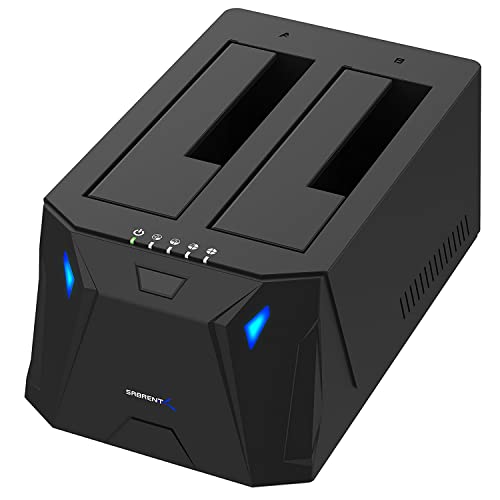
- Two-bay SATA drive support
- Offline cloning without drivers
- USB 3.0 up to 5Gbps
Best For: Basic SATA backups, upgrades, and drive duplication
Best Two-Bay NVMe/SATA Flexibility
WAVLINK RapidFire NVMe/SATA Dock

- Dual-bay NVMe and SATA support
- 10Gbps USB 3.2 Gen 2
- Cross-format offline cloning
Best For: Mixed-drive cloning, backups, and fast storage upgrades
Best Dual-Bay Cloner

- Offline cloning without a computer
- Dual-bay access for two SATA drives
- Supports 2.5-inch and 3.5-inch SATA media
Best For: SATA drive cloning and two-drive transfers
Best Multi-Format Station

- Handles SATA and M.2 NVMe drives
- 10Gbps USB 3.2 Gen 2 interface
- Offline cloning with one-touch control
Best For: Mixed SATA and NVMe storage workflows
Best Single-Bay 10Gbps Dock

- 10Gbps USB 3.2 Gen 2 connection
- Supports 2.5-inch and 3.5-inch SATA drives
- Tool-free access for drives up to 20TB and larger
Best For: Fast single-drive SATA access and backups
Best High-Capacity Cloner

- Two SATA bays for HDDs and SSDs
- Offline cloning without a computer
- Three USB 3.0 hub ports
Best For: High-capacity backups, cloning, and data processing
Best Simple Single-Drive Dock
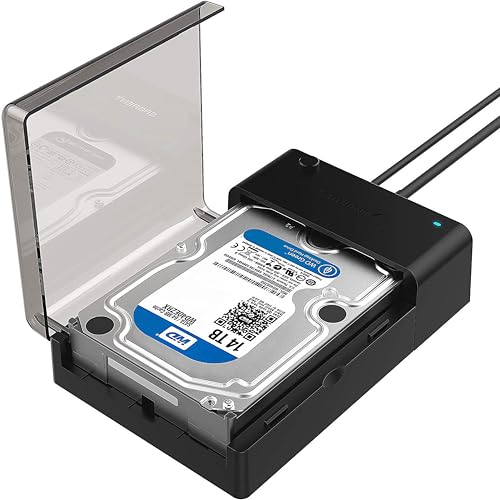
- Single bay for 2.5-inch and 3.5-inch SATA drives
- Tool-free hot-swap operation
- Includes 12V adapter for 3.5-inch drives
Best For: Routine SATA drive access and transfers
Best Value Dual-Bay Clone Dock

- Dual bays for 2.5-inch and 3.5-inch SATA drives
- Offline cloning without a computer
- USB 3.0 with up to 5Gbps transfers
Best For: Drive migrations, backups, and maintenance
Best Multi-Drive Capacity – SABRENT 4-Bay USB 3.0 Dock
For managing several SATA drives from one workstation, this four-bay dock is a practical choice among high-performance hard drive docking stations. It accepts 2.5-inch and 3.5-inch HDDs or SSDs, connects over USB 3.0, and supports offline cloning without a computer.
Best For: Users who need simultaneous access to up to four SATA drives, convenient backups, or a simple drive-cloning setup.
Pros:
- Four trayless bays support 2.5-inch and 3.5-inch SATA HDDs and SSDs.
- USB 3.0 provides transfer speeds up to 5Gbps and works with USB 2.0 systems.
- Offline clone function operates without a computer and includes progress LEDs.
- External power adapter helps support multiple installed drives.
Cons:
- Limited to SATA drives rather than M.2 NVMe SSDs.
- USB 3.0 is slower than newer 10Gbps USB 3.2 Gen 2 docks.
The DS-U3B4 stands out when bay count matters most. Its tool-free, trayless design and offline cloning make routine drive access and duplication straightforward, though users seeking NVMe support or faster host connectivity should consider a newer model.
Best Dual-Format Speed – SABRENT USB-C NVMe/SATA Dock
This dual-format dock is a versatile option among high-performance hard drive docking stations, combining M.2 PCIe NVMe support with 2.5-inch and 3.5-inch SATA drive access. Its USB 3.2 Gen 2 interface supports up to 10Gbps, while both USB-C and USB-A cables are included.
Best For: Users who switch between NVMe and SATA drives and want fast backups, media access, or computer-free cloning.
Pros:
- Supports M.2 NVMe sizes 2242, 2260, and 2280 plus 2.5-inch and 3.5-inch SATA drives.
- USB 3.2 Gen 2 offers up to 10Gbps with an NVMe SSD.
- Includes USB-C-to-USB-C and USB-A-to-USB-C cables.
- Tool-free offline cloning works without a computer.
Cons:
- Only one drive is supported at a time for standard access.
- Actual speed depends on the installed drive; mechanical HDDs will be slower.
- Cloning requires a target drive equal to or larger than the source.
The DS-UFNC is a strong fit for mixed-drive workflows. Its broad format support, 10Gbps connection, included cables, and cross-platform compatibility provide flexibility without requiring tools or separate adapters.
Best Budget Cloning Setup – SABRENT Dual-Bay USB 3.0 Dock
For straightforward SATA drive duplication and access, this dual-bay model offers a practical entry point among high-performance hard drive docking stations. It supports standard 2.5-inch and 3.5-inch SATA HDDs and SSDs, connects by USB 3.0, and clones drives without a computer.
Best For: Home users and technicians who need two-bay SATA access, drive upgrades, or offline cloning at USB 3.0 speeds.
Pros:
- Two bays accept 2.5-inch and 3.5-inch SATA hard drives or SSDs.
- Supports drives up to 10TB and lists 20TB storage capacity.
- Offline cloning requires no drivers or computer.
- USB 3.0 supports transfer speeds up to 5Gbps and includes UASP support.
Cons:
- Does not support M.2 NVMe drives.
- USB 3.0 is slower than 10Gbps USB 3.2 Gen 2 alternatives.
The EC-HD2B keeps the feature set focused on everyday SATA workflows. Its two bays are useful for source-and-target cloning or simultaneous drive access, while plug-and-play operation minimizes setup work.
Best Two-Bay NVMe/SATA Flexibility – WAVLINK RapidFire NVMe/SATA Dock
This two-bay WAVLINK model combines M.2 NVMe and SATA compatibility with a 10Gbps USB 3.2 Gen 2 connection, making it a flexible choice among high-performance hard drive docking stations. It also supports offline cloning between NVMe and SATA drives without a computer.
Best For: Users who want dual-bay access, cross-format cloning, and fast transfers for backups, large files, or drive upgrades.
Pros:
- Two-bay design supports M.2 NVMe and 2.5-inch or 3.5-inch SATA drives.
- USB 3.2 Gen 2 provides up to 10Gbps transfer capability.
- Offline cloning supports duplication between NVMe and SATA drives in both directions.
- Aluminum alloy shell helps with durability and heat dissipation.
Cons:
- The supplied details do not specify included USB cable or power-adapter contents.
- Actual performance depends on the installed drives.
The RapidFire U2C is particularly useful for mixed-format migration projects. Its two slots and cross-format cloning expand its usefulness beyond a conventional SATA enclosure, while Windows, Mac, and Linux compatibility suits varied workstations.
Best Dual-Bay Cloner – Sabrent EC-CH2B
The SABRENT EC-CH2B is a practical choice among high-performance hard drive docking stations when you need to work with two bare SATA drives or clone one drive to another without using a computer. It supports both 2.5-inch and 3.5-inch SATA HDDs and SSDs, with USB 3.0 transfer speeds up to 5Gbps.
Best For: Offline drive cloning, two-drive file transfers, and tool-free SATA drive access.
Pros:
- Offline 1-to-1 cloning works without a connected computer.
- Mounts two SATA drives simultaneously as separate computer drives.
- Supports both 2.5-inch and 3.5-inch SATA HDDs and SSDs.
- Includes a USB-C cable and requires no drivers on Windows or Mac.
Cons:
- Does not support IDE/PATA, M.2, or NVMe drives.
- The included cable connects via USB-C, so a USB-A adapter or cable may be needed for some computers.
- Offline cloning is limited to up to 60MBps and requires the target drive to be the same size or larger.
Choose this dock if your storage setup is centered on SATA drives and you value straightforward offline cloning. Its dual-bay design is more versatile than a single-drive dock, though newer NVMe hardware requires a different model.
Best Multi-Format Station – ICY BOX NVMe/SATA Dock
The ICY BOX docking station stands out among high-performance hard drive docking stations for its broad drive support. It handles 2.5-inch and 3.5-inch SATA drives as well as M.2 SATA and PCIe NVMe SSDs, while its USB 3.2 Gen 2 interface supports transfers up to 10Gbps.
Best For: Users who work with both traditional SATA drives and M.2 NVMe SSDs.
Pros:
- Supports 2.5-inch and 3.5-inch SATA HDDs and SSDs plus M.2 SATA and PCIe NVMe SSDs.
- Offers one-touch offline cloning to an M.2 PCIe NVMe SSD.
- USB 3.2 Gen 2 provides transfer rates up to 10Gbps.
- Includes USB-C to USB-C and USB-C to USB-A connectivity, with a tool-free design.
Cons:
- The cloning target must be larger than the source, and existing target data should be backed up first.
- Its broad compatibility may be unnecessary if you only use standard SATA drives.
This is the most flexible option in the group for mixed storage environments. The open-frame design is intended to improve heat dissipation during heavy workloads, while Windows, Mac, and Linux compatibility broadens its use beyond a single platform.
Best Single-Bay 10Gbps Dock – Sabrent DS-UC1B
The SABRENT DS-UC1B is a streamlined option among high-performance hard drive docking stations for quickly accessing one bare 2.5-inch or 3.5-inch SATA drive. Its USB 3.2 Gen 2 connection supports up to 10Gbps, and the included cables support both USB-C and USB-A host connections.
Best For: Fast, occasional access to high-capacity SATA HDDs and SSDs.
Pros:
- Supports 2.5-inch and 3.5-inch SATA HDDs and SSDs.
- Provides up to 10Gbps USB 3.2 Gen 2 performance.
- Includes both USB-A and USB-C to USB-C cables.
- Tool-free, hot-swappable design supports drives up to 20TB and larger.
Cons:
- Only one drive can be mounted at a time.
- It does not include offline cloning functionality.
- Actual transfer speeds depend on the installed drive and connected system.
For a simple single-drive workflow, the DS-UC1B combines broad SATA compatibility with a faster 10Gbps host interface. It is a good fit for backups, transfers, and drive swapping when you do not need dual-bay operation or NVMe support.
Best High-Capacity Cloner – MAIWO Dual-Bay SATA Dock
For users handling large storage workloads, the MAIWO is a high-performance hard drive docking station with two SATA bays, offline cloning, and three USB 3.0 hub ports. It supports 2.5-inch and 3.5-inch SATA HDDs and SSDs, with up to 24TB per bay according to the supplied specifications.
Best For: IT backups, drive-to-drive cloning, batch data processing, and users who need extra USB-A ports.
Pros:
- Dual-bay design supports simultaneous source and target drives.
- Offline cloning works without connecting to a computer.
- Three USB 3.0 ports add peripheral connectivity, including one port with 2.4A charging.
- Included 12V/3A adapter provides dedicated power for the dock.
Cons:
- Supports SATA drives, not other drive interfaces such as M.2 or IDE.
- Its larger feature set may be unnecessary for simple one-drive access.
- Cloning requires careful placement of source and target drives.
The MAIWO stands out when capacity, cloning, and connectivity matter more than a minimal footprint. Its 5Gbps USB 3.0 interface and independent power supply make it a practical choice for recurring backup and drive-management tasks.
Best Simple Single-Drive Dock – SABRENT EC-DFLT SATA Dock
The SABRENT EC-DFLT is a straightforward high-performance hard drive docking station for accessing one bare 2.5-inch or 3.5-inch SATA drive at a time. Its USB 3.0 connection, UASP support, tool-free design, and included 12V adapter make it suited to routine drive swaps and file transfers.
Best For: Users who need a compact, single-bay dock for SATA HDDs or SSDs on Windows, macOS, or Linux.
Pros:
- Accepts 2.5-inch and 3.5-inch SATA I/II/III drives.
- Tool-free, plug-and-play operation with hot-swapping support.
- UASP support can help compatible systems achieve better USB transfer performance.
- Includes the required 12V/2A adapter for stable 3.5-inch drive operation.
Cons:
- Does not support IDE/PATA, M.2, NVMe, M.2 SATA, or SAS drives.
- Uses a USB Type-A host cable rather than a USB-C port.
- Single-bay design cannot clone directly between two installed drives.
Choose the SABRENT when simplicity and broad operating-system support are the priorities. It is a practical reader for bare SATA drives, but shoppers should verify their drive connector and computer ports before buying.
Best Value Dual-Bay Clone Dock – FIDECO SATA HDD Dock
The FIDECO dual-bay model combines simultaneous two-drive access with offline cloning, making it a flexible high-performance hard drive docking station for SATA HDD and SSD workflows. Its USB 3.0 connection supports transfers up to 5Gbps, while plug-and-play operation works across Windows, macOS, and Linux.
Best For: Home users and technicians who need dual-drive access and occasional computer-free cloning.
Pros:
- Supports two 2.5-inch or 3.5-inch SATA drives at the same time.
- Offline cloning completes without a computer after activating the Clone button.
- USB 3.0 provides transfer rates up to 5Gbps.
- Compatible with Windows, macOS, and Linux systems.
Cons:
- Supports SATA HDDs and SSDs only.
- New drives may need to be initialized before the computer recognizes them.
- No additional USB hub ports are listed.
The FIDECO is a well-rounded option for users who want more flexibility than a single-bay reader provides. Its dual-bay layout and offline clone function are particularly useful for drive migrations, backups, and maintenance.
How We Picked the Best High-Performance Hard Drive Docking Stations
We focused on the features that matter most in real desktop storage workflows: drive compatibility, connection speed, bay configuration, cloning capability, build practicality, and ease of use. The lineup includes docks for 2.5-inch and 3.5-inch SATA drives, models that support M.2 NVMe SSDs, and options with USB-C 10Gbps interfaces.
We also considered whether a dock supports offline drive-to-drive cloning, which can be useful when migrating to a larger disk or replacing an aging drive. Capacity claims, included accessories, cooling, power requirements, and operating-system compatibility should still be checked against the manufacturer’s specifications before purchase.
Quick Comparison
- Best for multiple SATA drives: Four-bay docks offer convenient access to several bare drives at once.
- Best for faster modern SSDs: USB-C 10Gbps models and NVMe-compatible docks can reduce transfer bottlenecks.
- Best for simple cloning: Dual-bay cloners allow direct disk duplication without installing cloning software.
- Best for mixed drive collections: Hybrid NVMe-and-SATA docks provide broader compatibility in one enclosure.
- Best for occasional access: A single-bay SATA dock is compact and usually easier to store.
Key Buying Factors for High-Performance Hard Drive Docking Stations
Drive Type and Size
Confirm whether you need 2.5-inch SATA, 3.5-inch SATA, M.2 NVMe, or a combination. SATA M.2 and NVMe M.2 drives are not interchangeable, so check the supported protocol and keying. Mechanical 3.5-inch drives generally require the dock’s external power adapter.
Interface Speed
USB 3.0 is suitable for many hard-drive tasks, while USB-C 10Gbps can better serve SATA SSDs and compatible NVMe storage. Actual performance depends on the drive, host port, cable, filesystem, and workload. A faster dock cannot overcome a slower computer port or source drive.
Cloning and Bay Layout
For offline cloning, verify the source and target drive requirements, target-capacity rules, and whether the process overwrites the destination. Dual-bay designs are convenient for migrations; four-bay models are better for accessing multiple drives, backups, or archives.
Power, Cooling, and Usability
Look for a stable power supply, clear activity indicators, tool-free insertion, and a layout that keeps drives secure. Frequent users may benefit from accessible power controls and good ventilation, while occasional users may prefer a smaller footprint.
Who Should Buy Which High-Performance Hard Drive Docking Stations?
Choose a four-bay SATA dock if you regularly work with several desktop hard drives. Pick a dual-bay cloner for straightforward upgrades and backups. An NVMe-and-SATA hybrid is the most flexible choice for mixed drive collections, while a USB-C 10Gbps single-bay dock suits users prioritizing fast access to one SATA drive. If your needs are limited to occasional file transfers, a compact USB 3.0 SATA model can deliver the best value.