The best hard drive docking stations for remote work make it easier to access, clone, and manage bare SATA drives without installing them inside a computer. They are useful for backups, file transfers, troubleshooting, and moving data between workstations.
We selected 10 docking stations with different port, bay, speed, and cloning configurations so you can match the hardware to your home-office workflow.
Best 10 Hard Drive Docking Stations for Remote Work Picks for 2026
Best Single-Bay SATA Pick
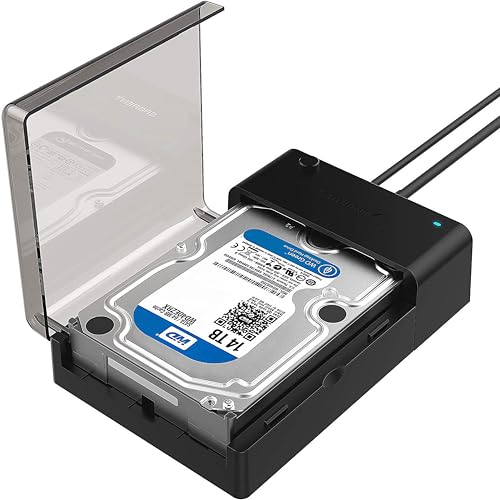
- Single bay for 2.5- and 3.5-inch SATA drives
- Tool-free hot-swap design with UASP
- Includes 12V power adapter; USB-A host cable
Best For: Simple access to one bare SATA drive
Best for Offline Drive Cloning
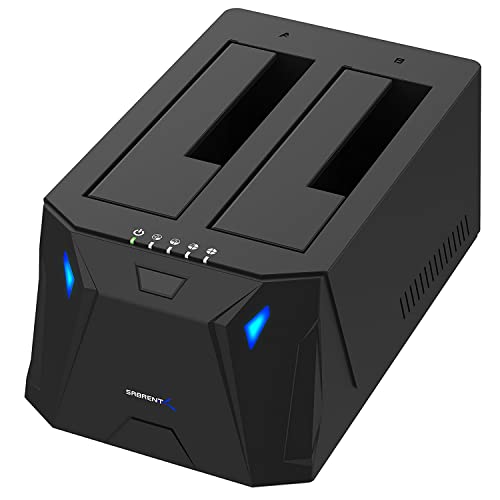
- Two bays for 2.5- and 3.5-inch SATA drives
- Offline cloning without a computer
- USB 3.0 transfer support and included power supply
Best For: Drive duplication, migration, and two-drive workflows
Best Dual-Bay Value for Backups

- Dual bays support 2.5- and 3.5-inch SATA drives
- Offline cloning with no computer required
- USB 3.0, UASP, and wide OS compatibility
Best For: Two-drive backups, upgrades, and cloning
Best for Offline Cloning

- Offline SATA cloning without a computer
- Dual-bay access for two drives
- USB-C and USB 3.0 connectivity
Best For: Remote workers managing two bare SATA drives
Best for Broad Compatibility

- Supports 2.5-inch and 3.5-inch SATA drives
- Offline cloning with no computer required
- Includes USB-A and USB-C connection options
Best For: Mixed-device remote offices and backup workflows
Best for Controlled Cloning

- Manual switch helps prevent mode mistakes
- LEDs show cloning and drive status
- Aluminum body supports heat dissipation
Best For: Careful backup and cloning workflows
Best Dual-Bay Cloning Pick

- Dual bays support 2.5-inch and 3.5-inch HDDs or SSDs
- Offline cloning requires no computer
- USB 3.1 Gen 1 with UASP supports up to 5Gbps
Best For: Remote workers who want simple drive cloning and two-drive access
Best Aluminum Design
RSHTECH USB-C/SATA Dual-Bay Dock

- Supports up to 22TB in each bay
- Includes detachable USB-A/USB-C cable
- Adds offline cloning and automatic sleep mode
Best For: USB-A and USB-C users handling high-capacity SATA drives
Best Hub-Integrated Option

- Dual-bay SATA dock supports 2.5-inch and 3.5-inch drives
- Offline cloning includes progress LED indicators
- Adds three USB 3.0 Type-A hub ports
Best For: Home offices needing drive cloning and extra USB-A connectivity
Best Single-Bay SATA Pick – SABRENT USB 3.0 SATA Dock
For straightforward access to one bare drive, this SABRENT model is a practical choice among hard drive docking stations for remote work. Its tool-free bay supports 2.5- and 3.5-inch SATA HDDs and SSDs, with USB 3.0 and UASP support for backups, file transfers, and drive checks. The included USB-A cable means USB-C-only computers require a separate adapter.
Best For: Remote workers who need a simple, single-bay dock for bare SATA drives.
Pros:
- Supports 2.5- and 3.5-inch SATA I/II/III HDDs and SSDs.
- Tool-free, hot-swappable design with plug-and-play operation on Windows, macOS, and Linux.
- Includes the required 12V adapter for stable 3.5-inch drive operation.
Cons:
- Supports SATA drives only; it does not support IDE/PATA, M.2, SAS, or USB-enclosed drives.
- Uses a USB Type-A host connection rather than USB-C.
- S.M.A.R.T. diagnostics do not pass through the USB bridge.
This is a focused, affordable-style option when you only need one SATA drive bay. Check your drive connector and computer ports before ordering, especially if your laptop has only USB-C.
Best High-Capacity Single-Bay Dock – ORICO 22TB SATA Dock
The ORICO DD18 is a versatile single-bay option for hard drive docking stations for remote work, supporting 2.5- and 3.5-inch SATA drives up to 22TB. USB 3.0, UASP, a 12V/2A power supply, and automatic sleep after 10 minutes make it suited to routine backup and file-transfer workflows across Windows, macOS, and Linux.
Best For: Remote workers handling high-capacity SATA drives across several operating systems or devices.
Pros:
- Supports 2.5- and 3.5-inch SATA I/II/III HDDs and SSDs up to 22TB.
- Works with Windows, Mac, Linux, iPadOS devices with Thunderbolt, and more.
- Includes USB-A cable and 12V/2A power supply, with UASP and tool-free hot-swapping.
Cons:
- Does not support IDE or SAS drives.
- New or unallocated drives must be initialized and formatted before use.
- The listed connection is USB 3.0 rather than USB-C.
Its high capacity rating and broad platform support give it an edge for varied home-office setups. It remains a SATA-only dock, so confirm compatibility before buying.
Best for Offline Drive Cloning – SABRENT Dual-Bay Cloner
This SABRENT dual-bay unit combines everyday USB 3.0 file access with offline cloning, making it useful for remote workers who need to duplicate or migrate standard SATA drives. It accepts two 2.5- or 3.5-inch SATA HDDs or SSDs and includes a power supply and USB cable.
Best For: Remote workers who regularly clone, replace, or manage two SATA drives.
Pros:
- Holds two 2.5- or 3.5-inch SATA hard drives or SSDs simultaneously.
- Supports offline cloning without requiring a computer.
- Offers USB 3.0 transfer rates up to 5Gbps and plug-and-play operation.
Cons:
- Supports standard SATA drives only, not other drive interfaces.
- Offline cloning is listed at up to 60Mbps, slower than the USB 3.0 interface rating.
- The notes specify support for drives up to 10TB.
Choose this model when cloning is central to your workflow rather than an occasional extra. Its two bays also make it more convenient than a single-bay dock for comparing or transferring between drives.
Best Dual-Bay Value for Backups – FIDECO SATA Clone Dock
FIDECO’s dual-bay dock is designed for remote workers who want simultaneous access to two bare SATA drives plus a computer-free cloning option. It supports 2.5- and 3.5-inch HDDs and SSDs, offers USB 3.0 speeds up to 5Gbps with UASP, and works with Windows, macOS, and Linux.
Best For: Home-office backups, drive upgrades, and offline cloning with two SATA drives.
Pros:
- Accepts two 2.5- or 3.5-inch SATA HDDs or SSDs at once.
- Supports offline cloning by pressing the Clone button, without a computer.
- Includes a 12V power adapter and USB 3.0 cable, with broad operating-system compatibility.
Cons:
- Supports SATA drives only.
- New HDDs or SSDs must be initialized before the computer recognizes them.
- USB 3.0 is the listed host interface, with no USB-C connection specified.
This is a practical pick for maintaining a working drive and a backup or replacement drive in the same station. Its dual-bay design adds flexibility, while the SATA-only limitation should be checked against your hardware.
Best for Offline Cloning – SABRENT Dual-Bay USB-C Dock
For remote workers who need a straightforward way to manage bare SATA drives, the SABRENT Dual-Bay USB-C Hard Drive Docking Station combines two-drive access with offline cloning. It supports 2.5-inch and 3.5-inch SATA HDDs and SSDs, while connecting to a computer through USB-C without requiring drivers.
Best For: Remote workers who regularly clone, transfer, or access two SATA drives and already have a USB-C computer port.
Pros:
- Clones one SATA drive to another without a computer, at up to 60MBps.
- Mounts both drives separately for simultaneous file transfers or access.
- Supports tool-free, hot-swappable 2.5-inch and 3.5-inch SATA drives.
- Includes a USB-C cable and supports USB 3.0 transfer speeds up to 5Gbps.
Cons:
- Supports SATA drives only; it does not work with IDE/PATA, M.2, or NVMe drives.
- The included cable is USB-C on the dock end, so a USB-C computer port or separate adapter cable may be needed.
- Actual transfer speeds depend on the installed drives, and offline cloning is limited to up to 60MBps.
This is a practical choice for a USB-C-based remote-work setup involving SATA backups or drive-to-drive migration. Confirm your computer has the right port and that the target drive is at least as large as the source before buying.
Best for Broad Compatibility – WAVLINK Dual-Bay SATA Dock
The WAVLINK Dual Bay Hard Drive Docking Station is a flexible option for remote workers who need to access or back up multiple bare SATA drives. Its two bays support 2.5-inch and 3.5-inch HDDs and SSDs, while the included USB-A cable and USB-A-to-C adapter make it easier to connect with different computers.
Best For: Users who want dual-drive storage access, offline cloning, and compatibility across Windows, Mac, Chrome OS, Linux, or supported Android devices.
Pros:
- Supports two 2.5-inch or 3.5-inch SATA drives, with up to 20TB per bay according to the supplied specifications.
- Offers offline cloning without a computer when the target drive is equal to or larger than the source.
- Includes USB 3.0 connectivity, UASP support, a USB-A-to-C adapter, and a power adapter.
- Tool-free, plug-and-play design supports hot-swapping and requires no drivers.
Cons:
- It supports SATA drives only, not other drive interfaces.
- USB 3.0 transfer performance is dependent on the drives and connected system.
- Offline cloning requires the target drive to have capacity equal to or greater than the source.
With its adapter-inclusive connection options and broad operating-system support, this WAVLINK dock suits mixed-device home offices. The fixed bezel design also helps provide a more stable fit for inserted drives.
Best for Controlled Cloning – SSK Aluminum Dual-Bay Dock
The SSK External Hard Drive Docking Station is designed for remote workers who want clearer control over cloning and computer-transfer modes. A manual mode switch helps reduce accidental operation, while LED indicators show power, drive position, and cloning progress.
Best For: Users prioritizing deliberate cloning controls, status indicators, and an aluminum dual-bay design for two SATA HDDs or SSDs.
Pros:
- Manual switch separates cloning mode from PC data-transfer mode.
- Supports offline cloning and two 2.5-inch or 3.5-inch SATA drives.
- LED indicators show power, drive position, and cloning progress.
- Aluminum construction helps conduct heat away from the installed drives.
Cons:
- Does not support hot-plugging, although it does support plug-and-play operation without drivers.
- Uses USB 3.0 with a USB-B connection rather than USB-C.
- The supplied specifications list no warranty.
The SSK is a sensible fit when preventing mode-selection mistakes matters as much as accessing two drives. Its heat-dissipating aluminum build and status LEDs add useful reassurance during longer transfer or cloning tasks.
Best Dual-Bay Cloning Pick – BENFEI USB-C Dual-Bay Dock
For remote workers managing backups, upgrades, or extra storage, the BENFEI is one of the more flexible hard drive docking stations for remote work. Its dual bays accept both 2.5-inch and 3.5-inch HDDs or SSDs, while USB-C connectivity and UASP support help streamline file transfers.
Best For: Users who want a straightforward dual-drive dock with a no-computer cloning mode and an 18-month warranty.
Pros:
- Reads, writes, and transfers data between two 2.5-inch or 3.5-inch drives.
- Offline cloning works without a PC after pressing the clone button for three seconds.
- USB 3.1 Gen 1 and UASP support provide speeds up to 5Gbps.
- Dedicated 12V/2.5A power and a built-in power switch support stable operation.
Cons:
- The target drive must be equal to or larger than the source for cloning.
- Drives should be connected or removed only with the power switched off.
The BENFEI stands out when hands-off cloning and simple two-drive management matter most. It is a practical choice for remote workers who regularly migrate systems or back up local drives.
Best Aluminum Design – RSHTECH USB-C/SATA Dual-Bay Dock
The RSHTECH combines a dual-bay SATA dock with a detachable USB-A/USB-C cable, making it a versatile option among hard drive docking stations for remote work. Its tool-free design supports drives up to 22TB per bay and includes features for cloning, cooling, and energy savings.
Best For: Remote professionals who switch between USB-A and USB-C computers and need broad drive capacity support.
Pros:
- Supports 2.5-inch and 3.5-inch SATA HDDs and SSDs up to 22TB per drive.
- Includes a 3.3-foot dual-connector USB-A/USB-C cable for flexible host compatibility.
- Offline cloning works without connecting to a computer.
- Aluminum housing, port dust caps, and a semi-open design support durability and heat dissipation.
Cons:
- UASP performance depends on whether the connected device supports the protocol.
- The dock is designed for SATA drives rather than other drive interfaces.
With its high stated capacity, interchangeable host connections, and automatic sleep mode after 10 minutes of inactivity, the RSHTECH is well suited to a flexible home-office setup. The 36W power adapter also helps support stable dual-drive operation.
Best Hub-Integrated Option – MAIWO Dual-Bay Drive Cloner
The MAIWO adds three USB 3.0 ports to a dual-bay SATA drive dock, giving remote workers storage access and peripheral expansion in one unit. It supports 2.5-inch and 3.5-inch drives, offline cloning, and up to 5Gbps USB 3.0 transfer bandwidth.
Best For: Home-office users who need a drive cloner plus extra USB-A ports for flash drives and other accessories.
Pros:
- Two bays support both 2.5-inch and 3.5-inch SATA HDDs and SSDs.
- Offline cloning requires no computer, with LED indicators showing 25%, 50%, 75%, and 100% progress.
- Three USB 3.0 Type-A hub ports provide additional connectivity.
- One hub port supports 2.4A phone charging, and the 12V/3A adapter supplies independent power.
Cons:
- The included data cable is USB-B to USB-A, so USB-C hosts may require an additional adapter.
- Its stated warranty is one year, shorter than some alternatives in this roundup.
- The enclosure uses ABS plastic rather than aluminum.
The MAIWO is a practical space-saving choice when a remote-work desk needs both drive management and extra USB-A connectivity. Its clone-progress lights are especially useful for monitoring a computer-free duplication job.
How We Picked the Best Hard Drive Docking Stations for Remote Work
We focused on practical features for home offices and hybrid work: compatibility with 2.5-inch and 3.5-inch SATA HDDs and SSDs, USB 3.0 or USB-C connectivity, dual-bay flexibility, tool-free installation, offline cloning, and build quality. We also considered whether a dock suits occasional drive access or regular backup and migration work. Capacity claims should be checked against the manufacturer’s current specifications, especially when using high-capacity disks.
Quick Comparison
Single-bay docks are compact and usually the simplest choice for reading one loose drive. Dual-bay models are more useful when you regularly copy between drives, compare disks, or keep two storage devices connected. USB 3.0 models generally offer up to 5Gbps interface bandwidth, while USB-C models may provide a more convenient connector or better compatibility with newer laptops; the actual speed still depends on the computer, cable, drive, and file workload.
| Need | Best configuration |
|---|---|
| Occasional drive access | Single-bay SATA dock |
| Routine backups or drive-to-drive transfers | Dual-bay dock |
| Modern laptop connectivity | USB-C dock, with included adapters if needed |
| Computer-free duplication | Model with offline cloning |
| More connected peripherals | Dock with USB hub ports |
Key Buying Factors for Hard Drive Docking Stations for Remote Work
Drive Compatibility
Confirm that the dock supports both the drive size and interface you use. Most models in this roundup support 2.5-inch and 3.5-inch SATA drives, but they do not directly support M.2 NVMe, IDE, or SAS drives unless explicitly stated. A 3.5-inch desktop HDD also needs the dock’s external power adapter.
Bay Count and Cloning
Two bays let you connect a source and destination drive at the same time. Offline cloning can duplicate a drive without a computer, but it normally requires a destination drive at least as large as the source and erases existing data on that destination. Always verify the direction of the clone and back up important files first.
Ports, Speed, and Stability
USB 3.0 is adequate for many backup tasks, while USB-C can simplify connection to newer laptops. Look for UASP support when using a compatible operating system and host controller. Stable power, a secure drive fit, and a reliable cable matter as much as the headline speed.
Desk Setup and Workflow
Consider footprint, ventilation, indicator lights, switches, and whether the dock’s fixed or open bezel accommodates your drives comfortably. If you need card readers or extra peripherals, an integrated USB hub may reduce cable clutter, but it can also increase desk space and power demands.
Who Should Buy Which Hard Drive Docking Stations for Remote Work?
Choose a single-bay model if you mainly recover files, inspect old disks, or attach one spare drive at a time. Pick a dual-bay USB 3.0 dock for recurring backups and straightforward drive-to-drive work. Choose a USB-C dual-bay model when your laptop has limited USB-A ports or you prefer a newer cable standard. If you need computer-free duplication, prioritize a clearly labeled offline-cloning model and treat the destination disk as expendable during the cloning process. For a more capable workstation, a dock with extra USB ports can consolidate accessories, provided its power supply and available bandwidth meet your needs.