Small businesses often need to access, clone, back up, or recover bare SATA drives without installing them inside a computer. A hard drive docking station offers a practical way to handle those tasks while keeping storage workflows flexible.
This roundup compares 10 docking stations ranging from compact dual-bay models to high-capacity four- and five-bay units, with attention to connectivity, drive compatibility, cloning features, and everyday business usability.
Best 10 Hard Drive Docking Stations for Small Businesses Picks for 2026
Best Multi-Drive Cloning Value

- Holds four 2.5- or 3.5-inch SATA drives
- Offline cloning without a computer
- Trayless plug-and-play design
Best For: Small teams managing backups and multiple SATA drives
Best High-Capacity DAS

- Five 3.5-inch bays with up to 100TB capacity
- Independent controllers for stable drive access
- Quiet PWM cooling and tool-free hot-swap design
Best For: Large local storage collections and frequent transfers
Best Five-Bay Cloning Dock

- Supports five 2.5- or 3.5-inch SATA drives
- Offline cloning with digital progress display
- Tool-free design with simultaneous reading and writing
Best For: IT teams handling SATA backups and drive duplication
Best Compact Two-Drive Option

- Handles two 2.5- or 3.5-inch SATA drives
- Offline cloning at up to 60MBps
- Compact, tool-free hot-swappable design
Best For: Small offices performing routine drive upgrades and transfers
Simple SATA Starter
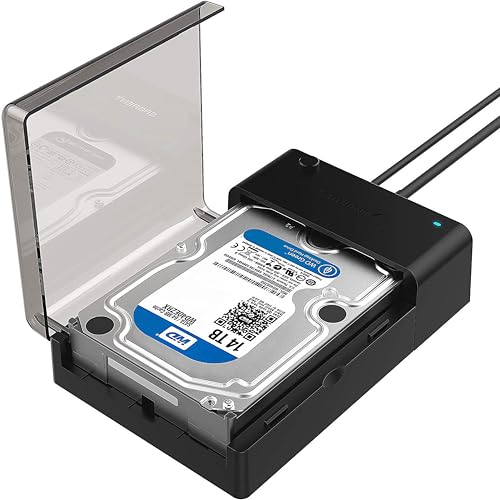
- Reads one bare 2.5- or 3.5-inch SATA drive
- Tool-free, hot-swap design with UASP
- USB Type-A host connection; 12V adapter included
Best For: Basic single-drive SATA access and swaps
High-Volume Cloning Hub

- Holds up to five 2.5- or 3.5-inch SATA drives
- Offline duplicates four copies from one source
- USB-C/C-A cable and aluminum vertical design
Best For: Multi-drive storage management and cloning
Practical Dual-Bay Cloner

- Accesses two 2.5- or 3.5-inch SATA drives
- Supports computer-free offline cloning
- USB 3.0, UASP, and broad OS compatibility
Best For: Two-drive access and occasional disk migrations
Flexible Two-Drive Workflow
StarTech.com Dual-Bay SATA Dock

- Two tool-free bays for 2.5-inch and 3.5-inch SATA drives
- USB 3.2 Gen 1 and eSATA host connections
- Independent eject buttons support convenient hot-swapping
Best For: Small businesses managing routine two-drive backups and transfers
Offline Cloning Value

- Standalone drive-to-drive cloning without a computer
- Supports two SATA drives up to 20TB each
- USB 3.0, UASP, hot-swap, and USB-C adapter included
Best For: Small offices performing routine drive duplication and backups
High-Capacity Desk Setup

- Four tool-free bays for simultaneous SATA drive access
- Independent controllers support hot-swapping other bays in use
- Dual fans, TRIM support, 4Kn compatibility, and LED indicators
Best For: Small-business IT teams handling multiple drives at once
Best Multi-Drive Cloning Value – 4-Bay USB 3.0 SATA Dock
For small businesses comparing hard drive docking stations, the SABRENT DS-U3B4 is a practical choice when you need access to several 2.5-inch or 3.5-inch SATA drives from one compact, trayless station. Its USB 3.0 connection supports transfers up to 5Gbps, while offline cloning handles direct drive duplication without a computer.
Best For: Small teams managing multiple SATA drives, backups, and straightforward drive cloning.
Pros:
- Supports up to four 2.5-inch or 3.5-inch SATA HDDs and SSDs.
- Offline drive-to-drive cloning works without additional software or a computer.
- Trayless, plug-and-play design simplifies drive changes and maintenance.
- USB 3.0 offers up to 5Gbps transfer performance and works with USB 2.0 systems.
Cons:
- Supports SATA drives only; M.2 and NVMe compatibility is not listed.
- Offline cloning requires the target drive to be suitable for the duplication task.
The DS-U3B4 balances four-drive capacity with a relatively compact design and a simple workflow. It is especially useful for businesses that need occasional cloning and multi-drive access without investing in a larger enclosure.
Best High-Capacity DAS – 5-Bay USB-C 10Gbps Enclosure
Among hard drive docking stations for small businesses, the SABRENT DS-SC5B stands out as a higher-capacity direct-attached storage enclosure for up to five 3.5-inch SATA drives. Its 10Gbps USB-C connection, independent bay controllers, and temperature-controlled fan are suited to sustained multi-drive access.
Best For: Businesses needing a five-drive DAS enclosure for large local storage collections and frequent transfers.
Pros:
- Provides five tool-free 3.5-inch SATA bays with support for up to 100TB total capacity.
- 10Gbps USB-C connectivity supports faster transfers than standard USB 3.0.
- Independent controllers give each bay a stable connection.
- PWM-controlled cooling, per-bay switches, activity LEDs, and drive locks support organized operation.
Cons:
- Drives are not included.
- This is JBOD-style DAS, not a hardware RAID system or NAS.
- Its larger, 10-pound enclosure may require dedicated desk space.
The DS-SC5B is a strong fit when capacity, drive independence, and cooling matter more than portability. Buyers should choose it specifically for direct computer-connected storage, since it does not provide RAID or network-attached functionality.
Best Five-Bay Cloning Dock – 5-Bay USB 3.1 SATA Station
The MAIWO five-bay model gives small businesses a flexible option for reading, writing, backing up, and cloning multiple SATA drives. It accepts both 2.5-inch and 3.5-inch HDDs and SSDs, supports up to five drives, and includes a visible digital progress display for offline cloning tasks.
Best For: IT workgroups that need broad SATA drive compatibility, simultaneous drive access, and standalone cloning.
Pros:
- Supports up to five 2.5-inch or 3.5-inch SATA I, II, or III drives.
- Offline cloning works without a computer and displays progress from 0% to 100%.
- USB transfer speeds reach up to 5Gbps with UASP support.
- Open, tool-free design promotes convenient installation and heat dissipation.
Cons:
- Its listed capacity figures vary between the supplied specifications, so buyers should confirm drive-size support before purchase.
- The product is designed for SATA drives; M.2 and NVMe support is not specified.
- The relatively large footprint may be less convenient for compact workspaces.
With five bays and a cloning progress indicator, this MAIWO dock is geared toward hands-on storage administration. It makes the most sense for teams that value drive flexibility and standalone duplication over a faster 10Gbps interface.
Best Compact Two-Drive Option – USB-C SATA Cloner
For small businesses that do not need five bays, the SABRENT EC-CH2B is a compact two-drive docking station for 2.5-inch and 3.5-inch SATA HDDs and SSDs. It supports simultaneous access to both drives over USB-C and can clone one drive to another offline with a button press.
Best For: Small offices needing a compact tool for two-drive transfers, upgrades, and occasional cloning.
Pros:
- Fits two 2.5-inch or 3.5-inch SATA drives in a tool-free, hot-swappable design.
- Offline 1-to-1 cloning requires no computer and runs at up to 60MBps.
- Both bays can be read and written simultaneously when connected to a computer.
- USB-C connectivity supports up to 5Gbps and plug-and-play operation on Windows and Mac.
Cons:
- It does not support IDE/PATA, M.2, NVMe, or drives using a 4-pin Molex connector.
- Drives are not included.
- The included cable is USB-C to USB-C, so a USB-A adapter or separate cable may be needed for some computers.
The EC-CH2B is a sensible space-saving choice for routine drive swaps and one-to-one cloning. Its narrow compatibility scope makes it important to verify that the business’s existing drives are SATA and that the host computer has a suitable USB connection.
Simple SATA Starter – SABRENT Single-Bay Dock
For small businesses seeking hard drive docking stations for small businesses, the SABRENT EC-DFLT is a straightforward choice for reading or swapping one bare 2.5- or 3.5-inch SATA drive at a time. Its tool-free, lay-flat design supports plug-and-play use on Windows 10/11, macOS, and Linux, but the included connection is USB Type-A rather than USB-C.
Best For: Teams that need an uncomplicated single-drive dock for SATA HDD or SSD access and occasional drive swaps.
Pros:
- Supports 2.5- and 3.5-inch SATA I/II/III HDDs and SSDs.
- Tool-free, hot-swappable design with power and activity LED.
- Includes the required 12V adapter for 3.5-inch drives and supports UASP.
Cons:
- Supports SATA drives only; it does not support IDE/PATA, M.2, SAS, or enclosed USB drives.
- Uses a USB Type-A host cable, so USB-C-only computers need an adapter.
- S.M.A.R.T. diagnostics do not pass through the USB bridge.
This dock keeps the workflow simple and affordable for basic SATA access. Confirm the drive connector and your computer’s available ports before ordering.
High-Volume Cloning Hub – ORICO 5-Bay Dock
The ORICO 5-bay dock is aimed at small businesses that need hard drive docking stations for small businesses with higher-volume storage and duplication tasks. It accepts up to five 2.5- or 3.5-inch SATA drives, supports offline duplication of four copies from one source, and connects through USB 3.2 Gen 1 with both USB-C and USB-A cable options.
Best For: Professional users, photographers, and teams managing multiple SATA drives or repeated offline cloning jobs.
Pros:
- Five-bay design supports up to five SATA HDDs or SSDs, with up to 20TB per drive listed.
- One-button offline duplicator can create four copies without a computer.
- Aluminum vertical construction supports heat dissipation and includes USB-C-to-C/A connectivity.
Cons:
- Offline cloning overwrites target disks, so backups are needed before starting.
- Supports SATA 2.5- and 3.5-inch drives rather than other drive formats.
- Its larger five-bay design may be more capacity than a small office needs.
With substantial drive capacity and multi-copy duplication, the ORICO is better suited to organized, repeatable storage workflows than occasional single-drive reading. Its USB-C/C-A cable helps it fit a broader range of current computers.
Practical Dual-Bay Cloner – FIDECO SATA Dock
For small businesses comparing hard drive docking stations for small businesses, the FIDECO dual-bay dock provides a useful middle ground between a basic reader and a larger multi-bay system. It connects two bare 2.5- or 3.5-inch SATA HDDs or SSDs simultaneously and supports offline cloning without a computer.
Best For: Small offices that regularly access two SATA drives or need occasional standalone disk cloning.
Pros:
- Dual bays accept 2.5- and 3.5-inch SATA HDDs and SSDs.
- Offline clone function works without a computer after inserting both drives.
- USB 3.0 supports transfer rates up to 5Gbps, with plug-and-play operation and UASP.
- Compatible with Windows, macOS, and Linux systems.
Cons:
- Supports SATA drives only, not IDE/PATA or other drive interfaces.
- New drives may need to be initialized before the computer recognizes them.
- Offline cloning requires careful target-drive selection.
The FIDECO offers a practical balance for teams that need two-drive access without stepping up to a five-bay unit. Its cloning feature is convenient for migrations, provided the source and target drives are identified correctly.
Flexible Two-Drive Workflow – StarTech.com Dual-Bay SATA Dock
For small businesses comparing hard drive docking stations, this StarTech.com model offers two tool-free bays for quickly accessing 2.5-inch or 3.5-inch SATA HDDs and SSDs. USB 3.2 Gen 1 or eSATA connectivity supports backups, disk imaging, and file transfers, while independent eject buttons make drive changes more convenient.
Best For: Small-business teams that regularly move, image, or back up two SATA drives and want both USB and eSATA host options.
Pros:
- Supports two 2.5-inch or 3.5-inch SATA I/II/III drives, including SSDs and HDDs of any capacity.
- Toolless, hot-swappable bays with independent eject buttons simplify drive changes.
- Includes USB-A and eSATA cables, a universal power adapter, LED activity lights, and a two-year warranty.
Cons:
- IDE drives require a separately sold adapter.
- USB transfer speeds are limited to USB 3.2 Gen 1 rates up to 5 Gbps.
Its dual-bay layout is a practical middle ground for offices that need more flexibility than a single-drive dock without stepping up to four bays. The dual connection options are particularly useful for mixed workstation environments.
Offline Cloning Value – WAVLINK Dual-Bay SATA Dock
Among hard drive docking stations for small businesses, this WAVLINK dual-bay unit stands out for its offline cloning function. It accepts two 2.5-inch or 3.5-inch SATA drives, supports up to 2 x 20TB, and can copy from one drive to another without a computer.
Best For: Small offices that want a straightforward way to duplicate SATA drives or expand accessible storage without installing drives internally.
Pros:
- Offline clone function copies between two drives without a connected computer.
- Supports 2.5-inch and 3.5-inch SATA I/II/III HDDs and SSDs, up to 2 x 20TB.
- Tool-free, hot-swappable design includes USB-A-to-B and USB-A-to-C connection options.
- UASP support and USB 3.0 provide transfer rates up to 5 Gbps.
Cons:
- The target drive must have capacity equal to or greater than the source for offline cloning.
- The listed warranty information specifies SATA interface support only.
This is a useful choice when drive duplication is a regular task, such as preparing a replacement disk or maintaining a backup copy. The fixed bezel design also adds physical support around inserted drives.
High-Capacity Desk Setup – StarTech.com 4-Bay SATA Dock
For businesses that handle several bare drives at once, this four-bay StarTech.com model provides a higher-capacity option among hard drive docking stations for small businesses. It offers tool-free access to up to four 2.5-inch or 3.5-inch SATA drives over USB 3.2 Gen 1, with independent controllers and cooling fans designed for sustained multi-drive use.
Best For: Small-business IT teams managing multiple SATA drives for backups, disk imaging, transfers, or troubleshooting.
Pros:
- Four hot-swappable bays accommodate 2.5-inch and 3.5-inch SATA I/II/III HDDs and SSDs.
- Independently powered controllers allow one bay to be swapped without interrupting other bays in use.
- Dual 40mm fans help maintain drive temperature during operation.
- Supports SATA III with TRIM, 4Kn compatibility, LED activity lights, and a two-year warranty.
Cons:
- Its four-bay design occupies more desk space than the two-bay alternatives.
- USB host connectivity is limited to USB 3.2 Gen 1 speeds up to 5 Gbps.
- IDE drives require a separately sold adapter.
The additional bays make this dock better suited to organized, higher-volume drive work than occasional single-drive access. Independent power and active cooling add practical value when several drives are connected during IT workflows.
How We Picked the Best Hard Drive Docking Stations for Small Businesses
We focused on features that matter in office, workshop, and small IT-team environments: support for both 2.5-inch and 3.5-inch SATA HDDs and SSDs, available bay count, USB or eSATA connectivity, offline cloning, stated transfer speeds, and ease of swapping drives. We also considered whether a dock is better suited to occasional maintenance, routine backups, or multi-drive workflows.
Compatibility should be verified before purchase. These docks are designed primarily for SATA drives; they generally do not accept NVMe or IDE drives unless an appropriate adapter is explicitly supported. Drive capacity limits, operating-system support, and included cables can also vary by model.
Quick Comparison
| Dock Type | Best For | Typical Advantage |
|---|---|---|
| Single-bay | Basic access and occasional backups | Compact, simple, and affordable |
| Dual-bay | Drive cloning and routine transfers | Useful balance of capacity and simplicity |
| Four- or five-bay | Teams handling multiple drives | More simultaneous storage access |
| USB-C 10Gbps | Modern workstations and faster transfers | Higher interface bandwidth when the host supports it |
Key Buying Factors for Hard Drive Docking Stations for Small Businesses
Bay Count and Workflow
Choose a single-bay unit for occasional drive access, a dual-bay dock when cloning is important, and a four- or five-bay model when staff regularly rotate several drives. More bays can reduce cable changes and save time, but they also require more desk space and power.
Cloning and Backup Features
Offline cloning can copy one SATA drive to another without a computer, which is useful for upgrades and repeatable maintenance. Confirm that the source and destination bays are clearly labeled and that the destination drive is equal to or larger than the source. Cloning is not the same as a versioned backup, so businesses should still maintain separate backup copies.
Connection Speed and Host Compatibility
USB 3.0 is adequate for many HDD tasks, while USB-C 10Gbps can better serve SSDs and newer computers. Actual performance depends on the drive, cable, host port, file sizes, and enclosure electronics. A USB-C connector does not automatically guarantee 10Gbps operation.
Drive Support and Protection
Check support for 2.5-inch and 3.5-inch SATA drives, including SATA generations and SSD compatibility. A stable base, fixed bezel, power switch, ventilation, and secure drive slots are valuable in busy offices where equipment may be used frequently.
Who Should Buy Which Hard Drive Docking Stations for Small Businesses?
Choose the SABRENT single-bay model for straightforward access to one 2.5-inch or 3.5-inch SATA drive. Dual-bay options from SABRENT, FIDECO, StarTech.com, and WAVLINK are better for routine cloning, migrations, and comparing two drives. Businesses that handle several disks at once should consider the four- or five-bay SABRENT, MAIWO, ORICO, or StarTech.com models.
For newer workstations, prioritize a USB-C model such as the SABRENT five-bay or dual-bay dock when its connection speed and bay layout match your workload. For mixed office equipment, a widely compatible USB 3.0 dock may be the more practical choice. Whichever model you select, treat docking stations as convenient access tools—not a replacement for a tested, off-site backup strategy.