Hard drive docking stations make it easier to access loose 2.5-inch and 3.5-inch SATA drives without installing them inside a computer. They are useful for upgrades, backups, troubleshooting, and moving files between systems.
This roundup compares 10 beginner-friendly models, including single- and dual-bay docks, USB-A and USB-C options, UASP support, and offline cloning features.
Best 10 Hard Drive Docking Stations for Beginners Picks for 2026
Best Dual-Bay Cloner
SABRENT USB 3.0 Docking Station
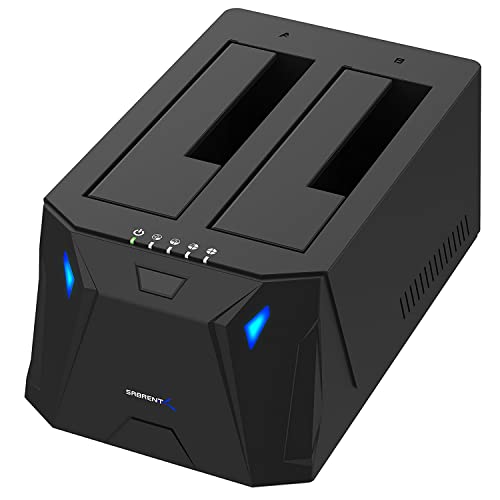
- Two bays for 2.5-inch and 3.5-inch SATA drives
- Offline cloning without a computer
- USB 3.0 speeds up to 5Gbps
Best For: Beginners who need simple two-drive cloning
Best Lay-Flat Design
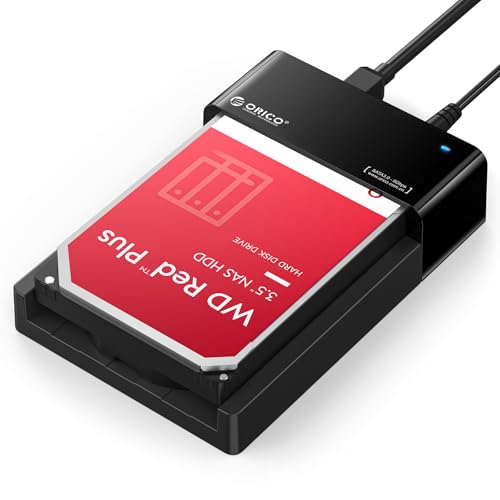
- Single bay supports drives up to 24TB
- Tool-free setup with no drivers required
- Lay-flat design encourages natural cooling
Best For: Beginners accessing one SATA drive at a time
Best Simple Single-Bay Dock
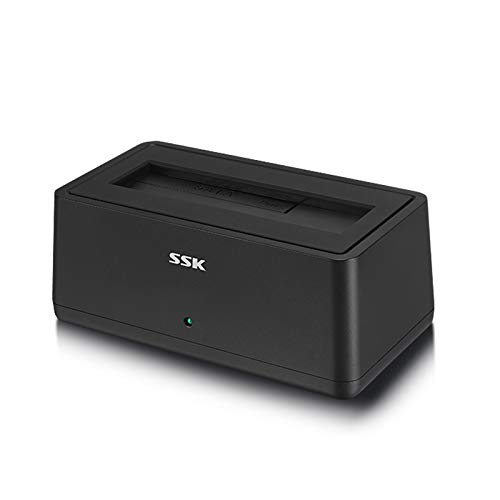
- Supports 2.5-inch and 3.5-inch SATA drives
- Plug-and-play USB 3.0 connectivity
- Adds LED status and automatic sleep
Best For: Beginners needing easy access to one SATA drive
Best USB-C Cloning Dock

- Dual bays support 2.5-inch and 3.5-inch SATA drives
- Offline cloning requires no computer
- USB-C connectivity with speeds up to 5Gbps
Best For: USB-C users who want easy drive cloning
Best Dual-Bay Clone Dock
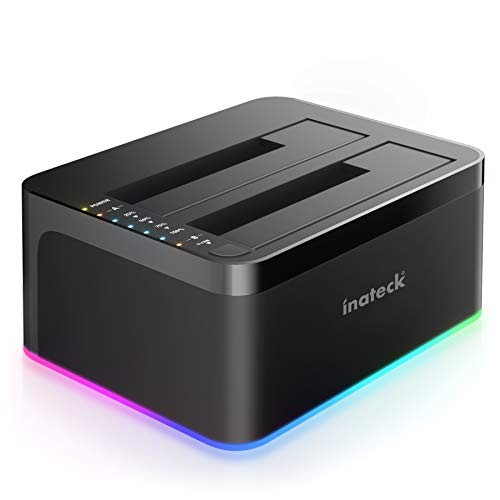
- Two-bay design supports 2.5-inch and 3.5-inch SATA drives
- Offline cloning works without a computer
- USB 3.0 with UASP support for fast transfers
Best For: Beginners needing drive access and standalone cloning
Best for Everyday Use
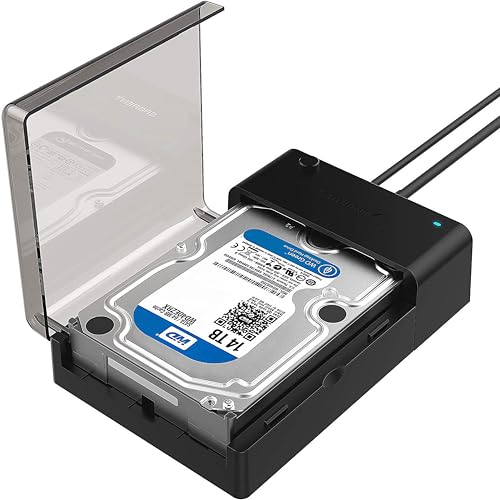
- Tool-free dock for one 2.5-inch or 3.5-inch SATA drive
- Plug-and-play support across Windows, macOS, and Linux
- Includes required 12V adapter for 3.5-inch drives
Best For: Beginners who need basic single-drive SATA access
Best USB-C Dual-Bay Dock

- Dual bays support SATA drives up to 22TB each
- Includes USB-A/USB-C cable for newer and older hosts
- Offline cloning and aluminum housing add versatility
Best For: Beginners wanting USB-C access and two-drive cloning
Beginner-Friendly Clone Choice

- Dual-bay support for 2.5- and 3.5-inch SATA drives
- Offline cloning without a computer
- USB 3.0 and broad OS compatibility
Best For: Beginners needing simple SATA drive access and cloning
Stable Dual-Bay Pick

- Supports two SATA drives up to 20TB each
- Fixed bezels help hold drives securely
- Offline cloning and USB 3.0/UASP support
Best For: Beginners prioritizing stable drive placement and capacity
Versatile Connection Option

- Dual-bay support for 2.5- and 3.5-inch SATA drives
- USB 3.0 and USB-C connection flexibility
- Offline cloning, power switch, and sleep mode
Best For: Beginners who want flexible connections for SATA drives
Best Dual-Bay Cloner – SABRENT USB 3.0 Docking Station
For beginners comparing hard drive docking stations, the SABRENT EC-HD2B offers a straightforward way to access or clone two bare SATA drives. It supports 2.5-inch and 3.5-inch HDDs and SSDs, connects over USB 3.0, and requires no drivers for plug-and-play use.
Best For: Beginners who need two drive bays and offline cloning for SATA drives.
Pros:
- Supports both 2.5-inch and 3.5-inch SATA HDDs and SSDs.
- Offline cloning works without a computer and supports up to 60Mbps.
- USB 3.0 transfer speeds reach up to 5Gbps, with backward compatibility for USB 2.0 and 1.1.
- Supports drives up to 10TB each and includes a power supply, USB 3.0 cable, and manual.
Cons:
- Designed for SATA drives, so other drive interfaces are not supported in the supplied specifications.
- Offline cloning requires a target drive that is suitable for the copying task.
The two-bay layout makes this a practical choice for drive-to-drive copying and routine file access. Its simple setup and included accessories make it approachable for first-time users.
Best Lay-Flat Design – ORICO USB 3.0 Hard Drive Dock
The ORICO lay-flat dock is one of the more beginner-friendly hard drive docking stations for accessing a bare SATA drive without installing it inside a computer. Its tool-free design supports 2.5-inch and 3.5-inch HDDs and SSDs, while USB 3.0 and UASP provide up to 5Gbps transfer rates.
Best For: Beginners who want a single-drive dock with broad operating-system compatibility and a flat cooling-oriented design.
Pros:
- Supports one 2.5-inch or 3.5-inch SATA I/II/III HDD or SSD up to 24TB.
- Tool-free, plug-and-play setup works without additional drivers.
- Compatible with Windows, Linux, and Mac OS systems listed by the manufacturer.
- Lay-flat construction is designed to promote natural convection cooling.
Cons:
- Only one drive can be mounted at a time.
- The supplied specifications do not describe an offline cloning function.
With a single bay, this ORICO dock focuses on uncomplicated drive access rather than multi-drive workflows. The included power adapter, USB cable, and manual help make setup simple for new users.
Best Simple Single-Bay Dock – SSK USB 3.0 SATA Adapter
The SSK DK102 keeps the basics simple for anyone choosing hard drive docking stations for beginners. Insert a bare 2.5-inch or 3.5-inch SATA drive, connect the dock by USB 3.0, and access files without assembling an enclosure or installing drivers.
Best For: Beginners who want an uncomplicated single-drive reader with UASP, status lighting, and automatic sleep.
Pros:
- Works with 2.5-inch and 3.5-inch SATA I/II/III HDDs and SSDs.
- Plug-and-play operation supports USB 3.0 transfer rates up to 5Gbps.
- LED status display makes drive activity easier to monitor.
- Automatic sleep after 10 minutes of inactivity helps reduce unnecessary drive operation.
Cons:
- It has one supported drive bay, so it is not suited to simultaneous two-drive access.
- The supplied notes do not list an offline cloning mode.
This dock is a sensible entry point when the goal is quick access to an existing SATA drive rather than a full cloning station. Its included cable, power adapter, and manual cover the essentials for getting started.
Best USB-C Cloning Dock – SABRENT Dual-Bay USB-C Dock
The SABRENT EC-CH2B is a useful option for beginners seeking hard drive docking stations with USB-C connectivity and dual-drive cloning. It accepts bare 2.5-inch and 3.5-inch SATA HDDs or SSDs, lets a computer see both bays separately, and can clone one drive to another without a computer.
Best For: Beginners with a USB-C computer who want two-drive access and one-button offline cloning.
Pros:
- Supports two 2.5-inch or 3.5-inch SATA HDDs or SSDs.
- Offline 1-to-1 cloning works without a connected computer and runs up to 60MBps.
- Both bays can be read and written as separate drives over USB, with hot-swappable, tool-free mounting.
- Includes a USB-C cable and supports USB transfer speeds up to 5Gbps.
Cons:
- It supports SATA drives only and does not support IDE/PATA, M.2, or NVMe drives.
- The included cable uses USB-C at the dock end, so computers without a USB-C port may need an additional cable.
- Offline cloning requires the target drive to be the same size as or larger than the source.
This model stands out when cloning and USB-C connectivity matter more than broad drive-interface support. Beginners should confirm their computer has a compatible USB-C port and that their drives are SATA before ordering.
Best Dual-Bay Clone Dock – Inateck SA02003 RGB
For beginners comparing hard drive docking stations for beginners, the Inateck SA02003 is a versatile dual-bay option for SATA 2.5-inch and 3.5-inch HDDs and SSDs. Its offline-clone function works without a computer, while USB 3.0 and UASP support help with everyday transfers.
Best For: Beginners who want to access two SATA drives or clone one drive to another without using a computer.
Pros:
- Supports two 2.5-inch or 3.5-inch HDDs and SSDs.
- Offline cloning can operate independently from a computer.
- USB 3.0 and UASP support provide fast transfer capability.
- RGB indicator changes behavior during drive activity and sleep.
Cons:
- The housing is plastic rather than aluminum.
- Offline cloning is intended for compatible SATA drives and requires careful drive placement.
The Inateck is a strong all-around choice when flexibility matters. Its two bays and standalone cloning make it more capable than a basic single-drive reader, while its straightforward USB connection keeps setup accessible.
Best for Everyday Use – Sabrent EC-DFLT
The Sabrent EC-DFLT is a straightforward choice for beginners shopping for hard drive docking stations for beginners. It accepts bare 2.5-inch and 3.5-inch SATA drives without tools, supports plug-and-play use on Windows, macOS, and Linux, and includes the power adapter needed for 3.5-inch drives.
Best For: Beginners who need a simple, single-drive SATA reader for routine file access, swapping, or backups.
Pros:
- Tool-free, lay-flat design accepts 2.5-inch and 3.5-inch SATA drives.
- Plug-and-play operation is supported on Windows 10/11, macOS, and Linux.
- Includes a 12V/2A adapter for stable 3.5-inch drive operation.
- Supports hot-swapping without requiring a reboot.
Cons:
- Supports one drive at a time.
- Works with SATA drives only; it does not support IDE/PATA, M.2, or SAS drives.
- The included host cable uses USB-A rather than USB-C.
This is the least complicated option in the group, provided your drive is SATA and your computer has a USB-A port. Buyers with USB-C-only computers will need a separate adapter, and those wanting dual-bay access should consider another model.
Best USB-C Dual-Bay Dock – RSHTECH Aluminum
For beginners looking for hard drive docking stations for beginners with newer computers, the RSHTECH dual-bay dock offers both USB-A and USB-C connectivity. It supports two SATA HDDs or SSDs, includes offline cloning, and uses an aluminum housing with a semi-open design for improved drive cooling.
Best For: Beginners who want dual-drive access, USB-C compatibility, and offline cloning in one dock.
Pros:
- Dual bays support 2.5-inch and 3.5-inch SATA drives up to 22TB each.
- Includes a detachable USB-A/USB-C cable for different host ports.
- Offline cloning works without connecting to a computer.
- Aluminum housing, dust caps, and semi-open construction support durability and heat dissipation.
Cons:
- It requires an external 36W, 12V/3A power adapter.
- UASP performance depends on support from the connected device.
- It supports SATA drives, not other drive interfaces such as NVMe.
The RSHTECH is the most connectivity-focused choice here. Its included dual-ended cable suits USB-A and USB-C hosts, while the two bays and cloning feature give beginners room to handle drive upgrades and data transfers as their needs grow.
Beginner-Friendly Clone Choice – FIDECO Dual-Bay SATA Dock
For beginners comparing hard drive docking stations, the FIDECO dual-bay dock offers a straightforward way to access two 2.5- or 3.5-inch SATA HDDs or SSDs. Its plug-and-play setup, USB 3.0 connection, and computer-free cloning make it practical for basic storage upgrades and backups.
Best For: Beginners who want simple dual-drive access and offline cloning for SATA drives.
Pros:
- Supports two 2.5- or 3.5-inch SATA HDDs or SSDs simultaneously.
- Offline cloning works without a computer.
- USB 3.0 supports transfer rates up to 5Gbps.
- Works with Windows, Mac OS, and Linux, with no driver required.
Cons:
- Supports SATA drives only.
- New drives must be initialized before the computer can recognize them.
The FIDECO is a sensible starting point if you want accessible controls and broad operating-system compatibility. Just confirm that your drives use the SATA interface before buying.
Stable Dual-Bay Pick – WAVLINK Fixed-Bezel SATA Dock
This WAVLINK model is a practical option for beginners choosing hard drive docking stations for backup and file transfers. It accepts 2.5- and 3.5-inch SATA drives, includes fixed bezels for added drive stability, and supports offline cloning without requiring a computer.
Best For: Beginners who want a stable dual-bay dock with high-capacity support and simple cloning.
Pros:
- Supports two 2.5- or 3.5-inch SATA drives, up to 20TB per bay.
- Fixed bezels provide added drive protection and stability.
- Offline cloning starts with a long press of the Clone button.
- Includes USB-A and USB-C connection options through the supplied adapter.
Cons:
- Cloning requires the target drive to have capacity equal to or greater than the source.
- Compatibility is limited to SATA drives.
Its tool-free design and wide device compatibility make this WAVLINK easy to approach, while the fixed bezels may reassure users who prefer a more secure drive fit. Check the target drive capacity before cloning.
Versatile Connection Option – WAVLINK USB 3.0/USB-C Dock
For beginners shopping for hard drive docking stations with flexible connectivity, this WAVLINK dual-bay dock supports USB 3.0 and USB-C setups through its included adapter. It handles 2.5- and 3.5-inch SATA drives, offers offline cloning, and requires no dock-specific drivers.
Best For: Beginners who need dual-bay SATA access with USB-C connection flexibility.
Pros:
- Works with 2.5- and 3.5-inch SATA I/II/III HDDs and SSDs.
- Supports UASP transfer speeds up to 6Gbps and USB 3.0 connections up to 5Gbps.
- Offline cloning is available without a computer.
- Includes a power switch and automatic sleep mode after 30 minutes of inactivity.
Cons:
- Not compatible with M1- or M2-based Macs.
- Offline cloning requires the target disk to be at least as large as the source.
This model suits users who want a traditional USB 3.0 dock but also appreciate USB-C adapter support. Its main limitation is important for Mac owners: the supplied notes exclude M1- and M2-based systems.
How We Picked the Best Hard Drive Docking Stations for Beginners
We focused on features that matter most to first-time buyers: compatibility with 2.5-inch and 3.5-inch SATA HDDs and SSDs, connection type, transfer performance, ease of use, power design, and useful extras such as offline cloning. Models with dual bays can access two drives at once, while single-bay docks are generally simpler and more compact.
Because these are Hard Drive Docking Stations for Beginners, we also considered how clearly each design supports common tasks such as reading an old drive, creating a backup, or cloning one drive to another.
Quick Comparison
| Feature | What to look for | Why it matters |
|---|---|---|
| Drive support | 2.5-inch and 3.5-inch SATA | Determines which internal drives fit |
| Bay count | Single or dual bay | Dual bays enable drive-to-drive workflows |
| Host connection | USB 3.0 or USB-C | Affects compatibility and convenience |
| UASP | Supported by dock and computer | Can improve USB storage responsiveness |
| Offline cloning | Available on selected models | Copies drives without a computer |
Key Buying Factors for Beginners
Drive Size and Interface
Most docks in this roundup support SATA drives, but confirm both the interface and physical size before buying. A 2.5-inch laptop drive and a 3.5-inch desktop drive use different power requirements, so 3.5-inch support normally requires the dock’s included power adapter.
USB Compatibility and Speed
USB 3.0 remains widely compatible, while USB-C can be more convenient on newer laptops. A USB-C connector does not automatically guarantee faster transfers; real-world performance also depends on the drive, computer port, cable, and file workload. UASP support can help when the host system and operating system support it.
Single Bay, Dual Bay, or Cloning
Choose a single-bay dock for occasional file access and a smaller footprint. A dual-bay model is more flexible for comparing drives, copying data, or working with two disks. For offline cloning, carefully follow the dock’s source-and-target instructions and remember that cloning usually overwrites the destination drive.
Safety and Everyday Usability
Look for a stable base, clear drive alignment, a power switch, status indicators, and protective covers or bezels where provided. Always eject the drive through your operating system before switching off or removing it, and keep important data backed up in more than one location.
Who Should Buy Which Hard Drive Docking Stations for Beginners?
Choose a single-bay dock if you mainly need to read or recover files from one SATA drive at a time. It is the simplest option for beginners and occasional maintenance.
Choose a dual-bay dock if you regularly manage multiple drives, perform backups, or want easier drive-to-drive workflows. Confirm that both bays support the drive sizes you use.
Choose a USB-C model for a newer laptop or desktop where USB-C is your most convenient port. If your equipment uses USB-A, a USB 3.0 model may be the more straightforward choice.
Choose offline cloning when you want a dedicated drive-copy function without running cloning software on a computer. For routine backups, however, a proper backup application can offer more control, scheduling, and verification.