The best network attached storage systems make it easier to protect files, back up phones and computers, stream media, and create a private cloud without relying entirely on subscription services.
This roundup compares 10 two- and four-bay NAS options, including diskless systems for flexible drive selection and models with storage included for simpler setup.
Best 10 Network Attached Storage Systems Picks for 2026
Best Overall
Synology DS225+ Private Cloud Media Server

- 4K streaming with Intel hardware transcoding
- Layered backups, RAID, and snapshot protection
- Supports up to 30 IP cameras
Best For: Media libraries, creators, and comprehensive home backup
Best for Beginners
UGREEN NAS DH2300 2-Bay Personal Storage

- Simple private storage and device backups
- AI photo organization and duplicate detection
- Supports up to 64TB with installed drives
Best For: First-time NAS owners and personal users
Best Budget Synology
Synology DiskStation DS223j 2-Bay NAS
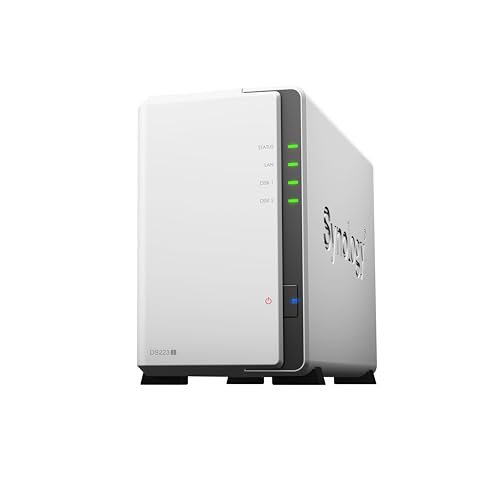
- Private cloud with cross-platform access
- Automated backup to multiple destinations
- Supports multiple IP cameras
Best For: Home users seeking simple Synology storage
Best for Fast Networking
Asustor Drivestor 2 Gen 2 AS1202T

- 2.5GbE connectivity for compatible networks
- Quad-core processor for daily storage tasks
- Tool-free HDD or SSD installation
Best For: Home users with 2.5GbE networking
Best Home Backup Hub

- Centralizes files and device backups
- Supports collaboration and version control
- Two-bay diskless enclosure with surveillance support
Best For: Homes and small offices needing straightforward centralized storage
Best for Power Users

- Intel Core performance with expandable DDR5 memory
- Supports Docker, VMs, and local AI photo tools
- Four bays plus 10GbE and 2.5GbE networking
Best For: Developers, IT professionals, and demanding media or virtualization workflows
Best Ready-to-Use Value

- Includes two 2TB hard drives
- Ships configured in RAID 1
- Supports backups and subscription-free personal cloud access
Best For: Home users wanting an easy, pre-populated backup and storage solution
Best for Growing Photo Libraries

- Four-bay design with up to 128TB capacity
- AI photo organization and automatic phone backup
- 2.5GbE, Docker support, and 4K HDMI
Best For: Families and users building a large private media library
Best Ready-to-Use Backup NAS
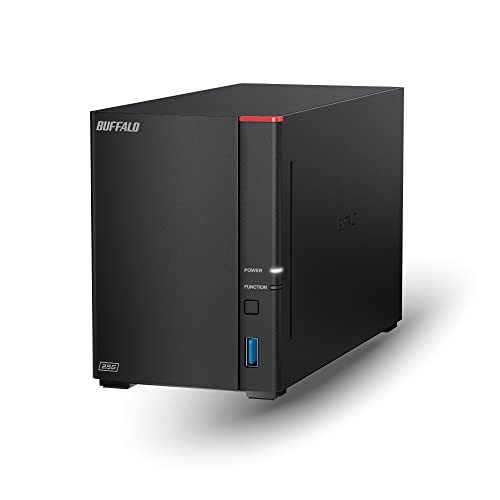
- Includes 8TB across two preinstalled drives
- RAID 1 provides 4TB usable mirrored storage
- 24/7 US support and two-year warranty
Best For: Home offices wanting simple, included-drive backups
Best Compact Diskless NAS

- Compact two-bay design with 2.5GbE networking
- Supports RAID, snapshots, backups, and Docker
- Remote access and private sharing across major devices
Best For: Beginners wanting a small, customizable private cloud
Best Overall – Synology DS225+ Private Cloud Media Server
The Synology DS225+ is a versatile choice among network attached storage systems for households and creators who want private media streaming, centralized files, and layered backups. Its Intel processor supports hardware transcoding, while the two-bay diskless design lets you choose compatible drives.
Best For: Home media libraries, photo backups, private cloud access, and users who want broader security and surveillance features.
Pros:
- Supports 4K media streaming with hardware transcoding.
- Offers automated backups, RAID redundancy, and snapshot protection.
- Supports up to 30 IP cameras with AI detection and remote monitoring.
- Includes a three-year warranty.
Cons:
- Drives are not included.
- Its advanced features may be more than casual file-storage users need.
Choose the DS225+ when you want one enclosure to handle media, backups, file sharing, and surveillance. It is especially appealing if long-term data protection and streaming flexibility matter more than keeping the setup minimal.
Best for Beginners – UGREEN NAS DH2300 2-Bay Personal Storage
The UGREEN NAS DH2300 is an approachable entry point into network attached storage systems. It focuses on private photo, video, and file storage, automatic device backups, and simple organization rather than advanced server workloads. Drives are not included, and wired Ethernet is recommended.
Best For: Beginners, families, and personal users moving away from scattered device storage or recurring cloud fees.
Pros:
- Supports automatic backups across Windows, iOS, Android, and macOS.
- Offers up to 64TB of capacity with compatible drives.
- Includes AI photo tagging, duplicate detection, and sharing tools.
- Provides RAID, two-factor authentication, permissions, and encrypted transfers.
Cons:
- Does not support Docker or virtual machines.
- Wi-Fi requires an external USB adapter; wired Ethernet is recommended.
- Drives are not included.
The DH2300 makes a strong case for users who want straightforward private storage and phone backup without a complicated feature set. Its limitations are important for advanced users, but they help keep the focus on everyday personal storage.
Best Budget Synology – Synology DiskStation DS223j 2-Bay NAS
The Synology DS223j is a compact, diskless option for shoppers comparing network attached storage systems for private cloud access and dependable backups. It supports cross-platform file sharing, synchronization, mobile access, and home surveillance while retaining a relatively simple two-bay format.
Best For: Home users who want a straightforward private cloud, automated backups, and Synology’s software support.
Pros:
- Provides private cloud access with data ownership.
- Supports backups from Macs, PCs, and mobile devices to multiple destinations.
- Can record and monitor multiple IP cameras remotely.
- Includes a two-year warranty and ongoing software support.
Cons:
- Drives are not included.
- Its feature set is oriented toward home use rather than demanding server workloads.
The DS223j is a sensible choice when you want the familiar Synology ecosystem for essential storage, syncing, and backup tasks. Consider it for practical home use rather than performance-intensive media or virtualization needs.
Best for Fast Networking – Asustor Drivestor 2 Gen 2 AS1202T
The Asustor Drivestor 2 Gen 2 AS1202T is a practical pick among network attached storage systems for home users who want faster wired connectivity. Its 2.5GbE port, quad-core processor, and tool-free drive installation suit personal cloud storage, backups, and everyday file management.
Best For: Home users with a 2.5GbE network who want quick transfers and uncomplicated drive installation.
Pros:
- Includes 2.5-Gigabit Ethernet for faster compatible-network transfers.
- Uses a quad-core 1.7GHz processor for storage and backup tasks.
- Tool-free installation simplifies HDD or SSD setup.
- Offers cross-platform access and comprehensive backup features.
Cons:
- Memory is limited to 1GB and is not expandable.
- Faster 2.5GbE performance requires compatible network equipment.
- Drives are not included.
The AS1202T stands out when your network can take advantage of 2.5GbE and you value easy hardware installation. Its fixed 1GB memory makes it better suited to personal storage and backup than heavier multitasking.
Best Home Backup Hub – Synology DS223
The Synology DS223 is a practical starting point among network attached storage systems for households and small offices that want one central place for files, backups, and shared projects. Its two-bay, diskless design lets you choose compatible drives and build a storage setup around your needs.
Best For: Home users and small offices seeking centralized file storage, automated backups, collaboration tools, and optional IP-camera monitoring.
Pros:
- Centralizes files from computers, phones, and external drives.
- Supports automated backups for Macs, PCs, and mobile devices.
- Enables file sharing, document synchronization, and version control.
- Can support IP-camera recording, motion alerts, and remote viewing.
Cons:
- Diskless design means hard drives must be purchased separately.
- Two bays provide less expansion room than larger NAS enclosures.
The DS223 is a well-rounded choice when simple centralized storage and backup matter more than maximum performance or expansion. Its two-year warranty and ongoing software updates add useful support for a long-term home or office setup.
Best for Power Users – UGREEN NAS DXP4800 Pro
The UGREEN NAS DXP4800 Pro is aimed at demanding users comparing network attached storage systems for virtualization, development, media work, and large libraries. Its Intel Core processor, expandable DDR5 memory, fast networking, and four drive bays give it considerably more headroom than a basic backup NAS.
Best For: IT professionals, developers, video editors, virtualization users, and growing teams that need high performance, flexible storage, and advanced services.
Pros:
- Intel Core i3-1315U processor with 8GB DDR5 RAM expandable to 96GB.
- Supports Docker, virtual machines, and on-device AI photo organization.
- Dual 10GbE and 2.5GbE ports support transfers up to 1.25GB/s.
- Four bays, dual M.2 PCIe 4.0 slots, and RAID 0, 1, 5, and 10 options provide flexibility.
Cons:
- Its advanced hardware and features may be more than casual users need.
- Drives are not identified as included, so storage costs may be additional.
Choose the DXP4800 Pro when workloads extend beyond routine backups. The combination of virtualization support, expandable memory, fast networking, and SSD options makes it a strong platform for technically demanding environments.
Best Ready-to-Use Value – Buffalo LinkStation 220 4TB
The Buffalo LinkStation 220 is a straightforward option among network attached storage systems because it includes two 2TB hard drives and arrives configured in RAID 1. It provides centralized storage, automated computer backups, and a subscription-free personal cloud for compatible home devices.
Best For: Families and home users who want an included-drive NAS for shared files, backups, media storage, and private access without a monthly cloud fee.
Pros:
- Includes 4TB total storage with two 2TB drives.
- Ships in RAID 1 with 2TB usable capacity for automatic mirroring.
- Supports automated backups for multiple computers.
- Offers folder access controls, SSL file transfers, and 24/7 US-based support.
Cons:
- RAID 1 reduces usable capacity to 2TB unless changed to RAID 0.
- Compatibility notes limit the listed macOS support to macOS 15 and earlier.
- It offers fewer advanced capabilities than newer, higher-performance NAS systems.
The LinkStation 220 is best for buyers who prefer a simple, pre-populated setup over extensive customization. Its included drives, RAID 1 configuration, backup software, and two-year warranty make it convenient for basic household storage and protection.
Best for Growing Photo Libraries – UGREEN NAS DH4300 Plus
For families and remote workers comparing network attached storage systems, the UGREEN NAS DH4300 Plus is a beginner-friendly four-bay option focused on private media storage, phone backups, and remote file access. Its 8GB RAM, 2.5GbE port, Docker support, and 4K HDMI output give it room for more than basic backups, though storage drives must be purchased separately.
Best For: Families, home media collections, and users moving away from cloud subscriptions or scattered external drives.
Pros:
- Four bays and support for up to 128TB provide substantial expansion room.
- AI photo albums, semantic search, duplicate removal, and automatic phone backup help organize large libraries.
- Supports remote access across Windows, macOS, Android, iOS, browsers, and smart TVs.
- 2.5GbE, 8GB LPDDR4X RAM, Docker support, and 4K HDMI offer useful performance and flexibility.
Cons:
- Storage disks are not included.
- Supports Docker but not virtual machines.
- Its broad feature set may be more than needed for simple file storage.
The DH4300 Plus is a strong fit when photo management, capacity, and private-cloud features matter more than a minimal setup. Its four-bay design also gives growing households more headroom than a typical entry-level enclosure.
Best Ready-to-Use Backup NAS – BUFFALO LinkStation 720
Among network attached storage systems, the BUFFALO LinkStation 720 stands out as a ready-to-use two-bay unit with 8TB of included storage. It arrives configured in RAID 1 with 4TB usable capacity, making it a practical choice for centralized backups and private-cloud access without a separate drive-purchasing step.
Best For: Home offices and families wanting included drives, automated computer backups, and straightforward shared storage.
Pros:
- Includes two 4TB drives and ships in RAID 1 for automatic redundancy.
- Supports automated backups for multiple computers through included management and backup software.
- Provides subscription-free personal-cloud access plus Dropbox, Azure, and OneDrive integration.
- Includes 24/7 US-based support and a two-year warranty covering the device and hard drives.
Cons:
- RAID 1 leaves 4TB of usable capacity from the included 8TB.
- Changing to RAID 0 provides full capacity but removes the stated drive-failure protection.
- Two bays offer less expansion flexibility than a four-bay system.
The LinkStation 720 is appealing for buyers who want a complete, supported backup appliance rather than a diskless enclosure. Its closed system, SSL file-transfer encryption, and access restrictions emphasize simple, controlled sharing.
Best Compact Diskless NAS – Yxk Zero1 2-Bay
The Yxk Zero1 is a compact, diskless two-bay option for shoppers comparing network attached storage systems for personal storage and entertainment. It combines remote access, phone backup, flexible RAID modes, snapshot recovery, Docker support, and 2.5GbE connectivity, but you will need to purchase compatible hard drives separately.
Best For: Beginners who want a small private cloud with room to choose or upgrade their own drives.
Pros:
- 2.5GbE connectivity supports faster transfers than standard 1GbE networking.
- Remote access works through phone, desktop, and web clients across Windows, macOS, iOS, and Android.
- Flexible RAID modes, automated backups, and snapshot recovery add layers of data protection.
- Compact, lightweight construction includes intelligent thermal control and real-time health monitoring.
Cons:
- Hard drives must be purchased separately.
- Two bays provide less capacity and expansion potential than four-bay alternatives.
- Plastic construction may feel less substantial than metal-enclosed models.
The Zero1 makes sense when you value a compact footprint and control over drive selection. Its 2.5GbE port and Docker support also give this beginner-oriented NAS useful flexibility for users who may explore more advanced features later.
How We Picked These Network Attached Storage Systems
We selected products for a range of home, home-office, and advanced-use scenarios rather than choosing only the most powerful hardware. Our comparison considers bay count, included storage, backup features, processor capability, media-streaming potential, expandability, ease of setup, and the likely software experience for the intended user.
Because NAS performance depends heavily on the installed drives, network connection, software, and workload, product claims should be treated as guidance rather than a guarantee of real-world speed. Diskless models offer more control over capacity and drive type, while bundled-drive systems can reduce setup time.
Quick Comparison
| Best For | Recommended Type | What to Look For |
|---|---|---|
| Simple personal backups | Entry-level two-bay NAS | Automatic phone and computer backup tools |
| Private cloud and file sharing | Two-bay NAS | Remote access, user permissions, and encryption |
| Media streaming | NAS with a capable Intel or modern ARM processor | Hardware transcoding and broad app support |
| Family or small-office storage | Four-bay NAS | Higher capacity, RAID flexibility, and multi-user support |
| Fast, ready-to-use storage | NAS with drives included | Preconfigured capacity and warranty coverage |
Key Buying Factors for Network Attached Storage Systems
Bay Count and Drive Capacity
Two-bay systems are compact and affordable, but a four-bay enclosure gives you more room to expand and can provide more flexible RAID configurations. Remember that usable capacity is lower than the total raw capacity after RAID, formatting, and system overhead.
Diskless or Drives Included
Diskless NAS units let you select compatible NAS-rated hard drives or SSDs and upgrade them later. Bundled systems are convenient for buyers who want a faster setup, but verify whether the included drives are replaceable and whether the advertised capacity reflects usable space.
Backup, RAID, and Data Protection
RAID can help maintain availability when a drive fails, but it is not a complete backup. Look for support for scheduled computer backups, phone photo uploads, snapshots, cloud synchronization, and an external backup destination. Keep at least one important copy separate from the NAS.
Performance and Connectivity
Check the processor, memory, number of network ports, and Ethernet speed. Hardware transcoding matters if the NAS will convert video for devices that cannot play the original format. For everyday documents and backups, reliability and software usability often matter more than peak transfer rates.
Who Should Buy Which Network Attached Storage Systems?
Choose a Two-Bay NAS for Most Homes
A two-bay model is a sensible starting point for photo backups, shared documents, and private-cloud access. It uses less space and power than a four-bay unit while still allowing a mirrored setup for basic drive redundancy.
Choose a Four-Bay NAS for Growth
Power users, developers, remote workers, and small teams should consider four bays when they need larger capacity, multiple shared folders, heavier multitasking, or room to expand without replacing every drive at once.
Choose Bundled Storage for Simplicity
A Buffalo system with included hard drives can suit buyers who want a ready-to-use home cloud. Confirm the backup tools, remote-access method, and replacement-drive options before purchasing.
Choose a Higher-Spec Model for Media and Advanced Workloads
Users who plan to run media servers, containers, development services, surveillance tools, or frequent simultaneous transfers should prioritize stronger processors, more memory, faster networking, and a mature app ecosystem.