Professional network audio demands more than basic music playback. The right streamer must deliver dependable connectivity, clean signal conversion, flexible control, and the outputs your system actually uses.
We selected 10 options spanning audiophile transports, streaming amplifiers, headphone systems, compact network players, and dedicated IP audio encoders. Use the guide below to narrow the field by workflow, sound system, and installation requirements.
Best 10 Network Audio Streamers for Professionals Picks for 2026
Precision Transport
Eversolo T8 Music Streamer Transport

- Dual femtosecond clocks and isolated digital outputs
- TIDAL, Qobuz, Roon Ready, and Spotify Connect Lossless support
- IIS, AES/EBU, USB, coaxial, and optical connectivity
Best For: High-end systems using a separate DAC
Installation Amplifier

- 140W-per-channel Class D amplification
- AirPlay 2, Google Cast, Spotify Connect, and Bluetooth 5.3
- HDMI eARC and professional control-system support
Best For: Single-zone custom installation projects
Clocked Network Transport
Eversolo T10 Music Streamer Transport

- OCXO clock with 10MHz and 25MHz external-clock inputs
- SFP, Ethernet, and Wi-Fi 6 connectivity
- 40-band DSP with PEQ, FIR, and room-correction tools
Best For: Advanced systems requiring clock and DSP integration
Headphone Network DAC
HIFIMAN Serenade Wireless DAC/Amp

- HYMALAYA PRO R2R DAC with Class A headphone amplification
- Wi-Fi/LAN playback up to PCM 768kHz and DSD512
- Balanced XLR, 4.4mm, and 6.35mm headphone outputs
Best For: High-resolution headphone monitoring systems
Flexible Hi-Fi Hub

- 5.5-inch touchscreen with Android 14
- Wi-Fi 6, Bluetooth 5.4, AirPlay, and DLNA
- Supports broad formats and up to 4TB SSD expansion
Best For: Expandable local, NAS, and streaming music systems
Multi-Listener Broadcast

- Supports up to 100 listeners, expandable beyond 10,000
- Dual-band 2.4GHz and 5GHz Wi-Fi
- One stereo or two mono audio channels
Best For: Public-venue audio distribution and near-real-time listening
Reference Streaming Control
EVERSOLO DMP-A10 Music Streamer

- Streamer, DAC, and balanced preamplifier in one unit
- ES9039PRO DAC with isolation and low-noise specifications
- Room correction and dual-subwoofer management
Best For: High-end, configurable audio systems and professional-grade integration
Professional AES Audio Link
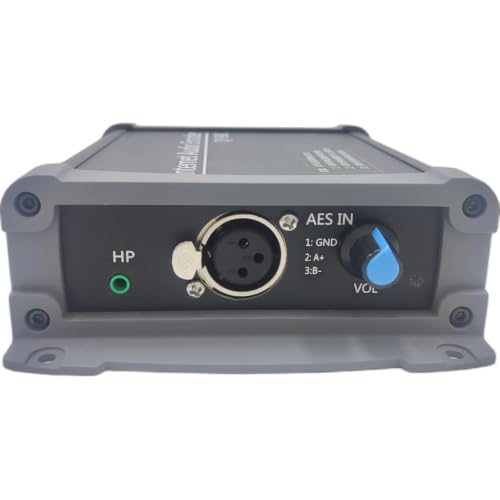
- 24-bit/48kHz balanced AES/EBU XLR I/O
- SRT, RTMP, RTP/TS/RTSP, and Icecast support
- Fanless design with fail-restart operation
Best For: Low-latency studio, broadcast, and REMI audio links
Network Music Playback

- Music-focused network audio component
- Works with headphones, speakers, and televisions
- USB Type-A connectivity and matte black finish
Best For: Dedicated music listening systems
Flexible Internet Audio Distribution

- SRT, RTMP, Icecast, RTP, and MPEG-TS support
- Auto-reconnect with remote web management
- RCA stereo input and headphone monitoring
Best For: Internet radio, churches, conferences, and distributed broadcasting
Precision Transport – Eversolo T8 Music Streamer Transport
The Eversolo T8 is a purpose-built digital transport for professionals who want flexible, high-resolution network audio streaming without adding an integrated amplifier. It supports services including TIDAL and Qobuz, plus Spotify Connect Lossless, Roon Ready, TIDAL Connect, and Qobuz Connect. Its isolated outputs, dual femtosecond clocks, and multiple digital interfaces make it especially suited to carefully built systems with a separate DAC.
Best For: Professionals assembling high-end digital audio systems around an external DAC, balanced AES/EBU connections, or specialized IIS compatibility.
Pros:
- Supports major streaming platforms and high-resolution, lossless playback.
- Dual femtosecond clocks and electrically isolated outputs target low-jitter, low-noise signal delivery.
- Offers IIS, coaxial, AES/EBU, USB Audio, and optical outputs, with eight IIS pinout configurations.
- Includes Wi-Fi 6, an isolated SFP network module, touchscreen controls, remote control, and app support.
Cons:
- SFP modules are sold separately and must match the selected SFP switch; SFP+ is not supported.
- It is a transport rather than a complete amplifier or speaker solution, so additional equipment is required.
The T8 stands out when connectivity, clocking, and electrical isolation matter more than simplicity. Its output variety and configuration options give professional users considerable system-matching flexibility.
Installation Amplifier – VSSL MA.1 Streaming Amplifier
The VSSL MA.1 combines network streaming with 140-watt-per-channel Class D amplification in a compact single-zone chassis. For professionals specifying network audio streamers for professionals, it offers practical integration features including HDMI eARC, Ethernet, analog, optical, coaxial, USB, AirPlay 2, Google Cast, Spotify Connect, and Bluetooth 5.3.
Best For: Custom installers and commercial or whole-home audio projects needing a compact streaming amplifier with control-system support.
Pros:
- Delivers 140W per channel at 4Ω or 8Ω in a slim, lightweight design.
- Supports AirPlay 2, Google Cast, Spotify Connect, Bluetooth 5.3 LE Audio, and Auracast.
- Provides HDMI eARC plus analog, optical, coaxial, USB, IR, and network inputs.
- Includes subwoofer output with adjustable crossover, five-band EQ, and drivers for major automation platforms.
Cons:
- This is a single-zone amplifier, so larger installations may require additional units.
- Its 1.6-inch profile prioritizes installation flexibility over extensive front-panel controls.
The MA.1 is a strong fit when streaming, amplification, and integration need to occupy one compact component. Its professional control support and broad input selection make it more installation-ready than a basic consumer streamer.
Clocked Network Transport – Eversolo T10 Music Streamer Transport
The Eversolo T10 is a premium digital transport built for demanding network audio streamers for professionals setups. Its octa-core platform, 8GB of DDR5 memory, 64GB of storage, OCXO clock, external master-clock inputs, and SFP, Ethernet, and Wi-Fi 6 connectivity are designed for stable high-resolution playback and system expansion.
Best For: Professional and enthusiast systems that need advanced clock synchronization, extensive DSP, and high-resolution streaming through an external DAC.
Pros:
- OCXO clock system supports stable timing, while 10MHz and 25MHz inputs allow external clock integration.
- Offers SFP fiber, Ethernet, and Wi-Fi 6 network connections.
- Provides 20 custom PEQ bands, 20 room-correction PEQ bands, FIR filter import, loudness compensation, and dynamic compression.
- Supports numerous services including TIDAL, Qobuz, HIGHRESAUDIO, Amazon Music, Deezer, and TuneIn Radio.
Cons:
- The SFP module is sold separately.
- Its large 365 × 310 × 88 mm chassis requires more rack or shelf space than a compact streamer.
- It requires a separate DAC because it is a digital transport.
The T10 is aimed at users who want clocking and DSP options beyond the usual network player. External-clock support and extensive room-tuning tools make it particularly adaptable in complex, professionally configured systems.
Headphone Network DAC – HIFIMAN Serenade Wireless DAC/Amp
The HIFIMAN Serenade combines network streaming, a HYMALAYA PRO R2R DAC, and a Class A headphone amplifier in one freestanding component. It supports Wi-Fi and wired LAN playback, along with coaxial and optical inputs, making it a practical option for professionals who need both headphone monitoring and balanced line-level output.
Best For: Headphone-focused listening stations, studio-style monitoring setups, and systems requiring balanced outputs with high-resolution network playback.
Pros:
- Supports network playback up to PCM 768kHz and DSD512, with USB support up to PCM 384kHz and DSD256.
- Includes balanced 4-pin XLR, 4.4mm, and 6.35mm headphone outputs.
- Provides XLR balanced and RCA single-ended outputs, plus coaxial, optical, USB, and LAN connections.
- Uses a HYMALAYA PRO R2R DAC and discrete Class A analog circuitry.
Cons:
- Its feature set is centered on headphone amplification, so it may be excessive for a simple speaker-only streaming system.
- Wireless and wired network playback depend on a suitable home or professional network.
The Serenade is differentiated by its combination of high-resolution network playback and substantial headphone connectivity. It makes the most sense where balanced headphone monitoring and flexible analog outputs are central requirements.
Flexible Hi-Fi Hub – DM100 Music Streamer
For professionals comparing network audio streamers for professionals, the HYFIOO DM100 stands out as a flexible Android-based transport with a touchscreen interface, broad format support, and several ways to access local and streaming music. Its digital outputs and other audio interfaces make it adaptable to an existing amplifier or active-speaker setup.
Best For: Users who want an expandable, touchscreen-controlled streamer for NAS, cloud, third-party streaming apps, and local high-resolution music.
Pros:
- 5.5-inch HDR touchscreen supports landscape or portrait orientation and adjustable brightness.
- Dual-band Wi-Fi 6, Bluetooth 5.4, AirPlay, and DLNA support provide flexible connectivity.
- Supports many formats, including DSD, DXD, WAV, FLAC, ALAC, MQA, and CUE files.
- Supports up to 4TB SSD expansion and can connect to external USB optical drives.
Cons:
- No GMS services are available, so apps that require GMS will not be supported.
- SSD expansion must not exceed 4TB.
- Some features, including the 31-band EQ, require a system upgrade.
The DM100 is a feature-rich choice when system flexibility and storage expansion matter more than a minimalist interface. Confirm app compatibility and your preferred output connections before buying.
Multi-Listener Broadcast – Express 5 Wi-Fi Audio
For venue operators seeking network audio streamers for professionals, the AudioFetch Express 5 is designed to distribute audio over Wi-Fi rather than serve as a conventional home music player. It supports multiple listeners, dual-band operation, and low stated latency for applications where synchronized, accessible audio is important.
Best For: Fitness clubs, sports bars, theaters, conventions, and other public spaces that need Wi-Fi audio broadcasting for many listeners.
Pros:
- Supports up to 100 simultaneous listeners and can expand to more than 10,000.
- Dual-band 2.4GHz or 5GHz Wi-Fi offers flexible deployment options.
- Provides one stereo channel or two mono audio channels.
- Approximately 115ms system audio latency supports near-real-time listening.
Cons:
- It is a broadcasting solution, not a general-purpose music streamer with built-in streaming-service access.
- Uses Wi-Fi 5 rather than a newer Wi-Fi generation.
- USB-C power may require a suitable power source in the installation location.
The Express 5 makes the most sense when the goal is to deliver a source to a large audience over Wi-Fi. Its value depends on having a suitable network environment and a clearly defined venue-audio use case.
Reference Streaming Control – EVERSOLO DMP-A10 Music Streamer
For high-end systems evaluating network audio streamers for professionals, the EVERSOLO DMP-A10 combines a streamer, DAC, and fully balanced preamplifier. Its ES9039PRO conversion platform, isolation system, room correction, and dual-subwoofer controls make it suited to demanding setups where signal quality and system integration are priorities.
Best For: High-end listeners and system builders who need streaming, DAC conversion, preamplification, room correction, and flexible subwoofer management in one component.
Pros:
- Combines music streaming, DAC, and preamplifier functions in a flagship component.
- Supports services including TIDAL, Qobuz, Amazon Music, TuneIn, and SoundCloud.
- ES9039PRO DAC, electrical isolation, and stated THD+N of -122dB and SNR of 130dB target low-noise playback.
- Room correction, balanced XLR/RCA inputs, and independent dual-subwoofer adjustments support advanced installations.
Cons:
- Its high-end feature set may be excessive for simple streaming-only systems.
- Subwoofer functionality is limited to PCM signals below 192kHz.
- Room correction requires analysis with a high-precision microphone.
The DMP-A10 is the most system-oriented option here, offering extensive control over conversion, preamplification, room response, and bass integration. It is best matched with a revealing, configurable audio system rather than a basic powered-speaker setup.
Professional AES Audio Link – AES XLR Audio Streamer
For professionals comparing network audio streamers for professionals, this AES/EBU encoder stands out as a dedicated hardware option for low-latency point-to-point or one-to-many streaming. Its balanced XLR interface, broad protocol support, and fanless design suit studio, broadcast, and live-production workflows.
Best For: Live streaming, REMI production, studio distribution, and professional IP audio links using balanced AES/EBU connections.
Pros:
- Balanced 24-bit/48kHz AES/EBU XLR input and output help support clean, noise-resistant digital audio.
- Supports SRT, RTMP, RTP/TS/RTSP, and Icecast for flexible network and internet delivery.
- SRT latency of approximately 200–500ms includes anti-packet-loss features for live applications.
- Fanless hardware, fail-restart, web controls, and front-panel operation support continuous use.
Cons:
- Maximum sample rate is limited to 48kHz.
- Its AES/EBU XLR workflow may require compatible professional audio equipment or adapters.
This is a focused choice when dependable hardware encoding and low-latency transport matter more than consumer music playback features. The included encoder-and-decoder approach also makes dedicated point-to-point setups straightforward.
Network Music Playback – Cocktail Audio N15 Streamer
The Cocktail Audio N15 is a network music streamer for professionals who need a dedicated audio component for connecting headphones, speakers, or a television. Its compact black design and USB Type-A connectivity make it a straightforward fit for music-focused listening systems.
Best For: Music playback setups that connect to headphones, speakers, or a television.
Pros:
- Designed specifically for music use rather than general-purpose video streaming.
- Compatible with headphones, speakers, and televisions.
- Includes a USB Type-A connector.
- Compact 4.8-pound component with a matte black finish.
Cons:
- The supplied specifications identify one USB Type-A port but do not list additional networking or output details.
- The notes do not specify supported streaming services, audio formats, or maximum sample rate.
Choose the N15 when your priority is a dedicated network music component and the listed device compatibility matches your system. Buyers needing detailed protocol, input, or output specifications should verify those requirements before purchase.
Flexible Internet Audio Distribution – IP Audio Encoder
This IP audio encoder is a practical option for professionals evaluating network audio streamers for professionals across internet radio, program distribution, conference rooms, and remote broadcasting. RCA stereo input, headphone monitoring, auto-reconnect, and remote management make it well suited to unattended network audio transmission.
Best For: Churches, radio stations, conference facilities, emergency systems, surveillance audio, and multi-location broadcasting.
Pros:
- Supports SRT, RTMP, Icecast, RTP, and MPEG-TS protocols with OPUS, AAC, AAC-HE, MP3, and MP2 encoding.
- Auto-reconnect helps restore streams after network interruptions.
- Offers stereo RCA input, headphone monitoring, Ethernet, USB, and 12V DC power.
- Web-based HTTP+JSON management supports remote configuration, VPN connectivity, and cross-segment LAN transmission.
Cons:
- It is audio-only and does not provide video encoding.
- Sampling is limited to 48kHz, with bitrate adjustment from 24Kbps to 256Kbps.
- The supplied notes do not identify a specific software-update schedule.
Its strongest advantage is operational flexibility: the encoder can stream directly without a public IP or self-built media server while retaining remote controls and monitoring. It is a good fit for distributed audio systems where reconnection and management are important.
How We Picked the Best Network Audio Streamers for Professionals
We compared these Network Audio Streamers for Professionals by looking at their intended role, connection options, streaming support, control interfaces, conversion hardware, and installation flexibility. The selection includes high-end transports and DAC-equipped units for critical listening, integrated amplification for simpler zones, and dedicated encoders for broadcasting or IP-based distribution.
We also considered practical factors such as wired and wireless networking, digital and analog outputs, app or touchscreen control, room-correction support, remote operation, and compatibility with services such as Tidal, Qobuz, Spotify, AirPlay, and Google Cast. Because professional systems vary widely, the best choice depends on whether you are feeding a reference playback chain, driving speakers directly, or sending audio across a network.
Quick Comparison
- Best for high-end transport: Eversolo T8 or T10, particularly when paired with an external DAC.
- Best for an integrated zone: VSSL MA.1, with streaming, amplification, and HDMI eARC in one chassis.
- Best for headphone-focused listening: HIFIMAN Serenade, combining network playback, DAC conversion, and a Class A headphone amplifier.
- Best for a touchscreen interface: DM100, with Android 14, a 5.5-inch display, and expandable storage.
- Best for IP audio workflows: AES Audio Encoder or IP Audio Encoder, depending on the required protocol and connector configuration.
- Best for compact broadcasting: Express 5, designed for smaller Wi-Fi audio distribution setups.
- Best for a feature-rich digital front end: EVERSOLO DMP-A10, with preamp functions, room correction, isolation, and a high-end DAC.
- Best for network music library playback: Cocktail Audio N15, suited to users who want a dedicated network music component.
Key Buying Factors for Network Audio Streamers for Professionals
System Role and Signal Path
First decide whether you need a transport, DAC, preamp, amplifier, headphone component, or encoder. A transport is appropriate when your existing DAC is preferred; a DAC or preamp can simplify a two-channel system; an amplifier reduces the number of components in a powered zone. Broadcast encoders serve a different purpose and should be judged by protocol support, input format, and stream stability.
Connectivity and Network Reliability
Check for Ethernet if the system is mission-critical, then verify Wi-Fi standards, band support, and placement requirements. Review every required input and output, including USB, coaxial, optical, balanced XLR, analog RCA, HDMI eARC, and headphone connections. A streamer with excellent specifications is still a poor fit if it needs adapters or lacks a key interface.
Formats, Services, and Control
Confirm support for your preferred services, high-resolution formats, gapless playback, local libraries, and multiroom platforms. Touchscreens are useful for standalone operation, while dependable apps and remote-control integration matter more in installed systems. For IP audio, verify whether the device supports the exact RTMP, SRT, Icecast, RTP, or TS workflow you use.
Conversion, Clocking, and Room Integration
Critical listening systems may benefit from advanced DAC architecture, clocking, electrical isolation, balanced outputs, and room correction. These features matter most when the rest of the chain is equally revealing and properly configured; they should not replace basic requirements such as stable networking and suitable outputs.
Who Should Buy Which Network Audio Streamers for Professionals?
Choose the Eversolo T8 or T10 if you want a dedicated transport for a serious external-DAC system. Select the DMP-A10 if you need a more complete preamp and DAC hub with room correction. The VSSL MA.1 is the practical choice for a single-zone installation where amplification and streaming should share one component.
Headphone listeners should consider the HIFIMAN Serenade, while users prioritizing touchscreen control may prefer the DM100. Cocktail Audio’s N15 fits dedicated network-library playback. For streaming audio over IP, choose the AES Audio Encoder or IP Audio Encoder only after confirming connector and protocol requirements; the Express 5 is better suited to compact, straightforward wireless broadcasting setups.