Choosing the right thermal imager can make inspections faster, safer, and far more accurate. For contractors, electricians, facility teams, and technicians, the best model depends on resolution, temperature range, and how easily it fits your workflow.
This roundup highlights 10 professional thermal imaging cameras worth comparing in 2026, from compact jobsite tools to advanced units built for demanding diagnostics.
Best 10 Professional Thermal Imaging Cameras Picks for 2026
Commercial Pick
FLIR E6-XT WiFi Thermal Camera

- 240 × 180 thermal resolution
- MSX image detail enhancement
- FLIR Ignite Cloud workflow support
Best For: Commercial users needing a practical handheld thermal camera
Inspection Value

- 27Hz thermal imager
- Professional Fluke inspection tool
- Limited supplied spec details
Best For: Inspectors who prefer a Fluke thermal imager
Premium Detail
FLIR E96 640x480 Thermal Camera

- 640 x 480 thermal resolution
- Interchangeable auto-calibrating lenses
- Built-in reporting and voice annotation
Best For: Advanced inspections that need high-resolution imaging
High-Resolution Choice
UTi740H Professional Thermal Camera

- 384 x 288 IR resolution
- 4.3-inch IPS display
- NETD ?60mK sensitivity
Best For: Professionals wanting a higher-resolution handheld thermal camera
Flagship inspection tool
FLIR E54 320x240 Thermal Camera
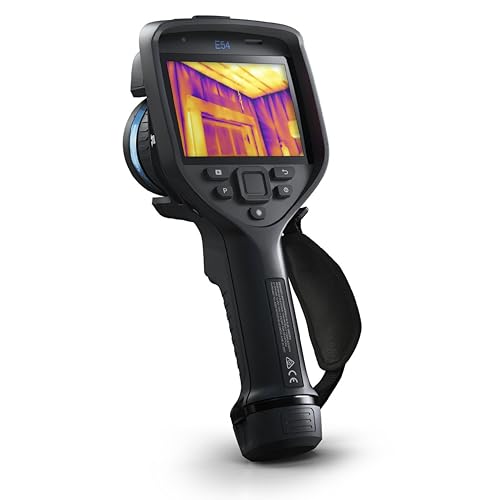
- 320 x 240 IR resolution with MSX enhancements
- 4" touchscreen and 24-degree field of view
- METERLiNK supports compatible FLIR meter data
Best For: Technicians needing detailed inspections and data-linked reporting
Pocket-friendly thermal scanner

- TISR enhances 128 x 128 to 240 x 240
- 25Hz refresh with 40 x 30 field of view
- 15-hour runtime plus IP54 and 2-meter drop protection
Best For: Portable everyday inspections and quick alert-based troubleshooting
AI-assisted diagnostic camera

- Super resolution boosts 256 x 192 to 640 x 480
- Dual IR and visual cameras with 4 image modes
- Wi-Fi sharing and AI scene detection tools
Best For: Inspectors wanting detailed thermal imaging with visual comparison
Portable Inspection Pick
FOXWELL RT280 Thermal Imaging Camera

- 320×240 LCD with TISR-enhanced thermal detail
- Measures -4°F to 1022°F with high/low alarms
- Built-in 8GB storage for over 20,000 images
Best For: Field inspections, electrical checks, and automotive diagnostics
Best Value Features
Klein Tools TI250 Rechargeable Thermal Imaging Camera

- Over 19,200 pixels for spotting hot and cold areas
- Adjustable emissivity from 0.01 to 0.99
- USB-C capture plus rechargeable lithium-ion battery
Best For: General troubleshooting and quick temperature checks
Connected Workflow Choice
Flir E5 Pro Thermal Imaging Camera

- 160×120 thermal resolution with MSX enhancement
- WiFi and FLIR Ignite Cloud for sharing and storage
- Measures -4°F to 752°F with OTA updates
Best For: Cloud-connected inspections and fault finding
Commercial Pick – FLIR E6-XT WiFi Thermal Camera
If you are comparing professional thermal imaging cameras for fast troubleshooting, the FLIR E6-XT is built around practical field use. It offers 240 × 180 thermal resolution, MSX technology for clearer image context, and a temperature range that covers common commercial inspection tasks.
Best For: Commercial users who want a handheld thermal camera with cloud workflow support and easy-to-read thermal images.
Pros:
- 240 × 180 thermal resolution for detailed inspections
- MSX technology helps add visual detail to thermal images
- FLIR Ignite Cloud support for storing, editing, and sharing images
- Rechargeable Li-Ion battery for repeated field use
Cons:
- Lower resolution than FLIR’s higher-end models
- Single-camera workflow may be less advanced than multi-lens systems
The E6-XT focuses on the essentials that matter in day-to-day diagnostics: readable images, cloud connectivity, and a temperature range suited to many commercial jobs. For users who want a straightforward FLIR tool without stepping into premium hardware, it is a balanced option.
Inspection Value – Fluke TiS55+ Thermal Imager
The Fluke TiS55+ is a professional thermal imaging camera option aimed at inspection work where a trusted brand and a 27Hz imager matter. While the supplied details are limited, it clearly fits into a serious thermal workflow for users comparing hands-on diagnostic tools.
Best For: Inspectors who want a Fluke thermal imager for professional diagnostic work.
Pros:
- Fluke thermal imager from a well-known inspection brand
- 27Hz thermal imaging for responsive viewing
- Positioned for professional inspection use
Cons:
- Supplied notes do not list resolution or temperature range
- Limited feature detail makes direct comparison harder
If you already prefer Fluke in the field, the TiS55+ is a straightforward candidate for thermal inspection workflows. The main drawback is the lack of detailed specs in the supplied information, so buyers may want to verify the exact feature set before choosing.
Premium Detail – FLIR E96 640×480 Thermal Camera
FLIR E96 Advanced Thermal Imaging Camera with 24° + 14° Lens, 640x480, -20°C to +1500°C
Check Price On AmazonFor buyers focused on professional thermal imaging cameras with more detail and flexibility, the FLIR E96 sits at the premium end of the lineup. Its 640 x 480 thermal resolution, multiple lens options, and advanced image processing are built for demanding inspection work.
Best For: Advanced users who need high-resolution thermal imaging, interchangeable lenses, and reporting tools.
Pros:
- 640 x 480 thermal resolution with 307,000 non-contact measurement points
- MSX, UltraMax, and adaptive filtering for clearer image output
- Interchangeable, auto-calibrating lenses for different inspection angles
- Built-in mic and report generation features for workflow support
Cons:
- Likely more complex than entry-level handheld cameras
- Premium feature set may be more than casual users need
The E96 is designed for users who need strong image clarity and flexible field use across electrical, mechanical, and building-envelope inspections. Its combination of resolution, lens options, and reporting support makes it the most capable option in this group.
High-Resolution Choice – UTi740H Professional Thermal Camera
The UTi740H is a professional thermal imaging camera built around a 384 x 288 pixel IR sensor, a 4.3-inch IPS display, and a wide-enough field of view for inspection work. It is aimed at users who want stronger thermal detail than basic models without moving into the highest-end class.
Best For: Professionals who want a higher-resolution handheld thermal camera with a large display.
Pros:
- 384 x 288 IR resolution for improved thermal detail
- 28° x 21° field of view for inspection coverage
- NETD ?60mK for sensitivity-focused measurement
- 4.3-inch IPS display for easier viewing
Cons:
- Supplied notes do not include temperature range
- Feature set is narrower than top-tier systems with lenses and reporting tools
The UTi740H stands out as a solid middle-ground option when image clarity and display size matter. Based on the provided specifications, it is best suited to professionals who want a capable thermal camera for regular inspection tasks.
Flagship inspection tool – FLIR E54 320×240 Thermal Camera
If you want a professional thermal imaging camera for detailed electrical, moisture, and general inspection work, the FLIR E54 is built around a 320 x 240 infrared sensor, MSX visual enhancement, and a 4″ touchscreen for clear on-site analysis. Its 24-degree field of view and METERLiNK support make it a practical fit for technicians who need thermal data plus linked meter readings in one workflow.
Best For: Technicians who want a higher-end FLIR camera for inspections where image detail and data integration matter.
Pros:
- 320 x 240 infrared resolution with FLIR MSX visual enhancements
- 4″ touchscreen LCD for easier review in the field
- METERLiNK can embed data from select FLIR meters into IR images
- 24-degree field of view for versatile inspection use
Cons:
- Priced and positioned as a more advanced professional model
- Wider-use strengths may be more than casual users need
Overall, the E54 is the strongest fit when your workflow depends on clear thermal imagery and organized documentation. It offers the kind of feature set that supports serious troubleshooting rather than basic spot-checking.
Pocket-friendly thermal scanner – TOPDON TC004 Mini 240×240
The TOPDON TC004 Mini is a compact option for professional thermal imaging cameras when you need quick checks for homes, electrical systems, underfloor heating, or leak detection. It starts at 128 x 128 and uses TISR enhancement to reach 240 x 240 resolution, while the 40 x 30 field of view and 25Hz refresh rate keep the image smooth and easy to interpret.
Best For: Users who want a portable inspection camera for everyday troubleshooting and fast temperature alerts.
Pros:
- TISR boosts thermal imaging from 128 x 128 to 240 x 240
- 25Hz refresh rate and 40 x 30 field of view for smooth viewing
- Automatic photo capture when preset temperature levels are exceeded
- Long 15-hour runtime with IP54 rating and 2-meter drop protection
Cons:
- No charging head is included
- Built-in storage is limited to 512MB eMMC
For compact inspections, the TC004 Mini covers a lot of practical ground without taking up much space. Its combination of alerts, long runtime, and rugged portability makes it useful for frequent field use.
AI-assisted diagnostic camera – HSFTOOLS F2VW 640×480
Among professional thermal imaging cameras, the HSFTOOLS F2VW stands out for its 640 x 480 super-resolution output, dual IR and visual cameras, and AI-driven scene tools. It upgrades from a 256 x 192 detector and adds 25Hz viewing, Wi-Fi sharing, and multiple image modes, making it a strong choice when you need more context around labels, edges, and suspect hotspots.
Best For: Inspectors who want enhanced thermal detail plus visual comparison and wireless image sharing.
Pros:
- Live AI super resolution lifts imaging from 256 x 192 to 640 x 480
- Built-in visual camera with Visual, Thermal, Fusion, and PIP modes
- Wi-Fi support for sharing images to a smartphone or tablet
- AI scene detection plus high/low alarms and multiple measurement points
Cons:
- 3.2″ LCD is smaller than some larger-screen inspection cameras
- Feature set may be more than basic users need
This model is well suited to users who want more than a basic heat map and value detail, comparison, and easy file transfer. The combination of super-resolution and visual imaging gives it a strong troubleshooting edge.
Portable Inspection Pick – FOXWELL RT280 Thermal Imaging Camera
If you’re comparing professional thermal imaging cameras for hands-on diagnostics, the FOXWELL RT280 focuses on usable detail, quick temperature checks, and field durability. Its 320×240 LCD, TISR-enhanced thermal resolution, and 25Hz refresh rate make it a practical choice for spotting hotspots, insulation issues, and mechanical faults.
Best For: Electrical, HVAC, plumbing, automotive, and general inspection work where clear thermal detail matters.
Pros:
- 320×240 LCD with TISR boosting effective resolution to 240×180 for finer thermal detail.
- Measures from -4°F to 1022°F with high/low alarms and auto-detected temperature points.
- Windows PC software supports point, line, and area analysis plus report generation.
- Built-in 8GB eMMC storage holds over 20,000 images and videos.
Cons:
- PC analysis software is not compatible with Mac.
- Frame rate is 25Hz, which is adequate but not the fastest option.
- Best suited to inspection tasks rather than high-end imaging workflows.
The RT280 is built for practical inspections rather than flashy extras, and that makes it easy to recommend for users who want a rugged, well-rounded tool. With strong storage, useful alerts, and portable IP54 protection, it covers the core needs of a field-ready thermal imager.
Best Value Features – Klein Tools TI250 Rechargeable Thermal Imaging Camera
For buyers shopping professional thermal imaging cameras with straightforward controls and practical measurement tools, the Klein Tools TI250 offers a balanced feature set. It combines over 19,200 pixels, adjustable emissivity, and temperature alarms with rechargeable power for everyday troubleshooting.
Best For: Users who want a compact thermal imager for general troubleshooting, surface-by-surface temperature checks, and easy image sharing.
Pros:
- Over 19,200 pixels for accurate hot and cold spot detection.
- Adjustable emissivity from 0.01 to 0.99 helps improve readings across different materials.
- Settable high/low alarms from -4°F to 752°F support fast monitoring.
- Rechargeable lithium-ion battery and USB-C storage/sharing add convenience.
Cons:
- Only three color palettes, so visualization options are limited.
- No advanced cloud workflow or PC analysis features are listed.
- Lower temperature ceiling than some more inspection-focused models.
The TI250 is a sensible pick when you want a capable thermal imager without unnecessary complexity. It covers the essentials well, especially if emissivity control and USB-C convenience matter in your day-to-day troubleshooting.
Connected Workflow Choice – Flir E5 Pro Thermal Imaging Camera
If you want professional thermal imaging cameras with a more connected workflow, the FLIR E5 Pro adds WiFi and cloud storage to a proven handheld IR camera. Its 160×120 resolution, MSX image enhancement, and Ignite Cloud support make it practical for finding faults and organizing images efficiently.
Best For: Inspectors who want thermal capture, cloud sharing, and software updates built into the workflow.
Pros:
- 160×120 thermal resolution with MSX for sharper, easier-to-read images.
- FLIR Ignite Cloud can store, edit, and share images automatically.
- WiFi connectivity and OTA updates support a modern workflow.
- Measures from -20°C to 400°C (-4°F to 752°F) with a solid 2-10 warranty.
Cons:
- Resolution is lower than some higher-detail inspection cameras.
- Feature set is centered on workflow rather than advanced manual analysis tools.
- Best suited to general troubleshooting rather than ultra-fine thermal inspection.
The E5 Pro stands out when connectivity matters as much as capture quality. For teams or solo users who want easier sharing and cloud-based organization, it offers a clean, efficient inspection experience.
How We Picked the Best Professional Thermal Imaging Cameras
We focused on practical inspection performance rather than marketing claims. Key factors included infrared resolution, temperature span, thermal sensitivity, image clarity, ergonomics, connectivity, and whether the camera supports real-world maintenance, electrical, HVAC, or building-envelope work.
Quick Comparison
For everyday troubleshooting, mid-range models usually offer the best balance of price and capability. If you need precise analysis, long-distance viewing, or documentable reporting, higher-resolution Professional Thermal Imaging Cameras are the better fit. Compact cameras can still be useful for basic spot checks, but they typically trade away detail, lens flexibility, or advanced measurement tools.
Key Buying Factors for Professional Thermal Imaging Cameras
Resolution and Image Detail
Higher infrared resolution helps you distinguish small hot spots, weak connections, air leaks, and insulation issues. If you inspect from farther away or need sharper reports, prioritize more pixels and better thermal contrast.
Temperature Range and Accuracy
Make sure the camera covers the temperatures you actually inspect. Electrical, industrial, and HVAC applications can require very different upper limits. Accuracy matters just as much as range when you need repeatable readings.
Measurement Tools and Software
Look for spot meters, min/max tracking, area analysis, and image documentation features. Wi-Fi, cloud syncing, and reporting software can save time for teams that need to share findings quickly.
Lens, Field of View, and Usability
A wider field of view helps with close-range building scans, while tighter optics can be better for distant targets. Also consider screen size, battery life, ruggedness, and how easy the controls are to use with gloves.
Who Should Buy Which Professional Thermal Imaging Cameras?
Facilities and maintenance teams should favor a balanced model with solid resolution, dependable temperature measurement, and easy image capture. Electricians and industrial users may want higher sensitivity and a broader range for detecting overloaded components. HVAC and building professionals often benefit from cameras with good MSX or visual-image blending, since it improves context and speeds up diagnostics. If you only need occasional spot checks, a compact entry-level option may be enough, but frequent users should invest in a more capable model for better long-term value.
In short, the best choice depends on how much detail you need, how far you inspect, and how you plan to document results. Focus on the features that improve decision-making in the field, not just the biggest spec sheet numbers.