Long coding sessions are easier on your body when your desk fits your workflow. The best standing desks for programmers help you switch positions, keep monitors at the right height, and reduce clutter.
In this roundup, we focus on desks that balance stability, surface space, load capacity, and useful features like memory presets and built-in power options.
Best 10 Standing Desks for Programmers Picks for 2026
Compact Starter Pick
ErGear 48 x 24 Electric Standing Desk

- Compact 48 x 24 inch desktop
- 4 memory presets with one-touch control
- Stable steel frame, 176 lb capacity
Best For: Programmers needing a smaller electric desk for a clean home office setup
Roomy Value Pick
DUMOS 63 Inch Electric Standing Desk

- Wide 63-inch desktop for multi-monitor setups
- Quiet motor with 3 memory presets
- Tool-free assembly in about 30 minutes
Best For: Coders who need a large, organized desk for dual monitors and accessories
Most Stable Option
FLEXISPOT 71 x 32 4-Leg Standing Desk
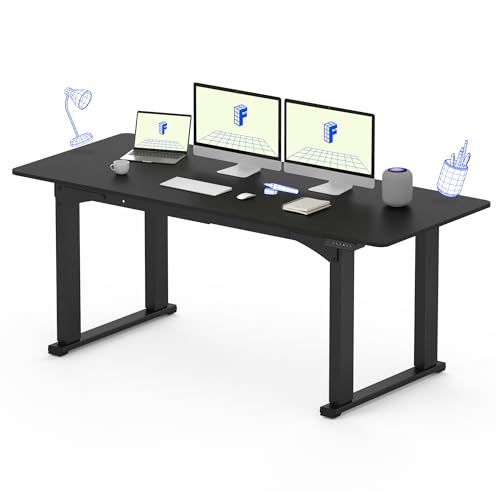
- 4-leg frame for added stability
- Large 71 x 32 inch workspace
- 220 lb capacity with memory controller
Best For: Developers with heavy, multi-monitor setups who prioritize stability
Best Deep Work Desk
Grandder 55x32 Extra-Deep Standing Desk

- Extra-deep 31.5-inch desktop
- Fits 49-inch ultrawide or dual monitors
- Quiet motor with anti-collision protection
Best For: Programmers who need extra depth for an ergonomic monitor and keyboard layout
Best for Easy Setup
FEZIBO 48x24 Electric Standing Desk

- 28.3"-46.5" electric height range
- 3 memory presets and quiet operation
- Supports up to 176 lbs in a compact size
Best For: Programmers needing a smaller electric desk for everyday coding
Executive Workspace Upgrade
OffiGo 71" Electric Standing Desk

- Spacious 71" desktop for multi-device setups
- Built-in AC, USB-A, and Type-C ports
- 3 presets with a 29.1"-48" height range
Best For: Programmers who need a large, organized workstation with built-in power
Heavy-Duty Value Pick
DeskShow 60x28 Electric Standing Desk

- Double-beam frame supports up to 220 lbs
- Deep 60 x 28 inch desktop for bigger setups
- 3 memory buttons with quiet electric lift
Best For: Programmers with heavier multi-device setups who want maximum stability
Premium Extra-Large Dual Motor
79x31 Dual Motor Standing Desk

- 79" x 31" desktop for multi-monitor setups
- Quiet dual motors with 4 memory presets
- Supports up to 198 lbs with a 28.3"-47.6" range
Best For: Large coding setups that need extra room and smooth height changes
Compact Power Hub
47 Inch Standing Desk with Outlets

- Built-in 4 AC, USB, and USB-C charging
- Quiet motor runs under 35 dB
- 220 lb capacity with 4 memory presets
Best For: Small home offices that need charging built into the desk
Stable Wide Workstation

- 71" x 37" top with deep multi-screen space
- Dual crossbeam frame for stronger stability
- 18W USB-C port and 3 memory presets
Best For: Deep, stable setups for multi-monitor programming
Compact Starter Pick – ErGear 48 x 24 Electric Standing Desk
If you want standing desks for programmers without taking over a small room, this 48 x 24 inch ErGear model is a practical fit. It gives you smooth electric height changes, memory presets, and a stable steel frame in a compact footprint that works well for coding sessions, light gaming, and everyday home-office use.
Best For: Programmers who want a compact, budget-friendly electric desk with memory presets and solid stability.
Pros:
- 28.35″ to 46.46″ height range supports sit-to-stand work.
- 4 memory presets make it easy to return to preferred coding positions.
- Heavy-duty steel frame is tested for 100,000 lift cycles.
- 176 lb capacity suits a typical monitor-and-laptop setup.
Cons:
- 48 x 24 inch top is smaller than some dual-monitor desks.
- Assembly is required.
This is a strong choice if you value reliability and simple one-touch adjustment over a huge desktop. It covers the essentials programmers usually need: stable support, saved heights, and a clean, no-fuss workspace.
Roomy Value Pick – DUMOS 63 Inch Electric Standing Desk
For programmers who want more surface area, this DUMOS model is one of the more practical standing desks for programmers in a large home-office setup. The 63-inch top makes room for multiple monitors and accessories, while the quiet motor, preset heights, and cable-management extras help keep the desk usable during long work sessions.
Best For: Coders who need a wide desktop for dual monitors and a tidy workspace.
Pros:
- 63-inch desktop provides plenty of room for monitors, laptop, and peripherals.
- Near-silent motor runs under 50 dB for low-distraction adjustments.
- 3 memory presets simplify switching between sitting and standing heights.
- Tool-free assembly is designed to take about 30 minutes.
Cons:
- White finish may not match every setup.
- Uses a splice board desktop design.
If your coding setup keeps growing, this desk gives you the space to stay organized without giving up ergonomic adjustment. It is a sensible pick for developers who want a bigger work surface with straightforward setup and dependable stability.
Most Stable Option – FLEXISPOT 71 x 32 4-Leg Standing Desk
If stability is your top priority, this FLEXISPOT model stands out among standing desks for programmers thanks to its 4-leg frame and high-load design. The extra-wide 71 x 32 inch surface gives you plenty of room for a full coding setup, and the memory controller plus electric height adjustment make it easy to change positions during the day.
Best For: Developers who want maximum stability and a large desktop for heavy workstation setups.
Pros:
- 4-leg frame is designed for better stability and durability.
- 220 lb weight capacity supports heavier equipment.
- 71 x 32 inch desktop offers a spacious work area.
- 28.7″ to 47.2″ height range with memory control.
Cons:
- Assembly is required.
- Control panel note says the three height keys need to be pressed while in use.
- Not compatible with casters or under-desk drawers.
This is the best fit if your desk holds multiple monitors, accessories, or heavier gear and you do not want wobble to be part of the experience. The tradeoff is a more specialized setup, but the stability and size make it easy to justify for serious desktop users.
Best Deep Work Desk – Grandder 55×32 Extra-Deep Standing Desk
For programmers who like a monitor placed at a comfortable viewing distance, this Grandder model is a smart pick among standing desks for programmers. Its extra-deep 31.5-inch desktop helps position an ultrawide or dual-monitor setup more naturally, while the electric height adjustment, anti-collision protection, and stable steel frame support long coding sessions.
Best For: Coders who want an extra-deep desktop for an ultrawide or dual-monitor setup.
Pros:
- 31.5-inch depth gives more ergonomic monitor distance.
- Designed for 49″ ultrawide and dual-monitor setups.
- 2 memory presets make height changes quick and simple.
- Quiet operation under 45 dB with anti-collision safety.
Cons:
- Only 2 memory presets, fewer than some rivals.
- Assembly is required.
- 55-inch width is smaller than larger workstation desks.
This desk makes sense if your setup benefits more from depth than sheer width, especially with a large monitor or a close keyboard-and-mouse layout. It is a thoughtful ergonomic choice for developers who want room to work without crowding the front edge of the desk.
Best for Easy Setup – FEZIBO 48×24 Electric Standing Desk
For programmers who want a straightforward entry into standing desks for programmers, this FEZIBO model covers the essentials without taking over a small office. It offers one-touch electric height adjustment, three memory presets, and a compact 48 x 24 inch footprint that works well for coding setups, study spaces, and home offices.
Best For: Programmers who need a space-saving electric desk with simple height presets and a stable everyday build.
Pros:
- Electric height range from 28.3″ to 46.5″ with 3 memory presets for quick sit-stand changes.
- Reinforced steel frame supports up to 176 lbs for a steady workspace.
- Quiet operation under 45dB and tested for up to 50,000 lift cycles.
- Most parts come pre-assembled, with setup claimed in about 30 minutes.
Cons:
- Smaller 48 x 24 inch desktop may feel tight for larger multi-monitor coding setups.
- Weight capacity is lower than heavier-duty desks in this roundup.
- Splice-board desktop may be less appealing if you want a single-piece top.
This is a practical pick if you want an affordable-feeling, compact standing desk that focuses on convenience and steady day-to-day use. It is best suited to programmers who value a clean setup, simple controls, and a smaller footprint over maximum surface area.
Executive Workspace Upgrade – OffiGo 71" Electric Standing Desk
If you want standing desks for programmers with more room for monitors, notes, and peripherals, this OffiGo model is built around a large 71 inch desktop. It combines electric sit-stand adjustment, three memory presets, and built-in power so a busy workstation stays organized and easy to use.
Best For: Programmers who want a spacious executive-style desk with integrated charging and a more organized multi-device layout.
Pros:
- Large 71 x 27.6 inch desktop gives plenty of space for multiple monitors and work essentials.
- Built-in power setup includes 3 AC outlets, 2 USB-A ports, and 2 Type-C ports.
- 3 memory presets and a 29.1″ to 48″ height range support quick ergonomic changes.
- Dual-beam frame and thick desktop are designed for improved stability during lifting.
Cons:
- Desktop is not designed for monitor arm mounting, so standard monitor stands are recommended.
- Rated load capacity of 154 lbs is solid, but not the highest here.
- Larger footprint may be overkill for tight rooms or minimal setups.
This desk makes sense if your programming setup is device-heavy and you want fewer cables and chargers cluttering the surface. It leans more toward a polished workstation than a compact home-office solution.
Heavy-Duty Value Pick – DeskShow 60×28 Electric Standing Desk
For programmers who want a sturdier feel in standing desks for programmers, this DeskShow model stands out with its reinforced double-beam frame and 220 lb load rating. The 60 x 28 inch top also gives you more depth than many basic desks, which is helpful for monitors, a laptop, and accessories.
Best For: Programmers who want a deep, stable standing desk with a higher weight capacity for heavier setups.
Pros:
- Heavy-duty double-beam frame and 2.5mm steel base support up to 220 lbs.
- Extra-deep 60 x 28 inch desktop provides generous room for coding gear and accessories.
- Electric height range from 27.95″ to 45.67″ with 3 memory buttons.
- Quiet motor under 45dB and pre-drilled holes for faster setup.
Cons:
- No drawer included, so storage is limited to hooks and cable tray accessories.
- Maximum height is lower than some taller standing-desk options.
- Heavier build may be less ideal if you want a lighter, more compact desk.
This is the strongest all-around option if stability and desk depth matter most. It suits programmers who keep multiple devices on the desk and want a robust platform that feels built for long-term use.
Premium Extra-Large Dual Motor – 79×31 Dual Motor Standing Desk
If you want one of the more spacious standing desks for programmers, this 79″ x 31″ model gives you room for multiple monitors, a keyboard, and the accessories that tend to pile up during a long coding day. The dual-motor lift should also appeal if you care about smooth height changes and a quiet workspace.
Best For: Programmers who need an oversized, stable workstation for multi-monitor coding and mixed work/gaming use.
Pros:
- Large 79″ x 31″ desktop leaves plenty of room for multiple monitors and gear.
- Dual motors operate quietly, with noise listed under 50 dB.
- Supports up to 198 lbs and offers a 28.3″ to 47.6″ height range.
- Includes 4 memory presets for quick sit-stand changes.
Cons:
- Arrives in two packages, which may not show up at the same time.
- Larger footprint may be more desk than a compact office needs.
This is a strong pick if your priority is workspace volume and a smooth electric lift rather than a small footprint. The included keyboard tray and monitor arm also make it easier to build a more ergonomic programming setup.
Compact Power Hub – 47 Inch Standing Desk with Outlets
This is a practical choice among standing desks for programmers who want a compact work surface with built-in charging. The 47″ x 24″ top is small enough for tighter rooms, while the integrated power station and cable manager help keep a coding setup cleaner and easier to use.
Best For: Programmers in smaller home offices who want built-in outlets, USB-C charging, and simple sit-stand switching.
Pros:
- Built-in charging station includes 4 AC outlets, 1 USB port, and 1 Type-C port.
- Quiet motor runs under 35 dB for low-noise adjustments.
- 4 memory presets and a digital screen make height changes easy and precise.
- Steel frame is rated up to 220 lbs and tested over 60,000 lift cycles.
Cons:
- 47″ x 24″ desktop is smaller than more expansive programming desks.
- Better suited to a streamlined setup than a heavily loaded multi-monitor station.
For programmers who value convenience and cable control, this desk covers the basics well. It combines charging, stability, and quiet movement in a size that fits apartments, bedrooms, or modest office spaces.
Stable Wide Workstation – 71×37 FEZIBO Standing Desk
If you build long coding sessions around multiple screens, this is one of the more capable standing desks for programmers in the lineup. The 71″ x 37″ top gives you serious depth for monitors and peripherals, while the dual-beam frame is designed to reduce wobble at full height.
Best For: Programmers who want a wide, deep desk for multi-monitor coding, gaming, or a home workstation.
Pros:
- Extra-large 71″ x 37″ desktop provides generous space for multi-screen setups.
- Dual crossbeam frame is built for improved stability and supports up to 220 lbs.
- Quiet motor adjusts from 28.3″ to 46.5″ and includes 3 preset heights.
- Built-in 18W USB-C port adds convenient device charging.
Cons:
- Large footprint may not fit smaller desks or rooms comfortably.
- Split delivery in two packages can mean parts arrive separately.
For programmers who prioritize stability and workspace depth, this FEZIBO model stands out. The thick desktop, monitor-arm-friendly design, and fast assembly approach make it especially appealing for a serious desk setup.
How We Picked the Best Standing Desks for Programmers
We prioritized Standing Desks for Programmers that can handle everyday development gear: one or more monitors, a laptop, a dock, speakers, and cable-heavy accessories. We looked for stable frames, dependable lift systems, practical desktop sizes, and controls that make height changes quick during a workday.
We also considered features that matter in real use, such as memory presets, thicker desktops, cable management, outlet integration, and weight capacity. For most programmers, the best desk is not just the tallest or fastest one; it is the one that stays steady while typing and supports your full setup without feeling cramped.
Quick Comparison
Smaller desks can work well for laptop-first setups or compact home offices, while wider and deeper models are better for dual monitors, ultrawide displays, and docked workstations. If you need flexibility, look for memory presets and a height range that supports both seated and standing ergonomics.
Deep desktops are especially useful for programmers because they create better viewing distance from large screens. Heavier frames and dual-beam or multi-leg designs are usually the safer bet if you use monitor arms or keep a lot of equipment on the surface.
Key Buying Factors for Standing Desks for Programmers
Stability
Typing and mouse movement can expose wobble quickly. A stable frame matters more than flashy features, especially if you use multiple monitors, monitor arms, or a mechanical keyboard.
Desktop Size and Depth
For coding, depth is often as important as width. A deeper surface improves screen distance and helps reduce eye strain. Wide desktops are better if you run dual monitors or want space for notebooks and peripherals.
Height Range and Presets
Make sure the desk adjusts high enough for standing comfort and low enough for seated ergonomics. Memory presets are useful if you switch positions often throughout the day.
Load Capacity and Build
Check the listed weight capacity against your actual setup, including monitors, mounts, PC towers, and accessories. A higher-rated frame usually offers more confidence over time.
Power and Cable Management
Integrated outlets, USB ports, and cable routing can simplify a programmer’s workspace and reduce desk clutter. If the desk does not include them, plan for a separate cable-management solution.
Who Should Buy Which Standing Desks for Programmers?
If you work mostly on a laptop or in a compact room, a smaller desk with presets and basic stability is usually enough. If you use dual monitors or an ultrawide display, choose a larger and deeper model for better layout flexibility.
Programmers who keep a heavy desktop PC, monitor arm, and several accessories on the desk should lean toward higher-capacity frames and more robust leg designs. If you want the cleanest setup possible, prioritize desks with built-in outlets, USB charging, and cable management features.
In short, the best Standing Desks for Programmers are the ones that match your screen setup, room size, and daily workflow. Focus on stability first, then choose the right dimensions and convenience features for how you actually code.