The best ultrawide gaming monitors for remote work combine workspace, gaming performance, and everyday convenience in one display. A wide 21:9 or 32:9 panel can replace a multi-monitor setup while leaving room for video calls, documents, browser tabs, and games.
These picks cover practical 34-inch QHD monitors, feature-rich USB-C models, and expansive 49-inch displays. We evaluated resolution, refresh rate, connectivity, ergonomics, built-in features, and value so you can choose a screen that fits both your desk and your workload.
Best 10 Ultrawide Gaming Monitors for Remote Work Picks for 2026
Best All-Around Work-Gaming Balance

- 34-inch 3440 x 1440 curved display
- USB-C with up to 65W power delivery
- PbP and workspace-splitting features
Best For: Remote workers who also want casual gaming capability
Best for High-Refresh Gaming

- 180Hz refresh rate with 1ms response
- WQHD 34-inch 1500R curved panel
- FreeSync Premium and DisplayHDR 400
Best For: Gamers who also edit photos, videos, or work on a large desktop
Best for Video Calls
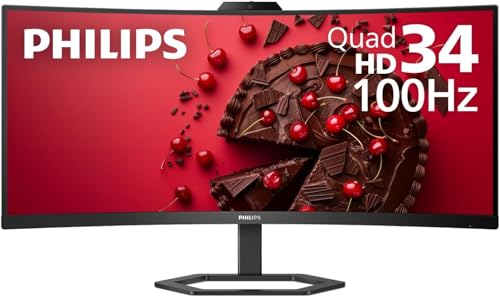
- Built-in 5MP Windows Hello webcam
- USB-C docking with up to 65W power
- 3440 x 1440 display with 100Hz refresh
Best For: Remote workers who frequently attend video meetings
Best for Maximum Screen Space

- 49-inch 5120 x 1440 DQHD workspace
- PbP and PiP for multiple sources
- 120Hz refresh with adaptive sync
Best For: Multitaskers replacing two monitors with one screen
Smart Work-and-Play Pick

- 34-inch QHD curved 21:9 display
- Built-in webOS streaming and cloud apps
- 100Hz refresh rate with HDR10
Best For: Remote workers who want built-in streaming and casual gaming capability
High-Refresh Performance Pick
SANSUI 34-Inch 200Hz Ultrawide

- UWQHD 3440×1440 curved display
- 200Hz refresh rate and 1ms response time
- PIP/PBP with HDMI 2.1 and DisplayPort 1.4
Best For: Gamers who also need a spacious multitasking display
Remote-Work Comfort Pick
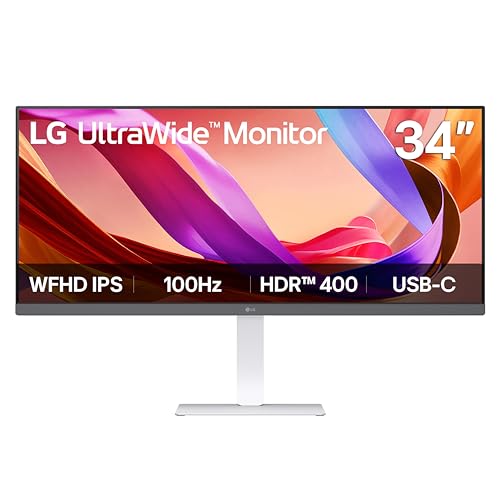
- 34-inch 21:9 IPS display for multitasking
- USB-C, DisplayPort, and HDMI connectivity
- Height, tilt, and swivel-adjustable stand
Best For: Remote workers prioritizing ergonomics and simple laptop connectivity
Precision Powerhouse
INNOCN 49-inch Flat Mini LED Ultrawide

- 1760-zone Mini LED backlight with up to 1000-nit HDR brightness
- Flat 49-inch 32:9 panel for accurate charts and design work
- 144Hz refresh rate, 1ms response, and FreeSync
Best For: Data analysis, design, multitasking, and HDR gaming
High-Resolution Hub
INNOCN 49-inch Dual-QHD Curved Monitor

- 5120 x 1440 dual-QHD resolution for detailed multitasking
- USB-C with 65W power delivery plus extensive connectivity
- PIP/PBP, 120Hz, FreeSync, HDR400, and 99% sRGB
Best For: Laptop-based remote work, content creation, and gaming
Balanced All-Rounder
INNOCN 49-inch Curved 144Hz Monitor

- 49-inch 32:9 curved VA display with 3840 x 1080 resolution
- 144Hz, 1ms, Adaptive-Sync, and HDR400 for gaming
- USB-C 65W power delivery with PIP/PBP support
Best For: Mixed remote work, multitasking, and gaming
Best All-Around Work-Gaming Balance – LG 34WR55QK-B UltraWide
If you want ultrawide gaming monitors for remote work without giving up gaming features, the LG 34WR55QK-B is a practical middle ground. Its 34-inch curved 3440 x 1440 display provides room for multiple windows, while 100Hz refresh, FreeSync, HDR10, and a 5ms response time support casual gaming.
Best For: Remote workers who want a versatile monitor for multitasking, gaming, and laptop connectivity.
Pros:
- 3440 x 1440 resolution and a 21:9 layout make side-by-side work easier.
- USB-C supports up to 65W power delivery for compatible laptops.
- OnScreen Control supports workspace splitting and Picture-by-Picture from two sources.
- Height- and tilt-adjustable stand with Reader Mode for extended reading.
Cons:
- Its 100Hz refresh rate is below the 180Hz offered by more gaming-focused options.
- The 5ms response time is less gaming-oriented than 1ms alternatives.
The LG stands out as a balanced choice when productivity comes first but gaming still matters. Its USB-C connection, ergonomic stand, and multitasking tools make it especially convenient for a home office.
Best for High-Refresh Gaming – Alienware AW3425DWM 34-Inch
Among ultrawide gaming monitors for remote work, the Alienware AW3425DWM prioritizes smooth gameplay while still offering a spacious 34-inch WQHD workspace. Its 180Hz refresh rate, 1ms response time, adaptive sync support, and 1500R curve are aimed at responsive gaming sessions.
Best For: Gamers who need an ultrawide monitor that can also handle photo or video editing and general desktop work.
Pros:
- 180Hz refresh rate and 1ms gray-to-gray response time support fluid motion.
- WQHD resolution, 34-inch size, and a 1500R curve create an expansive gaming view.
- FreeSync Premium and VESA AdaptiveSync help reduce tearing and stuttering.
- DisplayHDR 400, 95% DCI-P3 coverage, and hardware-based low blue light support viewing comfort.
Cons:
- The supplied details list HDMI, DisplayPort, and USB connectivity but do not specify USB-C laptop charging.
- Its 180Hz gaming focus may be more capability than office-first users need.
This is the strongest gaming-oriented pick in the group. It can serve as a work display, but shoppers seeking one-cable laptop docking may prefer a model with explicitly listed USB-C power delivery.
Best for Video Calls – Philips 34E1C5600HE UltraWide
The Philips 34E1C5600HE is one of the most office-ready ultrawide gaming monitors for remote work because it combines a 34-inch 3440 x 1440 display with a built-in webcam, microphone, speakers, and USB-C docking. A 100Hz refresh rate and FreeSync also leave room for gaming and entertainment.
Best For: Remote workers who want an all-in-one video conferencing setup with single-cable laptop connectivity.
Pros:
- Built-in 5MP Windows Hello webcam, noise-canceling microphone, and stereo speakers simplify video calls.
- USB-C docking carries data, video, and up to 65W of laptop power through one cable.
- 3440 x 1440 resolution and a 21:9 layout support efficient multitasking.
- Includes height adjustment, a USB hub, and a four-year manufacturer warranty.
Cons:
- The 100Hz refresh rate is lower than the 120Hz and 180Hz options in this selection.
- The glossy screen finish may reflect more ambient light than a matte panel.
For hybrid work, the integrated conferencing hardware is the main advantage. It reduces desktop clutter and makes the Philips especially convenient for users who regularly join calls from a Windows laptop.
Best for Maximum Screen Space – Amzfast AMZG49C7U 49-Inch
The Amzfast AMZG49C7U offers an unusually wide workspace for shoppers comparing ultrawide gaming monitors for remote work. Its 49-inch 5120 x 1440 DQHD panel effectively supports two 1440p views, while Picture-in-Picture and Picture-by-Picture modes make it useful for multiple computers or simultaneous work and entertainment.
Best For: Users who want the largest single-screen workspace for multitasking, gaming, and multiple input sources.
Pros:
- 49-inch 32:9 DQHD resolution provides extensive horizontal workspace.
- PbP and PiP support viewing content from multiple sources on one screen.
- 120Hz refresh, adaptive sync, and 1ms MPRT target smooth gaming performance.
- Height, rotation, and tilt adjustments plus VESA 75x75mm mounting support flexible setup.
Cons:
- Its 46.69-inch width requires substantial desk space.
- 120Hz refresh is available through DisplayPort 1.4, according to the supplied notes.
- The listed warranty is one year, shorter than the Philips warranty.
The Amzfast is the productivity specialist for people who want to replace a dual-monitor arrangement with one continuous screen. Confirm your desk dimensions and DisplayPort setup before choosing it.
Smart Work-and-Play Pick – LG 34SR60QC-W
If you want one of the more versatile ultrawide gaming monitors for remote work, the LG 34SR60QC-W combines a 34-inch QHD curved display with built-in webOS streaming. Its 21:9 layout provides extra horizontal room for multitasking, while the 100Hz refresh rate keeps everyday motion smooth.
Best For: Remote workers who also want built-in streaming and a comfortable ultrawide screen for casual gaming.
Pros:
- QHD 3440×1440 resolution and a curved 21:9 format provide generous workspace.
- Built-in webOS supports streaming apps and access to Microsoft 365 and Google applications.
- Includes two HDMI ports, three USB ports, AirPlay 2, and HomeKit compatibility.
- Offers HDR10, up to 99% sRGB coverage, and a 100Hz refresh rate.
Cons:
- Its 5ms response time and 100Hz refresh rate are less gaming-focused than faster alternatives.
- The built-in smart features may be unnecessary if you already use a separate streaming device.
- The included components list does not indicate that a Magic Remote is included.
This is a strong all-around choice when remote-work convenience matters as much as gaming and entertainment. The integrated smart platform and high-resolution ultrawide workspace make it especially flexible for mixed-use setups.
High-Refresh Performance Pick – SANSUI 34-Inch 200Hz Ultrawide
For buyers prioritizing fast gameplay without giving up remote-work screen space, this SANSUI model is one of the more performance-oriented ultrawide gaming monitors for remote work. It pairs a 34-inch UWQHD curved panel with a 200Hz refresh rate, 1ms response time, and support for picture-by-picture and picture-in-picture viewing.
Best For: Gamers who need a high-refresh ultrawide but also want room for multitasking and business applications.
Pros:
- UWQHD 3440×1440 resolution gives you substantial horizontal workspace.
- 200Hz refresh rate and 1ms response time are well suited to fast-paced gaming.
- HDMI 2.1 and DisplayPort 1.4 support up to 200Hz, with VRR support through HDMI 2.1.
- PIP/PBP, a matte screen, blue-light reduction, and a 178-degree viewing angle support mixed use.
Cons:
- It does not include built-in speakers.
- The stand offers tilt adjustment but not the height and swivel adjustments listed for some competing models.
- Its 300-cd/m² brightness may be less suitable for very bright rooms.
This SANSUI is the best fit when gaming speed is the priority, while the 21:9 resolution and PIP/PBP features keep it practical for work. Plan to use headphones or separate speakers for audio.
Remote-Work Comfort Pick – LG 34U530A-W
The LG 34U530A-W is designed around productive everyday use, making it a practical option among ultrawide gaming monitors for remote work. Its 34-inch 21:9 IPS panel supports side-by-side windows, while USB-C, an adjustable stand, built-in speakers, and a 100Hz refresh rate simplify a hybrid work-and-entertainment setup.
Best For: Remote workers who value connectivity, ergonomic adjustment, and easy multitasking over maximum gaming resolution.
Pros:
- 21:9 ultrawide format helps keep multiple windows visible at once.
- USB-C supports display output and data transfer for a cleaner laptop connection.
- Height, tilt, and swivel adjustments make it easier to position for long work sessions.
- IPS viewing angles, DisplayHDR 400, built-in speakers, and 100Hz refresh rate add everyday versatility.
Cons:
- The 2560×1080 resolution is lower than the QHD resolution on the other listed 34-inch models.
- Its 5ms response time is aimed more at general use than competitive gaming.
- The supplied details list one HDMI port and one USB port, limiting built-in connectivity compared with some alternatives.
This LG makes the most sense for a work-first desk where comfort and one-cable laptop connectivity matter. It can handle casual gaming and media well, but buyers seeking sharper text or competitive gaming performance may prefer a higher-resolution, faster panel.
Precision Powerhouse – INNOCN 49-inch Flat Mini LED Ultrawide
For shoppers comparing ultrawide gaming monitors for remote work, the INNOCN E49M1G stands out with a flat 49-inch 32:9 screen designed for accurate multitasking. Its 3840 x 1080 resolution, 144Hz refresh rate, Mini LED backlight, and strong HDR brightness support both productivity and gaming.
Best For: Data analysis, control-center work, graphic design, multitasking, and gaming where a flat screen and bright HDR image are priorities.
Pros:
- 1760-zone Mini LED local dimming and up to 1000-nit peak brightness support high-contrast HDR viewing.
- Flat 49-inch 32:9 panel helps preserve geometric accuracy for charts, design, and 3D work.
- 144Hz refresh rate, 1ms response time, and FreeSync support smooth gameplay.
- Height adjustment, matte finish, flicker-free operation, and eye-care features suit extended desktop use.
Cons:
- 3840 x 1080 resolution provides less vertical detail than a dual-QHD ultrawide.
- The flat 32:9 format may require considerable desk space.
- Connectivity is limited to DisplayPort and HDMI, without USB-C listed.
The E49M1G is a practical choice when distortion-free viewing and HDR performance matter more than maximum vertical resolution or USB-C docking. It is especially compelling for professionals who also want a fast gaming display.
High-Resolution Hub – INNOCN 49-inch Dual-QHD Curved Monitor
The INNOCN 49C1R is a strong option among ultrawide gaming monitors for remote work when you want expansive multitasking space without sacrificing desktop detail. Its curved 5120 x 1440 display, USB-C connectivity, and PIP/PBP support make it well suited to combining work and entertainment on one screen.
Best For: Remote workers who connect laptops and multiple sources, create content, play games, or need high-resolution side-by-side windows.
Pros:
- 5120 x 1440 dual-QHD resolution provides substantially more vertical detail than 1080p ultrawides.
- USB-C offers up to 65W power delivery, while the monitor also includes DisplayPort, HDMI, USB-A, USB-B, and RJ45 connectivity.
- PIP/PBP lets users view content from two input sources simultaneously.
- 120Hz refresh rate, FreeSync, HDR400, and 99% sRGB support work across gaming and creative tasks.
Cons:
- The glossy finish may be less suitable for brightly lit rooms.
- 120Hz is slower than the 144Hz refresh rate of the other listed models.
- At 49 inches, the curved display needs substantial desk space.
With its dual-QHD resolution and broad port selection, the 49C1R is the most versatile productivity-focused option in this group. Choose it if laptop connectivity, detailed workspaces, and source switching are more important than peak refresh rate.
Balanced All-Rounder – INNOCN 49-inch Curved 144Hz Monitor
For buyers seeking ultrawide gaming monitors for remote work at a lower resolution, the INNOCN 49C1G combines a broad 32:9 workspace with a fast 144Hz refresh rate. Its curved 3840 x 1080 VA panel, USB-C power delivery, and split-screen features support everyday multitasking alongside gaming.
Best For: Remote work, gaming, and general multitasking where a wide workspace, fast refresh rate, and convenient laptop connectivity are more important than maximum pixel density.
Pros:
- 49-inch 32:9 format provides a wide single-screen workspace for multiple applications.
- 144Hz refresh rate, 1ms response time, Adaptive-Sync, and HDR400 support responsive gaming.
- USB-C provides up to 65W power delivery, with DisplayPort, HDMI, USB, and RJ45 connections also available.
- Height, tilt, and swivel adjustment plus PIP/PBP add flexibility for work setups.
Cons:
- 3840 x 1080 resolution offers less workspace detail than the 5120 x 1440 49C1R.
- The curved VA display may be less suitable for precision work requiring a flat panel.
- The supplied specifications identify it primarily for gaming rather than professional color-critical workflows.
The 49C1G is a sensible middle ground for users who want a large curved screen, strong gaming fluidity, and USB-C connectivity without moving to dual-QHD resolution. It works best for mixed work-and-play setups using large windows and broad timelines.
How We Picked the Best Ultrawide Gaming Monitors for Remote Work
We focused on monitors that balance productivity and play rather than optimizing for gaming alone. Our comparison considers screen format, resolution, refresh rate, response time, adaptive sync support, connectivity, built-in audio or webcam features, and practical desk compatibility. USB-C is especially valuable for remote work because a single cable may carry video, data, and charging, although charging power and docking features vary by model.
We also included both 34-inch 21:9 displays and 49-inch 32:9 options. The smaller format is generally easier to fit and offers strong text clarity at QHD resolution, while a 49-inch panel provides the workspace of two monitors without a center bezel.
Quick Comparison
- Best all-around size: A 34-inch 3440 × 1440 monitor offers useful multitasking space without overwhelming most desks.
- Best for competitive gaming: Choose a model with 144Hz or higher refresh, low response time, and adaptive sync.
- Best for video calls: A monitor with a built-in webcam, microphone, and speakers can simplify a remote-work setup.
- Best for one-screen multitasking: A 49-inch 32:9 display provides exceptional side-by-side workspace.
- Best value: A 34-inch 2560 × 1080 model can be affordable, but it provides lower text sharpness than QHD alternatives.
Key Buying Factors for Ultrawide Gaming Monitors for Remote Work
Resolution and Screen Size
For a 34-inch monitor, 3440 × 1440 is the preferred balance of sharp text and usable workspace. Wider 49-inch displays need careful consideration: 5120 × 1440 delivers a sharper image across the full width, while 3840 × 1080 models are more demanding on desk space than on graphics hardware.
Refresh Rate and Gaming Features
A 100Hz refresh rate already makes scrolling and general use feel smoother than 60Hz. Gamers should consider 144Hz, 180Hz, or 200Hz options, along with FreeSync or AdaptiveSync support. Check your computer’s graphics output before buying, especially at high resolutions and refresh rates.
Connectivity and Ergonomics
Look for HDMI and DisplayPort at minimum, plus USB-C when using a laptop. Confirm whether USB-C supports charging, data, or only display input. Height adjustment, VESA mounting, tilt range, and curve radius can matter as much as headline specifications in a long workday.
Built-In Convenience Features
Webcams, microphones, speakers, USB hubs, picture-in-picture, and picture-by-picture can reduce desk clutter. However, built-in components may not match dedicated peripherals, so treat them as convenience features rather than automatic replacements.
Who Should Buy Which Ultrawide Gaming Monitors for Remote Work?
Choose a 34-inch QHD model if you want the best balance of clarity, workspace, and desk compatibility. Choose a 49-inch 32:9 model if you regularly manage multiple full-size windows and have enough depth and width for a large display. Choose a webcam-equipped USB-C monitor if video meetings and laptop docking are central to your routine. Choose a high-refresh gaming model if smooth competitive play is a priority. Finally, choose a lower-resolution 34-inch or 49-inch option when budget, graphics-card requirements, or older hardware matter more than maximum sharpness.