Wall mounted open frame PC cases are built for builders who want better airflow, easier access, and a showpiece-style setup without the bulk of a traditional tower.
Whether you are assembling a gaming rig, a test bench, or a compact wall display, the right open frame case can make upgrades simpler and cooling more efficient.
Best 10 Wall Mounted Open Frame PC Cases Picks for 2026
Showcase Wall Mount
ABKCA Design Wall Computer Case
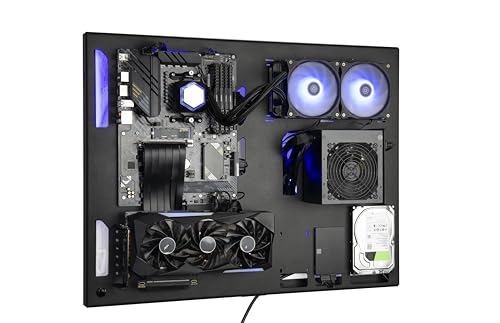
- Stainless steel build with powder coating
- Supports ATX, Micro ATX, and Mini ITX boards
- Fits up to 39 cm GPUs and 240/280mm cooling
Best For: Showpiece gaming builds that need wall mounting and open airflow
Display-Ready Frame

- Open-frame ATX case with tempered glass
- Supports large parts and a GPU holder
- Can fit a 420mm radiator at the front top
Best For: Enthusiast showcase systems with big cooling and GPU needs
Wall-Mount Bracket
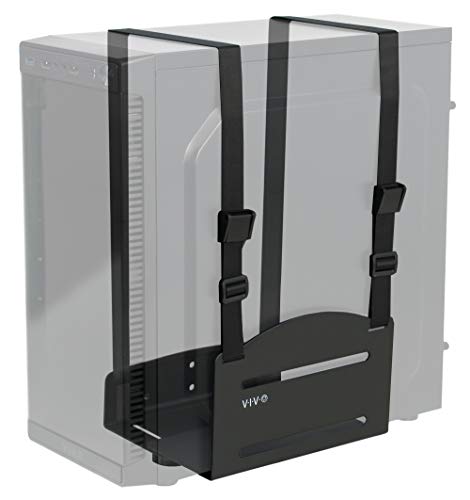
- Adjustable steel bracket for existing PC cases
- Fits widths from 12.2 to 21.1 cm
- Includes straps and a 3-year warranty
Best For: Mounting a compatible desktop case to the wall
Open Test Bench

- Open-air chassis for easy hardware access
- Supports ATX, Micro ATX, and ITX boards
- Built from 0.8mm SPCC steel
Best For: Test builds, hardware swaps, and airflow-focused setups
Stackable Techbench Rack

- Rigid 1.5mm SPCC construction
- Supports EATX to ITX boards
- Stackable and flexible placement
Best For: Bench testers and compact rack-style builds
Aluminum Open Frame Rack

- Aluminum alloy with stable vertical design
- Supports EATX, ATX, M-ATX, and ITX
- Water-cooling layout can be adjusted
Best For: DIY modders who want a flexible open aluminum chassis
Tool-Free Open Rack
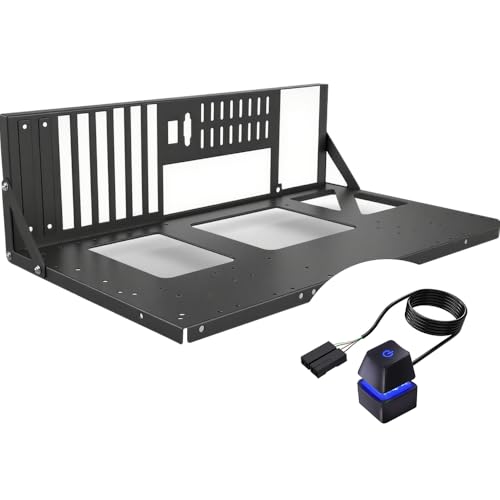
- Tool-free open bench for quick changes
- Supports ATX, MATX, and ITX boards
- Includes mounts for PSU and storage
Best For: Builders needing a simple test bench or display-style open case
Heavy-Duty EATX Pick

- Supports EATX through ITX motherboards
- Aluminum open frame with stable vertical design
- Up to two water-cooling installs
Best For: Large custom builds that need flexible cooling and broad motherboard support
Compact ITX Choice

- ITX version with open aluminum frame
- Supports ATX or SFX power supplies
- Adjustable water-cooling placement
Best For: Compact open-air builds with liquid cooling flexibility
Showcase Wall Mount – ABKCA Design Wall Computer Case
If you want one of the more distinctive wall mounted open frame pc cases, this ABKCA Design model is built to turn your hardware into part of the room. It supports Mini ITX, Micro ATX, and full ATX boards, while its open layout and side ventilation focus on easy airflow and clean display-oriented builds.
Best For: Gamers and PC enthusiasts who want a wall-mounted case that doubles as a showcase piece.
Pros:
- Rust-resistant stainless steel construction with electrostatic powder coating
- Supports 240mm or 280mm liquid cooling, plus unrestricted air-cooling size compatibility
- Includes a GPU sag prevention bracket and fits graphics cards up to 39 cm
- Storage support for 2 SSDs and 1 HDD by default, or up to 3 SSDs with a swap
Cons:
- Wall-mounted design is less flexible than a standard tower on or under a desk
- Open-frame layout leaves components fully exposed
- Large footprint may not suit compact setups
This is a strong pick if your priority is style, cooling access, and a true wall display build. It balances practical support for modern gaming parts with a more artistic presentation than a typical PC chassis.
Display-Ready Frame – Thermaltake Core P3 TG Pro
Thermaltake Core P3 TG Pro Open Frame ATX Compatible PC Case CA-1G4-00M1WN-09 CS8593
Check Price On AmazonAmong wall mounted open frame pc cases, the Thermaltake Core P3 TG Pro stands out for its open-frame construction and tempered glass panel. It is designed for ATX systems and gives builders space for large components, easy viewing, and a flexible layout that suits enthusiast builds.
Best For: Enthusiasts who want a display-focused open-frame ATX case with room for large hardware.
Pros:
- Open-frame construction with tempered glass for a clear component view
- Supports ATX, Micro-ATX, and Mini-ITX motherboards
- Includes a GPU holder and design tweaks that reduce interference around the motherboard plate
- Can mount a 140mm case fan or up to a 420mm front-top radiator
Cons:
- Large mid-tower frame takes up significant space
- Open design offers less physical protection than a closed case
- Single internal bay is limiting for storage-heavy builds
This case is a good fit if you want a visually impressive build with serious component support. It is especially appealing for users planning custom cooling or large GPU setups.
Wall-Mount Bracket – VIVO Universal PC Wall Mount
If you already have a compatible tower and just want to free up desk or floor space, this VIVO bracket is a practical option for wall mounted open frame pc cases setups. It is an adjustable steel wall mount with securing straps, meant to hold the case safely while keeping it accessible.
Best For: Users who want to wall-mount an existing PC case instead of buying a new chassis.
Pros:
- Adjustable width fits most cases from 12.2 to 21.1 cm
- Steel construction with adjustable straps for extra security
- Helps reduce dust and ground vibration exposure
- Backed by a 3-year manufacturer warranty
Cons:
- Cannot be mounted to drywall alone
- Only supports cases up to 10 kg
- It is a bracket, not a full open-frame PC case
This is the most straightforward choice if your goal is mounting convenience rather than a new enclosure. It works best for users with a compatible tower who want a cleaner workspace and easier access.
Open Test Bench – ALAMENGDA DIY PC Test Bench
This DIY test bench is a functional alternative for builders comparing wall mounted open frame pc cases, especially if the priority is fast access to parts and strong airflow. It supports ATX, Micro ATX, and ITX boards within the stated size range, and the open chassis format is aimed at easy component changes and heat dissipation.
Best For: Builders and testers who want an open chassis for hardware swaps and airflow-focused setups.
Pros:
- Supports ATX, Micro ATX, and ITX motherboards within the listed dimensions
- Open-air design emphasizes heat dissipation and easy access
- Compatible with standard ATX power supplies
- Made from 0.8mm SPCC steel with a black sand-grain finish
Cons:
- Not a wall-mounted case in the traditional sense
- Open test-bench design leaves hardware exposed
- Storage support and expansion are more basic than larger showcase cases
This is a practical bench for experimentation, troubleshooting, and airflow-first builds. It makes sense for users who change hardware often and want a simple, open platform instead of a decorative enclosure.
Stackable Techbench Rack – Open Air PC Test Bench
If you want a wall mounted open frame pc case-style setup for frequent builds, diagnostics, or a compact server rack workflow, this open-air test bench is built around flexibility. It supports EATX, ATX, Micro ATX, and ITX boards, and its stackable design makes it easy to organize multiple systems in the same space.
Best For: Builders who need a rigid, stackable open frame for bench testing, workstation setups, or small server rack use.
Pros:
- 1.5mm SPCC panels and a 0.8mm base plate add rigidity.
- Supports EATX, ATX, Micro ATX, and ITX motherboards.
- Can be placed horizontally or vertically, and stacked up to 10 units horizontally.
- Strong cooling support, including up to 8x 120mm fans or 360mm liquid cooling.
Cons:
- Open-frame layout offers less protection than a closed case.
- Maximum CPU cooler height is limited to 165mm.
- GPU clearance depends on fan configuration.
This is a practical bench-style chassis for users who prioritize access, airflow, and stacking over enclosure. It is especially useful when you want a durable open platform for testing or a modular rack-like setup.
Aluminum Open Frame Rack – DIY PC Assembly Frame
For buyers comparing wall mounted open frame pc cases, this aluminum open-frame chassis focuses on accessibility and cooling flexibility. It supports EATX, ATX, M-ATX, and ITX motherboards, and its vertical structure is designed for open-air use with easy access to components.
Best For: DIY builders who want an adjustable open aluminum frame with water-cooling support and broad motherboard compatibility.
Pros:
- Made from aluminum alloy with a stable vertical structure.
- Supports EATX, ATX, M-ATX, and ITX motherboards.
- Open design is intended to improve heat dissipation.
- Supports water cooling and can accommodate up to two water-cooled setups.
Cons:
- Graphics card installation may require optional accessories.
- Vertical GPU mounting may require extension cables.
- ITX and M-ATX may not work well with air-cooled CPUs in this frame.
This frame is geared toward mod-friendly builds where layout changes matter. If you want an open chassis that can be adjusted around your cooling and GPU placement, it offers a lot of flexibility.
Tool-Free Open Rack – ATX Open Frame Case
This open frame computer case is built for easy access, making it a straightforward pick for testing parts or assembling an air-cooled system. It supports ATX, MATX, and ITX motherboards, and the test-bench layout is meant to simplify installation and day-to-day component changes.
Best For: PC builders who want a simple, tool-friendly open bench for testing, maintenance, or display-style setups.
Pros:
- Supports ATX, MATX, and ITX motherboards, including X79 and X99 builds.
- Open-frame design improves airflow and component access.
- Tool-free setup makes installation and changes quicker.
- Includes mounting brackets for the motherboard, PSU, and storage devices.
Cons:
- Listed as air cooling only in the product details.
- Supported motherboard detail is narrower than the broader compatibility notes.
- Open layout is less protective than a closed case.
As a practical bench-style chassis, this model is strongest when convenience matters most. It suits users who want a fast-access platform for hardware testing or an open display build without extra complexity.
Heavy-Duty EATX Pick – Open Air Frame Test Bench
If you want wall mounted open frame pc cases with broad platform support, this aluminum test bench is built for larger builds and flexible cooling layouts. It supports EATX, ATX, Micro ATX, and ITX motherboards, plus ATX or SFX power supplies, HDDs, SSDs, and up to two water-cooling installations.
Best For: Builders who need a spacious open-air frame for EATX systems, dual cooling, and flexible component placement.
Pros:
- Supports EATX, ATX, Micro ATX, and ITX motherboards
- Open aluminum frame with stable vertical structure
- Supports up to two water-cooling units and adjustable placement
- Can fit ATX or SFX power supplies and HDD/SSD storage
Cons:
- Vertical GPU mounting needs optional accessories and extra cables
- ITX and MATX are not ideal with air-cooled CPUs due to frame height
- Open-frame design offers less enclosure protection than a closed case
This is a strong choice for custom builders who prioritize compatibility and cooling flexibility over compactness. Its larger layout and adjustable water-cooling position make it better suited to ambitious workstation-style setups.
Flexible Mid-Size Option – Open Frame PC Test Bench
For buyers comparing wall mounted open frame pc cases, this open-air test bench stands out for modular DIY assembly and broad cooling support. It fits ATX, mATX, and ITX motherboards, works with ATX, SFX, and SFX-L power supplies, and supports both horizontal and vertical GPU mounting with room for multiple radiators.
Best For: DIY builders who want a compact open-frame bench with flexible GPU and cooling options.
Pros:
- Supports ATX, mATX, and ITX motherboards
- Works with ATX, SFX, and SFX-L power supplies
- Supports 2.5-inch and 3.5-inch drives plus multiple fan and radiator sizes
- Open frame design makes installation and upgrades easier
Cons:
- Vertical GPU setup requires a separate riser cable
- Smaller footprint may be tighter for very large component combinations
- Open design provides less physical protection than a closed chassis
This model is a practical middle ground for builders who want strong airflow, easy access, and enough flexibility for future upgrades. The adjustable water-cooling position adds useful breathing room for different GPU lengths and layouts.
Compact ITX Choice – Open Aluminum Frame Chassis
If you’re shopping for wall mounted open frame pc cases with a smaller footprint, this aluminum test bench is aimed at compact builds and flexible water-cooling setups. It supports EATX, ATX, M-ATX, and ITX compatibility in the notes, while the listed configuration is the ITX version with ATX or SFX power support, two expansion slots, and room for HDD or SSD storage.
Best For: Compact open-air builds where an ITX-oriented frame and liquid cooling flexibility matter most.
Pros:
- Aluminum open-frame chassis with a stable vertical structure
- Supports ATX or SFX power supplies
- Compatible with HDD and SSD storage
- Supports water-cooling installation with adjustable placement
Cons:
- ITX and MATX builds may be limited by frame height with air cooling
- Vertical GPU installation needs extra extension cables
- Open layout provides minimal enclosure protection
This version makes sense if you want the open-air advantages of easy access and good heat dissipation in a smaller build. Just keep the CPU cooler height and GPU layout notes in mind so the frame matches your parts plan.
How We Picked the Best Wall Mounted Open Frame PC Cases
We focused on Wall Mounted Open Frame PC Cases that balance build quality, compatibility, and practical mounting or test-bench use. Priority went to frames with support for common motherboard sizes, clear cable access, useful component spacing, and a design that makes assembly and maintenance easier.
We also favored options that suit different buyer needs, from purpose-built wall mounts to open-air benches for frequent hardware changes. Material strength, cooler clearance, storage support, and overall stability mattered more than cosmetic features.
Quick Comparison
The lineup splits into two broad groups: true wall-mounted solutions and open frame benches that are better for desktop use, testing, or modular builds. Wall-mount models are ideal when floor or desk space is limited, while open benches are better if you plan to swap parts often or need fast access to the motherboard and GPU.
For most buyers, the best choice depends on whether appearance, accessibility, or testing workflow matters most. If you want a clean mounted build, choose a dedicated wall system. If you want flexibility and easier hardware changes, an open test bench is usually the smarter pick.
Key Buying Factors for Wall Mounted Open Frame PC Cases
Motherboard and Component Compatibility
Check support for ATX, Micro-ATX, Mini-ITX, or E-ATX before buying. Also confirm GPU length, PSU fit, radiator clearance, and storage mounting so your parts fit without awkward compromises.
Mounting Style and Stability
Some Wall Mounted Open Frame PC Cases use a true wall bracket or strap system, while others are open frames meant to rest on a desk or rack. If you want actual wall installation, verify mounting hardware, stud placement needs, and load capacity.
Cooling and Cable Management
Open frames naturally improve airflow, but layout still matters. Look for enough room around the CPU cooler, radiator, and GPU, plus tie points or channels that keep power and front-panel cables tidy.
Material and Build Quality
Steel frames tend to feel sturdier for wall use, while aluminum offers lighter weight and a cleaner finish. The best choice depends on whether you value rigidity, portability, or ease of handling during builds.
Who Should Buy Which Wall Mounted Open Frame PC Cases?
Choose a dedicated wall-mounted case if you want a showcase build, need to reclaim desk space, or prefer a cleaner permanent installation. Choose an open frame test bench if you build and swap parts often, run hardware diagnostics, or want the easiest possible access for tuning and maintenance.
For first-time buyers, start by matching your motherboard size and cooling plan, then decide whether you need a true wall mount or simply an open-air frame with flexible placement. That one decision will narrow the field fast and help you avoid buying the wrong style of case.