Choosing the right workstation PC for V-Ray rendering comes down to balance: CPU cores, GPU power, memory capacity, and storage speed all affect real-world production time.
Our picks focus on systems that can handle heavy scenes, render efficiently, and leave room to grow as your projects get more demanding.
Best 9 Workstation PC for Vray Rendering Picks for 2026
Best High-Performance
Sentinel RTX 5080 Creator Workstation

- Ultra 9 285K and RTX 5080 for demanding creative workloads
- 64GB DDR5 plus dual 2TB Gen4 SSDs for fast multitasking and storage
- 3-year warranty with lifetime technical support
Best For: 3D artists, architects, and creators who need a fast rendering and production desktop.
Best for Entry-Level V-Ray Work
Professional Workstation Gaming PC

- Xeon E5 supports multicore rendering and productivity
- GTX TITAN 6GB adds GPU help for creative workloads
- 512GB M.2 SSD + 1TB HDD gives speed and storage
Best For: Creators and small studios wanting an affordable workstation-style PC for V-Ray and mixed creative work.
Best Compact AI Workstation

- 4.4L chassis fits tight desks and small studios
- 64GB unified LPDDR5X memory supports demanding workflows
- Ryzen AI Max platform suits AI tools and creative tasks
Best For: Creators and developers who need a compact, AI-ready workstation for mixed 3D and productivity work.
Refurbished Value Pick

- 64GB RAM for large scenes and multitasking
- Fast 512GB NVMe boot drive plus 2TB storage
- Workstation-class Xeon platform with upgrade room
Best For: Budget-conscious creators who need a dependable tower for V-Ray and general 3D work.
Best for High-Core V-Ray Builds
Dell Tower Plus EBT2250 with RTX 5060
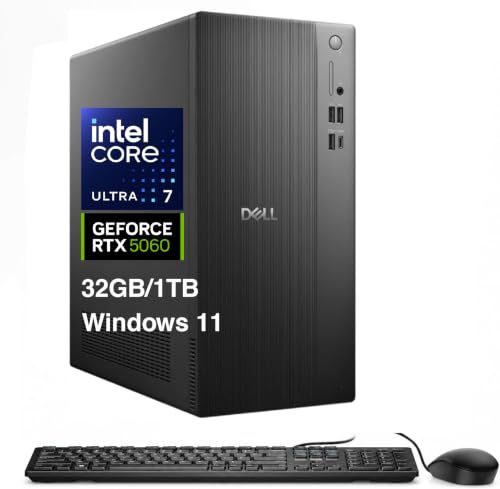
- 20-core Intel Ultra 7-265 supports demanding multitasking
- RTX 5060 8GB adds useful GPU rendering acceleration
- 32GB DDR5 and 1TB SSD deliver a ready-to-work baseline
Best For: 3D artists and power users who want a capable, ready-to-run tower for V-Ray and everyday creative work.
Best for CPU-Heavy Scenes
Sentinel Threadripper PRO 7965WX Workstation

- 24-core Threadripper PRO for demanding V-Ray CPU renders
- 64GB ECC DDR5 for stability in large creative workloads
- 2TB Gen5 SSD plus 3TB HDD for fast loads and extra storage
Best For: Artists and technical creators who need a dependable CPU-first workstation for V-Ray, CAD, and 3D rendering.
Best for Heavy-Duty V-Ray Scenes

- 64-core Threadripper for extreme multi-threaded rendering
- RTX 5090 for fast ray tracing and GPU-accelerated workflows
- 256GB ECC memory and 4TB NVMe storage for large projects
Best For: 3D artists and studios rendering complex V-Ray scenes with very large assets and heavy multitasking.
Best for Compact V-Ray Workloads

- 10-core Core i7-13620H for responsive multitasking
- 32GB DDR5 RAM + 1TB SSD for fast project handling
- HDMI and DisplayPort support dual-monitor setups
Best For: Designers and small studios needing a compact, business-ready desktop for lighter V-Ray workloads.
Best for Refurbished Power

- 8-core i9 9900K for strong rendering and multitasking
- 64GB RAM and 1TB NVMe SSD for fast, smooth workflows
- Upgradeable tower with room for a dedicated GPU
Best For: Creators who want a refurbished workstation with strong CPU performance and upgrade potential.
Best High-Performance – Sentinel RTX 5080 Creator Workstation
If you want a workstation pc for vray rendering that can also handle editing, streaming, and heavy multitasking, this Sentinel tower is built around strong core hardware: an Intel Core Ultra 9 285K, RTX 5080 graphics, 64GB of DDR5 RAM, and dual 2TB Gen4 NVMe SSDs. It’s a practical fit for creators who want fast scene loading, responsive viewport work, and a clean setup with Windows 11 Pro and no bloatware.
Best For: 3D artists, architects, and content creators who need a fast, well-rounded desktop for rendering and production work.
Pros:
- RTX 5080 and Ultra 9 285K provide strong performance for demanding creative workloads
- 64GB DDR5 RAM helps with large scenes, multitasking, and smoother workflow responsiveness
- 2x2TB Gen4 NVMe SSDs offer plenty of fast storage for projects, caches, and apps
- 3-year warranty and lifetime support add peace of mind for a higher-end workstation purchase
Cons:
- More machine than casual users need, so the price will likely be high
- Included keyboard and mouse are basic extras rather than premium peripherals
- Non-RGB design is clean but may not appeal to buyers wanting a showpiece build
For buyers comparing a workstation pc for vray rendering, this model stands out as a balanced creator desktop with enough CPU, GPU, memory, and storage headroom to stay useful as projects grow. It’s not the cheapest route, but it offers the kind of spec mix that makes a serious rendering workstation easier to rely on day to day.
Best for Entry-Level V-Ray Work – Professional Workstation Gaming PC
If you need a workstation pc for vray rendering without jumping to a high-end tower, this build offers a practical mix of multicore processing, a dedicated GTX TITAN GPU, and fast dual-storage for everyday creative work. It’s a sensible pick for lighter V-Ray scenes, content creation, and mixed-use productivity where stability matters more than bleeding-edge specs.
Best For: Creators, students, and small studios that want a reasonably priced workstation-style PC for V-Ray, CAD, and general rendering tasks.
Pros:
- Xeon E5 processor helps with parallel workloads like rendering and editing.
- GTX TITAN 6GB adds useful GPU support for creative software and acceleration.
- 512GB M.2 SSD plus 1TB HDD balances speed and storage capacity.
- 9 ARGB fans and a 650W PSU help keep the system cooled and powered reliably.
Cons:
- 16GB RAM is workable, but heavy V-Ray projects may benefit from an upgrade.
- Older Xeon and GTX TITAN hardware is not ideal for demanding modern render pipelines.
For buyers comparing a workstation pc for vray rendering, this system stands out more for value and balanced basics than raw performance. It makes sense when you want a ready-to-use tower that can handle rendering jobs, creative apps, and general productivity without a big upfront investment.
Best Compact AI Workstation – Corsair AI Workstation 300
The Corsair AI Workstation 300 is a compact option to consider if you want a workstation pc for vray rendering and other demanding creative tasks in a very small footprint. Its Ryzen AI Max platform, fast LPDDR5X memory, and integrated Radeon graphics make it a practical fit for users who need strong performance without a full tower.
Best For: Artists, developers, and content creators who want a compact workstation for AI-assisted workflows, 3D tasks, and lighter V-Ray rendering jobs.
Pros:
- Very compact 4.4L design saves desk space
- Unified 64GB LPDDR5X memory helps with large creative and AI workloads
- AMD Ryzen AI Max platform is tuned for local AI and productivity tasks
- Strong fit for mixed creative workflows where portability matters
Cons:
- Integrated graphics are not ideal for the heaviest GPU-accelerated render queues
- Less expandable than a traditional full-size workstation tower
- May be overkill if you only need a basic rendering PC
For buyers prioritizing space efficiency and modern AI features, this is a compelling workstation pc for vray rendering when your projects lean toward lighter scenes, hybrid workloads, or on-the-go creative work. If you need maximum render throughput from discrete graphics, a larger desktop will still be faster.
Refurbished Value Pick – HP Z4 G4 Workstation
If you want a workstation pc for vray rendering without paying new-system prices, the HP Z4 G4 is a practical refurbished option. Its 6-core Xeon, 64GB of RAM, and fast NVMe boot drive give you a solid base for scene prep, multitasking, and general DCC work, while the 2TB HDD adds plenty of storage for assets and project files.
Best For: Budget-minded buyers who need a dependable tower for V-Ray work, 3D workflows, and heavy multitasking.
Pros:
- 64GB DDR4 memory is strong for large scenes and smoother multitasking.
- 512GB NVMe SSD helps the system boot quickly and load software fast.
- Workstation-class Xeon platform and 750W PSU offer solid upgrade potential.
- Renewed pricing can make it a better value than buying new.
Cons:
- Quadro P400 2GB is very light-duty for GPU rendering or viewport-heavy projects.
- 6-core CPU is capable, but not ideal for the fastest V-Ray render times.
- Refurbished units can vary in cosmetic condition and included accessories.
This HP Z4 G4 makes sense if you need a reliable workstation pc for vray rendering and prioritize RAM, storage, and workstation stability over raw rendering speed. It is better suited to CPU-centric production and general 3D work than to high-end GPU rendering.
Best for High-Core V-Ray Builds – Dell Tower Plus EBT2250 with RTX 5060
If you want a workstation pc for vray rendering that also handles day-to-day creative work, this Dell Tower Plus is a strong midrange option. The Intel Ultra 7-265 brings plenty of cores for multitasking and scene prep, while the RTX 5060 adds CUDA-accelerated support for GPU-based rendering workflows.
Best For: Designers, 3D artists, and power users who want a ready-to-use tower for V-Ray scenes, modeling, and general productivity.
Pros:
- 20-core Intel Ultra 7-265 helps with heavy multitasking and CPU-side prep work
- RTX 5060 8GB gives you modern GPU acceleration for supported render tasks
- 32GB DDR5 and 1TB PCIe SSD provide a solid baseline for active projects
- Strong port selection, including Thunderbolt 4, multiple DisplayPorts, and HDMI
Cons:
- 460W power supply may limit higher-end GPU or major upgrade paths
- 8GB VRAM is capable, but not ideal for very large V-Ray scenes
- Not as specialized as a workstation built specifically for pro rendering
For buyers seeking a balanced workstation pc for vray rendering, this Dell stands out for its modern CPU, discrete RTX graphics, and practical out-of-box configuration. It is a sensible pick if you want a capable tower that can render, edit, and multitask without immediate upgrades.
Best for CPU-Heavy Scenes – Sentinel Threadripper PRO 7965WX Workstation
If you need a workstation pc for vray rendering that leans hard into CPU throughput and reliability, this Sentinel build is a strong fit. The Threadripper PRO 7965WX gives you 24 cores and 48 threads, while the 64GB ECC DDR5 memory and fast Gen5 SSD help keep large scenes, asset libraries, and multitasking responsive.
Best For: Artists, CAD users, and creators who want a serious CPU-first workstation for V-Ray, 3D modeling, AI workflows, and long rendering sessions.
Pros:
- 24-core Threadripper PRO CPU is well suited to V-Ray’s CPU rendering workload
- 64GB ECC DDR5 RAM adds stability for large projects and heavy multitasking
- 2TB PCIe Gen5 SSD speeds up boot times, caching, and project loading
- RTX 5070 adds capable GPU support for viewport work and hybrid workflows
Cons:
- 12GB GPU memory may be limiting for very large GPU-rendered scenes
- Includes a 3TB HDD, but most creators will still rely mainly on the SSD
- Higher-end workstation pricing may be overkill for casual users
For buyers comparing a workstation pc for vray rendering, this system stands out more for CPU performance, ECC memory, and workstation-grade stability than flashy extras. It is a practical choice if your priority is dependable render performance on complex scenes rather than the biggest possible gaming GPU.
Best for Heavy-Duty V-Ray Scenes – CLX Horus Creator Workstation
If you need a workstation pc for vray rendering that can handle huge scenes, dense textures, and multitasking without slowing down, the CLX Horus Creator Workstation is built for that exact job. The Threadripper 9980X, RTX 5090, and 256GB of ECC memory make it a serious option for studios and power users who care about speed, stability, and future-proof headroom.
Best For: 3D artists, archviz pros, and production teams rendering complex V-Ray projects while also modeling, compositing, or working across multiple creative apps.
Pros:
- 64-core Threadripper CPU delivers extreme multi-threaded rendering performance
- RTX 5090 provides top-tier GPU acceleration for ray tracing and AI-assisted workflows
- 256GB DDR5 ECC memory helps with very large scenes and memory-heavy projects
- 4TB NVMe SSD plus strong cooling and dual high-speed networking support demanding studio use
Cons:
- Expensive enough that it only makes sense for serious professional workloads
- Large, high-power build is overkill for lighter design or hobby rendering
- Premium components may be more than most small studios actually need
This is a standout workstation pc for vray rendering if your priority is maximum throughput and rock-solid memory capacity over cost savings. It is especially compelling for artists who want one machine to cover heavy render jobs now and stay relevant as projects scale up.
Best for Compact V-Ray Workloads – ASUS V500 i7 Tower Desktop
If you want a practical workstation pc for vray rendering without jumping to a full custom build, the ASUS V500 is a sensible middle-ground. Its 10-core Core i7-13620H, 32GB of DDR5 RAM, and 1TB SSD should handle light-to-moderate scene prep, multitasking, and fast project loading, while the tower format keeps the setup straightforward for office or home studios.
Best For: Designers, architects, and small studios that need a compact, Windows 11 Pro desktop for everyday V-Ray work and multitasking.
Pros:
- 10-core Intel Core i7-13620H offers solid CPU throughput for modeling, editing, and render-side multitasking.
- 32GB DDR5 RAM and a 1TB SSD provide a responsive baseline for large files and quick boot/load times.
- DisplayPort and HDMI make it easy to run dual monitors for an efficient workstation layout.
- Windows 11 Pro adds business-friendly security and management features.
Cons:
- Intel UHD Graphics means it is not ideal for GPU-heavy V-Ray rendering.
- It is better suited to entry-level and midrange workloads than demanding production render farms.
- The bundled USB drive is a minor add-on rather than a major performance benefit.
Overall, this is a good pick if your priority is a dependable workstation pc for vray rendering tasks that lean on CPU performance, memory, and storage rather than dedicated graphics power. For teams or freelancers who need an easy-to-deploy desktop, it covers the essentials well.
Best for Refurbished Power – HP Z2 Tower G4 i9 Workstation
If you want a workstation pc for vray rendering without paying for a brand-new tower, the HP Z2 Tower G4 packs a strong i9 9900K CPU, 64GB of RAM, and a fast 1TB NVMe SSD into a dependable refurbished chassis. It’s a practical pick for creators who need solid multi-tasking performance and a base that can be upgraded later with a discrete graphics card.
Best For: Artists, designers, and 3D users who want a refurbished workstation with strong CPU horsepower and room to grow.
Pros:
- 8-core i9 9900K and 64GB RAM handle heavy creative workloads smoothly
- 1TB NVMe SSD helps with fast boot times and responsive project loading
- Expandable tower design supports future GPU and storage upgrades
- Fresh Windows 11 Pro install keeps the system ready to use out of the box
Cons:
- No dedicated graphics card included, so V-Ray GPU work needs an add-on
- Renewed unit may not appeal to buyers who want a new-in-box machine
- Keyboard, mouse, and Wi‑Fi are sold separately
For CPU-heavy scenes and general content creation, this is a capable workstation pc for vray rendering if you plan to add the right GPU later. Its value comes from strong base specs and upgrade flexibility rather than out-of-the-box graphics power.
How We Picked the Best Workstation PC for Vray Rendering
For this Workstation PC for Vray Rendering roundup, we prioritized components that matter most in production workflows: high-core-count processors, strong NVIDIA GPU options, ample RAM, fast NVMe storage, and stable power delivery. We also considered thermals, expandability, and whether each system fits archviz, product visualization, or mixed CPU/GPU pipelines.
Quick Comparison
Some buyers will want maximum raw rendering speed, while others need a more practical balance for modeling, texturing, and multitasking. Broadly, the higher-end Threadripper and RTX 5090 systems are best for heavy V-Ray scenes and faster turnaround, while midrange Intel and RTX 5060/5070 builds offer a more cost-conscious path for smaller studios and solo artists.
Key Buying Factors for Workstation PC for V-Ray Rendering
CPU Cores and Clock Speed
V-Ray can benefit from both high core counts and strong boost clocks. More cores help with CPU rendering and background tasks, while higher clocks improve responsiveness in modeling and scene preparation. If you render often, prioritize sustained multi-core performance over marketing labels alone.
GPU Capability and VRAM
GPU rendering is increasingly important, so an NVIDIA RTX card with enough VRAM is a major advantage. Larger scenes, high-resolution textures, and complex lighting setups can quickly exceed the limits of entry-level GPUs. More VRAM also helps keep scenes from falling back to slower workflows.
Memory Capacity
32GB is a workable minimum for lighter projects, but 64GB is a smarter target for most V-Ray users. Large architectural scenes, simulations, and multitasking with DCC apps can benefit from 128GB or more, especially in studio environments.
Storage and Expandability
Fast NVMe SSDs improve boot times, cache access, and project loading. Dual-drive configurations are useful because you can separate operating system files from active project data. Extra drive bays, PCIe slots, and PSU headroom matter if you plan to upgrade later.
Who Should Buy Which Workstation PC for Vray Rendering?
If you need the fastest possible rendering and can justify the budget, choose a high-end Threadripper or RTX 5090 tower. If you want a balanced Workstation PC for Vray Rendering for daily studio work, a Ryzen AI or Intel Ultra-based system with 64GB RAM is often the sweet spot. Budget-conscious buyers or those upgrading from older hardware may prefer a renewed workstation, but should verify warranty coverage, GPU support, and memory limits before buying.
In short, match the machine to your scene complexity and turnaround goals. The best choice is the one that keeps V-Ray rendering moving without bottlenecks in the rest of your workflow.