Choosing the right workstation pc for game developers means balancing CPU speed, GPU power, memory capacity, and thermals for long builds and smooth testing.
Whether you’re shipping indie titles, prototyping in Unreal Engine, or handling 3D art and video workflows, the best system depends on your project size and workspace.
Best 10 Workstation PC for Game Developers Picks for 2026
Best for GPU-accelerated workflows
Lenovo ThinkStation P3 Tower Ultra 9

- Core Ultra 9 and 64GB DDR5 for demanding dev workloads
- RTX 2000 Ada 16GB helps with 3D and viewport tasks
- 2TB Gen4 SSD keeps projects and builds loading quickly
Best For: Game developers who want a pro tower for Unreal, Unity, and GPU-accelerated creation work.
Best for eGPU Expansion

- Oculink + USB4 for external GPU expansion
- 32GB LPDDR5 and 1TB NVMe included
- Dual 2.5GbE LAN for fast studio networking
Best For: Game developers who want a compact workstation that can expand with an eGPU and handle multitasking.
Best for VR-Ready Midrange Builds
Dell Tower Plus EBT2250 Workstation Desktop
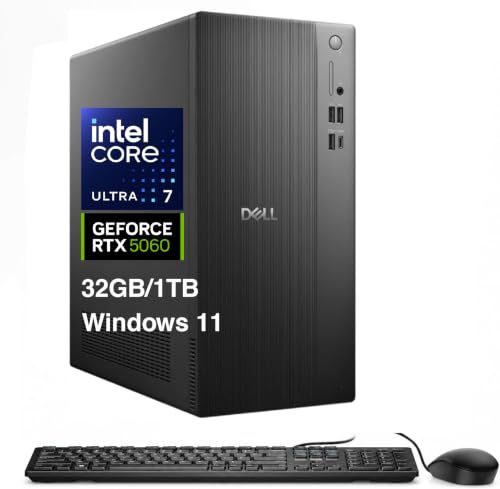
- Intel Ultra 7-265 and RTX 5060 for dev and graphics tasks
- 32GB DDR5 RAM plus 1TB NVMe SSD for fast multitasking
- WiFi 7, Thunderbolt 4, and multiple display outputs
Best For: Game developers who want a ready-to-run midrange workstation with VR-capable graphics.
Best for Local AI Workflows
Corsair AI Workstation 300 Desktop PC

- Compact 4.4L footprint for small dev spaces
- Unified memory and strong iGPU for AI-assisted work
- Good fit for local LLMs and creative tooling
Best For: Game developers and AI-focused creators who want a compact desktop for development workflows.
Best AI-Ready Mini Workstation
GEEKOM GT13 MAX Core Ultra 9 Mini PC

- Core Ultra 9 185H with AI NPU for dev and productivity
- Intel Arc graphics for light 3D work and game previews
- WiFi 7, 2.5G LAN, and Windows 11 Pro in a tiny chassis
Best For: Developers who want a compact, AI-capable mini PC for coding, engines, and everyday creative work.
Best Dual-CPU Multitasker
Dual-CPU RTX 5060 Workstation Gaming Desktop

- 36-core / 72-thread dual-CPU setup
- 128GB RAM for heavy multitasking
- 1TB SSD + 4TB HDD for fast, roomy storage
Best For: Game developers who need lots of cores, memory, and storage for builds, testing, and multitasking.
Best AI Workstation Mini PC
GEEKOM A9 Max Ryzen AI 9 HX 370

- Ryzen AI 9 HX 370 for strong dev and multitasking performance
- 32GB DDR5 RAM and 1TB SSD included
- Dual USB4, dual HDMI 2.1, Wi‑Fi 7, and Windows 11 Pro
Best For: Developers and creators who need a compact Windows 11 Pro machine for coding, AI tools, and game-development workflows.
Best for Compact High-End Builds
i9-14900HX RTX 5060 Ti Prebuilt

- 24-core i9-14900HX for fast multitasking and compiles
- RTX 5060 Ti handles 1440p gaming and GPU-assisted work
- 1TB NVMe SSD and 16GB DDR5 keep workflows snappy
Best For: Game developers and creators who want a ready-to-run prebuilt with strong CPU/GPU balance.
Best for High-FPS Dev Work
Skytech Gaming O11 Vision 7800X3D
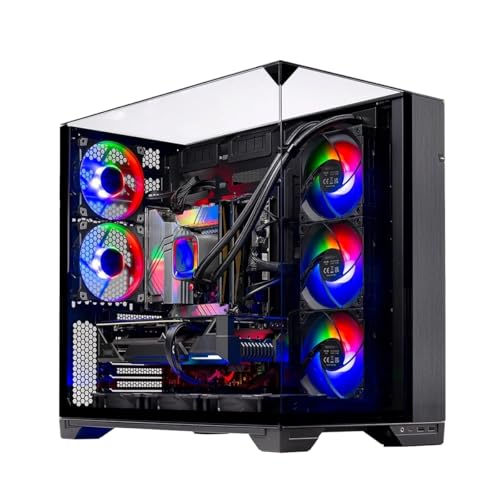
- 7800X3D delivers strong game-dev and gaming performance
- 32GB DDR5 RAM plus 1TB Gen4 SSD for responsive workflows
- RTX 5060 Ti 16GB is well-suited to modern engines and assets
Best For: Developers who want a balanced desktop for building, testing, and playing games.
Best for GPU-accelerated workflows – Lenovo ThinkStation P3 Tower Ultra 9
If you want a workstation pc for game developers that leans hard into responsive multitasking and GPU-assisted 3D work, the Lenovo ThinkStation P3 Tower is a strong fit. Its Core Ultra 9 processor, 64GB of DDR5 memory, and RTX 2000 Ada graphics give it the kind of headroom that helps with engine builds, editor performance, and asset-heavy workflows.
Best For: Developers working in Unreal Engine, Unity, or similar pipelines who need a capable tower for coding, level design, and moderate-to-heavy 3D workloads.
Pros:
- Core Ultra 9 CPU and 64GB DDR5 handle demanding dev multitasking well
- RTX 2000 Ada 16GB is a solid pro GPU for viewport work and graphics tasks
- 2TB Gen4 SSD provides fast project loading and ample local storage
- Tower design offers room for a serious workstation setup
Cons:
- Not the most affordable option for smaller studios or indie buyers
- 1-year warranty is shorter than some premium business workstations
- Large tower footprint may be overkill for compact desks
For a workstation pc for game developers, this Lenovo stands out as a balanced creator machine rather than a pure gaming rig. It has enough CPU, RAM, and pro-grade GPU power to support development work without feeling under-specced, though buyers focused on maximum value may want to compare it against lower-cost towers.
Best for eGPU Expansion – GMKtec K16 Ryzen 7 Mini PC
The GMKtec K16 is a compelling workstation pc for game developers who want a compact system with strong CPU performance, fast memory, and unusually flexible expansion. Its Ryzen 7 7735HS, dual 2.5GbE ports, USB4, and Oculink make it a smart choice if you plan to pair the machine with an external GPU or move large project files quickly between devices.
Best For: Developers who want a small-form-factor workstation with eGPU support, fast networking, and enough speed for coding, asset work, and light-to-moderate builds.
Pros:
- Oculink and USB4 give it standout expansion options for an eGPU-based dev setup.
- 32GB LPDDR5 memory and a 1TB NVMe SSD handle multitasking and active project files well.
- Dual 2.5GbE LAN ports are great for studio networks, file transfers, and server tasks.
- Triple-display support helps when you want a fuller coding, testing, and asset workflow.
Cons:
- Integrated graphics alone are not ideal for heavy 3D game development workloads.
- LPDDR5 memory is fast, but it is not the easiest part to upgrade later.
- The compact chassis may run louder under sustained compile or rendering loads.
For a workstation pc for game developers, the K16 stands out less as a brute-force tower and more as a flexible mini workstation that can grow with your setup. If you value portability, networking, and eGPU readiness over raw internal GPU power, it hits a very practical balance.
Best for VR-Ready Midrange Builds – Dell Tower Plus EBT2250 Workstation Desktop
If you want a workstation pc for game developers that can handle engine work, asset creation, and light-to-moderate testing without jumping to a full high-end tower, the Dell Tower Plus EBT2250 is a practical fit. Its Intel Ultra 7-265, RTX 5060, 32GB of DDR5, and 1TB NVMe SSD give it a strong balance of CPU speed, GPU capability, and responsive multitasking.
Best For: Developers who need a ready-to-use Windows 11 Pro workstation for game engines, 3D tools, and VR-capable workflows.
Pros:
- Intel Ultra 7-265 and RTX 5060 deliver solid performance for development and graphics workloads.
- 32GB DDR5 memory and a 1TB PCIe SSD support fast multitasking and quick project loading.
- Good connectivity with WiFi 7, Bluetooth 5.4, Ethernet, Thunderbolt 4, and multiple display outputs.
Cons:
- 460W power supply limits major future GPU or upgrade headroom.
- More of a balanced midrange workstation than a top-tier render or simulation machine.
For a workstation pc for game developers, this Dell tower makes sense if you want strong everyday dev performance, VR readiness, and modern ports in a prebuilt package. It is a sensible step up for creators who value convenience and a well-rounded spec sheet over maximum expandability.
Best for Local AI Workflows – Corsair AI Workstation 300 Desktop PC
If you want a compact workstation pc for game developers that also handles local AI tools, the Corsair AI Workstation 300 stands out with its Ryzen AI Max platform, unified memory, and unusually strong integrated graphics for its size. It is a practical pick for prototyping, shader work, indie development, and AI-assisted content creation when desk space is tight.
Best For: Developers who need a small, quiet system for game-dev workflows, local LLMs, and creative production without a full tower.
Pros:
- Compact 4.4L design fits easily into small desks or studio setups
- Unified LPDDR5X memory and Radeon 8050S iGPU help with AI and graphics workloads
- Ryzen AI Max platform is well suited to local LLMs and development tools
- Built-in security features, dual-fan cooling, and lifetime tech support add peace of mind
Cons:
- Integrated graphics won’t replace a high-end discrete GPU for heavy 3D rendering
- 1TB SSD may feel limiting for large projects, assets, and game libraries
- Premium AI-focused hardware can be overkill if you only need a basic dev machine
This is a strong workstation pc for game developers who want a space-saving machine that can juggle coding, asset work, and AI experimentation. It makes the most sense for creators who value efficiency and modern AI acceleration over maximum expandable graphics power.
Best AI-Ready Mini Workstation – GEEKOM GT13 MAX Core Ultra 9 Mini PC
If you want a compact workstation pc for game developers, the GEEKOM GT13 MAX is a strong fit thanks to its Intel Core Ultra 9 185H, fast DDR5 memory, and 1TB NVMe SSD. It’s built to handle coding, multitasking, light 3D work, and AI-assisted workflows without taking up much desk space.
Best For: Developers who need a small, capable Windows mini PC for game engines, content creation, and everyday productivity.
Pros:
- Core Ultra 9 185H and Intel AI Boost NPU support demanding dev and AI workloads
- Intel Arc graphics add useful headroom for game previews, light rendering, and creative tools
- 16GB DDR5 and 1TB SSD deliver fast boot times and responsive multitasking
- WiFi 7, 2.5G LAN, and Windows 11 Pro make it easy to drop into a modern setup
Cons:
- Integrated graphics won’t replace a dedicated GPU for heavy AAA development
- 16GB RAM is usable, but larger projects may benefit from an upgrade
- Mini PC thermal limits can matter under long, sustained render or compile loads
For a workstation pc for game developers who value portability, AI features, and a clean desk setup, this mini PC offers a lot of practical performance in a very small footprint. It’s best viewed as a compact development machine rather than a full desktop replacement for high-end graphics work.
Best Dual-CPU Multitasker – Dual-CPU RTX 5060 Workstation Gaming Desktop
If you want a workstation pc for game developers that prioritizes raw multitasking over compact design, this dual-CPU tower is built to handle demanding workloads. With 36 cores, 72 threads, 128GB of RAM, and an RTX 5060, it has the headroom for engine work, builds, testing, and playing back heavy projects without constant slowdowns.
Best For: Game developers who need a high-core-count Windows workstation for compiling code, running tools, and handling GPU-accelerated tasks.
Pros:
- Dual E5-2697 v4 CPUs deliver huge multi-threaded performance for builds and background tasks.
- 128GB DDR4 RAM is excellent for large projects, multitasking, and creative software.
- RTX 5060 supports modern graphics features for testing visuals and GPU workloads.
- 1TB SSD plus 4TB HDD gives you fast boot times and plenty of storage for assets.
Cons:
- Older Xeon platform is not ideal if you want the newest CPU architecture.
- Dual-CPU systems can be less power-efficient than newer single-socket workstations.
- Large tower design may be overkill for users who only need light development work.
This is a strong fit if you need a workstation pc for game developers that leans hard into multitasking, memory capacity, and storage. It is less about cutting-edge efficiency and more about giving dev teams and solo builders a lot of room to run demanding tools at once.
Best AI Workstation Mini PC – GEEKOM A9 Max Ryzen AI 9 HX 370
If you want a compact but seriously capable workstation pc for game developers, the GEEKOM A9 Max is built around AMD’s Ryzen AI 9 HX 370, fast DDR5 memory, and integrated Radeon 890M graphics. It’s a strong fit for coding, asset work, light-to-moderate 3D, and AI-assisted workflows without giving up the convenience of a mini PC.
Best For: Developers and creators who need a space-saving Windows 11 Pro machine for coding, multitasking, AI tools, and game-dev side work.
Pros:
- Ryzen AI 9 HX 370 offers plenty of CPU headroom for development and multitasking
- Dual USB4, dual HDMI 2.1, and Wi‑Fi 7 make it easy to build a flexible desk setup
- 32GB RAM and 1TB SSD give you a solid starting point for demanding projects
- Compact all-metal design with 3-year warranty adds appeal for long-term use
Cons:
- Integrated graphics are good, but not a substitute for a discrete GPU in heavy 3D workloads
- Mini PC form factor limits internal expansion compared with full towers
For teams or solo builders who want a workstation pc for game developers that balances speed, portability, and modern connectivity, the A9 Max is a practical all-in-one choice—especially if your workflow leans more toward coding, testing, and content creation than high-end GPU rendering.
Best for Small Dev Desks – ACEMAGICIAN M1 Ryzen 7 Mini PC
If you need a compact workstation pc for game developers, the ACEMAGICIAN M1 is a practical pick for coding, asset work, and light engine testing without taking over your desk. Its Ryzen 7 7735HS, Radeon 680M graphics, and 24GB LPDDR5 memory give it enough headroom for multitasking, while triple-display support makes it easy to keep your editor, docs, and game preview open at once.
Best For: Developers who want a small, quiet desktop for programming, light 3D work, and multi-monitor productivity.
Pros:
- Ryzen 7 7735HS and Radeon 680M deliver solid performance for everyday dev workflows
- 24GB LPDDR5 plus 512GB SSD helps with smooth multitasking and fast boot times
- Triple 4K display output is useful for IDEs, reference material, and testing
- 2.5G LAN, WiFi 6, and plenty of USB ports support a tidy workstation setup
Cons:
- Not ideal for heavy AAA game development or demanding GPU rendering
- Storage may need expansion if you keep large projects and asset libraries locally
As a workstation pc for game developers, this mini PC makes the most sense for smaller teams, indie workflows, and home offices where space matters as much as performance. It is not a tower replacement for high-end content creation, but it does offer a strong value balance for everyday development work.
Best for Compact High-End Builds – i9-14900HX RTX 5060 Ti Prebuilt
If you want a workstation pc for game developers that can also handle modern gaming, this prebuilt tower makes a strong case with an Intel Core i9-14900HX, RTX 5060 Ti graphics, and fast DDR5/NVMe storage. It is aimed at creators who need quick compile times, smooth multitasking, and enough GPU muscle for rendering, testing, and high-refresh gameplay.
Best For: Game developers, streamers, and creators who want a ready-to-run desktop with strong CPU/GPU performance for development and editing.
Pros:
- 24-core i9-14900HX delivers strong multitasking and compile performance
- RTX 5060 Ti supports ray tracing, DLSS 4, and solid 1440p gaming
- 1TB NVMe SSD and 16GB DDR5 help with fast boots and responsive workflows
- WiFi 6 and multiple display outputs suit multi-monitor setups
Cons:
- 16GB RAM may feel tight for heavier game-dev or content-creation workloads
- 8GB VRAM can limit larger assets or more demanding rendering projects
- Mobile-derived CPU is powerful, but not as upgrade-friendly as some full desktop platforms
This is a practical workstation pc for game developers if you want a prebuilt system that balances CPU speed, modern graphics, and everyday creator convenience without starting from scratch.
Best for High-FPS Dev Work – Skytech Gaming O11 Vision 7800X3D
If you want a fast, ready-to-use workstation pc for game developers, this Skytech build pairs a Ryzen 7 7800X3D with 32GB of DDR5 memory and a 16GB RTX 5060 Ti, giving you strong performance for Unreal, Unity, multitasking, and playtesting without a full custom build.
Best For: Developers who want a balanced gaming-and-dev desktop with strong CPU speed, plenty of memory, and modern GPU headroom for engine work and testing.
Pros:
- Ryzen 7 7800X3D is excellent for game dev tasks that benefit from high single-core and gaming performance
- 32GB DDR5 RAM and 1TB Gen4 NVMe SSD support smooth multitasking and fast project loading
- RTX 5060 Ti 16GB provides useful VRAM for modern engines, shaders, and asset-heavy workflows
- 360mm ARGB AIO cooling and 650W Gold PSU add better thermal and power stability
Cons:
- 1TB SSD may feel tight for large game projects and libraries
- 650W power supply leaves less upgrade room than higher-wattage systems
- Not the most workstation-focused choice for heavy CPU rendering or large-scale simulation
This is a practical pick if you want a workstation pc for game developers that feels snappy in both development tools and games, with enough GPU memory and system RAM to handle demanding modern workflows.
How We Picked the Best Workstation PC for Game Developers
We focused on systems that make sense for a Workstation PC for Game Developers: strong multi-core performance, capable graphics for engine previews and GPU-accelerated tasks, at least 32GB of memory on most picks, fast NVMe storage, and practical connectivity for external drives, displays, and peripherals. We also considered cooling, upgrade potential, and form factor because development PCs often run heavy workloads for hours at a time.
Quick Comparison
In simple terms, tower systems are better for sustained compile times, heavier rendering, and future upgrades. Mini PCs are appealing for smaller desks, travel, or lighter development work such as coding, asset review, and testing. Hybrid “creator” desktops sit in the middle, offering stronger graphics than most minis while staying more compact than full towers.
Key Buying Factors for a Workstation PC for Game Developers
CPU and Core Count
Game engines, compilers, light baking, and multitasking all benefit from more cores and strong single-thread performance. Look for modern CPUs that can handle both quick responsiveness and long background jobs.
GPU Capability
An RTX-class or similarly capable GPU helps with real-time engine previews, shader work, and accelerating content creation tools. If you work mainly in 2D, code, or lightweight 3D, you may not need the most powerful graphics option.
Memory and Storage
For modern development, 32GB RAM is a practical floor, while 64GB is better for larger projects, multiple tools, or virtual machines. A fast SSD reduces load times and keeps source control, assets, and build caches responsive.
Thermals and Noise
Stable cooling matters more than peak benchmarks. A workstation that throttles under load can slow compiles and make long sessions frustrating.
Ports and Expandability
Check for enough USB, display outputs, and networking. If you expect your setup to grow, choose a tower with extra RAM slots, drive bays, or GPU headroom.
Who Should Buy Which Workstation PC for Game Developers?
If you want the most balanced Workstation PC for Game Developers, choose a full tower with a modern CPU, 32GB to 64GB RAM, and a dedicated GPU. If you work in a small space or travel often, a mini PC can cover coding, lightweight testing, and asset management well. If you’re focused on larger Unreal or Unity projects, 3D content creation, or longer compile times, prioritize the strongest CPU/GPU combination and the most upgrade-friendly chassis you can afford.