Choosing the right workstation PC for product design can make a real difference in CAD responsiveness, rendering speed, and multitasking stability. The best systems balance CPU power, GPU capability, memory capacity, and storage speed for your workflow.
Below, we focus on 9 carefully selected workstations suited to product designers who need dependable performance for modeling, visualization, simulation, and AI-assisted creative work.
Best 9 Workstation PC for Product Design Picks for 2026
Best for Heavy 3D Work
Lenovo ThinkStation P3 Tower RTX 2000 Ada

- RTX 2000 Ada 16GB for pro graphics work
- 64GB DDR5 and 2TB SSD for fast multitasking
- Tower workstation design is easy to expand
Best For: Product designers and 3D professionals who need a powerful tower for CAD, rendering, and multitasking.
Best for AI-Heavy Design Work

- Compact 4.4L desktop for tight workspaces
- 64GB LPDDR5X and 1TB SSD included
- Good fit for AI-assisted creative and CAD workflows
Best For: Designers and engineers who want a space-saving AI-ready workstation.
Best for Heavy AI Workloads
NOVATECH AI Workstation Desktop PC

- RTX PRO 6000 with massive VRAM for pro design and compute
- 192GB DDR5 RAM and 10TB NVMe storage for large projects
- Core i9-14900K with liquid cooling for sustained performance
Best For: Product designers and technical teams running AI, rendering, and simulation-heavy workflows.
Best for Small Spaces
Lenovo ThinkStation P8 Threadripper PRO Workstation

- Threadripper PRO CPU for demanding multi-threaded tasks
- Tower workstation built for pro productivity and expansion
- Good fit for CAD, rendering, and simulation workflows
Best For: Product designers and 3D professionals who need strong CPU performance for complex workloads.
Best for Networked Workflows
MINISFORUM MS-02 Ultra Workstation Mini PC
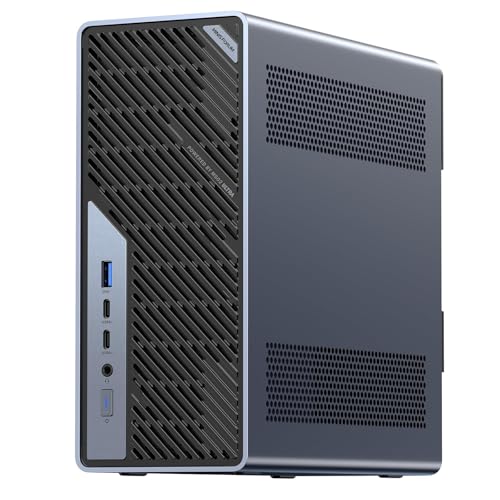
- Core Ultra 9 performance for demanding creative workloads
- Four M.2 slots and four DDR5 slots for major expansion
- Dual 25GbE plus 10GbE and 2.5GbE for fast team workflows
Best For: Designers and teams handling large files, fast transfers, and heavy multitasking.
Best for Heavy 3D and AI

- 64-core Threadripper for demanding rendering and simulation
- RTX 5090 delivers top-tier viewport and ray tracing performance
- 256GB ECC RAM plus 4TB SSD for huge project files
Best For: Product designers and 3D teams running complex, compute-heavy creative workflows.
Best for Heavy Creative Workloads
Dell Pro Tower i7-14700 Desktop
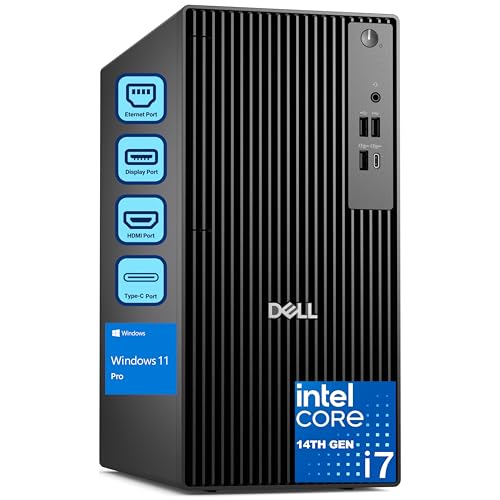
- 20-core Intel Core i7-14700 for demanding design and multitasking
- 32GB DDR5 RAM plus 1TB PCIe SSD for fast project handling
- Dual 4K display support and Windows 11 Pro for pro workflows
Best For: Product designers, CAD users, and small teams needing a business-class creative desktop.
Best for Extreme Workloads
Sentinel Threadripper PRO 9995WX 96-Core Workstation

- 96-core Threadripper PRO for heavy rendering and simulation
- RTX PRO 6000 with 96GB GDDR7 for advanced 3D and AI work
- 384GB ECC RAM and 16TB total storage for large projects
Best For: Product designers and studios working with massive files, complex scenes, and demanding multitasking.
Best for Heavy Design Workloads
Dell Tower Plus EBT2250 Workstation Desktop

- Intel Ultra 7-265 + RTX 5060 for CAD and 3D work
- 32GB DDR5 and 1TB SSD for smooth multitasking
- Thunderbolt 4, DisplayPort, and HDMI for multiple monitors
Best For: Product designers and creators who need a fast desktop for 3D modeling, visualization, and multitasking.
Best for Heavy 3D Work – Lenovo ThinkStation P3 Tower RTX 2000 Ada
If you need a workstation pc for product design that can handle demanding CAD, 3D modeling, and visualization tasks, this ThinkStation P3 Tower is built for that kind of workload. The Intel Ultra 9 processor, 64GB of DDR5 memory, 2TB SSD, and RTX 2000 Ada graphics make it a strong fit for designers who want serious responsiveness without jumping to a full enterprise build.
Best For: Product designers, engineers, and 3D creators who need a fast, expandable tower for professional design software.
Pros:
- RTX 2000 Ada 16GB supports demanding graphics and viewport performance
- 64GB DDR5 RAM helps with large files and multitasking
- 2TB SSD provides plenty of fast storage for projects and assets
- Workstation-class tower design is easier to expand and service
Cons:
- Overkill for simple 2D drafting or basic office use
- Large tower chassis takes more desk or floor space
- Premium hardware means a higher upfront cost
For a workstation pc for product design, this ThinkStation stands out when your workflow includes complex assemblies, rendering, or multiple creative apps at once. It is a practical choice if you want pro-level performance and room to grow over time.
Best for AI-Heavy Design Work – Corsair AI Workstation 300
If you want a compact workstation pc for product design that can also handle local AI tools, the Corsair AI Workstation 300 is a compelling niche pick. Its 64GB of fast LPDDR5X memory, Ryzen AI Max platform, and Radeon 8050S graphics make it suited to demanding creative apps, prototype work, and multitasking in a small footprint.
Best For: Designers and engineers who need a space-saving system for CAD, concepting, and AI-assisted workflows.
Pros:
- Compact 4.4L chassis saves desk space without feeling underpowered
- Unified memory and strong integrated graphics help with creative and AI workloads
- Built for local LLMs, engineering tools, and mixed productivity use
- Includes a 1TB SSD and 64GB memory out of the box
Cons:
- Integrated graphics won’t replace a high-end discrete GPU for heavy 3D rendering
- Small form factor may limit upgrade flexibility
- Premium positioning makes it a costly choice for basic design tasks
For buyers who care about AI acceleration as much as design performance, this is a smart workstation pc for product design in a compact package. It makes the most sense when you need modern memory bandwidth, strong responsiveness, and a small footprint more than maximum expandability.
Best for Heavy AI Workloads – NOVATECH AI Workstation Desktop PC
If you need a workstation pc for product design that can also handle demanding simulation, 3D rendering, and AI-heavy workflows, this NOVATECH tower is built for serious professional use. Its Core i9-14900K, RTX PRO 6000, massive memory pool, and fast NVMe storage make it a strong fit for complex files and multitasking-heavy creative pipelines.
Best For: Product designers, CAD users, and technical teams that also run rendering, AI, and large-data workloads.
Pros:
- RTX PRO 6000 graphics with huge VRAM for demanding design and GPU compute tasks
- 192GB DDR5 RAM and 10TB NVMe storage support large projects and smooth multitasking
- Core i9-14900K plus liquid cooling helps sustain high performance under load
- Assembled in the USA with lifetime technical support and a 3-year hardware warranty
Cons:
- Likely overkill for basic CAD, 2D drafting, or lighter creative work
- Large, high-end configuration may be expensive for solo designers or small studios
For teams that need a workstation pc for product design with extra headroom for rendering, analysis, and AI-assisted workflows, this is more of a no-compromise production machine than a general-purpose desktop.
Best for Small Spaces – Lenovo ThinkStation P8 Threadripper PRO Workstation
If you need a workstation pc for product design that can handle complex CAD assemblies, rendering, and simulation without slowing down, the Lenovo ThinkStation P8 is built for that kind of load. Its AMD Ryzen Threadripper PRO 7945WX, 32 GB of RAM, and professional workstation platform make it a strong fit for demanding creative and engineering workflows.
Best For: Product designers, CAD users, and 3D professionals who need high multi-threaded performance for heavy modeling and rendering.
Pros:
- Threadripper PRO CPU offers excellent multi-core performance for rendering and simulation.
- Workstation-class tower design is made for pro-grade productivity and expansion.
- NVIDIA graphics support helps with 3D design and visual workflows.
- 1 TB SSD and Windows 11 Pro provide a ready-to-use professional setup.
Cons:
- 32 GB RAM may be limiting for very large product design projects.
- Included 4 GB graphics is modest for advanced GPU-accelerated workloads.
As a workstation pc for product design, this Lenovo stands out more for raw CPU power than flashy extras, making it a practical choice if your workflow is dominated by heavy modeling, multitasking, and render jobs.
Best for Networked Workflows – MINISFORUM MS-02 Ultra Workstation Mini PC
If you need a compact workstation pc for product design that can move large files quickly and stay responsive under heavy multitasking, the MINISFORUM MS-02 Ultra is built for that kind of workflow. It combines a high-end Intel Core Ultra 9 processor, massive memory and storage expandability, and unusually strong networking for a mini PC.
Best For: Designers, engineers, and small teams that work with large project files, fast local transfers, and upgrade-heavy creative workflows.
Pros:
- Intel Core Ultra 9 285HX delivers strong performance for demanding creative and AI-assisted tasks.
- Four M.2 slots and four DDR5 SO-DIMM slots support serious storage and memory expansion.
- Dual 25GbE plus 10GbE and 2.5GbE networking is excellent for shared project environments.
- PCIe 5.0 x16 and USB4 v2 add flexibility for GPU, display, and high-speed accessory upgrades.
Cons:
- Premium hardware makes it more expensive than typical mini PCs.
- To reach its full potential, many buyers will need to add their own RAM, storage, or GPU.
- Its advanced configuration is more than casual users need.
For buyers prioritizing speed, expandability, and network throughput, this is a very capable workstation pc for product design. It stands out most when your workflow depends on large asset libraries, fast transfers, and room to grow over time.
Best for Heavy 3D and AI – CLX Horus Creator Workstation
If you need a workstation pc for product design that can also handle demanding rendering, simulation, and AI-assisted workflows, the CLX Horus Creator Workstation is built for the top end of the market. Its Threadripper 9980X CPU, RTX 5090 GPU, and massive memory pool make it a strong fit for professionals working with complex files and multitasking-heavy creative stacks.
Best For: Product designers, 3D artists, and VFX teams that need extreme compute headroom for large projects and real-time visualization.
Pros:
- 64-core Threadripper processor is ideal for CPU-heavy design, rendering, and simulation workloads
- RTX 5090 with 32GB GDDR7 offers elite viewport performance and ray tracing support
- 256GB DDR5 ECC memory and a 4TB NVMe SSD support large project files and smooth multitasking
- Dual LAN, WiFi 6E, and Windows 11 Pro make it ready for studio environments
Cons:
- Overkill for basic CAD or lighter design work
- Very high price puts it well beyond most single-user setups
- Large, power-hungry build is better suited to a dedicated desk or studio
For teams and creators who want a workstation pc for product design with serious expansion room, this CLX system is more about raw capability than value. It makes sense when your workflow regularly pushes past mainstream desktop limits.
Best for Heavy Creative Workloads – Dell Pro Tower i7-14700 Desktop
If you need a workstation pc for product design that can handle CAD, 3D rendering, and heavy multitasking without slowing down, this Dell Pro Tower is built for the job. Its 20-core Intel Core i7-14700, 32GB of DDR5 RAM, and 1TB PCIe SSD give it the headroom for creative apps, large files, and demanding business workflows.
Best For: Product designers, CAD users, and small teams who want a business-class tower for rendering, editing, and everyday productivity.
Pros:
- 20-core i7-14700 delivers strong performance for design, editing, and multitasking
- 32GB DDR5 RAM and 1TB SSD help keep large projects and apps moving quickly
- Dual 4K display support is useful for multi-monitor design and review workflows
- Windows 11 Pro and Dell business features suit office or fleet deployments
Cons:
- No built-in Wi-Fi, so you may need Ethernet or an adapter
- Less portable than an all-in-one or laptop setup
For buyers comparing a workstation pc for product design, this tower stands out more for dependable horsepower and business readiness than flashy extras. It is a practical choice if you want a desktop that can support serious creative work and scale with a growing team.
Best for Extreme Workloads – Sentinel Threadripper PRO 9995WX 96-Core Workstation
If you need a workstation pc for product design that can handle heavy CAD assemblies, 3D rendering, simulation, and AI-assisted creative workflows, this Sentinel build is aimed at serious performance first. The 96-core Threadripper PRO CPU, RTX PRO 6000 graphics, and massive memory capacity make it a strong fit for professionals who want fewer bottlenecks and more headroom.
Best For: Product designers, studios, and technical creatives who work with very large files, complex scenes, and multitasking-heavy workflows.
Pros:
- 96-core Threadripper PRO delivers exceptional multithreaded performance for rendering and simulation.
- RTX PRO 6000 with 96GB GDDR7 is built for demanding 3D, AI, and visualization tasks.
- 384GB ECC DDR5 RAM gives plenty of room for large projects and multitasking.
- 4TB Gen5 SSD plus 12TB HDD offers both fast scratch storage and deep file capacity.
Cons:
- Overkill for lighter design work or typical office use.
- Large, high-end configuration comes with a premium price.
- Not the most compact choice for small desks or shared spaces.
This is a serious workstation pc for product design when speed, stability, and expandability matter more than cost. It is best suited to professionals who regularly push CPU, GPU, and memory limits at the same time.
Best for Heavy Design Workloads – Dell Tower Plus EBT2250 Workstation Desktop
If you want a workstation pc for product design that can handle CAD, 3D modeling, rendering, and multitasking without feeling underpowered, this Dell Tower Plus is a strong fit. The Intel Ultra 7-265, 32GB of DDR5 memory, and GeForce RTX 5060 give it a modern performance mix for demanding creative workflows, while the 1TB SSD keeps projects and apps loading quickly.
Best For: Product designers, industrial designers, and creators who need a fast Windows desktop for 3D work, visualization, and everyday production tasks.
Pros:
- Intel Ultra 7-265 and RTX 5060 pair well for design apps, viewport work, and GPU-accelerated tasks.
- 32GB DDR5 memory is a solid baseline for large files, multitasking, and creative software.
- 1TB PCIe SSD provides quick boot times and responsive project storage.
- Plenty of ports, including Thunderbolt 4, DisplayPort, and HDMI, support multi-monitor setups.
Cons:
- 460W power supply leaves less room for major future GPU upgrades.
- It’s a tower desktop, so it takes more space than an all-in-one or mini PC.
For buyers comparing a workstation pc for product design, this Dell stands out most for balanced performance and broad connectivity rather than extreme expandability. It’s a practical choice if you want reliable speed for design software, preview work, and daily office tasks in one machine.
How We Picked the Best Workstation PC for Product Design
For a Workstation PC for Product Design, raw specs matter, but so does how those parts work together. We prioritized strong single-core and multi-core CPU performance, professional or high-end GPUs, ample RAM, fast NVMe storage, and platform stability. We also considered upgrade potential, cooling, and form factor so the list includes options for studios, solo designers, and space-conscious desks.
Quick Comparison
In general, Threadripper-class systems are best for heavy multitasking, simulation, and large assemblies. High-end Intel Core and Ultra-based towers offer a balanced mix of speed and efficiency for mainstream CAD and design work. Compact mini workstations suit lighter modeling or mobile-style setups, while GPUs like RTX Ada, RTX PRO, and top-tier GeForce cards are useful for viewport performance, ray tracing, and visualization.
Key Buying Factors for a Workstation PC for Product Design
CPU Performance
Choose a processor that matches your workload. For frequent rendering, simulation, and large project files, more cores help. For everyday CAD navigation and sketching, strong single-thread speed can matter just as much.
GPU Capability
If your workflow includes real-time visualization, rendering, or 3D scenes, invest in a capable discrete GPU. Professional GPUs can improve driver stability, while high-end consumer cards may offer excellent raw performance.
Memory and Storage
At least 32GB of RAM is a practical starting point, but 64GB or more is better for demanding assemblies, multitasking, and design software stacks. Fast SSDs reduce project load times and help keep large libraries responsive.
Thermals and Reliability
Product design workflows can sustain long loads. Look for strong cooling, a quality power supply, and a chassis designed for consistent performance under pressure.
Who Should Buy Which Workstation PC for Product Design?
If you work in advanced CAD, simulation, or rendering, choose a high-core-count tower with abundant RAM and strong GPU support. If you want a balanced workstation for product design, a mid- to high-end Intel or Lenovo tower is often the safest fit. If desk space is limited, a compact workstation mini PC can handle lighter design tasks, though it is not ideal for the heaviest 3D workloads. Buyers building a future-proof creative studio should favor expandable systems with room for more memory, storage, and graphics power.