Choosing the right workstation PC for architects and designers is about more than raw CPU speed. You need stable graphics performance, enough memory for complex models, and fast storage for smooth project work.
This roundup focuses on well-matched desktops for CAD, BIM, 3D visualization, and creative workflows, with options ranging from practical all-rounders to heavy-duty powerhouses.
Best 10 Workstation PC for Architects and Designers Picks for 2026
Best for Heavy 3D Work
Dell Tower Plus EBT2250 Workstation
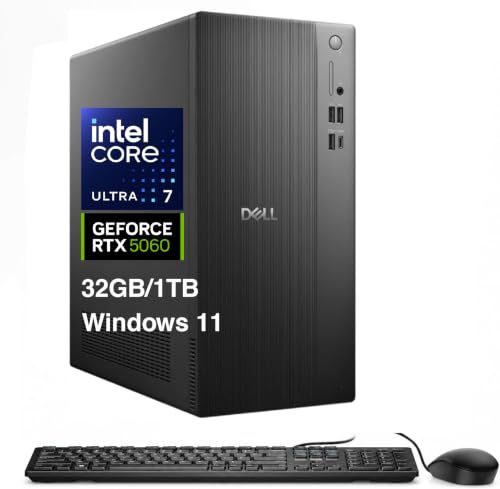
- Intel Ultra 7-265 and RTX 5060 handle demanding creative workloads
- 32GB DDR5 and 1TB SSD keep multitasking and loading times snappy
- Strong display and connectivity options suit multi-monitor studios
Best For: Architects and designers who need a fast tower for CAD, 3D work, and rendering.
Best for AI Workflows
Corsair AI Workstation 300 Desktop PC

- Compact 4.4L design fits tight creative desks
- Ryzen AI Max platform with up to 50 TOPS NPU acceleration
- Unified LPDDR5X memory supports AI and creative tasks
Best For: Architects and designers who want a compact AI-ready desktop for local models and creative workflows.
Best for Balanced 3-Display Workflows
Lenovo ThinkStation P3 Tower AI PC

- Triple 4K display support for multitasking
- Fast SSD and DDR5 memory for responsive work
- Wi-Fi 7 and strong port selection for modern offices
Best For: Architects and designers who want a dependable business tower with multi-monitor support.
Best for Multi-Core Workloads
Professional Workstation PC with GTX Titan

- Xeon E5 is tuned for sustained multi-threaded work
- GTX Titan 6GB supports CAD and creative software
- SSD + HDD combo gives speed and project storage
Best For: Architects, designers, and creators needing a ready-built workstation for rendering, CAD, and multitasking.
Best for AI-Assisted Productivity
Dell Pro Tower Plus, Core Ultra 5, 32GB, 1TB

- AI-ready Intel Core Ultra 5 with NPU
- 32GB DDR5 RAM and 1TB SSD
- Triple 4K monitor support for multitasking
Best For: Architects and designers who want a dependable tower for multitasking, collaboration, and AI-assisted office workflows.
Best for Reliable CAD Work

- 64GB RAM for smooth multitasking
- 512GB NVMe SSD + 2TB HDD storage
- Quadro P400 suits CAD-focused workflows
Best For: Architects and designers who want a dependable Xeon workstation for CAD and multitasking.
Best for Heavy-Duty 3D Work
Sentinel Threadripper PRO 9995WX Workstation

- 96-core Threadripper PRO for demanding rendering and compute
- RTX PRO 6000 with 96GB VRAM for pro visualization and CAD
- 384GB ECC DDR5 RAM with 4TB Gen5 SSD + 12TB HDD
Best For: Architects, designers, and 3D pros who need maximum workstation performance for rendering and large projects.
Best for Expansion
Lenovo ThinkStation P2 Tower Desktop AI PC

- 32GB DDR5 RAM and 1TB SSD for responsive multitasking
- Supports up to three 4K displays with HDMI and dual DP
- Wi-Fi 7 and broad USB connectivity simplify setup
Best For: Architects and designers who want a capable, upgrade-friendly tower for everyday creative work.
Best for Heavy CAD & Rendering
PCSP Precision 7920 Dual Xeon Workstation

- Dual Xeon Platinum 8160 CPUs with 48 cores/96 threads
- 384GB DDR4 RAM and up to 1.5TB support
- 1TB NVMe SSD + 4TB HDD for speed and storage
Best For: Architects and designers running demanding CAD, BIM, and rendering workloads.
Best Refurbished Workstation
PCSP Z4 G4 Xeon Workstation Tower

- Xeon W-2133 and 64GB RAM support CAD and multitasking
- 512GB NVMe SSD plus 2TB HDD balances speed and storage
- Quadro M4000 8GB fits design and 3D workflow needs
Best For: Architects and designers who want a capable refurbished workstation with pro-grade components.
Best for Heavy 3D Work – Dell Tower Plus EBT2250 Workstation
If you want a workstation pc for architects and designers that can handle CAD, 3D modeling, rendering, and multitasking without feeling underpowered, this Dell Tower Plus is built for exactly that kind of workload. The Intel Ultra 7-265, 32GB of DDR5 memory, and RTX 5060 graphics give it a strong mix of CPU speed, GPU acceleration, and responsiveness for pro apps.
Best For: Architects, designers, and creators who need a reliable tower for demanding creative software, multiple displays, and fast project work.
Pros:
- Intel Ultra 7-265 and RTX 5060 provide strong performance for design and rendering tasks
- 32GB DDR5 and 1TB PCIe SSD support smooth multitasking and quick file access
- Multiple display outputs plus Thunderbolt 4 and USB-C make it easy to build a pro workstation setup
- WiFi 7, Bluetooth 5.4, and RJ-45 offer modern, flexible connectivity
Cons:
- 460W power supply may limit future high-end upgrade headroom
- Not as compact as an all-in-one or small-form-factor desktop
- Includes basic peripherals, but you may still want a better monitor, keyboard, and mouse for pro work
Overall, this is a capable workstation pc for architects and designers who need solid performance now and a practical port selection for a multi-monitor office or studio setup. It is especially appealing if you want a ready-to-use tower that balances speed, graphics power, and everyday reliability.
Best for AI Workflows – Corsair AI Workstation 300 Desktop PC
The Corsair AI Workstation 300 is a compact workstation pc for architects and designers who want strong local AI, fast unified memory, and a small footprint for modern creative desks. It is especially appealing if your workflow mixes concept development, generative tools, and lighter 3D or visualization tasks.
Best For: Architects, designers, and AI-forward creatives who need a compact desktop for local models, concept work, and everyday production tasks.
Pros:
- Compact 4.4L chassis saves desk space without feeling like a basic mini PC
- Ryzen AI Max platform with RDNA 3.5 graphics and up to 50 TOPS NPU acceleration
- Unified LPDDR5X memory helps with bandwidth-heavy creative and AI workflows
- Built-in security features and Corsair software support add pro-level polish
Cons:
- Integrated graphics are not a substitute for a high-end discrete GPU in heavy rendering
- Compact design may limit upgrade flexibility versus a full-size tower
- Premium AI-focused specs can push the price above mainstream workstations
As a workstation pc for architects and designers, this Corsair stands out most when speed, portability, and AI assistance matter more than maximum expandability. It is a smart fit for forward-looking studios that want a tidy, powerful desktop for design ideation and local AI work.
Best for Balanced 3-Display Workflows – Lenovo ThinkStation P3 Tower AI PC
If you need a practical workstation pc for architects and designers, the Lenovo ThinkStation P3 Tower is a solid midrange pick with enough speed for CAD, 3D modeling, and day-to-day multitasking. Its Core Ultra 5 processor, DDR5 memory, and SSD storage make it responsive for project files, while the triple-display support helps keep tools, layers, and references spread out.
Best For: Architects, designers, and office pros who want a reliable business workstation with easy multi-monitor connectivity and Windows 11 Pro.
Pros:
- Supports up to three 4K displays for efficient design workflows
- Fast boot and app loading from the 512GB PCIe SSD
- Wi-Fi 7, Bluetooth, and plenty of front/rear ports for modern setups
- Windows 11 Pro adds productivity and business-friendly features
Cons:
- 16GB RAM is workable, but larger creative projects may benefit from an upgrade
- Integrated graphics limit heavier 3D rendering and GPU-accelerated work
- Storage capacity may feel tight for large asset libraries
As a workstation pc for architects and designers, this ThinkStation stands out more for reliability, display flexibility, and upgrade potential than for top-end graphics power. It makes the most sense for users who prioritize a clean professional desktop for drafting, planning, presentations, and everyday creative production.
Best for Multi-Core Workloads – Professional Workstation PC with GTX Titan
If you need a workstation pc for architects and designers that can handle CAD, rendering, multitasking, and light gaming, this Evounic build is aimed at dependable day-to-day performance. The Xeon E5 processor and GTX Titan graphics make it a practical fit for users who want a ready-to-run system without assembling parts themselves.
Best For: Architects, designers, and creators who want a prebuilt workstation for 3D work, editing, and general productivity.
Pros:
- Xeon E5 platform offers solid multi-core performance for rendering and heavy multitasking
- GTX Titan 6GB helps with CAD, creative apps, and GPU-accelerated workloads
- 512GB M.2 SSD plus 1TB HDD balances fast boot times with extra project storage
- 9 ARGB fans and a 650W PSU support cooling and stable operation
Cons:
- 16GB RAM may feel limiting for larger design files or more demanding 3D projects
- GTX Titan 6GB is capable, but not a modern high-end workstation GPU
- RGB-heavy styling may not suit a minimalist office setup
For buyers comparing a workstation pc for architects and designers, this model stands out more for practical multi-tasking and storage than cutting-edge component generation. It’s a sensible choice if you value a ready-built system with decent creative headroom and easy expansion potential.
Best for AI-Assisted Productivity – Dell Pro Tower Plus, Core Ultra 5, 32GB, 1TB
If you want a workstation pc for architects and designers that balances office-ready reliability with modern AI acceleration, the Dell Pro Tower Plus is a practical fit. Its Intel Core Ultra 5 chip, roomy 32GB of DDR5 memory, and fast 1TB SSD give you the responsiveness needed for multitasking across design tools, reference files, and collaboration apps.
Best For: Architects and designers who need a dependable business tower for CAD work, multitasking, and everyday creative workflows.
Pros:
- Intel Core Ultra 5 with NPU helps speed up AI-enabled tasks in productivity and creative apps.
- 32GB DDR5 RAM and 1TB SSD provide strong headroom for large projects and fast file access.
- Triple 4K monitor support is ideal for expansive layouts, timelines, and side-by-side workflows.
- Windows 11 Pro and Gigabit Ethernet make it well suited for professional office environments.
Cons:
- Not a dedicated graphics workstation, so heavy 3D rendering users may want a stronger GPU.
- Tower size takes up more desk or floor space than compact desktops.
Overall, this is a sensible workstation pc for architects and designers who prioritize smooth multitasking, enterprise reliability, and multi-display productivity over maximum graphics power.
Best for Reliable CAD Work – HP Z4 G4 Xeon Workstation
If you need a dependable workstation pc for architects and designers, the HP Z4 G4 offers a strong mix of CPU power, generous memory, and flexible storage for everyday CAD, 3D modeling, and project management tasks. It’s a renewed tower, so it can deliver workstation-class specs at a lower entry cost than many new systems.
Best For: Architects, designers, and technical users who want a capable Xeon-based tower for CAD workflows, large files, and multitasking.
Pros:
- 64GB of DDR4 RAM helps with multitasking and larger design files
- Fast 512GB NVMe SSD plus 2TB HDD gives both speed and ample storage
- Quadro P400 graphics support professional display and CAD-oriented workloads
- 750W power supply and dual LAN add flexibility for workstation use
Cons:
- Quadro P400 is entry-level for heavier 3D rendering or GPU-accelerated work
- Renewed condition may not appeal to buyers who want brand-new hardware
- Older Xeon platform is solid, but not the newest option available
Overall, this is a practical workstation pc for architects and designers who value memory, storage, and proven reliability over cutting-edge graphics performance. It makes the most sense for drafting, modeling, and office-to-studio productivity rather than demanding real-time visualization.
Best for Heavy-Duty 3D Work – Sentinel Threadripper PRO 9995WX Workstation
If you need a workstation pc for architects and designers that can chew through huge models, complex renders, and multitasking without slowing down, this Sentinel build is aimed squarely at that tier. The 96-core Threadripper PRO, RTX PRO 6000, and massive memory/storage configuration make it a serious choice for demanding creative pipelines and AI-assisted workflows.
Best For: Architects, designers, and 3D professionals who want extreme CPU/GPU headroom for rendering, simulation, and large project files.
Pros:
- 96-core Threadripper PRO is ideal for heavily threaded rendering and compute tasks
- RTX PRO 6000 with 96GB VRAM is built for pro visualization, CAD, and large scenes
- 384GB ECC DDR5 RAM helps with massive multitasking and memory-hungry projects
- 4TB Gen5 SSD plus 12TB HDD gives fast working storage and lots of archive space
Cons:
- Overkill for basic CAD, 2D drafting, or lighter design workloads
- Very high-end pricing makes sense only if you truly need workstation-class power
- Large, specialized configuration may be more than most solo users require
This is a powerhouse workstation pc for architects and designers who regularly move between CAD, rendering, and advanced content creation and want a machine that can scale with professional workloads.
Best for Expansion – Lenovo ThinkStation P2 Tower Desktop AI PC
If you need a dependable workstation pc for architects and designers, the Lenovo ThinkStation P2 Tower is built to handle demanding everyday workloads with room to grow. Its Core Ultra 5 processor, 32GB of DDR5 memory, and 1TB SSD make it a solid fit for CAD, 3D modeling, multitasking, and large project files without feeling overbuilt for a typical office setup.
Best For: Architects, designers, and other professionals who want a capable tower workstation with strong memory, fast storage, and practical upgrade potential.
Pros:
- 32GB DDR5 RAM and 1TB PCIe SSD help with smooth multitasking and fast load times
- Multiple display outputs, including HDMI and dual DisplayPort, support up to three 4K monitors
- Wi-Fi 7, Bluetooth, and a wide front/rear port selection improve workspace flexibility
- Windows 11 Pro adds business-friendly productivity features
Cons:
- Core Ultra 5 is capable, but not the best choice for the heaviest rendering workflows
- Tower size takes up more desk or floor space than a compact PC
- Includes a bundled USB flash drive, which adds value but not raw performance
This ThinkStation makes sense if you want a practical workstation pc for architects and designers that balances performance, connectivity, and easy expansion. It is a better fit for design productivity than for extreme visualization or render-farm-style workloads.
Best for Heavy CAD & Rendering – PCSP Precision 7920 Dual Xeon Workstation
If you need a workstation pc for architects and designers that can handle complex models, large assemblies, and render-heavy projects, this PCSP Precision 7920 is built for serious throughput. The dual Xeon Platinum CPUs, massive RAM ceiling, and pro-grade Quadro graphics make it a strong fit for demanding creative and technical workflows.
Best For: Architects, designers, and CAD users who prioritize multi-core performance, memory capacity, and reliable workstation graphics.
Pros:
- 48 cores and 96 threads for heavy multitasking and rendering
- 384GB DDR4 installed, with support for even larger memory configs
- 1TB NVMe SSD plus 4TB HDD for fast loads and ample project storage
- Quadro P2000 with four DisplayPort outputs for multi-monitor setups
Cons:
- Quadro P2000 is solid for pro apps, but not ideal for high-end GPU rendering
- Renewed status may not appeal to buyers wanting a brand-new system
- Large tower design is not meant for compact workspaces
For buyers seeking a workstation pc for architects and designers with lots of CPU power and memory headroom, this model stands out more for raw productivity than flashy graphics performance. It is best suited to users running CAD, BIM, visualization, or simulation tasks that benefit from a stable, high-capacity tower workstation.
Best Refurbished Workstation – PCSP Z4 G4 Xeon Workstation Tower
If you want a dependable workstation pc for architects and designers without paying full retail for a new tower, this refurbished HP Z4 G4 setup is a practical pick. It combines a Xeon processor, 64GB of RAM, fast NVMe storage, and Quadro graphics for day-to-day CAD, modeling, and presentation workflows.
Best For: Architects, designers, and technical users who need a proven, professionally specced workstation for CAD, 3D modeling, and multitasking on a tighter budget.
Pros:
- Xeon W-2133 CPU and 64GB RAM handle demanding design software and multitasking well
- 512GB NVMe SSD plus 2TB HDD gives you fast boot times and plenty of project storage
- Quadro M4000 8GB is built for stable performance in creative and CAD applications
- Windows 11 Pro and dual LAN make it ready for professional office or studio use
Cons:
- Refurbished status may not appeal to buyers who want brand-new hardware
- Older Quadro M4000 graphics are capable, but not ideal for the heaviest modern rendering loads
- Tower format takes up more desk space than a compact PC
This is a strong value-oriented option for anyone shopping for a workstation pc for architects and designers who cares more about reliability and spec balance than having the latest hardware. It is especially appealing if you need enough memory and graphics support for professional software but want to keep the total investment controlled.
How We Picked the Best Workstation PC for Architects and Designers
For a Workstation PC for Architects and Designers, we prioritized components that affect real project work: strong multi-core processors, dependable pro or high-end GPUs, ample RAM, and SSD storage for fast loading and caching. We also considered upgrade potential, connectivity for multi-monitor setups, and system balance so buyers avoid paying for parts that won’t improve design workflows.
Quick Comparison
There is a clear spread in this list: some systems are better suited to 2D drafting, documentation, and moderate 3D work, while others are built for large assemblies, rendering, simulation, and multi-app multitasking. Entry and midrange towers make sense for smaller studios or individual users, while Threadripper and dual-Xeon class systems are for demanding production environments.
Key Buying Factors for a Workstation PC for Architects and Designers
CPU
Architecture and design software can favor different workloads. Modeling and viewport work benefit from fast single-core performance, while rendering, exports, and simulation scale better with more cores. Choose the CPU based on your heaviest daily task, not just peak specs.
GPU
For 3D work and visualization, the graphics card matters just as much as the processor. A stronger GPU helps with smoother viewports, real-time rendering, and large scene handling. If your workflow includes rendering engines or GPU-accelerated tools, prioritize graphics headroom.
Memory and Storage
32GB RAM is a practical starting point for many professionals, while 64GB or more is safer for large files, multitasking, and rendering. A fast NVMe SSD keeps project files responsive, and extra secondary storage helps with archives, assets, and backups.
Displays and Expansion
Architects and designers often rely on dual or triple monitors. Check for enough video outputs, USB-C or USB-A ports, and room for future upgrades. Reliable connectivity matters if you use external drives, tablets, docks, or network storage.
Who Should Buy Which Workstation PC for Architects and Designers?
If you mainly draft, review plans, or work in lighter 3D, a modern tower with 16GB to 32GB RAM and a capable integrated or midrange GPU is usually enough. For most professional users, a balanced configuration with 32GB to 64GB RAM and a dedicated graphics card is the sweet spot. If you handle large BIM files, advanced visualization, animation, or CPU-intensive rendering, step up to a high-core-count workstation with more memory and stronger professional graphics.
In short, the best choice depends on your workflow mix, file size, and upgrade plans. Match the machine to your most demanding projects, and you’ll get the best long-term value from your workstation investment.