Upgrading a desktop’s networking can make a bigger difference than many people expect. The right card can improve download speeds, reduce lag, and add modern Bluetooth support in one clean install.
Below, we’ve rounded up the best PCIe network cards for desktop PC users looking for a simple upgrade path, whether you need faster wired Ethernet, better wireless coverage, or a future-ready Wi-Fi 7 option.
Best 9 Pcie Network Cards for Desktop PC Picks for 2026
Best for Low-Latency Gaming
TP-Link Archer TX55E WiFi 6 PCIe Card
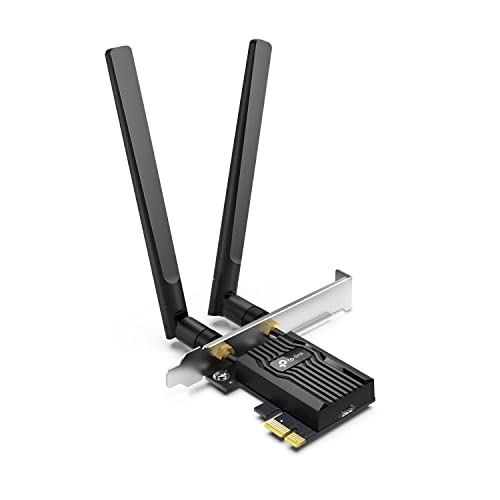
- Wi‑Fi 6 AX3000 speeds up to 2.4 Gbps
- Bluetooth 5.2 for accessories and peripherals
- Includes standard and low-profile brackets
Best For: Desktop gamers and power users who want fast Wi‑Fi plus Bluetooth in one PCIe card.
Best for 2.5GbE Upgrades
TP-Link TX201 2.5Gb PCIe Ethernet Adapter

- 2.5GbE speeds for faster wired networking
- Wide Windows and Linux compatibility
- Easy PCIe add-in card for desktop PCs
Best For: Desktop users who want an affordable and easy 2.5Gb Ethernet upgrade.
Best for Wi‑Fi 6E Gaming
TP-Link Archer TXE75E WiFi 6E PCIe Card
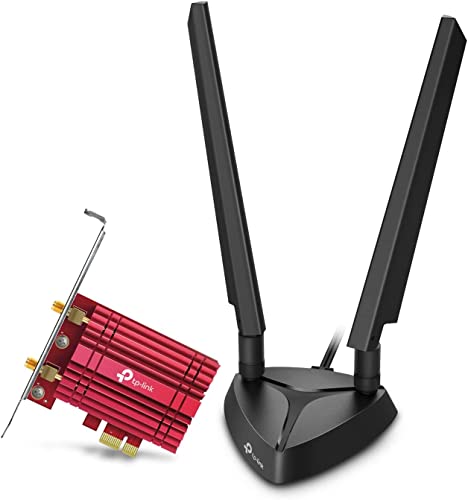
- Wi‑Fi 6E tri-band speeds up to AXE5400
- Magnetic dual-antenna base improves placement
- Bluetooth 5.3 and WPA3 add modern convenience
Best For: Desktop gamers and power users who want a fast Wi‑Fi 6E upgrade with Bluetooth.
Best for Wi‑Fi and Bluetooth Upgrade
TP-Link AC1200 PCIe WiFi Card for Desktop PC

- Dual-band AC1200 Wi‑Fi for up to 1200 Mbps combined speed
- Built-in Bluetooth 5.0 for peripherals and accessories
- Two external antennas plus standard and low-profile brackets
Best For: Desktop PC owners who want a simple wireless and Bluetooth upgrade in one PCIe card.
Best for Wi‑Fi 6E Speed
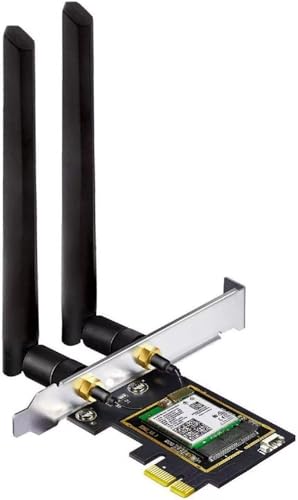
- Wi‑Fi 6E on the 6GHz band
- AX5400 speeds with MU-MIMO and OFDMA
- Bluetooth 5.3 plus low-profile bracket support
Best For: Desktop PC users with a Wi‑Fi 6E router who want a fast internal wireless upgrade.
Best for Wi‑Fi 7 Upgrades
TP-Link Archer TBE553E Wi‑Fi 7 PCIe Card

- Wi‑Fi 7 tri-band speeds up to BE9300
- Bluetooth 5.4 for modern desktop peripherals
- Magnetic antenna base and low-profile bracket
Best For: Desktop PC owners upgrading to Wi‑Fi 7 and Bluetooth 5.4 on a compatible Intel-based system.
Best for Wi‑Fi 6E Upgrades
TP-Link Archer TXE72E Wi‑Fi 6E PCIe Card

- Wi‑Fi 6E tri-band speeds up to 2.4 Gbps
- Bluetooth 5.3 plus WPA3 security
- High-gain antennas for better desktop range
Best For: Desktop PC users upgrading to fast Wi‑Fi 6E and Bluetooth 5.3.
Best for Easy Wireless Upgrade
TP-Link Archer T2E AC600 WiFi Card
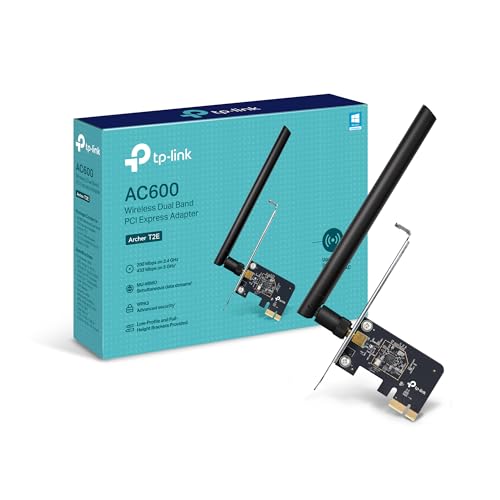
- Dual-band AC600 wireless for desktop PCs
- High-gain antenna for stronger reception
- MU-MIMO, WPA3, and low-profile bracket included
Best For: Desktop users who want a simple internal Wi‑Fi upgrade with modern security.
Best Wi‑Fi 7 Upgrade
TP-Link Archer TBE400E PCIe WiFi 7 Card

- Wi‑Fi 7 tri-band support
- Bluetooth 5.4 included
- High-gain antennas for better signal
Best For: Desktop builders who want a modern PCIe Wi‑Fi card with strong wireless specs and Bluetooth.
Best for Low-Latency Gaming – TP-Link Archer TX55E WiFi 6 PCIe Card
If you want one of the more capable pcie network cards for desktop pc use, the TP-Link Archer TX55E is built for fast Wi‑Fi 6 speeds, low latency, and added Bluetooth support. It’s a practical upgrade for gaming rigs and everyday desktops that need stronger wireless performance without moving to a full Ethernet setup.
Best For: Desktop users who want a fast Wi‑Fi 6 adapter with Bluetooth 5.2 for gaming, streaming, and peripherals.
Pros:
- Wi‑Fi 6 AX3000 speeds up to 2.4 Gbps for strong wireless performance
- OFDMA and MU-MIMO help reduce lag on busy networks
- Bluetooth 5.2 adds easy support for controllers, headphones, and keyboards
- Includes standard and low-profile brackets for wider case compatibility
Cons:
- Bluetooth requires connecting the USB cable to a motherboard header
- Windows 11 and 10 64-bit only, so it won’t suit older systems
- Best results depend on Wi‑Fi signal quality and router support
For buyers comparing pcie network cards for desktop pc setups, this model stands out by combining fast Wi‑Fi, modern Bluetooth, and gaming-friendly latency features in a straightforward internal card.
Best for 2.5GbE Upgrades – TP-Link TX201 2.5Gb PCIe Ethernet Adapter
If you want a simple speed bump for one of the most practical pcie network cards for desktop pc setups, the TP-Link TX201 is a straightforward 2.5GbE upgrade. It fits standard PCIe slots, adds faster wired networking than basic gigabit adapters, and keeps compatibility broad across Windows and Linux systems.
Best For: Desktop users who want an affordable 2.5Gb Ethernet upgrade for everyday file transfers, streaming, and faster local network performance.
Pros:
- 2.5GbE speeds offer a clear upgrade over standard 1GbE adapters
- Broad OS support, including Windows, Server editions, and Linux
- Simple PCIe add-in card design for most desktop builds
- Good fit for home networking, NAS access, and faster LAN transfers
Cons:
- Requires a free PCIe slot, so it is not ideal for very compact systems
- Full 2.5GbE benefits depend on a matching router, switch, or network hardware
For shoppers comparing pcie network cards for desktop pc use, the TX201 stands out as a practical middle-ground choice: faster than gigabit, easy to install, and widely compatible without adding unnecessary complexity.
Best for Wi‑Fi 6E Gaming – TP-Link Archer TXE75E WiFi 6E PCIe Card
If you want one of the more capable pcie network cards for desktop pc use, the TP-Link Archer TXE75E is built around Wi‑Fi 6E, a tri-band design, and a magnetic antenna base for stronger reception. It’s a practical upgrade for desktops that need faster wireless speeds, lower latency, and Bluetooth support without moving to a wired connection.
Best For: Desktop gamers and power users who want a fast Wi‑Fi 6E upgrade with Bluetooth 5.3 and strong antenna placement flexibility.
Pros:
- Wi‑Fi 6E support adds the cleaner 6 GHz band for less congestion
- Dual antennas with a magnetic base help improve signal positioning
- Bluetooth 5.3 adds convenient wireless support for controllers and headsets
- Includes WPA3, MU-MIMO, OFDMA, and both standard and low-profile brackets
Cons:
- 6 GHz Wi‑Fi requires a Windows 11 setup
- Bluetooth needs the USB cable connected to an internal F_USB header
- Best performance depends on having a Wi‑Fi 6E router nearby
For buyers comparing pcie network cards for desktop pc, this model stands out for modern wireless features rather than simplicity or budget pricing. It’s especially appealing if you want strong gaming-friendly specs, updated Bluetooth, and the flexibility to fine-tune antenna placement.
Best for Wi‑Fi and Bluetooth Upgrade – TP-Link AC1200 PCIe WiFi Card for Desktop PC
If you want one of the more practical pcie network cards for desktop pc use, the TP-Link Archer T5E is a straightforward way to add dual-band Wi‑Fi and Bluetooth 5.0 in a single PCIe card. It’s a sensible pick for older desktops, gaming rigs, and workstations that need a more stable wireless connection than a basic USB adapter can provide.
Best For: Desktop users who want both Wi‑Fi and Bluetooth on one easy-to-install expansion card.
Pros:
- Dual-band AC1200 wireless speeds for everyday streaming, browsing, and gaming.
- Bluetooth 5.0 support for controllers, headphones, keyboards, and mice.
- Two high-gain antennas help improve range and connection stability.
- Includes standard and low-profile brackets for broader desktop compatibility.
Cons:
- Bluetooth requires connecting the included USB cable to a motherboard F_USB header.
- Wi‑Fi 6 performance isn’t available if you need the newest wireless standard.
Overall, this is a well-rounded upgrade for buyers comparing pcie network cards for desktop pc setups and wanting reliable wireless plus Bluetooth in one card. It’s especially appealing if you value simple expansion, decent speed, and strong compatibility over cutting-edge specs.
Best for Wi‑Fi 6E Speed – OKN AX5400 PCIe WiFi 6E Card
If you want one of the faster pcie network cards for desktop pc setups, this OKN AX5400 card is built around Intel’s AX210 chipset with Wi‑Fi 6E, Bluetooth 5.3, and strong 2.4GHz, 5GHz, and 6GHz support. It’s a good fit for desktops that need faster wireless performance, lower latency, and better coverage than older Wi‑Fi adapters.
Best For: Desktop PC users with a Wi‑Fi 6E router who want a fast internal upgrade for gaming, streaming, and crowded networks.
Pros:
- Wi‑Fi 6E support adds the cleaner 6GHz band for less congestion.
- AX5400 speeds and MU-MIMO/OFDMA help improve throughput and responsiveness.
- Bluetooth 5.3 is handy for headsets, controllers, keyboards, and other peripherals.
- Includes both standard and low-profile brackets for broader desktop compatibility.
Cons:
- To use 6GHz, you need compatible hardware and the right Windows version.
- Setup requires a driver install, so it’s not quite plug-and-play.
For buyers comparing pcie network cards for desktop pc use, this model stands out for its modern wireless features and strong performance ceiling, especially if your router already supports Wi‑Fi 6E. It’s a practical pick for users who want a future-ready desktop wireless upgrade without moving to Ethernet.
Best for Wi‑Fi 7 Upgrades – TP-Link Archer TBE553E Wi‑Fi 7 PCIe Card
If you want one of the fastest pcie network cards for desktop pc setups available, the TP-Link Archer TBE553E is built for next-gen wireless performance. It combines Wi‑Fi 7, tri-band speeds, Bluetooth 5.4, and a magnetic antenna base to help a desktop PC get stronger signal, lower latency, and better overall responsiveness.
Best For: Desktop users with a Wi‑Fi 7 router who want top-tier wireless speed, low-latency gaming, and built-in Bluetooth in a PCIe add-in card.
Pros:
- Wi‑Fi 7 support with tri-band speeds up to BE9300-class performance
- Bluetooth 5.4 adds easy connectivity for headsets, controllers, and peripherals
- Magnetic antenna base and high-gain antenna help improve reception
- Low-profile bracket included for more flexible desktop installs
Cons:
- Requires a Wi‑Fi 7 router to get the biggest performance gains
- Not compatible with AMD systems, which limits some desktop builds
- Premium features may be overkill if you only need basic Wi‑Fi
This is a strong choice if you want modern wireless features in a desktop expansion card, especially for gaming or heavy streaming. Among pcie network cards for desktop pc, it stands out for speed and future-ready connectivity more than budget value.
Best for Wi‑Fi 6E Upgrades – TP-Link Archer TXE72E Wi‑Fi 6E PCIe Card
If you want one of the faster pcie network cards for desktop pc setups, the TP-Link Archer TXE72E is a strong fit for modern Wi‑Fi 6E routers. It adds tri-band wireless, Bluetooth 5.3, and low-latency features that make it useful for gaming, streaming, and general desktop upgrades.
Best For: Desktop users who want a Wi‑Fi 6E PCIe adapter with Bluetooth 5.3, strong range, and solid performance on Windows 11.
Pros:
- Wi‑Fi 6E support with up to 2.4 Gbps speeds on compatible networks
- Includes Bluetooth 5.3 for newer wireless peripherals
- High-gain antennas help improve range and signal stability
- MU-MIMO, OFDMA, and WPA3 add speed, efficiency, and security
Cons:
- 6GHz Wi‑Fi requires Windows 11
- Bluetooth function needs the internal USB header connection
- Best results depend on having a compatible Wi‑Fi 6E router
For buyers comparing pcie network cards for desktop pc use, this card stands out because it combines next-gen wireless performance with Bluetooth in one easy desktop upgrade. It is a practical choice if you want faster, cleaner connections without moving to a full wired setup.
Best for Easy Wireless Upgrade – TP-Link Archer T2E AC600 WiFi Card
If you want a simple way to add wireless connectivity to a tower or mini-tower, this TP-Link option is a practical pick among pcie network cards for desktop pc. It uses a dual-band internal PCIe design, so you can move off a crowded built-in adapter or older Wi‑Fi setup without a complicated install.
Best For: Desktop users who want a straightforward PCIe Wi‑Fi upgrade with dual-band support, a high-gain antenna, and modern security features.
Pros:
- Dual-band AC600 support helps provide flexible 2.4GHz and 5GHz connectivity.
- High-gain external antenna can improve reception and signal stability.
- MU-MIMO and WPA3 add better network efficiency and stronger security.
- Includes a low-profile bracket for smaller PC cases.
Cons:
- Requires an open PCIe slot and an internal installation.
- Only supports Windows 10 and 11.
For shoppers comparing pcie network cards for desktop pc, the Archer T2E stands out as a low-fuss wireless add-on that focuses on ease of setup, decent signal reach, and essential modern features rather than advanced enthusiast speeds.
Best Wi‑Fi 7 Upgrade – TP-Link Archer TBE400E PCIe WiFi 7 Card
If you want one of the more forward-looking pcie network cards for desktop pc, the TP-Link Archer TBE400E stands out with Wi‑Fi 7, tri-band support, Bluetooth 5.4, and included high-gain antennas. It’s a strong pick for builders who want faster wireless performance and modern features without moving to a full motherboard upgrade.
Best For: Desktop users who want a Wi‑Fi 7 PCIe card with Bluetooth 5.4, tri-band support, and broad AMD/Intel motherboard compatibility.
Pros:
- Wi‑Fi 7 and tri-band design for newer wireless networks
- Bluetooth 5.4 included for accessories and peripherals
- High-gain antennas help improve reception and stability
- Supports both AMD and Intel desktop motherboards
Cons:
- Not compatible with Windows 10
- Requires a PCIe slot and internal installation
This is a compelling upgrade if you’re shopping pcie network cards for desktop pc and want the newest wireless standard plus built-in Bluetooth in one add-in card. Just make sure your system runs a supported Windows version before buying.
How We Picked the Best Pcie Network Cards for Desktop PC
For this roundup of Pcie Network Cards for Desktop PC, we focused on real-world upgrade value: supported standards, band options, Bluetooth version, antenna design, OS compatibility, and whether the card fits a typical desktop build without unnecessary complexity. We also weighed the balance between performance and price, since the best choice is not always the fastest card on paper.
Quick Comparison
If you want the simplest upgrade, a wired 2.5GbE card is usually the most predictable choice. If you need wireless access, Wi-Fi 6 and Wi-Fi 6E models offer a strong blend of speed and stability for most homes, while Wi-Fi 7 options are the best pick for newer routers and users who want more headroom for the future.
Key Buying Factors for Pcie Network Cards for Desktop PC
Wireless Standard
Choose the newest standard your router can actually support. Wi-Fi 6 is plenty for many users, Wi-Fi 6E adds access to the 6GHz band for cleaner connections, and Wi-Fi 7 is the most future-forward option if your network hardware is ready for it.
Wired Speed
For Ethernet, 2.5GbE is a sweet spot for faster NAS transfers, large file backups, and multi-gig internet plans. If your modem, router, and cabling cannot support faster speeds, a premium network card will not help much.
Bluetooth Support
Many desktop users want Bluetooth for headphones, controllers, keyboards, and mice. Newer Bluetooth versions can improve stability and power efficiency, so this is worth paying attention to if you rely on wireless accessories.
Antenna Design and Placement
External antennas and magnetic bases can improve reception, especially when the PC sits under a desk or near interference. Compact internal cards are neat, but signal quality often depends on antenna quality and positioning.
System Compatibility
Check motherboard slot availability, case clearance, and driver support for your operating system. This is especially important for Pcie Network Cards for Desktop PC buyers using older versions of Windows or planning a Linux install.
Who Should Buy Which Pcie Network Cards for Desktop PC?
If you mostly game or stream on Wi-Fi, choose a Wi-Fi 6 or Wi-Fi 6E card with strong antennas and Bluetooth support. If you have a fast internet plan and want the most stable connection, a 2.5GbE Ethernet adapter is the safer bet. If you are building a new PC or want the longest useful lifespan, a Wi-Fi 7 card is the best future-proof choice, provided your router can take advantage of it.
In short, match the card to your network first, then to your desktop’s available slots and your everyday needs. That keeps the upgrade practical and helps you get the most value from your purchase.