Choosing the right expansion card can make or break a NAS upgrade. The best options balance port count, host interface width, driver support, and reliable boot behavior.
Below, we focus on practical picks for home servers and small NAS builds, so you can match the card to your motherboard, drive count, and performance needs.
Best 10 Sata Expansion Cards for Nas Build Picks for 2026
Best for Plug-and-Play NAS Expansion
GLOTRENDS 6-Port PCIe SATA Card
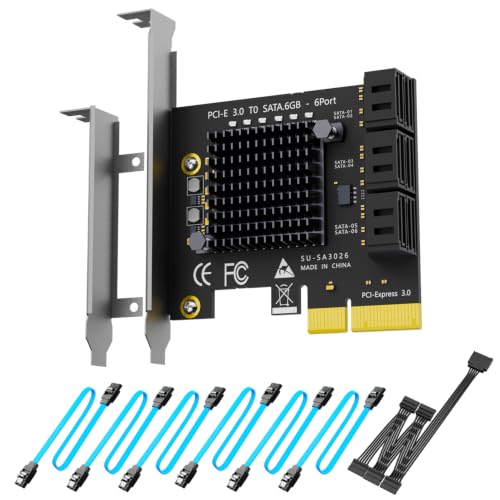
- Six SATA III ports for NAS or storage-server expansion
- Includes cables, power splitter, and low-profile bracket
- Broad plug-and-play compatibility with major OS and NAS systems
Best For: Home NAS builders who want a simple, bundled SATA expansion solution.
Best Budget 4-Port SATA Expansion
PCIe x1 to 4-Port SATA III Card

- Adds four SATA III 6Gbps ports for extra drive capacity
- Fits PCIe x1, x4, x8, and x16 slots
- Supports SSDs, HDDs, Windows, and Linux
Best For: Small NAS or storage builds that need an inexpensive way to add a few SATA ports.
Best for Easy Installation
GLOTRENDS 4-Port PCIe SATA Card

- 4 SATA III ports for NAS or software RAID expansion
- Includes SATA cables, power splitter, and brackets
- Works with Windows, Linux, Mac OS, and NAS systems
Best For: Builders who want a plug-and-play 4-port SATA expansion card for a simple NAS upgrade.
Best for Plug-and-Play Boot Drives
4-Port SATA 3.0 Expansion Card

- Adds 4 SATA III ports via PCIe x1
- Bootable support for SSDs and HDDs
- Includes 4 cables and both bracket sizes
Best For: Users who want a simple 4-port SATA expansion card with boot support and included cables.
Best for Easy Setup
GLOTRENDS SA3034-C 4-Port PCIe X1 SATA Card

- 4 SATA ports for NAS or storage expansion
- Includes cables, splitter, and both bracket sizes
- Plug-and-play support for major desktop and NAS platforms
Best For: Builders who want an easy, low-fuss way to add four SATA drives to a NAS or storage PC.
Best for 4-Bay Expansion
PCIe SATA 4-Port Expansion Card

- Adds four SATA 3.0 ports for small NAS builds
- Marvell 88SE9215 chipset for stable compatibility
- Includes cables and low-profile bracket
Best For: Desktop NAS builders who want simple, non-RAID four-drive expansion.
Best for Maximum Drive Count
GLOTRENDS SA3112-C 12-Port SATA Card

- 12 SATA ports for large NAS storage arrays
- Includes SATA cables and power splitters
- Works with Windows, Linux, Mac OS, and NAS
Best For: NAS and home server builders who want lots of SATA ports from a simple add-in card.
Best for Multi-Drive NAS Expansion

- Adds six SATA 6Gbps ports for SSDs or HDDs
- Driver-free support for Windows, Linux, macOS, and many NAS systems
- Includes 6 SATA cables, power cable, and two bracket sizes
Best For: NAS and home server builders who want an easy six-drive expansion card.
Best High-Port Expansion
PCIe x1 to 12-Port SATA3.0 Card

- 12 SATA 3.0 ports from a single PCIe x1 slot
- 6Gbps SATA support for SSDs and HDDs
- Works with Windows, Linux, Ubuntu, ESXi, and Synology NAS
Best For: NAS builders and home lab users who need maximum drive expansion from one slot.
Best for Broad Compatibility
PCIe 4-Port SATA Card for NAS Builds

- 4 SATA 6Gbps ports from a PCIe 2.0 x1 slot
- Works with Windows, Linux, Mac OS, and NAS systems
- Includes 4 cables and a low-profile bracket
Best For: DIY NAS builders who want a simple, widely compatible 4-port SATA expansion card.
Best for Plug-and-Play NAS Expansion – GLOTRENDS 6-Port PCIe SATA Card
If you want sata expansion cards for nas build setups that are simple to install and easy to scale, the GLOTRENDS SA3026-C is a practical pick. Its 6-port design, bundled cables, and broad OS support make it a straightforward way to add more SATA drives for a storage pool or software RAID.
Best For: Home NAS builders and DIY users who want a plug-and-play way to add six SATA drives without hardware RAID.
Pros:
- Six SATA III ports give you plenty of room to expand a NAS or storage server.
- Works with Windows, Linux, Mac OS, and many NAS systems with no driver hassle.
- Includes SATA cables, power splitter, and both standard and low-profile brackets.
- Built-in LEDs make drive activity and status easy to monitor at a glance.
Cons:
- No hardware RAID support, so RAID management depends on your OS or software.
- Upstream bandwidth is limited by the PCIe x2 interface, so heavy multi-drive use has a ceiling.
- Best suited for SATA drives only, not mixed NVMe expansion.
Overall, this card is a strong fit if you need sata expansion cards for nas build projects and value simplicity over advanced RAID features. It is especially appealing for users who want a complete, ready-to-install package with minimal setup friction.
Best Budget 4-Port SATA Expansion – PCIe x1 to 4-Port SATA III Card
If you need a simple, low-cost way to add more drives, this PCI-E X1 to SATA 3.0 controller card is a practical option for sata expansion cards for nas build projects. It gives you four SATA III 6Gbps ports and supports both SSDs and HDDs, so it works well for light NAS upgrades, backup arrays, or basic storage expansion.
Best For: Builders who want an inexpensive 4-port SATA add-in card for a small NAS, media server, or general storage expansion.
Pros:
- Four SATA III 6Gbps ports expand drive capacity without using a motherboard SATA port
- Supports PCIe x1, x4, x8, and x16 slots for broad compatibility
- Works with both SSDs and HDDs on Windows, Linux, and older systems
- Good value for straightforward storage expansion
Cons:
- Not ideal for high-performance or enterprise NAS workloads
- Basic controller design may not suit advanced RAID or boot-drive needs
For budget-minded builders, this is one of the more straightforward sata expansion cards for nas build setups when the goal is simply to add dependable SATA ports. It is best suited to smaller arrays and general storage use rather than demanding, high-throughput deployments.
Best for Easy Installation – GLOTRENDS 4-Port PCIe SATA Card
If you want a straightforward way to add more drives, the GLOTRENDS SA3234-C is a practical pick for sata expansion cards for nas build. It gives you four SATA III ports, broad OS support, and a full accessory kit, so it’s easier to drop into a home NAS or storage-focused PC without piecing together extra parts.
Best For: Builders who want a plug-and-play 4-port SATA expansion card with cables and brackets included for a simple NAS or storage upgrade.
Pros:
- Four SATA III ports for expanding a small NAS or creating a larger software-RAID array
- Includes SATA cables, power splitter, and both full-height and low-profile brackets
- Compatible with Windows, Linux, Mac OS, and NAS systems with no driver hassle
- Boot support from port 1 adds flexibility for system-drive use
Cons:
- No hardware RAID support, so array management depends on your OS or NAS software
- Only four ports, which may be limiting for larger multi-bay builds
- Performance is shared through the PCIe x4 interface, so it is not ideal for very heavy simultaneous transfers
Overall, this card is a solid fit if you value ease of setup, included accessories, and broad compatibility over advanced RAID features. For many sata expansion cards for nas build projects, that balance makes it a sensible, low-friction upgrade.
Best for Plug-and-Play Boot Drives – 4-Port SATA 3.0 Expansion Card
If you need simple, affordable storage expansion, this card is a practical pick among sata expansion cards for nas build projects and general PC upgrades. It adds four SATA 3.0 ports over a PCIe x1 slot, supports bootable drives, and includes both low-profile and full-height brackets for flexible installation.
Best For: Builders who want a basic 4-port SATA expansion card for adding bootable SSDs or HDDs to a desktop, workstation, or simple NAS-style setup.
Pros:
- 4 SATA III ports with up to 6Gbps support for extra drives
- Boot support makes it useful for OS drives and older systems
- Includes 4 SATA cables plus both low-profile and full-height brackets
- Fanless design keeps operation quiet and low maintenance
Cons:
- Non-RAID card, so it is not meant for managed array builds
- PCIe x1 bandwidth may limit peak performance with multiple fast drives
- Driver-free setup is not guaranteed on every OS or legacy platform
For straightforward storage expansion, this model covers the essentials without extra complexity. It is a sensible choice if you want sata expansion cards for nas build use cases where bootability, included accessories, and quiet operation matter more than RAID features.
Best for Easy Setup – GLOTRENDS SA3034-C 4-Port PCIe X1 SATA Card
If you want a straightforward add-on for sata expansion cards for nas build projects, the GLOTRENDS SA3034-C is a simple 4-port option that works across Windows, Linux, Mac OS, and many NAS setups. It uses a PCIe 3.0 x1 connection, includes the cables and brackets you need, and is aimed at users who want quick storage expansion without stepping up to a more complex RAID controller.
Best For: Builders who want an easy, low-fuss way to add four SATA drives to a NAS, media server, or general storage PC.
Pros:
- 4 SATA III ports for expanding storage pools or software RAID arrays
- Includes SATA cables, SATA power splitter, and both full-height and low-profile brackets
- Plug-and-play support for Windows, Linux, Mac OS, and many NAS systems
- LED indicators make it easy to monitor drive activity at a glance
Cons:
- No hardware RAID support
- PCIe x1 bandwidth is fine for basic storage, but not ideal for heavy multi-drive throughput
- Boot support is limited to port 1
For sata expansion cards for nas build projects that prioritize compatibility and convenience, this card is a practical pick rather than a performance-first one. It’s a good fit if you mainly need dependable extra SATA ports and want the included accessories to simplify installation.
Best for 4-Bay Expansion – PCIe SATA 4-Port Expansion Card
If you’re comparing sata expansion cards for nas build, this 4-port PCIe SATA adapter is a straightforward way to add more drives without moving up to a full RAID card. It uses the Marvell 88SE9215 chipset, supports bootable system disks, and includes four SATA cables plus a low-profile bracket, making it a practical option for compact desktop-based NAS setups.
Best For: Desktop NAS or home server builders who need a simple, non-RAID way to add up to four SATA drives.
Pros:
- 4 SATA 3.0 ports with 6Gbps support for basic expansion
- Marvell 88SE9215 chip for better stability and compatibility
- Includes 4 cables, low-profile bracket, and install accessories
- Bootable support can help with system or utility drives
Cons:
- Non-RAID design limits advanced storage configurations
- Only four ports, so it may not suit larger NAS builds
- Best fit for desktop PCIe slots rather than server-grade expansion
For budget-conscious builders, this card covers the essentials well: multiple SATA ports, decent chipset support, and bundled cables. It stands out among sata expansion cards for nas build when you want an easy add-on for a small drive array rather than a more complex storage controller.
Best for Maximum Drive Count – GLOTRENDS SA3112-C 12-Port SATA Card
If you need a straightforward way to add a large number of drives, this is one of the more practical sata expansion cards for nas build projects. The GLOTRENDS SA3112-C gives you 12 SATA ports, broad OS support, and bundled cables, making it a convenient option for software RAID or large media storage arrays.
Best For: NAS builders and home server users who want maximum drive count from a simple PCIe x1 card with included cabling.
Pros:
- 12 SATA ports for high-capacity NAS and storage-pool builds
- Plug-and-play support for Windows, Linux, Mac OS, and NAS systems
- Includes SATA data cables and power splitter cables for easier setup
- LED indicators help confirm drive activity at a glance
Cons:
- No hardware RAID support
- PCIe x1 bandwidth is shared across multiple ports
- Regular-profile bracket may not suit compact cases
For builders focused on adding many SATA drives without hunting for extra accessories, the SA3112-C is a strong fit. It won’t replace a true hardware RAID card, but for flexible, budget-conscious sata expansion cards for nas build setups, it offers a lot of connectivity in one package.
Best for Multi-Drive NAS Expansion – 6-Port PCIe 3.0 SATA Card
If you need one of the more practical sata expansion cards for nas build projects, this 6-port PCIe 3.0 x4 card is built to add capacity without much setup hassle. It uses the ASM1166 controller, supports six SATA 6Gbps drives at once, and includes extra brackets plus six SATA cables, which makes it a convenient pick for NAS boxes, servers, or monitoring systems.
Best For: Users who want a straightforward way to add multiple SATA drives to a NAS or home server with driver-free setup.
Pros:
- Six SATA 3.0 ports with support for SSDs and HDDs
- Plug-and-play compatibility for Windows, Linux, macOS, and many NAS systems
- Includes six SATA cables, power cable, and two bracket sizes for flexible installation
- Aluminum heatsink helps keep the card stable during 24/7 use
Cons:
- Supports software RAID only, not hardware RAID
- Cannot be used for boot drives
- Best value depends on whether you actually need all six ports
For builders comparing sata expansion cards for nas build plans, this card stands out for its simple compatibility, bundled accessories, and strong drive count. It is less about advanced RAID features and more about dependable, no-fuss storage expansion.
Best High-Port Expansion – PCIe x1 to 12-Port SATA3.0 Card
If you need one of the most practical sata expansion cards for nas build projects, this PCIe x1 to 12-port SATA card is all about maximizing drive count from a single slot. It supports up to 12 independent SATA 3.0 connections, offers 6Gbps transfer speeds, and includes 12 status LEDs to make drive checks easier during setup and troubleshooting.
Best For: NAS builders and home lab users who want to add a lot of SATA drives from one PCIe x1 slot without a complicated install.
Pros:
- Expands one PCIe x1 slot into 12 SATA 3.0 ports
- Up to 6Gbps SATA speed helps SSDs and HDDs perform well
- Includes 12 status LEDs for easier drive monitoring
- Works with Windows, Linux, Ubuntu, ESXi, and Synology NAS
Cons:
- PCIe x1 bandwidth may limit aggregate performance with many active drives
- May be overkill if you only need a few extra SATA ports
- Compatibility can still depend on your motherboard, NAS OS, and power setup
For builders who need dense storage expansion, this is a strong fit among sata expansion cards for nas build use cases because it prioritizes port count, broad platform support, and straightforward installation. It is a sensible option when the goal is adding lots of drives quickly rather than chasing enthusiast-level controller features.
Best for Broad Compatibility – PCIe 4-Port SATA Card for NAS Builds
If you need one of the more flexible sata expansion cards for nas build projects, this 4-port PCIe SATA card is a practical pick. It adds four SATA 6Gbps ports over a PCIe 2.0 x1 slot, includes both standard and low-profile brackets, and works with Windows, Linux, Mac OS, and NAS environments without driver hassles.
Best For: DIY NAS builders who want a simple, widely compatible 4-port SATA add-in card with included cables and a low-profile bracket.
Pros:
- Supports 4 SATA drives at up to 6Gbps per port
- Broad OS compatibility, including NAS, Linux, Windows, and Mac
- Includes 4 SATA cables plus a low-profile bracket for small cases
- AHCI boot support and hot-swap capability add flexibility
Cons:
- Not a hardware RAID card
- PCIe 2.0 x1 bandwidth can be a bottleneck under heavy multi-drive loads
- Best suited to basic expansion rather than high-performance storage builds
Overall, this card makes sense if you want a low-friction way to add four extra SATA ports without worrying about driver compatibility. For sata expansion cards for nas build setups centered on straightforward storage expansion, it offers a balanced mix of value, accessory bundle, and compatibility.
How We Picked the Best Sata Expansion Cards for Nas Build
For Sata Expansion Cards for Nas Build use, we prioritized native SATA stability, sensible port-to-lane pairing, compatibility with common operating systems, and low-profile support where it matters. We also looked for cards that are easier to deploy in real NAS cases, including models with included cables and clear boot support.
Quick Comparison
Start with your slot type and lane availability. An x1 card is fine for modest array growth, but higher-port cards often perform better when paired with an x4 PCIe slot. If your NAS will host several hard drives or a mix of SSDs and HDDs, prefer cards that avoid oversubscribing a single lane and that clearly support non-RAID operation.
Key Buying Factors for Sata Expansion Cards for Nas Build
Port Count Vs. PCIe Bandwidth
More ports do not automatically mean better performance. A 12-port card on a limited link can be useful for bulk storage, but it will not deliver full bandwidth to every drive at once. Match the card to your workload: media storage and backups need less bandwidth than multiple active VMs or database volumes.
Controller Compatibility
Look for broad OS support and proven NAS compatibility. For Linux-based NAS platforms, chipset and driver maturity matter more than marketing claims. Avoid cards that are vague about controller behavior, because stable detection is critical after reboots and updates.
Boot and RAID Behavior
If you want to boot from the card or use it as a system disk path, confirm that the model explicitly supports booting. For most NAS users, non-RAID cards are preferable because the NAS software should manage redundancy, not the expansion card.
Case Fit and Drive Cabling
Low-profile brackets, included SATA cables, and compact layouts can save time in tighter NAS cases. Check physical clearance, especially if the card will sit near large CPU coolers, backplanes, or thick cabling.
Who Should Buy Which Sata Expansion Cards for Nas Build?
If you are building a small NAS with a few extra drives, a 4-port PCIe x1 card is the simplest and most cost-effective choice. If you need more headroom for a growing archive, step up to a 6-port PCIe x4 model. For dense storage builds where the motherboard slot count is limited, a 12-port card can be attractive, but only if your board, airflow, and workload can support it. In short, choose the card that fits your slot layout, power budget, and expansion plan—not just the highest port number.