Choosing budget bike navigation computers does not have to mean settling for clunky screens or unreliable route guidance. Today’s affordable units can offer color displays, GPS tracking, rerouting, and app sync at prices that make sense for everyday riders.
This roundup focuses on the features that matter most on the road and trail, so you can quickly narrow down the best value option for your riding style, setup, and budget.
Best 10 Budget Bike Navigation Computers Picks for 2026
Color Navigation Upgrade
GEOID CC600 2.4" GPS Bike Computer

- 2.4-inch color screen with route prompts
- GPX import and automatic rerouting
- WiFi, Bluetooth, and ANT+ sensor support
Best For: Riders who want affordable color navigation and trainer support
Ultra-Light Basic GPS
CYCPLUS G1 Wireless Bike Computer

- 70 g wireless unit with GPS ride tracking
- Automatic backlight and IPX6 waterproofing
- Long battery life with simple button controls
Best For: Riders who want a lightweight, basic GPS computer
Big-Screen Route Planner
GEOID CC700 Pro Color Touch GPS

- 2.8-inch touchscreen with offline maps
- Turn prompts and re-route planning
- WiFi, Bluetooth, ANT+, and AGNSS support
Best For: Riders who want a larger touchscreen navigation computer
Off-Course Safety Pick
iGPSPORT BSC300T Touchscreen GPS Computer
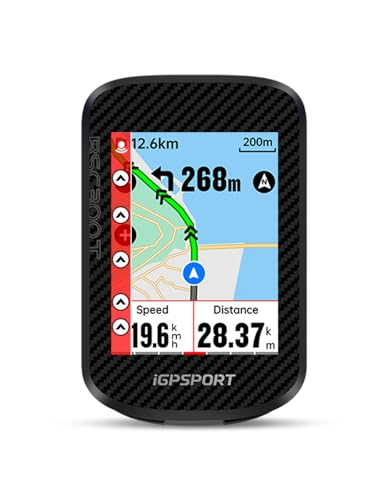
- Offline maps with off-course warnings
- 130+ ride data points and real-time tracking
- ANT+ and Bluetooth 5.0 sensor support
Best For: Riders who want offline mapping and off-course alerts
Compact All-Round Tracker
CYCPLUS GPS Wireless Bike Computer M2

- 2.5-inch anti-dazzling LCD
- Up to 12 data fields across 3 tables
- 70-hour battery life with IPX6 waterproofing
Best For: Riders who want a straightforward GPS computer with long battery life
Color Navigation Pick
Magene C506SE Wireless GPS Bike Computer

- 2.4-inch color screen with turn prompts
- Route re-planning, GPX upload, and off-course alerts
- Fast 5-second positioning with Bluetooth/WiFi
Best For: Cyclists who want colorful navigation and broad sensor support
Value Navigation Workhorse
COOSPO CS500 Bike Computer Wireless

- Preloaded maps with turn prompts
- 2.6-inch auto-backlight display
- 45-hour battery life and IPX7 waterproofing
Best For: Riders who want reliable navigation and long runtime
Budget Navigator
iGPSPORT BSC200S GPS Bike Computer

- App route creation and third-party imports
- One-touch navigation plus back-to-start guidance
- 25-hour battery life with IPX7 waterproofing
Best For: Riders who want an affordable navigation-focused bike computer with solid battery life and basic smart features.
Big-Screen Route Pick
GEOID CC700 Color Screen Bike Computer

- Large 2.8-inch color display with Asahi glass
- Turn reminders and automatic re-routing for routes
- WiFi, Bluetooth, and ANT+ support with fast positioning
Best For: Riders who want a larger screen, colorful navigation, and easy device syncing for training and route use.
Touchscreen Value Choice
COOSPO CS600 GPS Bike Computer

- 2.4-inch color touchscreen with auto-backlight
- Built-in navigation and breadcrumb trail routing
- 36-hour battery life with app syncing
Best For: Riders who want a touchscreen bike computer with navigation, long battery life, and broad ecosystem support.
Color Navigation Upgrade – GEOID CC600 2.4" GPS Bike Computer
If you’re shopping for budget bike navigation computers, the GEOID CC600 stands out for riders who want color route guidance without paying for a premium head unit. It combines GPX import, rerouting, WiFi sync, and a 2.4-inch color display, so everyday route following is straightforward and data screens stay readable.
Best For: Riders who want affordable color navigation, indoor training support, and broad sensor compatibility.
Pros:
- 2.4-inch color screen with turn reminders and zoomable route navigation.
- Supports GPX uploads plus automatic rerouting if you go off course.
- WiFi and Bluetooth help with fast syncing, firmware updates, and AGNSS data.
- Works with ANT+ and Bluetooth sensors, including power meters and smart trainers.
Cons:
- Navigation depends on the companion app for certain re-route features.
- Smaller screen than larger touchscreen competitors.
The CC600 is a strong value pick if navigation is your priority and you want extra training tools without a big price jump. Its mix of route prompts, data-page flexibility, and indoor training makes it practical for both commuting and weekend rides.
Ultra-Light Basic GPS – CYCPLUS G1 Wireless Bike Computer
For budget bike navigation computers that keep things simple, the CYCPLUS G1 focuses on core ride tracking in a compact, wireless design. It records GPS route data, altitude, distance, and time, while the backlit screen and IPX6 waterproofing make it easy to live with on daily rides.
Best For: Riders who want a lightweight, basic GPS computer with long battery life and simple operation.
Pros:
- Very light at 70 g with a pocket-size wireless design.
- Automatic backlight improves visibility in sun or low light.
- IPX6 waterproof rating adds confidence in rainy conditions.
- Large battery capacity and sleep mode help extend runtime.
Cons:
- Does not offer map navigation or advanced route rerouting.
- Smaller 2.0-inch display is more basic than color touchscreen models.
The G1 is best when you just want dependable ride stats and a clean handlebar setup. It’s less feature-rich than mapping computers, but that simplicity is part of its value.
Big-Screen Route Planner – GEOID CC700 Pro Color Touch GPS
If you want budget bike navigation computers with a larger, easier-to-follow display, the GEOID CC700 Pro offers a 2.8-inch color touchscreen and offline map downloads. It adds turn prompts, re-route planning, WiFi syncing, and indoor training support, making it a versatile option for riders who navigate often.
Best For: Riders who want a larger touchscreen navigation computer with offline maps and modern connectivity.
Pros:
- 2.8-inch color touchscreen plus three-button control for easier operation.
- Offline map downloads with 4GB storage and turn-by-turn prompts.
- Re-route planning helps keep you moving if you miss a turn.
- WiFi, Bluetooth, ANT+, and AGNSS support streamline syncing and updates.
Cons:
- Re-route planning requires the computer to stay connected to the designated app.
- DJI camera control is limited to specific Action 4 and Action 5 Pro models.
The CC700 Pro is a strong pick if screen size and map clarity matter more than minimalism. It adds a lot of navigation-friendly features while still staying practical for training and ride data syncing.
Off-Course Safety Pick – iGPSPORT BSC300T Touchscreen GPS Computer
Among budget bike navigation computers, the iGPSPORT BSC300T is built for riders who want offline maps, off-course warnings, and useful ride tracking in one compact package. Its 2.4-inch touch screen, dual control layout, and support for ebikes make it flexible for road, MTB, and mixed-use riding.
Best For: Riders who want offline mapping, off-course alerts, and broad bike compatibility.
Pros:
- Offline map download with route preview, turn prompts, and off-course warnings.
- Supports 130+ riding data points for detailed ride analysis.
- Real-time tracking can show teammates’ positions during group rides.
- ANT+ and Bluetooth 5.0 support connects with many sensors and trainers.
Cons:
- Battery life is listed at 20 hours, which is shorter than some rivals.
- Type-C cable is not included in the box.
The BSC300T is a practical choice if you want route guidance with safety-minded alerts, not just a basic speedometer. Its offline maps and broad data support make it especially useful for riders who mix navigation with performance tracking.
Compact All-Round Tracker – CYCPLUS GPS Wireless Bike Computer M2
If you want budget bike navigation computers that also cover training data, the CYCPLUS M2 is a practical pick. It keeps the layout simple with a 2.5-inch LCD, GPS tracking, and support for multiple data fields, while still offering long battery life for longer rides.
Best For: Riders who want a straightforward, low-fuss GPS bike computer with strong battery life and app syncing.
Pros:
- 2.5-inch anti-dazzling LCD screen is easy to read while riding.
- Up to 12 data types across 3 switchable tables, including speed, cadence, altitude, and power.
- 70-hour battery life and IPX6 waterproofing suit long rides and mixed weather.
- Bluetooth sync and STRAVA support via the CYCPLUS FIT app.
Cons:
- Navigation features are not highlighted as a core strength in the supplied details.
- Screen is monochrome LCD rather than color.
Overall, the M2 leans more toward dependable ride tracking than advanced route guidance, which makes it a sensible budget-friendly choice for riders who value basics done well.
Color Navigation Pick – Magene C506SE Wireless GPS Bike Computer
Among budget bike navigation computers, the Magene C506 SE stands out for its color screen and route guidance tools. It adds turn prompts, off-course alerts, and route re-planning, so it is aimed at riders who want navigation help without stepping up to a premium head unit.
Best For: Cyclists who want colorful navigation, fast positioning, and broad sensor support in a compact unit.
Pros:
- 2.4-inch color screen improves visibility and makes navigation prompts easier to follow.
- Route navigation includes turn tips, off-course alerts, re-planning, and GPX upload support through OnelapFit.
- Fast 5-second positioning with AGNSS support and dual Bluetooth/WiFi connectivity.
- Supports 9 device types, including sensors, smart trainers, radar lights, and electronic shifting.
Cons:
- Several navigation features require connection to the OnelapFit app.
- Smaller screen size may feel limited for riders who want a larger display.
For riders focused on guided rides and data-rich training, the C506 SE offers a strong mix of navigation features and connectivity in a relatively lightweight package.
Value Navigation Workhorse – COOSPO CS500 Bike Computer Wireless
The COOSPO CS500 is a strong fit if you’re comparing budget bike navigation computers and want built-in route guidance. It combines preloaded maps, turn prompts, and a readable 2.6-inch display with broad GPS support and long battery life for everyday riding.
Best For: Riders who want reliable navigation, wide sensor compatibility, and a battery that lasts through long sessions.
Pros:
- Preloaded maps and turn prompts provide built-in route navigation on the handlebars.
- 2.6-inch auto-backlight graphical display improves visibility in low light.
- Supports more than 140 cycling metrics and customizable screens.
- 45-hour battery life, IPX7 waterproofing, and support for bike radar add practical value.
Cons:
- Display is LCD rather than color.
- Navigation is useful, but the feature set is less app-centric than some competitors.
In practice, the CS500 delivers a balanced package: solid navigation, broad sensor support, and durability that makes it easy to recommend for riders who want more function without overspending.
Budget Navigator – iGPSPORT BSC200S GPS Bike Computer
If you want budget bike navigation computers that still cover the essentials well, the iGPSPORT BSC200S is built around route guidance, simple app-based routing, and a clear 2.4-inch display. It supports route creation in the iGPSPORT app, third-party route imports, and quick one-touch navigation, making it easy to start a ride without much setup.
Best For: Riders who want an affordable navigation-focused bike computer with solid battery life and basic smart features.
Pros:
- Route navigation with app-created routes and imports from Strava, Ride with GPS, and Komoot
- One-touch navigation, back-to-start guidance, and riding record navigation
- 2.4-inch color display with semi-transparent, semi-reflective design for sunlight visibility
- Up to 25 hours of battery life and IPX7 waterproofing
Cons:
- Type-C cable is not included in the box
- Smaller 2.4-inch screen than some larger display rivals
- Navigation and notifications are practical, but not as feature-heavy as higher-end units
For riders comparing budget bike navigation computers, the BSC200S stands out for its mix of route support, long battery life, and easy everyday usability. It is a sensible pick if you want reliable ride guidance without paying for premium extras.
Big-Screen Route Pick – GEOID CC700 Color Screen Bike Computer
The GEOID CC700 is a strong option if you want budget bike navigation computers with a bigger display and more advanced route handling. Its 2.8-inch color screen, turn reminders, popup turn notifications, and automatic re-routing make it easier to follow uploaded GPX routes without constantly checking your phone.
Best For: Riders who want a larger screen, colorful navigation, and easy device syncing for training and route use.
Pros:
- 2.8-inch color screen with durable Asahi glass and a three-button layout
- Color navigation with turn reminders, zooming, and automatic re-routing
- WiFi and Bluetooth syncing for firmware updates, AGNSS, and ride records
- Supports GPS, BEIDOU, GLONASS, QZSS, and GALILEO for fast positioning
Cons:
- Best performance depends on syncing AGNSS and using it in open areas
- Some riders may prefer buttons only; this model does not use touchscreen input
- Indoor training and advanced connectivity features may be more than casual riders need
Among budget bike navigation computers, the CC700 is appealing if you value screen size and a more visual navigation experience. It also adds broad device support and indoor training tools, giving it useful versatility for both outdoor and structured riding.
Touchscreen Value Choice – COOSPO CS600 GPS Bike Computer
The COOSPO CS600 fits well in budget bike navigation computers if you want a touchscreen interface and longer endurance for bigger rides. It combines built-in route navigation, breadcrumb trail following, and automatic syncing through the COOSPORIDE app, while the 2.4-inch color touchscreen and auto-backlight help keep the screen easy to read on the move.
Best For: Riders who want a touchscreen bike computer with navigation, long battery life, and broad ecosystem support.
Pros:
- 2.4-inch color touchscreen with auto-backlight for better visibility
- Built-in route navigation plus breadcrumb trail tracking
- 36-hour battery life with 2-hour Type-C charging
- Supports app syncing to Strava and TrainingPeaks, plus smart bike ecosystem pairing
Cons:
- Does not include additional sensors or extension mounts
- Cadence, heart rate, and power tracking require compatible accessories sold separately
- Screen is still relatively small compared with larger-display options
The CS600 is a practical pick for riders who want a more modern interface without moving far up in price. Its strong battery life and route tools make it a useful all-around option for riders who value navigation and training data together.
How We Picked These Budget Bike Navigation Computers
We focused on the features that most affect real-world riding: GPS accuracy, navigation clarity, screen readability, battery life, waterproofing, wireless connectivity, and ease of syncing rides or routes. We also favored models that balance useful mapping tools with simple operation, since the best Budget Bike Navigation Computers should save time as well as money.
Quick Comparison
If you want the simplest setup, look for a unit with clear route prompts, quick GPS positioning, and Bluetooth or Wi-Fi syncing. Riders who follow unfamiliar roads regularly may benefit from color screens, touchscreen controls, and rerouting support. If you mostly track distance and pace, a smaller display and longer battery life may be the better value.
Key Buying Factors for Budget Bike Navigation Computers
Navigation Type
Not every bike computer handles navigation the same way. Some provide turn-by-turn route prompts, while others rely on breadcrumb-style tracking or offline maps. For everyday route following, turn prompts and off-course alerts are especially helpful.
Display and Readability
Screen size, brightness, and contrast matter more than many buyers expect. A larger color display is easier to read at a glance, but it may also use more battery. Touchscreens are convenient, though physical buttons can be easier to use in rain or with gloves.
Battery and GPS Performance
Fast GPS lock and dependable battery life are core priorities. If you ride long distances or multiple times per week, look for models that hold a charge well and acquire position quickly after startup.
Connectivity and Sensors
Bluetooth and ANT+ compatibility can expand what your computer pairs with, including heart-rate straps, cadence sensors, power meters, and e-bike systems. Wi-Fi auto-sync is a nice convenience feature for riders who want less manual uploading.
Durability and Weather Protection
Bike computers live outdoors, so water resistance and rugged construction matter. An IPX-rated device is usually the safer choice for commuters and riders who train in mixed weather.
Who Should Buy Which Budget Bike Navigation Computers?
Commuters and casual riders should prioritize simple navigation, a readable screen, and easy syncing. Road cyclists and endurance riders may value quicker GPS positioning, longer battery life, and broader sensor support. E-bike riders and data-focused riders should look for compatibility with more advanced accessories and navigation features.
In short, the best choice depends on how often you navigate new routes and how much detail you want on the ride. Pick the features you will actually use, and the right Budget Bike Navigation Computers will feel like a major upgrade without stretching your budget.