The best premium ultrawide editing monitors give creators expansive timelines, high pixel density, and the flexibility to manage multiple windows without a multi-display setup. This roundup compares 10 standout models across 5K2K, Dual QHD, IPS, VA, and OLED designs.
Whether you edit video, produce photography, design graphics, or balance creative work with gaming, the right monitor depends on more than screen size. Resolution, panel behavior, connectivity, ergonomics, HDR performance, and workspace fit all matter.
Best 10 Premium Ultrawide Editing Monitors Picks for 2026
Best Premium Pick

- 40-inch 5120×2160 IPS Black display
- 99% DCI-P3 with DisplayHDR True Black 600
- Thunderbolt 5 and 120Hz refresh rate
Best For: Professional editing and high-end multitasking
Best Connectivity Hub
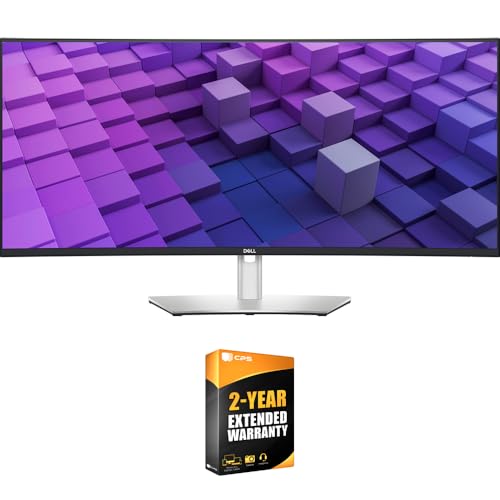
- 37.5-inch 3840×1600 IPS Black panel
- 98% DCI-P3 and 100% sRGB/Rec.709
- 90W USB-C, Auto KVM, and 2.5GbE
Best For: Multi-PC editing and organized workstations
Best Value 5K Option

- 34-inch 5120×2160 VA display
- Factory calibrated to Delta E below 2
- 120Hz, 65W USB-C, and 106% DCI-P3
Best For: Compact high-resolution photo and video editing
Best Large-Screen Alternative
Dell UltraSharp U4025QW 40-Inch

- 39.7-inch curved 5120×2160 display
- 120Hz refresh and 5ms response time
- USB-C, Thunderbolt, Ethernet, and USB hub
Best For: Large-canvas desktop editing and multitasking
Precision Workspace Pick

- Flat 32:9 design keeps lines straight for precision work
- 5120 x 1440 resolution with 165Hz refresh rate
- Mini LED HDR and wide, factory-tested color coverage
Best For: Editors, designers, architects, and multitaskers
Immersive OLED Choice

- 49-inch curved QD-OLED panel with deep black levels
- Dual QHD 5120 x 1440 resolution at 144Hz
- Picture-in-picture and OLED care features aid multitasking
Best For: Photo/video editors who also game
Comfortable Everyday Pick

- 34-inch WQHD workspace with 99% sRGB coverage
- USB-C connectivity with up to 65W power delivery
- ComfortView Plus and built-in speakers support all-day use
Best For: Home offices and compact editing setups
Best for Connected Productivity
Samsung S95UA 49-inch Dual QHD

- 49-inch 5120x1440 Dual QHD workspace
- USB-C docking with 90W charging
- 120Hz refresh rate and HDR 400
Best For: Editors and multitaskers wanting a spacious, connected workstation
Best OLED Detail and Speed
LG UltraGear 45-inch 5K2K OLED

- 5120x2160 resolution with 125 PPI
- OLED panel with up to 1300-nit peak brightness
- USB-C 90W, DP 2.1, and HDMI 2.1
Best For: Creators seeking high-detail OLED visuals and fast gaming performance
Best for Gaming-First Editing

- 49-inch 5120x1440 panoramic workspace
- 144Hz refresh and 1ms response time
- Picture-in-Picture and split-screen features
Best For: Hybrid editors who also want immersive high-refresh gaming
Best Premium Pick – LG UltraFine evo 40U990A 5K2K
For demanding video, photo, and content workflows, this LG is a standout among premium ultrawide editing monitors. Its 40-inch curved 5K2K panel combines a large workspace with detailed resolution, wide DCI-P3 coverage, HDR support, and a fast 120Hz refresh rate.
Best For: Professional editors and creators who want maximum workspace, high resolution, and advanced one-cable connectivity.
Pros:
- 5120×2160 resolution provides substantial vertical and horizontal workspace.
- Nano IPS Black panel offers 99% DCI-P3 coverage and a 2000:1 contrast ratio.
- Thunderbolt 5, HDMI 2.1, DisplayPort 2.1, Ethernet, KVM, and 96W power delivery support a sophisticated workstation.
- 120Hz refresh rate and FreeSync Premium help keep playback and timeline scrubbing smooth.
Cons:
- The 40-inch format and 32-pound weight require considerable desk space.
- Its glossy finish may be less suitable for brightly lit rooms than a matte display.
This is the most feature-rich option in the group, especially for users who can take advantage of Thunderbolt 5 and the wide-gamut IPS Black panel. It is a premium investment, but its combination of resolution, speed, and connectivity is unusually complete.
Best Connectivity Hub – Dell U3824DW 38-Inch
The Dell U3824DW is a practical choice among premium ultrawide editing monitors for organized office and creative workspaces. Its 37.5-inch curved IPS Black panel emphasizes comfortable multitasking, accurate standard and wide-gamut color, and extensive built-in connectivity.
Best For: Editors and professionals who prioritize a USB-C dock, dual-computer control, ergonomics, and reliable everyday color.
Pros:
- 3840×1600 resolution and a 21:9 curved layout provide generous multitasking space.
- 100% sRGB and Rec.709 plus 98% DCI-P3/Display P3 coverage support varied creative work.
- USB-C offers up to 90W power delivery, while Auto KVM supports two connected PCs.
- Height, tilt, and swivel adjustments, built-in speakers, and 2.5GbE networking add workstation convenience.
Cons:
- The 60Hz refresh rate is less suited to high-frame-rate playback than the 120Hz alternatives.
- Its 300-nit brightness is more modest for demanding HDR work.
The U3824DW favors workflow efficiency over maximum resolution or refresh rate. Its color coverage, ergonomic stand, USB-C hub, and Auto KVM make it particularly compelling for editors who also manage multiple computers and peripherals.
Best Value 5K Option – INNOCN 34-Inch 5K 120Hz
The INNOCN 34C1U delivers unusually high resolution and refresh rate for a more compact ultrawide format. For shoppers comparing premium ultrawide editing monitors, its 5120×2160 VA panel, factory calibration, broad color gamut, and USB-C docking features make it a strong productivity-focused option.
Best For: Photo and video editors who want 5K2K detail, 120Hz motion, and laptop-friendly connectivity in a 34-inch display.
Pros:
- 5120×2160 resolution provides crisp detail and ample workspace.
- Factory calibration targets Delta E below 2, with 106% DCI-P3 and 135% sRGB coverage.
- 120Hz refresh rate, HDR400 support, and FreeSync suit smooth playback and timeline work.
- USB-C provides 65W power delivery, alongside HDMI 2.1, DisplayPort, and USB ports.
Cons:
- The VA panel has narrower stated viewing-angle information than the IPS models.
- 350-nit brightness and HDR400 are less ambitious for high-end HDR mastering.
- The listed manufacturer warranty is one year.
This model balances resolution, speed, color coverage, and connectivity in a relatively manageable 34-inch size. It is a sensible fit for creators who want a detailed editing canvas without moving to a much larger 40-inch monitor.
Best Large-Screen Alternative – Dell UltraSharp U4025QW 40-Inch
The Dell UltraSharp U4025QW offers a spacious 39.7-inch curved canvas for editors who want to keep timelines, previews, and supporting panels visible together. It stands out among premium ultrawide editing monitors with 5K2K resolution, a 120Hz refresh rate, USB-C connectivity, and an adjustable anti-glare design.
Best For: Desktop editors who need a very large 21:9 workspace for multitasking and smooth content review.
Pros:
- 5120×2160 resolution on a 39.7-inch curved screen supports detailed multitasking.
- 120Hz refresh rate and 5ms response time help deliver smooth motion.
- USB-C, DisplayPort, HDMI, Ethernet, Thunderbolt, and an integrated USB hub offer flexible connectivity.
- Anti-glare coating plus height, swivel, and tilt adjustments support long work sessions.
Cons:
- The supplied specifications contain inconsistent brightness and native-resolution listings.
- Its 41.9-pound weight makes installation and desk planning more demanding.
- The notes provide less specific color-gamut detail than the other professional-oriented options.
The U4025QW is appealing when screen real estate is the priority. Its large 5K2K canvas and 120Hz operation are well suited to complex desktop workflows, while the adjustable stand and matte finish make it practical for extended use.
Precision Workspace Pick – INNOCN 49-inch Flat Ultrawide
For premium ultrawide editing monitors, the INNOCN E49M1R stands out with a flat 49-inch panel designed to keep lines straight across the screen. Its 5120 x 1440 resolution, wide color coverage, and Mini LED backlight make it well suited to demanding editing and multitasking workflows.
Best For: Graphic designers, video editors, architects, and professionals replacing two 27-inch QHD monitors.
Pros:
- Flat 32:9 display helps minimize curved-screen edge distortion.
- Professional color coverage: 100% sRGB, 95% DCI-P3, and 96% Adobe RGB with factory-tested ΔE < 2.
- Mini LED backlight with 1760 local dimming zones and up to 1000 nits HDR brightness.
- 5120 x 1440 resolution and 165Hz refresh rate support detailed, fluid work and play.
Cons:
- The very wide 49-inch footprint requires substantial desk space.
- VA technology may not provide the same viewing characteristics as some alternative panel types.
The INNOCN is the most editing-focused option here for buyers who prioritize a flat, expansive canvas and verified color performance. It is especially compelling for timeline-heavy work, photo retouching, and side-by-side window layouts.
Immersive OLED Choice – Samsung Odyssey OLED G9
The Samsung Odyssey OLED G9 is a premium ultrawide editing monitor that combines a 49-inch curved 32:9 workspace with QD-OLED contrast and Dual QHD resolution. It is a strong fit for creators who also want fast, immersive gaming performance.
Best For: Photo and video editors who want OLED contrast, a wide multitasking canvas, and high-speed gaming capability.
Pros:
- QD-OLED panel delivers deep blacks and a 1,000,000:1 contrast ratio.
- 5120 x 1440 resolution and 110 pixels per inch preserve detail across the 49-inch screen.
- 144Hz refresh rate and 0.03ms response time support responsive motion.
- Picture-in-picture, USB-C connectivity, and an adjustable stand add workflow flexibility.
Cons:
- The curved design may be less suitable for work requiring perfectly straight lines.
- OLED care features such as logo detection and screen saver are important for static editing interfaces.
- Its 250 cd brightness rating is lower than the INNOCN’s stated peak HDR brightness.
The Odyssey OLED G9 is a compelling hybrid monitor when rich contrast and immersion matter as much as editing space. Its built-in measures for reducing static-image brightness help address long-term OLED workflow considerations.
Comfortable Everyday Pick – Dell S3425DW 34-inch Monitor
For shoppers seeking premium ultrawide editing monitors in a more manageable size, the Dell S3425DW offers a 34-inch WQHD workspace with 99% sRGB and 95% DCI-P3 coverage. Its USB-C connectivity, eye-comfort features, and built-in speakers make it practical for everyday editing and office work.
Best For: Home offices, business users, and photo or video editors who prefer a compact 21:9 monitor with simple USB-C connectivity.
Pros:
- 3440 x 1440 resolution provides useful editing space without a 49-inch footprint.
- 99% sRGB and 95% DCI-P3 coverage support vivid, true-to-life color.
- ComfortView Plus reduces harmful blue light emissions to 35% or less.
- USB-C provides up to 65W power delivery through one cable, with built-in speakers included.
Cons:
- Its 34-inch 21:9 canvas is less expansive than the two 49-inch alternatives.
- The 300 cd brightness rating and HDR readiness are more modest than a high-brightness Mini LED display.
- Its 120Hz refresh rate is lower than the INNOCN’s 165Hz specification.
The Dell is the practical choice for editors who want strong color coverage and a comfortable, uncluttered desk setup rather than an enormous super-ultrawide canvas. USB-C power delivery also makes it convenient for compatible laptops.
Best for Connected Productivity – Samsung S95UA 49-inch Dual QHD
For creators who want expansive workspace and simplified connectivity, this Samsung is a practical choice among premium ultrawide editing monitors. Its 49-inch 32:9 Dual QHD panel provides the equivalent of a broad dual-monitor setup, while USB-C connectivity with 90W charging helps reduce desk clutter.
Best For: Video editors, designers, and multitaskers who need a panoramic workspace with docking-station features.
Pros:
- 5120×1440 Dual QHD resolution offers substantial horizontal workspace.
- USB-C supports up to 90W charging, with DisplayPort, HDMI, USB, and Ethernet connectivity.
- 1000R curvature, matte finish, height adjustment, and built-in speakers support a cleaner workstation.
- 120Hz refresh rate and DisplayHDR 400 add smoother motion and enhanced contrast.
Cons:
- The 32:9 format and 1000R curve require considerable desk space and may not suit every editing workflow.
- HDR 400 is useful for enhanced range, but it is less advanced than the HDR standards on some premium OLED displays.
This monitor stands out as a productivity-first ultrawide with strong connectivity and a useful resolution for timeline-based work. Choose it if a built-in hub and dual-monitor-style layout matter more than OLED contrast.
Best OLED Detail and Speed – LG UltraGear 45-inch 5K2K OLED
The LG UltraGear combines unusually high ultrawide resolution with OLED contrast, making it one of the most visually capable premium ultrawide editing monitors in this group. Its 5120×2160 resolution and 125 PPI are designed to keep text and detailed creative work sharp, while the OLED panel delivers deep blacks and vivid color.
Best For: Editors and creators who prioritize fine detail, OLED contrast, wide color coverage, and high-refresh gaming.
Pros:
- 5K2K 5120×2160 resolution provides a detailed, spacious 21:9 canvas.
- OLED contrast, up to 1300-nit peak brightness, and up to 98.5% DCI-P3 coverage support striking imagery.
- 125 PPI is designed to improve text clarity and reduce color fringing.
- USB-C with 90W power delivery, DisplayPort 2.1, and dual HDMI 2.1 provide modern connectivity.
Cons:
- The dramatic 800R curve may take adjustment for some editing setups.
- Its gaming-focused features and dual-mode resolutions may be more than a productivity-only buyer needs.
With its combination of 5K2K detail, OLED blacks, wide color coverage, and fast refresh options, this is the strongest choice here for buyers who want premium creative visuals without giving up serious gaming performance.
Best for Gaming-First Editing – Samsung Odyssey G9 G91F
The Samsung Odyssey G9 G91F is aimed primarily at immersive gaming, but its 49-inch Dual QHD canvas also gives editors room for long timelines, tool panels, and reference material. Among premium ultrawide editing monitors, it makes the most sense for buyers who want a single expansive screen that can switch easily between creative work and fast-action play.
Best For: Hybrid users who edit photos or video and want strong ultrawide gaming performance in the same display.
Pros:
- 49-inch 5120×1440 32:9 panel offers workspace comparable to two 16:9 monitors.
- 1000R curvature creates an immersive panoramic viewing experience.
- 144Hz refresh rate, 1ms response time, and FreeSync Premium Pro support smooth gaming.
- Picture-in-Picture, split-screen functionality, and Auto Source Switch+ support multitasking.
Cons:
- The VA panel and 280-cd brightness are less explicitly color-focused than the LG OLED’s creator-oriented specifications.
- Its gaming-oriented design may be excessive for editing-only buyers.
- The very wide 32:9 format requires substantial desk space.
This G9 is a compelling compromise for editors who also game regularly. It delivers the same broad Dual QHD style of workspace as a dual-monitor setup, with higher gaming refresh and multitasking features, but it is less specialized for color-critical work than the LG.
How We Picked the Best Premium Ultrawide Editing Monitors
We focused on monitors that provide meaningful advantages for editing and professional multitasking, including wide horizontal workspaces, high resolutions, useful color and HDR capabilities, and modern connectivity. The selection spans 21:9 and 32:9 formats, with options from 34 to 49 inches and resolutions ranging from WQHD and Dual QHD to 5K2K.
We also considered practical workflow features such as USB-C connectivity, built-in hubs, Thunderbolt support, refresh rates, adaptive sync, ergonomic flexibility, and panel technology. OLED models can offer exceptional contrast and motion clarity, while IPS and VA displays may be preferable for sustained desktop use, budget control, or reduced burn-in concerns.
Quick Comparison
| Best For | What to Prioritize |
|---|---|
| Video editing | 5K2K resolution, timeline width, accurate color, and strong connectivity |
| Photo and design work | Panel consistency, color management, pixel density, and ergonomic adjustment |
| Multitasking | 32:9 width, picture-by-picture support, USB-C, and built-in speakers or hub features |
| Gaming and editing | OLED contrast, fast response, high refresh rate, and adaptive sync |
| Value-focused workspaces | WQHD or Dual QHD resolution, reliable connectivity, and a comfortable stand |
Key Buying Factors for Premium Ultrawide Editing Monitors
Resolution and Aspect Ratio
A 5K2K display provides substantially more vertical detail than standard 3440×1440 ultrawides, which helps with full-height video previews, long timelines, and sharp text. A 32:9 Dual QHD screen offers exceptional side-by-side workspace but may be less vertically spacious.
Panel Type and Image Quality
IPS panels are often a dependable choice for consistent desktop viewing and color-sensitive work. VA displays can deliver stronger native contrast, while OLED offers the deepest blacks and fastest pixel response. For professional color work, verify the monitor’s gamut coverage, calibration options, uniformity, and compatibility with your color-management workflow.
Connectivity and Ergonomics
USB-C with power delivery can simplify laptop editing setups, while Thunderbolt is valuable for high-bandwidth peripherals and daisy chaining. Check the number and location of ports, KVM or picture-by-picture features, stand adjustment, VESA compatibility, and whether the desk can accommodate the monitor’s depth and curve.
HDR, Refresh Rate, and Burn-In Risk
HDR support is useful for compatible content, but certification alone does not guarantee professional HDR performance. Higher refresh rates improve cursor movement and video playback, while OLED buyers should consider static interface exposure and the manufacturer’s burn-in coverage and care features.
Who Should Buy Which Premium Ultrawide Editing Monitors?
Choose a 5K2K IPS model if editing detail, text sharpness, and vertical workspace matter most. Pick a 49-inch 32:9 display if replacing two monitors is the priority. OLED models suit creators who also value premium contrast, fast motion, and immersive gaming. More affordable WQHD options make sense for general editing, office work, and buyers who do not need maximum resolution.