The right adapter can expand where your EV charges, but compatibility, electrical ratings, and connector fit matter more than a low sticker price. This roundup compares 10 professional electric vehicle charging adapters for fast-charging and destination-charging scenarios.
Use the guide below to narrow your choices by vehicle, charging network, amperage, certification, and everyday portability.
Best 10 Professional Electric Vehicle Charging Adapters Picks for 2026
Certified Supercharger Access
Lectron Vortex Plus NACS to CCS Adapter

- UL 2252 certified by SGS
- 500A/1,000V DC fast-charging rating
- Interlock design for a secure connection
Best For: Supported CCS1 EVs using Tesla V3 or V4 Superchargers
Extended Warranty Pick

- UL 2252-compliant SGS certification
- 500A/1,000V DC charging support
- Three-year warranty included
Best For: Eligible CCS1 EV drivers seeking Tesla Supercharger access
AC Charging Flexibility
Lectron J1772 to Tesla Adapter

- Supports up to 80A at 240V AC
- Works with Tesla and NACS-alliance EVs
- IP67 weatherproof, TUV and UL 2251 certified
Best For: Tesla drivers using J1772 Level 1 or Level 2 chargers
Road-Trip CCS Access

- 350A/1,000V DC fast-charging support
- Access to over 20,000 CCS stations
- Travel bag and three-year limited warranty
Best For: Tesla Model 3, S, X, or Y owners from 2021 and newer
Best High-Power Choice

- Up to 500A and 1,000V
- UL 2252 certified with thermal protection
- IP67-rated for water and dust resistance
Best For: Tesla and compatible NACS EV owners needing CCS1 fast-charging access
Best for CCS EV Road Trips

- Accesses 12,000+ Tesla Supercharger stations
- 500A and 1,000V fast-charging capability
- Includes travel bag and three-year warranty
Best For: Compatible CCS1 EV owners who frequently travel
Broad Vehicle Coverage
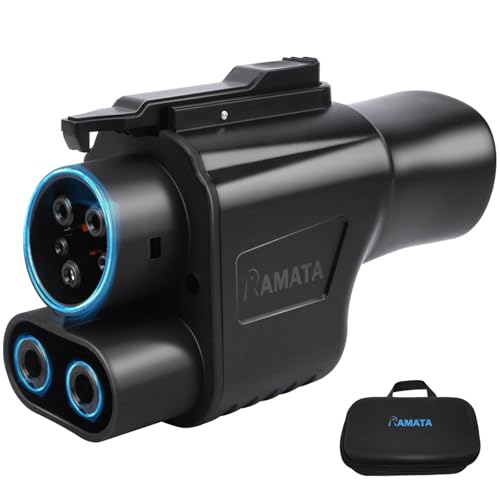
- 500A/1,000V DC rating
- Broad listed EV compatibility
- Temperature shutoff and carrying bag
Best For: Drivers seeking broad compatibility and a travel-ready adapter
Established Fast-Charging Option
Lectron Vortex NACS to CCS Adapter

- 500A/1,000V DC rating
- Access to 25,000+ listed chargers
- Two-sided locking and two-year warranty
Best For: Authorized CCS1 EV owners prioritizing security and warranty coverage
Portable Network Access

- 500A/1,000V DC support
- 250kW listed power rating
- Simple design for Tesla Superchargers
Best For: CCS1 EV drivers wanting a basic travel adapter for DC charging
Certified Supercharger Access – Lectron Vortex Plus NACS to CCS Adapter
For professional electric vehicle charging adapters, the Lectron Vortex Plus is a strong choice for CCS1 EV owners who have automaker-enabled Tesla Supercharger access. Its 500A/1,000V rating, UL 2252 certification, and built-in interlock are aimed at secure DC fast charging rather than AC use.
Best For: CCS1 EV drivers who need a certified adapter for supported Tesla V3 and V4 Superchargers.
Pros:
- UL 2252 certified by SGS (NRTL).
- 500A/1,000V rating supports high-power DC charging.
- Built-in interlock helps maintain a secure connection.
- Designed to access more than 25,000 supported Tesla Superchargers.
Cons:
- Only works with CCS1 EVs whose automakers enable Supercharger access.
- Not compatible with Tesla vehicles or AC charging stations.
The Vortex Plus is a safety-focused option for compatible non-Tesla EVs, but buyers should confirm vehicle and network eligibility before purchase. Charging speed depends on the Supercharger and the vehicle’s specifications.
Extended Warranty Pick – FOCSPROD NACS to CCS1 Adapter
Among professional electric vehicle charging adapters, the FOCSPROD NACS to CCS1 model offers a high-capacity option for compatible CCS1 EVs charging at Tesla Superchargers. It combines a 500A/1,000V rating with an interlock design, but compatibility must be checked carefully because several vehicle brands are listed as unsupported.
Best For: Compatible CCS1 EV owners who want a travel-oriented DC adapter backed by a three-year warranty.
Pros:
- SGS certified to comply with the UL 2252 standard.
- 500A/1,000V rating is designed for high-power DC charging.
- Interlock structure adds connection stability.
- Includes a three-year warranty and customer support.
Cons:
- Currently listed as incompatible with Audi, BMW, Mercedes-Benz, Kia, Mazda, MINI, Nissan, Porsche, Stellantis, Toyota, Volkswagen, and Honda.
- Requires automaker-enabled Tesla Supercharger access.
- Not intended for Level 1 or Level 2 AC charging.
This adapter can expand charging options for eligible CCS1 vehicles, but its extensive compatibility exclusions make verification essential. It is best treated as a DC fast-charging accessory for supported Tesla Supercharger protocols.
AC Charging Flexibility – Lectron J1772 to Tesla Adapter
For professional electric vehicle charging adapters used with AC infrastructure, the Lectron J1772 to Tesla adapter connects Tesla vehicles and other NACS-alliance EVs to SAE J1772 chargers. It supports Level 1 and Level 2 charging, with an 80A/240V capacity and a compact, weatherproof design.
Best For: Tesla and NACS-alliance EV drivers who regularly use J1772 chargers at home, work, or on the road.
Pros:
- Supports up to 80A at 240V AC.
- Compatible with Tesla Model S, 3, X, Y, and Cybertruck.
- Compact plug-and-play design fits in a glove box.
- IP67 weatherproof rating plus TUV and UL 2251 certifications.
Cons:
- Designed for AC Level 1 and Level 2 charging, not DC fast charging.
- Actual charging is limited by the connected charger and vehicle.
This is a practical compatibility adapter for expanding access to J1772 charging locations. Its high current rating and outdoor-oriented construction make it useful for routine charging, provided the vehicle and charging equipment are appropriately matched.
Road-Trip CCS Access – DEWALT CCS1 to NACS Adapter
For Tesla owners comparing professional electric vehicle charging adapters, the DEWALT CCS1 to NACS model is designed to add third-party Level 3 DC fast-charging access. It supports up to 350A and 1,000V and is tailored to Tesla Model 3, S, X, and Y vehicles from 2021 and newer, excluding Cybertruck.
Best For: Eligible Tesla owners who want a portable adapter for CCS fast-charging stations across North America.
Pros:
- Provides access to more than 20,000 CCS fast-charging stations.
- Supports up to 350A and 1,000V DC charging.
- IP54-rated exterior helps resist rain, dust, and road wear.
- Includes a travel bag, three-year limited warranty, and 24/7 technical support.
Cons:
- Not compatible with Cybertruck.
- Listed for Tesla Model 3, S, X, and Y vehicles from 2021 and newer.
- Charging performance depends on the station and vehicle.
The DEWALT adapter is a travel-focused way to broaden DC fast-charging options for eligible Tesla vehicles. Confirm the vehicle year and model before buying, particularly if you own a Cybertruck or an earlier Tesla.
Best High-Power Choice – Lectron CCS to NACS Adapter
For drivers comparing professional electric vehicle charging adapters, the Lectron CCS-to-NACS model expands access to more than 12,000 CCS1 fast-charging stations across North America. It supports up to 500A and 1,000V, although actual charging speed depends on the vehicle and station.
Best For: Tesla Model S, 3, X, and Y owners and compatible NACS EV drivers who need CCS1 DC fast-charging access.
Pros:
- Supports up to 500A, 1,000V, and 500 kW maximum charging capability.
- UL 2252 certified with thermal protection and automatic over-temperature shut-off.
- IP67-rated and tested for impact, crush resistance, temperature extremes, and high-power cycles.
- Broad compatibility with supported Tesla and next-generation NACS vehicles.
Cons:
- Not compatible with the Tesla Cybertruck.
- Tesla vehicles must have CCS Adapter Support enabled.
- Requires a vehicle with CCS DC fast-charging support.
This is a strong option when safety certification, weather resistance, and maximum charging capacity matter. Confirm vehicle compatibility before purchase, especially for newer NACS models.
Best for CCS EV Road Trips – DEWALT NACS to CCS1 Adapter
The DEWALT NACS-to-CCS1 adapter is among the practical professional electric vehicle charging adapters for CCS1 EV owners who want access to more than 12,000 Tesla Supercharger stations. Its compact design and included travel bag make it suited to charging on the road.
Best For: Compatible Rivian, Ford, GM, Polestar, Volvo, Nissan, Hyundai, and Kia EVs that can use Tesla’s high-speed charging network.
Pros:
- Supports up to 500A and 1,000V for high-speed DC charging.
- Compact, travel-ready design with an included carrying bag.
- IP54-rated weatherproof housing for use in demanding environments.
- Includes a three-year limited warranty and 24/7 technical support.
Cons:
- Not compatible with several brands, including Audi, BMW, Lucid, Mercedes, Porsche, and Toyota.
- Charging performance varies by vehicle and charging station.
- Its proprietary connector design requires careful compatibility checking.
DEWALT’s combination of portability, network access, and warranty support makes this a useful travel adapter. However, the brand-specific exclusions mean buyers should verify their exact EV before ordering.
Best for Home and Destination Charging – Lectron Tesla to J1772 Adapter
For J1772 EV owners, the Lectron Tesla-to-J1772 adapter is one of the more versatile professional electric vehicle charging adapters for home, destination, and travel use. It connects compatible J1772 vehicles to Tesla Wall Connectors, Destination Chargers, and Mobile Connectors.
Best For: J1772 electric vehicle owners who want access to Tesla AC charging equipment and up to 48A at 240V.
Pros:
- Supports up to 48A and 240V, according to the supplied specifications.
- Works with Tesla High Powered Wall Connectors, Destination Chargers, and Mobile Connectors.
- Compact and durable for keeping in the vehicle while traveling.
- SGS certified under the UL 2251 standard and backed by a two-year warranty.
Cons:
- Designed for J1772 EVs and compatible Tesla AC charging equipment, not DC fast charging.
- Actual charging rate depends on the vehicle and connected charger.
- It provides one charging port and has no power plug of its own.
This adapter is a practical choice for expanding AC charging access rather than increasing DC fast-charging availability. Its 48A rating and broad Tesla charging-equipment compatibility make it especially useful for home and destination charging.
Broad Vehicle Coverage – RAMATA NACS to CCS Adapter
For drivers comparing professional electric vehicle charging adapters, the RAMATA NACS-to-CCS adapter stands out for its broad listed vehicle coverage and high DC fast-charging rating. It is designed for compatible CCS1 EVs using Tesla Superchargers, not home Level 1 or Level 2 charging.
Best For: CCS1 EV owners who want a portable adapter for supported Tesla Supercharger access and varied weather conditions.
Pros:
- Rated up to 500A, 1,000V, and 500kW DC fast charging.
- Lists compatibility with many Ford, GM, Rivian, Mercedes, BMW, Hyundai, Kia, Lucid, Nissan, and Genesis models.
- Includes a carrying bag and temperature shutoff at 194°F (90°C).
- Uses waterproof, flame-retardant materials and is tested for more than 20,000 mating cycles.
Cons:
- Not compatible with home wall chargers, certain PHEVs, or some older EV models listed by the manufacturer.
- Vehicle and charging-network compatibility should be confirmed before purchase.
- The listed 500kW rating may exceed what many vehicles or stations can deliver.
RAMATA is a feature-rich choice when vehicle coverage, portability, and environmental protection matter. Carefully verify your exact model and Tesla Supercharger access, especially for older vehicles and hybrids.
Established Fast-Charging Option – Lectron Vortex NACS to CCS Adapter
The Lectron Vortex Plug is a focused option among professional electric vehicle charging adapters, built specifically for CCS1 EVs whose automakers have enabled Tesla Supercharger access. Its 500A/1,000V rating supports high-speed DC charging, while built-in locking mechanisms help secure the connection.
Best For: CCS1 EV owners with confirmed Tesla Supercharger authorization who want a durable, professionally specified adapter.
Pros:
- Rated for up to 500A and 1,000V DC fast charging.
- Designed to access 25,000+ V3 and V4 Tesla Superchargers when vehicle access is enabled.
- Locking mechanisms on both the NACS and CCS sides support a secure connection.
- Includes a two-year warranty.
Cons:
- Exclusive to CCS1 EVs with automaker-approved Tesla Supercharger access.
- Charging speed depends on the Supercharger generation and vehicle specifications.
- The adapter may require a 30-minute cool-down if a heat-related charging fault occurs.
Lectron offers a clear, compatibility-focused design with useful safety and warranty details. Confirm network authorization with your automaker before relying on it for road trips.
Portable Network Access – Aipechy NACS to CCS1 Adapter
The Aipechy adapter is a straightforward choice for shoppers evaluating professional electric vehicle charging adapters for Tesla Supercharger use. It supports CCS1 EVs at up to 500A and 1,000V, but it is intended for DC fast charging only and requires manufacturer-enabled network access.
Best For: CCS1 EV drivers who want a compact, simple adapter for compatible Tesla Supercharger trips.
Pros:
- Supports up to 500A and 1,000V DC charging, with a listed 250kW power rating.
- Designed for access to 25,000+ V3 and V4 Tesla Superchargers when supported.
- Simple attach-and-plug operation for travel use.
- Lists compatibility with CCS-standard vehicles from Ford, GM, Rivian, and others.
Cons:
- Not compatible with Level 1 or Level 2 AC chargers.
- Requires vehicle compatibility and Tesla Supercharger protocol access from the automaker.
- Offers a one-year warranty according to the supplied details.
Aipechy keeps the feature set focused on portable DC fast charging and Tesla network access. Its lower listed power rating than some alternatives may be worth considering alongside your vehicle’s charging limits.
How We Picked the Best Professional Electric Vehicle Charging Adapters
We focused on adapters that address common EV connection standards: NACS, CCS1, and J1772. The selected models cover both DC fast charging and AC destination or home charging, while highlighting published ratings such as amperage, voltage, connector direction, and certification claims. We also considered vehicle and charger compatibility, locking or interlock features, portability, and whether the adapter is designed for occasional backup use or frequent charging.
Always verify the exact vehicle, charging station, and adapter direction before buying. A connector that fits physically may not support the required charging protocol.
Quick Comparison
- NACS to CCS1: Intended for CCS1 vehicles using compatible NACS or Tesla Supercharger equipment.
- CCS1 to NACS: Designed for NACS vehicles accessing CCS1 fast chargers, where the vehicle and network support it.
- J1772 to NACS: Typically used to connect a J1772 AC charger to a Tesla or other NACS vehicle.
- NACS to J1772: Used when a Tesla or NACS AC source must connect with a J1772 vehicle.
Higher ratings, such as 500A and 1,000V, indicate electrical capacity—not guaranteed charging speed. Actual output is controlled by the vehicle, charger, battery temperature, and network.
Key Buying Factors for Professional Electric Vehicle Charging Adapters
Connector Direction and Protocol
Confirm both ends and the intended direction. DC fast-charging adapters are not interchangeable with AC J1772 adapters, even when a connector appears similar. Check your vehicle’s inlet, the station’s cable, and supported charging standards.
Current and Voltage Ratings
Choose an adapter rated at or above the maximum current and voltage your charging setup can deliver. A higher rating does not override vehicle limits, but an underspecified adapter can create a safety risk and may be unsuitable for high-power charging.
Safety, Certification, and Locking
Look for clear manufacturer specifications, thermal protection information, durable insulation, and a secure locking or interlock mechanism. Treat UL claims carefully and confirm the exact product listing, because certification may apply only to a particular model or revision.
Build Quality and Daily Handling
Professional Electric Vehicle Charging Adapters should tolerate repeated insertion, cable strain, weather exposure appropriate to their rating, and storage in a vehicle. A compact case, protective caps, and a manageable weight are useful for roadside or road-trip use.
Who Should Buy Which Professional Electric Vehicle Charging Adapters?
CCS1 drivers seeking NACS access: Consider a properly rated NACS-to-CCS1 adapter, especially if your vehicle and charging network explicitly support that combination.
NACS drivers using CCS1 stations: Choose a CCS1-to-NACS fast-charging adapter and verify station authorization and vehicle compatibility before relying on it for travel.
Tesla owners using J1772 equipment: A J1772-to-NACS adapter is the practical choice for compatible AC chargers, workplaces, hotels, and home charging equipment.
J1772 vehicle owners with NACS AC equipment: Look for a NACS-to-J1772 adapter, but confirm that the source is AC destination charging rather than DC fast charging.
For frequent commercial or high-power use, prioritize documented certification, a secure connection, and a warranty over the lowest price. When compatibility is uncertain, consult the vehicle manufacturer and charging-network guidance before energizing the setup.