The right adapter can make public fast-charging networks far more useful, especially when your EV’s connector does not match the station plug. This roundup compares 10 high-performance electric vehicle charging adapters designed for Tesla/NACS and CCS1 charging scenarios.
We focus on practical compatibility, rated charging capacity, safety features, build quality, and the details that matter when you are charging on the road. Always confirm your vehicle, model year, charging network, and adapter approval before buying.
Best 10 High-Performance Electric Vehicle Charging Adapters Picks for 2026
Top Certified Pick
Lectron Vortex Plus NACS-to-CCS Adapter

- UL 2252 certified by SGS
- 500A/1,000V DC rating
- Interlock-equipped design
Best For: Supported CCS1 EVs using Tesla Superchargers
Best 2-in-1 Tesla Option

- Supports CCS1 and J1772
- Up to 250kW CCS charging
- Includes travel carrying case
Best For: Eligible 2021–2026 Tesla Model 3, Y, S, and X owners
Best Warranty Coverage

- UL 2252-compliant SGS certification
- 500A/1,000V DC rating
- Three-year warranty
Best For: Compatible CCS1 EVs needing Tesla Supercharger access
Best Dual-Connector Flexibility

- CCS1 and J1772 support
- Up to 250kW DC charging
- Temperature-control safety features
Best For: CCS-enabled Tesla owners using varied public chargers
Top Safety-Certified Pick
2026 NACS to CCS1 Fast-Charging Adapter

- 500A/1000V DC rating for high-speed charging
- UL2252 certification with thermal monitoring
- IP65 protection and broad stated CCS1 compatibility
Best For: Authorized CCS1 non-Tesla EV owners using compatible NACS fast-charging networks
Best V3 Network Value
NACS to CCS1 Tesla Supercharger Adapter

- Designed for compatible Tesla V3 Superchargers
- 500A/1000V DC rating with 90°C cutoff
- IP55, flame-retardant housing for outdoor use
Best For: Verified CCS1 EVs needing access to compatible Tesla V3 Supercharger ports
Best Two-in-One Option
CCS and J1772 to Tesla Adapter

- Combines CCS1 DC and J1772 AC charging support
- Up to 250kW DC and 80A AC charging
- IP65 protection with active temperature control
Best For: Tesla owners using both public CCS1 fast chargers and J1772 AC stations
Wide-Compatibility Pick
RAMATA 500A NACS-to-CCS Adapter
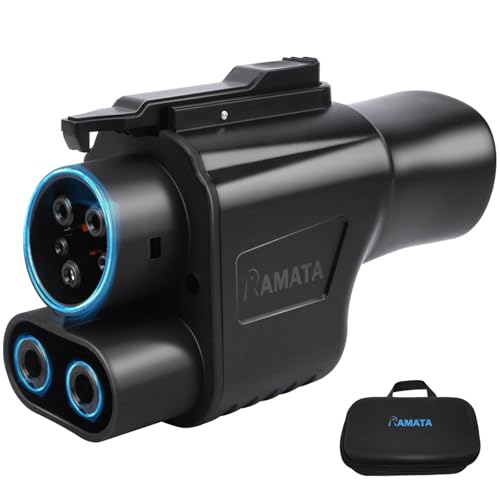
- Up to 500A, 1,000V, and 500kW
- Broad listed EV compatibility
- Thermal cutoff and carrying bag included
Best For: CCS1 EV owners seeking Tesla Supercharger access
Certified Safety Pick
Lectron 500A CCS-to-NACS Adapter

- Accesses 12,000+ CCS1 stations
- UL 2252 certified with thermal shutoff
- IP67-rated and tested for harsh conditions
Best For: Compatible Tesla and NACS EV owners
Long-Trip Value Pick
Aipechy 500A NACS-to-CCS1 Adapter

- Up to 500A, 1,000V, and 250kW
- Designed for Tesla V3/V4 Superchargers
- Portable and simple to connect
Best For: Eligible CCS1 EVs needing Tesla Supercharger access
Top Certified Pick – Lectron Vortex Plus NACS-to-CCS Adapter
For drivers comparing high-performance electric vehicle charging adapters, the Lectron Vortex Plus stands out with a 500A/1,000V rating and UL 2252 certification. It is designed to connect supported CCS1 EVs to Tesla Superchargers, including V3 and V4 sites, but automaker approval is required before purchase.
Best For: CCS1 EV owners whose automaker has enabled Tesla Supercharger access and who prioritize certified high-power DC charging.
Pros:
- UL 2252 certified by SGS for safety, thermal, and mechanical performance.
- 500A/1,000V rating supports high-speed DC charging.
- Built-in interlock helps secure the connection during charging.
- Designed for access to more than 25,000 V3 and V4 Tesla Superchargers where supported.
Cons:
- Only works with supported CCS1 EVs and enabled Supercharger access.
- Not compatible with Tesla vehicles or AC charging stations.
The Vortex Plus is a strong choice when certification and high-current performance matter most. Confirm vehicle and network compatibility with the automaker before ordering.
Best 2-in-1 Tesla Option – Ecogenix CCS & J1772 Adapter
The Ecogenix combines CCS1 and J1772 compatibility in one adapter, making it a versatile option among high-performance electric vehicle charging adapters. It is designed for 2021–2026 Tesla Model 3, Y, S, and X vehicles, with support for Level 1, Level 2, and Level 3 charging when the vehicle is compatible.
Best For: Owners of eligible 2021–2026 Tesla models who want one travel adapter for CCS1 DC fast charging and J1772 AC charging.
Pros:
- Combines CCS1 and J1772 charging compatibility.
- Supports up to 250kW and 400A for CCS charging, according to the supplied specifications.
- Supports J1772 charging up to 250V and 80A.
- Waterproof construction, flame retardancy, and a carrying case support travel use.
Cons:
- Not compatible with Tesla vehicles manufactured before 2021.
- Vehicle support for the CCS adapter must be enabled before use.
Its main advantage is convenience: one compact adapter covers both common public AC and DC connector types. Verify the vehicle’s “CCS Adapter Support” status before buying.
Best Warranty Coverage – FOCSPROD NACS-to-CCS Adapter
The FOCSPROD adapter is a practical high-performance electric vehicle charging adapter for compatible CCS1 EVs that have Tesla Supercharger access enabled. Its interlock design, SGS UL 2252 certification, and 500A/1,000V rating make it suited to high-power DC charging, while the three-year warranty adds purchase support.
Best For: CCS1 EV drivers seeking Tesla Supercharger access with a high-current adapter and longer stated warranty.
Pros:
- SGS certified to comply with the UL 2252 standard.
- 500A/1,000V rating supports fast DC charging.
- Interlock structure is designed to improve connection stability.
- Includes a three-year warranty.
Cons:
- Compatibility is restricted for several listed automakers, including Audi, BMW, Mercedes-Benz, Kia, Nissan, Porsche, Toyota, Volkswagen, and others.
- Not compatible with Level 1 or Level 2 AC chargers.
- Automaker network approval or a protocol update may be required.
FOCSPROD offers a compelling combination of certification, high-current capability, and warranty coverage. Its extensive compatibility exclusions make checking the vehicle list especially important.
Best Dual-Connector Flexibility – Raylix CCS & J1772 Adapter
The Raylix 2-in-1 adapter covers CCS1 DC fast charging and J1772 Level 1 and Level 2 charging, giving Tesla owners broader connector flexibility. It supports up to 250kW DC charging and 80A AC charging, subject to vehicle, charger, and compatibility requirements.
Best For: CCS-enabled Tesla owners who want a single adapter for public CCS1 fast chargers and J1772 AC stations or home chargers.
Pros:
- Combines CCS1 and J1772 charging in one adapter.
- Supports up to 250kW DC charging and 400A/1,000V.
- Supports up to 80A/250V on J1772 stations or home chargers.
- Includes temperature-control features, a flame-retardant shell, and a 365-day warranty.
Cons:
- CCS charging requires a CCS-enabled compatible Tesla model.
- Not compatible with the Cybertruck, according to the supplied notes.
- Actual charging speed depends on the charger, vehicle, and conditions.
Raylix is the most flexible choice here for drivers who regularly encounter both CCS1 and J1772 equipment. Confirm model compatibility before relying on it for a trip.
Top Safety-Certified Pick – 2026 NACS to CCS1 Fast-Charging Adapter
For drivers comparing high-performance electric vehicle charging adapters, the EcofusionX NACS-to-CCS1 model stands out for its 500A/1000V rating, UL2252 certification, and broad stated compatibility with automaker-authorized CCS1 vehicles. It is designed for DC fast-charging networks in North America, not AC charging stations.
Best For: CCS1-equipped non-Tesla EV owners authorized to use compatible NACS/Tesla high-speed charging networks.
Pros:
- Supports up to 500A/1000V and claims up to 150 miles of range in 15 minutes, depending on the vehicle and station.
- UL2252 safety certification, dual locking, thermal monitoring, and low-leakage circuitry.
- IP65 waterproof enclosure and compatibility across many listed brands, including Ford, GM, Hyundai, Kia, BMW, Volvo, and others.
- Includes a storage bag and carries a 1-year warranty.
Cons:
- Only for CCS1 vehicles authorized for the relevant high-speed charging networks.
- Not compatible with Tesla vehicles or AC charging stations.
- Requires checking vehicle software and compatibility before purchase; Mazda and Stellantis brands are specifically excluded.
This is the strongest fit for buyers who prioritize documented safety features and extensive vehicle-brand coverage. Confirm your exact model’s authorization before relying on it for road trips.
Best V3 Network Value – NACS to CCS1 Tesla Supercharger Adapter
This HUACAITU adapter is a practical option among high-performance electric vehicle charging adapters for CCS1 EVs that specifically use compatible Tesla V3 Superchargers. Its 500A/1000V rating, temperature shutoff, and weather-resistant housing support fast public charging, but the V3-only limitation is important.
Best For: Select CCS1 EV owners who want access to compatible Tesla V3 Supercharger ports and have verified vehicle support.
Pros:
- Designed to unlock more than 15,000 compatible Tesla V3 Supercharger ports.
- Rated up to 500A/1000V DC and marketed for fast charging up to 500kW, subject to vehicle and station limits.
- Temperature kill switch stops charging at 90°C, while the IP55 housing and flame-retardant case add protection.
- Supports a long list of listed brands, including Ford, Rivian, GM, Volvo, Hyundai, Kia, Lucid, and BMW.
Cons:
- Works only with Tesla V3 Superchargers and not V1, V2, V4, home, destination, or mobile chargers.
- Some older vehicles, PHEVs, and specific model years do not support DC fast charging.
- Requires checking both the vehicle and charger through their respective apps before traveling.
Choose this model when V3 Supercharger access is your main goal and your EV appears on the supported list. Its network restriction makes compatibility verification essential.
Best Two-in-One Option – CCS and J1772 to Tesla Adapter
Unlike single-purpose high-performance electric vehicle charging adapters, the LJH CT02 combines a CCS1-to-Tesla DC adapter with J1772 AC support. It is built for Tesla Model 3, Y, S, X, and Cybertruck owners who want to use both public DC fast chargers and Level 1 or Level 2 AC stations.
Best For: Tesla owners seeking one adapter for CCS1 fast charging and J1772 AC charging across major North American networks.
Pros:
- Supports CCS1 DC charging up to 250kW/500V/500A and J1772 AC charging up to 80A.
- Works with listed networks including Electrify America, EVgo, Blink, and ChargePoint.
- Active temperature control reduces current during overheating and cuts power above 85°C.
- IP65 protection, flame-retardant housing, compact design, and a 2-year warranty.
Cons:
- Some older Tesla Model 3, Model Y, Model S, and Model X vehicles may require ECU modifications for CCS1 use.
- Owners must verify CCS support in the vehicle settings before purchasing.
- The listed DC charging specification is up to 250kW, below the 500kW ratings claimed by the other adapters.
The CT02 offers the broadest charging-format coverage of the three choices. It is especially useful for Tesla drivers who regularly encounter both CCS1 DC fast chargers and J1772 AC stations.
Wide-Compatibility Pick – RAMATA 500A NACS-to-CCS Adapter
For drivers comparing high-performance electric vehicle charging adapters, the RAMATA NACS-to-CCS adapter emphasizes broad vehicle coverage, high current capacity, and access to Tesla Supercharger locations. It supports DC fast charging only—not home wall chargers or Level 1/2 AC charging.
Best For: CCS1 EV owners who need a travel-ready adapter for compatible Tesla Supercharger and other public DC fast-charging networks.
Pros:
- Rated up to 500A, 1,000V, and 500kW, depending on vehicle and charger limits.
- Lists compatibility with numerous Ford, GM, Cadillac, Rivian, Mercedes, Hyundai, Kia, Lucid, BMW, and other EVs.
- Includes thermal shutoff at 194°F, weather-resistant construction, and a carrying bag.
Cons:
- Not compatible with Ford plug-in hybrids, certain older EVs, or home wall chargers.
- Vehicle and network compatibility should be verified before purchase.
- The tight connection may require noticeable force when plugging in or unplugging.
RAMATA is a strong option when maximum stated capacity and extensive model coverage matter. Its safety and portability features add practical value, but the adapter’s fitment limitations make pre-purchase verification essential.
Certified Safety Pick – Lectron 500A CCS-to-NACS Adapter
The Lectron CCS-to-NACS adapter is a practical choice among high-performance electric vehicle charging adapters for Tesla and other compatible NACS vehicles. Its UL 2252 certification, thermal protection, and high power rating are designed for demanding DC fast-charging use.
Best For: Tesla Model S, 3, X, and Y drivers, plus compatible NACS EV owners who want access to CCS1 fast-charging stations.
Pros:
- Connects compatible Tesla or NACS EVs to more than 12,000 CCS1 fast-charging stations across North America.
- Supports up to 500A, 1,000V, and 500kW when vehicle and station conditions allow.
- UL 2252 certified with automatic over-temperature shutoff, IP67 water and dust resistance, and impact testing.
Cons:
- Not compatible with the Tesla Cybertruck.
- Tesla vehicles must show CCS Adapter Support as enabled.
- Actual charging speed depends on the EV and charging station.
Lectron stands out for its clearly stated certification and environmental testing. It is a particularly compelling fit for supported Tesla vehicles, provided the vehicle’s software setting and CCS fast-charging capability meet the requirements.
Long-Trip Value Pick – Aipechy 500A NACS-to-CCS1 Adapter
The Aipechy NACS-to-CCS1 adapter offers a straightforward way for eligible CCS1 vehicles to use Tesla Supercharger DC fast-charging stations. As one of the high-performance electric vehicle charging adapters listed here, it combines a 500A/1,000V specification with a compact plug-in design.
Best For: CCS1 EV drivers who want portable access to compatible Tesla Superchargers during road trips.
Pros:
- Rated up to 500A and 1,000V, with a stated maximum output of 250kW.
- Designed to provide access to Tesla V3 and V4 Supercharger locations for eligible vehicles.
- Simple connection process: attach it to the vehicle port, then plug into the Supercharger.
Cons:
- Not compatible with Level 1 or Level 2 AC chargers.
- Vehicle manufacturer approval and Tesla Supercharger protocol support are required.
- Actual charging time and power will vary by vehicle and station.
Aipechy is appealing for drivers who prioritize a simple, portable adapter for Tesla Supercharger access. Its lower stated 250kW maximum than some alternatives may matter less for vehicles that cannot accept higher charging rates, but fitment must be confirmed first.
How We Picked These High-Performance Electric Vehicle Charging Adapters
We selected adapters that address common NACS, CCS1, and J1772 charging needs, with particular attention to Tesla Supercharger compatibility and fast DC charging. We compared advertised amperage and voltage limits, stated power ratings, connector design, locking or interlock features, weather resistance, certification claims, and vehicle coverage.
Specifications in this category can vary by adapter revision and seller listing. Treat maximum ratings as limits rather than guaranteed charging speeds, and verify the latest manufacturer documentation before purchase.
Quick Comparison
| Adapter type | Best suited to | Features to check |
|---|---|---|
| NACS to CCS1 | CCS1 EVs using NACS or Tesla Supercharger hardware | Vehicle approval, interlock, current and voltage rating |
| CCS1/J1772 to NACS | Tesla and NACS EVs using CCS1 or J1772 stations | Separate AC/DC limits, included locking support |
| High-output DC adapter | Frequent road trips and rapid charging | Thermal handling, certification, cable and connector quality |
| Weather-resistant adapter | Outdoor charging in changing conditions | IP rating, sealed housing, storage protection |
Key Buying Factors
Connector and Vehicle Compatibility
Start with the connector on your vehicle and the plug at the charging station. CCS1, NACS, and J1772 adapters are not interchangeable in every direction. Check your exact model, model year, trim, and charging-network eligibility; some vehicles require software support or an approved adapter even when the plugs physically fit.
Power, Voltage, and Current Ratings
Look for ratings that exceed your vehicle’s maximum charging demand, but do not assume a 500A or 250kW label means your EV will charge at that rate. The vehicle, station, battery temperature, state of charge, and network can all reduce actual speed. AC and DC limits may differ significantly.
Safety and Construction
A secure locking or interlock mechanism helps prevent accidental disconnection. Prefer clearly documented safety certifications, strain relief, robust contacts, and a sealed housing for outdoor use. An IP rating can indicate water and dust resistance, but it does not make an adapter safe to submerge or use when wet inside the connectors.
Size and Everyday Handling
High-current adapters can be bulky. Consider whether the unit fits your charge-port area, storage compartment, and cable setup. A protective case and a manageable grip are useful for frequent travel, while a lighter adapter may be preferable for occasional backup charging.
Who Should Buy Which High-Performance Electric Vehicle Charging Adapters?
Choose a NACS-to-CCS1 adapter if you drive a CCS1 EV and want access to compatible NACS or Tesla Supercharger stations. Choose a CCS1/J1772-to-NACS adapter if you drive a Tesla or another NACS vehicle and need flexibility at CCS1 fast chargers or J1772 AC stations.
Road-trippers should prioritize verified vehicle compatibility, high continuous ratings, secure locking, and weather-resistant construction. Occasional users can save money with a simpler compact adapter, provided its ratings and approvals match the intended charging equipment. Before every purchase, confirm that the listing is for the correct direction of conversion and supports your specific EV and charging network.