Choosing your first network video recorder can feel complicated, especially when camera compatibility, storage, PoE ports, and recording resolution all affect the decision. The right NVR should make your security system easier to install, manage, and expand.
We selected 10 options for different home and small-business needs, from compact four-channel units to expandable 36-channel systems. Use the guide below to compare the features that matter most before buying.
Best 10 Network Video Recorders for Beginners Picks for 2026
Best Reolink Starter NVR
RLN8-410 8-Channel PoE Recorder
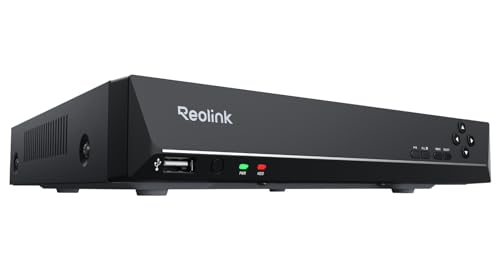
- Eight PoE ports for simple power and data wiring
- 24/7 recording with support for up to 8TB internal storage
- Free Reolink apps with no monthly fees
Best For: Beginners building a Reolink-only home camera system
Best Expandable Beginner NVR

- Eight built-in PoE ports with expansion to 16 channels
- Supports up to 12TB HDD storage, sold separately
- Free remote access through Guard Live and Guard Station
Best For: Beginners planning to expand beyond eight PoE cameras
Best Hybrid Beginner DVR
ANNKE 8CH 3K Lite Security Recorder

- Supports eight analog cameras plus two IP cameras
- Includes a 1TB hard drive
- Human and vehicle detection for smarter alerts
Best For: Beginners upgrading an existing analog CCTV system
Best High-Resolution Beginner NVR
VIKYLIN 8-Channel 12MP PoE Recorder

- Eight PoE ports support simple IP camera installation
- Records up to 12MP with 4K HDMI output
- Supports up to 10TB storage and smart detection features
Best For: Beginners who prioritize high-resolution footage
Flexible Wireless Starter
Hiseeu 10-Channel Wireless NVR

- 10-channel recording up to 5MP
- Built-in Wi-Fi router for camera traffic
- Supports up to 6TB internal storage
Best For: Beginners using compatible Hiseeu wireless cameras
PoE Plug-and-Play Pick
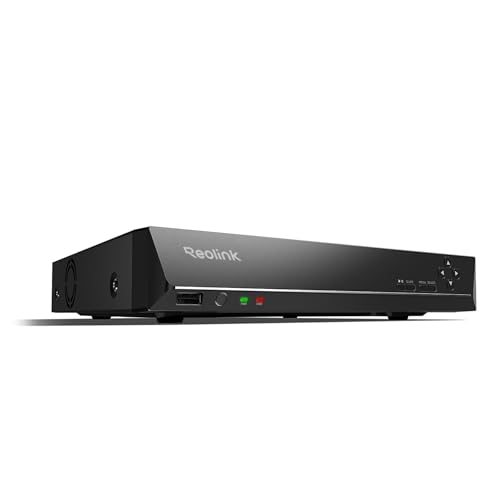
- Supports up to 16 Reolink cameras
- Includes a 4TB hard drive
- One Ethernet cable carries power and data
Best For: Beginners building a larger wired Reolink system
Storage-Saving PoE Option

- Supports compatible ANNKE cameras up to 12MP
- H.265+ helps reduce storage requirements
- Accepts 2.5-inch or 3.5-inch hard drives
Best For: Beginners choosing an ANNKE PoE system with custom storage
Best Plug-and-Play Pick

- One-cable PoE setup for Reolink cameras
- Up to 8TB local HDD storage
- Local AI search and remote viewing
Best For: Small Reolink camera systems and first-time installers
Best for Large Systems

- Supports up to 36 Reolink cameras
- Three bays provide up to 48TB storage
- Requires external PoE switches
Best For: Large Reolink installations and growing business systems
Best Compatibility Value

- Supports ONVIF cameras from multiple brands
- Handles up to four 8MP/4K inputs
- Supports up to 10TB HDD storage
Best For: Beginners wanting flexible camera compatibility and app access
Best Reolink Starter NVR – RLN8-410 8-Channel PoE Recorder
For beginners building a compatible camera system, the REOLINK RLN8-410 is one of the more straightforward network video recorders for beginners. Its eight PoE ports simplify installation by carrying power and data over one Ethernet cable, while the NVR can operate independently for local viewing and recording.
Best For: Home users starting a Reolink PoE camera system who want 24/7 recording, app access, and room to connect up to eight cameras.
Pros:
- Eight-channel recording with plug-and-play PoE connectivity.
- Supports 24/7 recording and Reolink camera detection features.
- Free mobile and desktop apps provide local and remote access without monthly fees.
- Supports an internal HDD up to 8TB plus an external eSATA HDD up to 8TB.
Cons:
- Hard drive is not included.
- Works only with specified compatible Reolink cameras, excluding 4G LTE models.
- Firmware updates may be needed before pairing some cameras.
The RLN8-410 is a beginner-friendly choice when you are comfortable staying within the Reolink ecosystem. It offers simple PoE wiring and useful expansion options, but camera compatibility should be confirmed before purchase.
Best Expandable Beginner NVR – Hiseeu 4K 8-Port PoE NVR
The Hiseeu 4K PoE NVR gives beginners a practical starting point for an IP camera system, with eight built-in PoE ports and expansion to 16 channels through an additional PoE switch. It also supports remote viewing without a monthly subscription.
Best For: Users who want an eight-camera PoE setup now and the option to expand to as many as 16 cameras later.
Pros:
- Eight built-in PoE ports can power cameras over Ethernet.
- Expandable to 16 channels with a separate PoE switch.
- Supports up to 4K/8MP PoE cameras and H.265+ compression.
- Free Guard Live and Guard Station remote-access software.
Cons:
- Hard drive is not included, and recording playback requires one.
- Third-party camera setup is not fully plug-and-play and may require IP changes and Virtual Host configuration.
- The extra PoE switch needed for 16-channel expansion is sold separately.
This Hiseeu model offers useful capacity for beginners who expect their system to grow. However, its limited third-party compatibility makes it a better fit for planned, compatible camera installations than mixed-brand upgrades.
Best Hybrid Beginner DVR – ANNKE 8CH 3K Lite Security Recorder
The ANNKE 3K Lite is a useful option for beginners who already have wired analog cameras or want a recorder that can bridge older and newer equipment. Unlike a dedicated PoE NVR, this hybrid unit supports up to eight analog cameras plus two additional IP cameras and includes a 1TB hard drive.
Best For: Home or small-business users upgrading an existing analog CCTV setup while retaining limited IP-camera flexibility.
Pros:
- Five-in-one hybrid design supports TVI, AHD, CVI, CVBS, and IP camera functions.
- Includes a 1TB hard drive for recording out of the box.
- Human and vehicle detection can help filter common false alerts.
- Remote access is available through the ANNKE Vision app and web browsers.
Cons:
- Supports only two additional IP cameras alongside the eight analog channels.
- It is a wired hybrid DVR rather than an eight-port PoE NVR.
- ANNKE recommends pairing it with ANNKE cameras for optimal performance.
For beginners replacing an older recorder, the included hard drive and hybrid inputs can simplify the transition. It is less suitable for a new all-IP installation where direct PoE camera wiring is the priority.
Best High-Resolution Beginner NVR – VIKYLIN 8-Channel 12MP PoE Recorder
For beginners who want high-resolution recording without complicated wiring, this VIKYLIN NVR combines eight independent PoE ports with support for cameras up to 12MP. Its 4K HDMI output, smart detection options, and app-based P2P access provide a capable foundation for home, office, or small-shop monitoring.
Best For: New users prioritizing detailed 4K-class footage and simple Ethernet-based installation for up to eight IP cameras.
Pros:
- Eight PoE ports provide power and network connectivity through one cable per camera.
- Supports up to 12MP recording and 4K HDMI output.
- Works with ONVIF IP cameras and auto-pairs with VIKYLIN cameras.
- Supports human detection, motion alerts, H.265 compression, and up to 10TB storage.
Cons:
- Hard drive is not included.
- Advanced searches and some smart functions depend on compatible AI cameras.
- Third-party setup may be less straightforward than pairing VIKYLIN cameras.
This model is a strong choice among network video recorders for beginners who value image detail and built-in PoE. Plan for the added cost of a SATA hard drive, and verify camera compatibility if you intend to mix brands.
Flexible Wireless Starter – Hiseeu 10-Channel Wireless NVR
If you are comparing network video recorders for beginners and already use compatible Hiseeu wireless cameras, this 10-channel recorder offers a straightforward way to manage and record them. Its built-in Wi-Fi router handles camera traffic separately from your home router, but you will need to add your own internal hard drive for saved recordings.
Best For: Beginners building or expanding a compatible Hiseeu wireless camera system.
Pros:
- Supports up to 10 camera channels and resolutions up to 5MP.
- Built-in Wi-Fi router can handle camera connections without consuming home-router bandwidth.
- Supports 2.5-inch or 3.5-inch internal hard drives up to 6TB.
- Includes an HDMI cable, network cable, power supply, and wired mouse.
Cons:
- Hard drive and cameras are not included.
- Works with compatible Hiseeu wireless cameras rather than serving as a universal camera recorder.
- Remote viewing requires a network connection, and audio playback requires HDMI-connected equipment and compatible cameras.
This is a practical entry point if you want wireless setup flexibility and already plan to use Hiseeu cameras. Budget for a separate hard drive, and follow the pairing steps when adding a new camera.
PoE Plug-and-Play Pick – Reolink RLN16-410 16CH NVR
For beginners seeking network video recorders for beginners, the Reolink RLN16-410 simplifies wired installation with PoE: one Ethernet cable carries power and data to compatible cameras. It includes a 4TB hard drive and supports simultaneous recording from up to 16 Reolink IP cameras.
Best For: Beginners who want a large, wired Reolink system with included storage.
Pros:
- Supports up to 16 Reolink PoE cameras.
- PoE setup uses one Ethernet cable for power and data, with cable runs up to 330 feet.
- Includes a pre-installed 4TB hard drive for 24/7 recording.
- Offers free Reolink apps and client software for local and remote viewing without monthly fees.
Cons:
- Only works with Reolink IP cameras.
- Additional storage is needed if you want more than the included 4TB; an extra drive up to 8TB can be added.
- Its wired PoE design is less suitable if you specifically want wireless camera installation.
The included storage and plug-and-play PoE design make this one of the easier choices for a larger wired setup. Its main limitation is the Reolink-only camera ecosystem, so confirm compatibility before buying cameras.
Storage-Saving PoE Option – ANNKE 12MP 8CH PoE NVR
This ANNKE recorder is a suitable option for beginners comparing network video recorders for beginners who want a wired PoE setup and high-resolution camera support. It records up to eight compatible ANNKE cameras, uses H.265+ compression to improve storage efficiency, and requires you to install a separate hard drive.
Best For: Beginners who want an ANNKE PoE system with flexible, user-installed storage.
Pros:
- Supports compatible ANNKE cameras up to 12MP, including 4K models.
- PoE carries camera power and data over one cable, with up to 30W output power.
- H.265+ can reduce storage use and bandwidth compared with H.264 while preserving image quality.
- Supports 2.5-inch and 3.5-inch hard drives and offers free ANNKE Vision remote-access apps.
Cons:
- No hard drive is included.
- It is optimized for ANNKE cameras; third-party compatibility should be confirmed with customer support.
- The NVR itself has no built-in AI functions; AI features depend on compatible ANNKE AI cameras.
Choose this model if you prefer a clean PoE installation and want to select your own storage capacity. It is most straightforward within the ANNKE ecosystem, especially when pairing it with cameras that provide the advertised AI detection features.
Best Plug-and-Play Pick – Reolink RLN4E 4CH PoE NVR
For beginners choosing network video recorders for beginners, the REOLINK RLN4E is a straightforward option for a small wired camera system. Its built-in PoE ports use one Ethernet cable per compatible camera for power and data, while local recording continues without an internet connection.
Best For: Beginners setting up up to four Reolink PoE cameras at home or in a small business.
Pros:
- Plug-and-play PoE setup simplifies installation.
- Supports 24/7 recording with a compatible internal HDD, up to 8TB.
- Local AI search can help find people, vehicles, and events in recorded footage.
- Supports remote access and multi-user viewing with permissions.
Cons:
- Works only with Reolink IP cameras.
- HDD and microSD card are not included.
- The four-channel system is intended for smaller installations.
The RLN4E is a beginner-friendly choice when simple wiring and local storage matter most. Remember that its microSD recording is motion-triggered, while continuous recording requires a separately purchased surveillance-grade HDD.
Best for Large Systems – Reolink RLN36 36CH NVR
Among network video recorders for beginners, the REOLINK RLN36 is a better fit for users planning a substantial Reolink installation rather than a small starter setup. It centralizes up to 36 Reolink IP cameras and supports three HDD bays, but its external PoE-switch requirement makes installation more involved.
Best For: Businesses or advanced home users expanding to many Reolink cameras with separate PoE switches.
Pros:
- Manages up to 36 compatible Reolink IP cameras.
- Three HDD bays support up to 48TB total storage.
- Supports 24/7 recording and USB 3.0 footage backups.
- Can integrate camera-based human and vehicle detection for playback.
Cons:
- Has no built-in PoE ports or PoE functionality.
- Requires external PoE switches, which are not included.
- Works only with Reolink IP cameras.
The RLN36 offers considerable capacity and expansion potential, but it is not the simplest first NVR. Beginners should choose it only if they are comfortable configuring external PoE switches and purchasing HDDs separately.
Best Compatibility Value – Tenda N3L-4H 4K NVR
The Tenda N3L-4H is a practical starting point for shoppers comparing network video recorders for beginners, especially when camera flexibility matters. Its automatic network camera search can simplify setup, and ONVIF support allows compatibility with Tenda cameras and cameras from other brands that use the protocol.
Best For: Home users who want a four-camera NVR with ONVIF compatibility and mobile viewing.
Pros:
- Supports up to four 8MP/4K network camera inputs.
- Automatic camera discovery can make initial setup easier.
- H.265+ compression helps conserve storage space.
- Supports up to 10TB HDD capacity and USB video backup.
Cons:
- HDD is not included.
- Cloud storage is offered with a three-month free trial, so continued use may require a paid option.
- Remote viewing and alerts rely on the TDSEE app.
With ONVIF support, 4K input capability, and guided camera discovery, the N3L-4H is a flexible beginner option. It is worth considering if you are not committed to a single camera brand, provided your cameras support ONVIF.
How We Picked These Network Video Recorders for Beginners
We focused on the practical features that simplify a first NVR purchase: supported camera resolution, built-in PoE ports, channel capacity, storage options, video compression, remote viewing, and compatibility with common IP-camera standards such as ONVIF. The selection includes complete ecosystem options from brands such as Reolink, Hiseeu, ANNKE, and Tenda, along with more flexible recorders for mixed-camera installations.
Because beginner systems vary widely, we included four-channel models for smaller homes, eight-channel units for typical setups, and higher-capacity recorders for users who expect to add cameras. Hard-drive configuration also matters, so this list includes both NVRs with included storage and models sold without a hard drive.
Quick Comparison
- Small systems: Four-channel NVRs suit apartments, small homes, or installations with up to four cameras.
- Most flexible starting point: Eight-channel recorders provide room to expand without requiring a large rack or complex setup.
- Larger installations: Sixteen- and 36-channel NVRs are better for multi-entry homes, workshops, offices, or future expansion.
- Simplest wiring: PoE NVRs can send power and data over one Ethernet cable to compatible cameras.
- Lowest initial cost: Models without a hard drive may cost less, but you must purchase and install compatible storage separately.
Key Buying Factors for Network Video Recorders for Beginners
Camera Capacity and Expansion
Choose a recorder with more channels than you currently need. A four-camera system may work with a four-channel NVR, but an eight-channel model is often a better value if you may add door, driveway, garage, or indoor cameras later.
PoE and Camera Compatibility
Built-in PoE ports make installation easier, but verify that the recorder’s power budget and port count match your cameras. For non-PoE cameras, check network, ONVIF, resolution, and codec compatibility before buying. Brand-matched systems generally offer the smoothest setup and app experience.
Resolution and Recording Bandwidth
Higher-resolution cameras can capture more detail, but they also require more storage and network bandwidth. Confirm the NVR’s maximum supported resolution and total recording bandwidth rather than relying only on a headline such as 4K or 12MP.
Storage and Retention
Storage capacity determines how many days of footage you can retain. Continuous recording uses substantially more space than motion-based recording. Check the supported hard-drive size, SATA-bay limits, overwrite behavior, and whether a drive is included.
Remote Access and Everyday Usability
A beginner-friendly NVR should offer a clear setup process, reliable mobile access, useful motion alerts, and straightforward playback. Human detection can help reduce notifications, but features may vary by camera, firmware, and subscription requirements.
Who Should Buy Which Network Video Recorders for Beginners?
Choose a four-channel model for a compact home system with little expansion planned. Choose an eight-channel PoE NVR for most first-time buyers who want a practical balance of simplicity and future capacity. Choose a 16-channel unit if you already have many cameras or need coverage across a larger property. Choose a 36-channel recorder for commercial, multi-building, or highly expandable installations.
Finally, prioritize ecosystem compatibility over a long feature list. The best NVR is the one that supports your cameras, provides enough storage for your retention goal, and remains easy to operate after installation.