The best premium PoE network switches simplify network installation by delivering data and power over one Ethernet cable. They are useful for access points, security cameras, VoIP phones, and other powered devices that need dependable connectivity.
This roundup compares 10 options across managed and unmanaged designs, compact and high-port-count configurations, PoE budgets, uplink capabilities, and network-management requirements. Use the buying guide below to narrow the list to the switch that fits your infrastructure.
Best 10 Premium PoE Network Switches Picks for 2026
Enterprise Backbone Pick

- 48 Gigabit PoE+ ports
- Four 10G SFP+ uplinks
- Managed Layer 2/3 UniFi control
Best For: Large UniFi networks and business backbones
Compact 2.5G Choice

- Eight 2.5G PoE++ ports
- 230W PoE power budget
- Fanless, wall-mountable metal design
Best For: Small multi-gigabit PoE deployments
UniFi Midrange Pick

- 24-port Gigabit Ethernet
- PoE+, SFP, and RJ45 interfaces
- Metal rack-oriented enclosure
Best For: Mid-sized UniFi Gigabit networks
High-Power Plug-and-Play Pick
TP-Link TL-SG1218MP PoE+ Switch

- 16 PoE+ ports with 250W budget
- Two combo SFP slots
- Plug-and-play rack-mountable design
Best For: Simple, high-power office or camera networks
Enterprise-Scale Pick

- 48 Gigabit ports with 32 PoE+ connections
- Four 1G SFP ports for uplinks
- UniFi Controller management with 240W supply
Best For: Large managed networks with many connected devices
Compact Smart Value

- Four PoE+ Gigabit ports plus one non-PoE port
- 120W PoE budget with up to 30W per port
- VLAN, QoS, IGMP, and PoE Auto Recovery features
Best For: Small managed PoE installations with limited port needs
Mid-Size Managed Option

- 16-port managed Ethernet switch
- Designed for moderate network capacity
- Measures 7.9 x 17.4 x 1.7 inches
Best For: Mid-size managed networks needing 16 ports
High-Capacity Pick

- 16 Gigabit PoE+ ports
- 183W shared PoE budget
- Fanless plug-and-play design
Best For: Larger PoE installations needing simple, quiet operation
Compact Managed Value

- Four 802.3af PoE ports
- 57W total PoE budget
- VLAN and QoS management
Best For: Small networks needing basic management and limited PoE
Expansion-Ready Choice
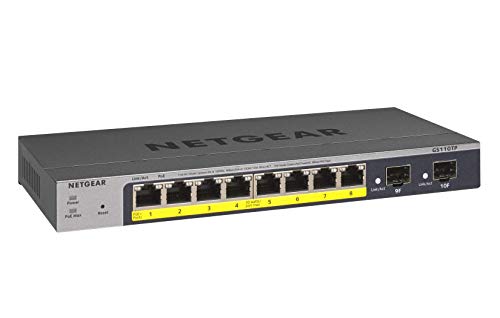
- Eight PoE+ Gigabit ports
- Two 1G SFP ports
- Smart management with SNMP support
Best For: Small managed networks needing fiber expansion
Enterprise Backbone Pick – UniFi Pro 48-Port PoE+ Switch
For larger deployments needing premium PoE network switches, the Ubiquiti UniFi Pro USW-PRO-48-POE combines 48 Gigabit PoE+ ports with four 10G SFP+ uplinks. Its managed Layer 2/3 features and UniFi Network integration make it suitable for centralized administration of access points, cameras, phones, and other connected equipment.
Best For: Businesses and advanced home labs building a high-port-count, centrally managed network backbone.
Pros:
- 48 RJ-45 Gigabit ports support IEEE 802.3af/at PoE and PoE+ devices.
- Four SFP+ 10G uplinks, 176 Gbps switching capacity, and 88 Mpps throughput support demanding backbones.
- Managed Layer 2/3 features include VLANs, spanning tree, 802.1x, RADIUS, DHCP server, and port mirroring.
- Integrates with the UniFi Network application for centralized management.
Cons:
- Its 48-port rack-mountable design may be excessive for smaller installations.
- It is more management-intensive than an unmanaged switch.
This is a strong choice when port density, 10G uplinks, and UniFi ecosystem management matter more than compact size. Its 1U rack-mountable form also suits structured network closets.
Compact 2.5G Choice – TRENDnet TPE-BG380
The TRENDnet TPE-BG380 is a practical premium PoE network switch for smaller installations that need faster-than-Gigabit access. Its eight 2.5GBASE-T ports, 230W PoE budget, and PoE++ support help power compatible devices over existing Cat5e or better cabling.
Best For: Small offices, workspaces, and compact deployments with 2.5G devices and higher PoE demands.
Pros:
- Eight 2.5G RJ-45 ports provide up to 2.5Gbps speeds with compatible cabling and devices.
- 230W PoE budget and IEEE 802.3af/at/bt compliance support a range of powered equipment.
- Fanless metal design reduces operating noise and supports wall mounting.
- Offers 40Gbps switching capacity, jumbo frames up to 12KB, and backward compatibility with legacy speeds.
Cons:
- Eight ports limit expansion compared with larger switches.
- The listed switch type is unmanaged, so advanced VLAN and centralized management features are not provided in the supplied specifications.
With its compact enclosure and 2.5G connectivity, the TPE-BG380 fits installations where quiet operation and multi-gigabit access are priorities. Its lifetime manufacturer protection is limited to the U.S. and Canada.
UniFi Midrange Pick – USW-24-POE Gigabit Switch
The Ubiquiti UniFi USW-24-POE is a straightforward option for users who want a 24-port PoE+ switch for common network devices. Its Gigabit Ethernet connectivity and metal enclosure suit installations involving computers, servers, storage, cameras, VoIP phones, and access points.
Best For: UniFi users needing a mid-sized Gigabit PoE+ switch for mixed office or home-network equipment.
Pros:
- Provides 24 ports for connecting a range of wired and PoE-capable devices.
- Supports PoE+, SFP, and RJ45 interfaces according to the supplied specifications.
- Metal construction and a rack-oriented form factor suit permanent installations.
Cons:
- Its 1Gbps data transfer rate is less suitable for multi-gigabit networks.
- The supplied details identify it as a Layer 2 Ethernet switch, without the broader Layer 2/3 feature list of the UniFi Pro model.
- Only a one-year manufacturer warranty is listed.
This model balances useful port capacity with a simpler Gigabit platform. It makes the most sense when 24 ports are sufficient and your network does not require 2.5G or 10G access speeds.
High-Power Plug-and-Play Pick – TP-Link TL-SG1218MP PoE+ Switch
The TP-Link TL-SG1218MP is a practical premium PoE network switch for installations that need substantial PoE capacity without software configuration. It provides 16 PoE+ ports, two additional Gigabit non-PoE ports, and two combo SFP slots for connecting cameras, access points, phones, and uplinks.
Best For: Small businesses and surveillance or office networks that need 250W of PoE power and simple deployment.
Pros:
- Sixteen 802.3at/af PoE+ ports can deliver up to 30W per port.
- A 250W total PoE budget supports multiple powered devices.
- Includes two Gigabit non-PoE ports and two combo SFP slots for uplink flexibility.
- Plug-and-play setup, QoS, IGMP Snooping, metal casing, and rack-mounting support practical installations.
Cons:
- Gigabit-only connectivity does not target multi-gigabit networks.
- Its 16 PoE+ ports offer less capacity than 24- or 48-port alternatives.
- The supplied notes emphasize plug-and-play operation rather than advanced managed-switch controls.
The TL-SG1218MP is a sensible choice when power capacity and easy installation are more important than advanced management. Its metal chassis, rack-mount kit, and three-year warranty add practicality for small professional deployments.
Enterprise-Scale Pick – Ubiquiti UniFi USW-48-PoE
For larger deployments needing premium PoE network switches, the Ubiquiti UniFi USW-48-PoE combines 48 Gigabit Ethernet ports with 32 802.3at PoE+ ports. Its UniFi Controller management and 240W power supply make it suited to centralized network administration.
Best For: Larger offices, managed networks, and installations requiring many wired and PoE connections.
Pros:
- Provides 48 Gigabit Ethernet ports, including 32 PoE+ ports.
- Includes four 1G SFP ports for compatible fiber uplinks.
- Supports UniFi Controller management and includes a 240W power supply.
- Features a 1.3-inch touch LCM for on-device information.
Cons:
- Its 48-port design may be more capacity than smaller installations need.
- The listed 240W power supply may require planning for larger PoE loads.
- At 17 pounds, it is less convenient to move than compact switches.
The USW-48-PoE is a strong choice when port count and centralized UniFi management matter most. It is less compelling for simple home or small-office setups that do not need extensive expansion capacity.
Compact Smart Value – TP-Link TL-SG105MPE
The TP-Link TL-SG105MPE is a compact option among premium PoE network switches, offering four PoE+ Gigabit ports, one non-PoE Gigabit port, and a 120W PoE budget. Its web-based management, VLAN features, and fanless metal design add useful control without a large footprint.
Best For: Small offices, desktop installations, cameras, access points, and other compact PoE networks.
Pros:
- Offers four 802.3at/af PoE+ ports with up to 30W per port.
- Provides a 120W total PoE power budget and one non-PoE Gigabit port.
- Includes VLAN, QoS, IGMP snooping, and link aggregation features.
- Supports PoE Auto Recovery and uses a fanless metal enclosure.
Cons:
- Only five total ports limit expansion compared with larger switches.
- PoE Auto Recovery requires configuration.
- The switch has no more than four PoE-powered connections.
With manageable features and a 120W budget in a compact enclosure, the TL-SG105MPE fits small, focused deployments. Choose a larger model if you expect to add numerous wired or PoE devices.
Mid-Size Managed Option – Ubiquiti USW-16-POE
The Ubiquiti USW-16-POE is a 16-port managed Ethernet switch for buyers who need more capacity than a compact desktop model without moving to a 48-port design. Its listed dimensions and 6.17-pound weight make it a practical mid-size option for organized network installations.
Best For: Mid-size wired networks that need a managed 16-port switch.
Pros:
- Provides 16 Ethernet ports for moderate network expansion.
- Offers managed switching for installations requiring network administration.
- Its 7.9 x 17.4 x 1.7-inch dimensions suit structured equipment setups.
Cons:
- The supplied notes do not specify PoE port count or total PoE budget.
- The supplied notes do not list uplink specifications or management features.
- It is less compact than a small desktop switch, weighing 6.17 pounds.
The USW-16-POE occupies a useful middle ground for buyers who want a 16-port managed platform. Because the supplied specifications omit detailed PoE and uplink information, verify those requirements before purchase.
High-Capacity Pick – NETGEAR GS316PP
For installations that need lots of powered devices, this premium PoE network switch combines 16 Gigabit ports with a substantial 183W PoE+ budget. Its unmanaged, fanless design keeps setup simple and operation quiet.
Best For: Small offices, surveillance deployments, and home networks with numerous PoE devices.
Pros:
- Sixteen PoE+ ports provide up to 30W per port.
- Dynamic PoE allocation can redistribute unused power.
- Fanless metal design supports quiet desktop or wall-mounted use.
- Plug-and-play setup requires no software or configuration.
Cons:
- Unmanaged operation does not provide VLAN, QoS, or other configuration controls.
- Its 183W power capacity may be more than smaller networks need.
The GS316PP is a practical choice when port count and PoE capacity matter more than advanced management. Auto-negotiating Gigabit ports also work with existing Cat5e or Cat6 cabling.
Compact Managed Value – TP-Link TL-SG108PE
The TP-Link TL-SG108PE is a compact premium PoE network switch for buyers who want basic management features without a complex setup. It offers four PoE ports, VLAN support, QoS, and a 57W total PoE budget.
Best For: Small networks needing light traffic management and power for a few compatible devices.
Pros:
- Four 802.3af PoE ports provide up to 15.4W per port.
- Web-based management includes VLAN, QoS, IGMP snooping, and monitoring features.
- Eight Gigabit ports fit compact desktop installations.
- Fanless metal enclosure supports quiet operation.
Cons:
- Only four ports supply PoE.
- The 57W total PoE budget is lower than higher-capacity models.
- Its 802.3af PoE ports may not suit devices requiring higher PoE+ output.
This switch balances a small footprint with useful network controls. It is a stronger fit than an unmanaged model when segmentation or traffic prioritization is important, but its power capacity is intended for modest deployments.
Expansion-Ready Choice – NETGEAR GS110TP
The NETGEAR GS110TP adds smart management and fiber expansion to a compact premium PoE network switch. Eight PoE+ Gigabit ports provide device power, while two 1G SFP ports support fiber connections or network expansion.
Best For: Small offices and growing networks that need managed control plus SFP connectivity.
Pros:
- Eight PoE+ ports share a 55W power budget.
- Two 1G SFP ports enable fiber uplinks or expansion.
- Smart management supports secure setup, access control, and SNMP management.
- Desktop or wall-mount installation suits flexible deployments.
Cons:
- The 55W PoE budget is modest for eight powered ports.
- Only eight of the ten total ports provide PoE+.
- Remote Insight management is included for one year, so ongoing use may require additional service considerations.
The GS110TP is well suited to networks that have outgrown basic switching but do not need a larger enterprise chassis. Its SFP ports make it especially useful where fiber uplinks or future expansion are part of the plan.
How We Picked the Best Premium PoE Network Switches
We selected these switches based on the features that matter most in real deployments: available PoE power, port count, Ethernet speed, management capability, uplink options, scalability, and installation flexibility. The list includes compact switches for small offices and home labs, as well as larger models for cameras, wireless access points, phones, and other powered endpoints.
We also considered the difference between managed, smart-managed, and unmanaged hardware. A premium switch should match your network skills and operational needs rather than simply offer the highest port count.
Quick Comparison
| Best For | Look For |
|---|---|
| Large deployments | 24 or 48 ports, higher PoE budgets, and fast SFP or SFP+ uplinks |
| Small offices and home labs | 5 to 10 ports, compact designs, and simple configuration |
| Managed networks | VLANs, QoS, monitoring, scheduling, and per-port controls |
| Plug-and-play installations | Unmanaged operation and automatic PoE negotiation |
| Modern high-speed devices | 2.5GbE ports or faster uplinks |
Key Buying Factors for Premium PoE Network Switches
PoE Standard and Power Budget
Check whether the switch supports PoE, PoE+, or PoE++ and calculate the total wattage required by all connected devices. Leave headroom for startup loads and future expansion. A high port count does not necessarily mean every port can deliver maximum power simultaneously.
Port Count and Speed
Choose enough ports for current devices plus planned growth. Gigabit Ethernet remains suitable for many cameras and access points, while 2.5GbE can benefit newer wireless access points and high-throughput workstations.
Management and Network Control
Managed switches support VLANs, traffic prioritization, diagnostics, and better security controls. Smart-managed models offer a useful middle ground. Unmanaged switches are easiest to deploy but provide little visibility or customization.
Uplinks, Noise, and Installation
Look for SFP or SFP+ uplinks when connecting to fiber, a core switch, or a longer-distance backbone. Also check rack-mounting options, fan noise, heat output, and power requirements before installing the unit in an office or cabinet.
Who Should Buy Which Premium PoE Network Switches?
Choose a 48-port managed model when you are building a larger wired infrastructure with multiple access points, cameras, phones, or expansion plans. A 16- or 24-port switch is often the best balance for a growing small business or home lab. Compact five-, eight-, or ten-port models suit desks, small offices, remote rooms, and limited camera systems.
Buy a managed or smart-managed switch if you need VLAN segmentation, traffic prioritization, monitoring, or scheduled PoE. Select an unmanaged model when simplicity matters more than configuration. For demanding wireless networks, prioritize 2.5GbE support and fast uplinks; for standard surveillance and office devices, a dependable Gigabit PoE switch may provide better value.