If you’re looking to elevate your PC’s network performance, 10Gb Ethernet cards might be just what you need. These powerful cards offer incredible speeds, making them ideal for gaming, streaming, and heavy data transfers. With several top options available, you can find one that suits your needs perfectly. But which card will give you the best bang for your buck? Let’s explore the top contenders and what makes each one stand out.
TP-Link 10GB PCIe Network Card (TX401)
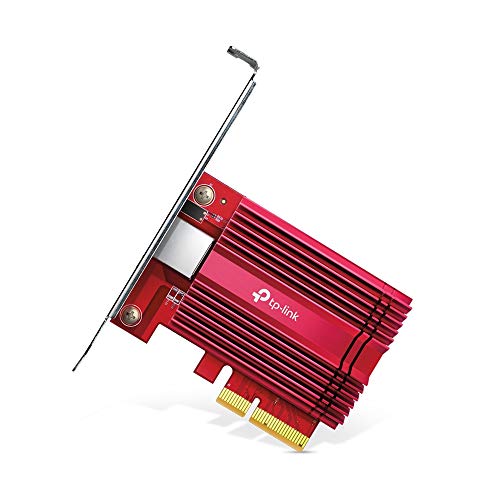
If you’re a gamer or a professional needing lightning-fast network speeds, the TP-Link 10GB PCIe Network Card (TX401) is your go-to choice. This adapter supports multiple operating systems, including Windows 11 and Linux, ensuring broad compatibility. With speeds up to 10 Gbps, it’s ten times faster than standard Gigabit adapters, perfect for smooth data transmission during online gaming or heavy file transfers. Its Quality of Service (QoS) technology minimizes lag, prioritizing your gaming experience. Installation’s a breeze, and you’ll appreciate the included 1.5 m CAT6A Ethernet cable. Plus, it’s backed by a solid 2-year warranty and 24/7 support.
Best For: Gamers and professionals seeking ultra-fast network speeds for seamless online gaming and heavy file transfers.
Pros:
- Delivers speeds up to 10 Gbps, making it ten times faster than standard Gigabit adapters.
- Easy installation with included low-profile and full-height brackets, plus plug-and-play compatibility with Windows 10 and 11.
- Backed by a 2-year warranty and 24/7 technical support for peace of mind.
Cons:
- May require a compatible motherboard with PCIe 3.0 slots for installation.
- Limited performance improvement if used with older network infrastructure not supporting higher speeds.
- Some users may prefer a wireless option, despite the advantages of wired connections.
10Gtek 10Gb Dual RJ45 Port Network Card

The 10Gtek 10Gb Dual RJ45 Port Network Card is an excellent choice for professionals and gamers who need high-speed connectivity for demanding applications. With dual RJ45 ports, you can connect using Category-6A and Category-6 cables, achieving speeds up to 10Gbps. It’s compatible with various operating systems, including Windows and Linux, though Windows 11 requires manual setup. Installation is straightforward, and you’ll appreciate its robust build quality and efficient heat dissipation. With a 3-year warranty and lifetime tech support, you’re making a solid investment in reliable performance for large file transfers and remote server access.
Best For: Professionals and gamers seeking high-speed connectivity for demanding applications and large file transfers.
Pros:
- Dual RJ45 ports allow for versatile connections using Category-6A and Category-6 cables, achieving speeds up to 10Gbps.
- Easy installation with a provided low-profile bracket and generally positive user experiences across various systems.
- Robust build quality with efficient heat dissipation and a 3-year warranty plus lifetime tech support.
Cons:
- Manual setup required for Windows 11, which may complicate installation for some users.
- Drivers may not be recognized by Windows Update, requiring users to download them from the chip manufacturer’s website.
- Not hot-swappable, meaning the card must be installed with the system powered down.
VIMIN 10G PCI-E Network Card with Dual RJ45 Ports

For those seeking a high-performance solution to boost their network capabilities, the VIMIN 10G PCI-E Network Card with Dual RJ45 Ports stands out. Featuring Intel’s X540-T2 controller, it delivers 10Gbps speeds through its two RJ45 ports, ensuring reliable data transmission. This card is compatible with various operating systems, including Windows and Linux, making installation straightforward. Weighing just 8.8 ounces and designed with excellent heat dissipation, it maintains peak performance. Users praise its seamless integration with Proxmox and ESXi, although some mention potential driver issues. Overall, it’s a solid choice for enhancing your network efficiency and speed.
Best For: Network professionals and enthusiasts looking to enhance their data transmission capabilities with a reliable 10Gbps network card.
Pros:
- High-speed data transmission with dual 10Gbps RJ45 ports.
- Compatible with multiple operating systems, ensuring flexibility in installation.
- Excellent heat dissipation design for optimal performance stability.
Cons:
- Some users report issues with packet loss and signal drops.
- Driver installation can be challenging on certain operating systems.
- Occasional reports of faulty devices affecting reliability.
YuanLey 10G PCIe Network Card
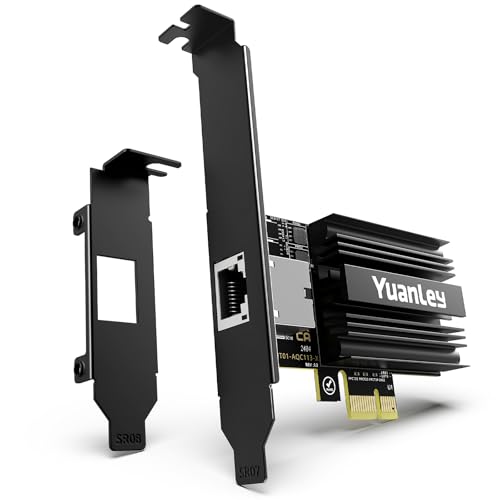
Looking to supercharge your network performance? The YuanLey 10G PCIe Network Card is your go-to solution. With the Marvell AQC113 controller, it supports speeds of 10GBASE-T, 5G, 2.5G, and 1G over RJ45. Its PCIe 4.0 x1 interface guarantees compatibility with various systems, including Windows and Linux. Users love its easy plug-and-play installation, making it perfect for gaming and data-intensive tasks. Plus, the card’s durable design and low-profile bracket fit seamlessly into compact builds. Enjoy lifetime technical support for any setup questions, and experience lightning-fast connectivity with this reliable network card!
Best For: The YuanLey 10G PCIe Network Card is best for gamers, streamers, and professionals requiring high-speed, reliable network connections for data-intensive tasks.
Pros:
- Easy plug-and-play installation for quick setup on various operating systems.
- Supports multiple speeds (10G, 5G, 2.5G, and 1G), making it versatile for different networking needs.
- Durable design with gold-plated connectors ensures low-latency performance and longevity.
Cons:
- Optimal performance may require driver updates, especially for certain operating systems like FreeBSD.
- Limited to PCIe 4.0 x1 interface, which might restrict performance on older motherboards.
- Some users may find the low-profile bracket insufficient for specific case designs.
TP-Link 2.5GB PCIe Network Card (TX201)

Designed for gamers and high-performance users, the TP-Link 2.5GB PCIe Network Card (TX201) delivers speeds up to 2.5 Gbps, making it 2.5 times faster than standard Gigabit Ethernet. This PCIe adapter is compatible with various Windows versions and Linux, ensuring versatility. With Quality of Service (QoS), it prioritizes your gaming experience by reducing network congestion. The Wake on LAN feature allows you to power your PC remotely. Installation is straightforward, and most users report achieving impressive speeds over 2 Gbps. With a solid 4.6-star rating, this card is a reliable choice for enhanced connectivity.
Best For: Gamers and high-performance users seeking faster and more reliable network connectivity.
Pros:
- High Speed: Achieves speeds up to 2.5 Gbps, significantly faster than traditional Gigabit Ethernet.
- Versatile Compatibility: Works with a range of operating systems including Windows and Linux, and is backward compatible with lower speeds.
- Quality of Service (QoS): Prioritizes gaming performance and reduces network congestion for a smoother experience.
Cons:
- Connectivity Issues: Some users have reported problems when waking from sleep mode, though these can often be resolved with driver updates.
- Driver Updates Needed: May require occasional driver updates for optimal performance.
- Physical Size: Depending on the case size, additional bracket installation may be necessary for some setups.
BrosTrend 5Gb PCIe Network Card for PC

The BrosTrend 5Gb PCIe Network Card stands out as an excellent choice for gamers and streamers seeking a significant speed boost for their desktop PCs. With speeds up to 5 Gbps, it’s five times faster than standard Gigabit cards, enhancing your online experience with reduced latency. Installation is a breeze—just plug it into the motherboard, and it’s compatible with major operating systems. Users report consistent performance, and its sturdy design guarantees reliability during intense tasks. With a customer rating of 4.6 stars, it’s a top pick for anyone wanting high-performance networking without breaking the bank.
Best For: Gamers and streamers looking for a high-speed networking solution to enhance their online experience.
Pros:
- Exceptional 5 Gbps speed, significantly faster than standard Gigabit cards.
- Easy installation and compatibility with major operating systems, including Linux.
- Sturdy design with optimal heat dissipation for reliable performance during intensive tasks.
Cons:
- Requires driver installation for full speed capabilities; may cap at 2500Mbps without proper drivers.
- Some user concerns regarding longevity and driver compatibility.
- Limited to desktop PCs, not suitable for laptops or other devices.
10Gb Dual LAN PCI-e Network Card

For anyone needing lightning-fast network connectivity, the 10Gb Dual LAN Base-T PCI-e Network Card stands out with its Intel X540 controller and dual 10Gbe RJ45 ports. This card offers speeds up to 20 Gbps, ensuring seamless internet and data transfers without packet loss. Compatible with Windows, Linux, and VMware, it’s easy to install with plug-and-play functionality. Users appreciate the excellent heat dissipation and minimal configuration needed to achieve full speeds. With a solid customer rating of 4.3 out of 5 and a one-year warranty, it’s a reliable choice for enhancing your network performance.
Best For: Users seeking high-speed network connectivity for gaming, data-intensive applications, or server environments.
Pros:
- Excellent speed of up to 20 Gbps with dual 10Gbe RJ45 ports.
- Easy installation with plug-and-play functionality and broad compatibility.
- Effective heat dissipation to maintain stable network performance.
Cons:
- Some users report connectivity issues and performance degradation after several months of use.
- Limited compatibility with older PCI slots, requiring PCIe slots for installation.
- A few customers may encounter difficulties with technical support responsiveness.
TRENDnet 10G PCIe Network Adapter (TEG-10GECTX)

Offering impressive versatility, the TRENDnet 10G PCIe Network Adapter (TEG-10GECTX) is an ideal choice for gamers and content creators who need high-speed connectivity. This adapter converts a PCI Express slot into a blazing-fast 10Gbps Ethernet port, supporting multiple speeds, including 5Gbps, 2.5Gbps, and 1Gbps. With its PCIe Gen 2 3.0 x4 interface and a single 10Gbps RJ-45 port, you’ll enjoy seamless performance. Plus, it’s compliant with NDAA and TAA standards, ensuring reliability. Backed by three years of manufacturer protection and accessible tech support, you can invest in this adapter with confidence for your networking needs.
Best For: Gamers and content creators seeking high-speed connectivity for demanding applications.
Pros:
- High-speed performance: Supports multiple speeds including 10Gbps, 5Gbps, and 2.5Gbps for versatile connectivity options.
- NDAA and TAA compliant: Meets government standards for reliable networking solutions in the U.S. and Canada.
- Manufacturer protection: Backed by a 3-year warranty, ensuring quality and reliability.
Cons:
- Requires PCIe slot: May not be compatible with systems lacking an appropriate PCIe slot.
- Limited to RJ-45 port: Only one 10Gbps RJ-45 port may limit expansion options for multiple connections.
- Potential setup complexity: Users may need technical knowledge for installation and configuration.
ipolex 10Gb Network Card (Intel X540-T2)

Designed for high-performance networking, the ipolex 10Gb Network Card (Intel X540-T2) stands out with its dual RJ45 ports, making it an excellent choice for those seeking to maximize data transfer speeds in demanding environments. With a data rate of up to 10Gbps, you’ll experience lightning-fast connections over distances of up to 100m using Cat.6a cabling. This card supports multiple operating systems, including Windows and Linux, ensuring compatibility with your setup. Just remember, it doesn’t support hot swapping, so plan your installation accordingly. Full height and low profile brackets are included for versatile usage in standard computers or servers.
Best For: Networking professionals and businesses looking for high-speed data transfer in server environments.
Pros:
- Dual RJ45 ports allow for enhanced connectivity options and increased bandwidth.
- High data rate of up to 10Gbps ensures rapid data transfer for demanding applications.
- Compatible with multiple operating systems including Windows and Linux, providing flexibility for various setups.
Cons:
- Not compatible with 5G/2.5G networks, limiting its use in certain modern setups.
- Does not support hot swapping, requiring planned installation and downtime.
- May require MCU info matching for Dell and HPE servers, necessitating additional consultation before purchase.
ASUS XG-C100C 10G Network Adapter PCI-E Card

The ASUS XG-C100C 10G Network Adapter PCI-E Card stands out for users who demand blazing-fast internet speeds for bandwidth-intensive tasks. With data-transfer speeds of up to 10Gbps, you’ll experience performance up to 10 times faster than traditional Ethernet cards. Its single RJ-45 port guarantees easy connectivity, while full compatibility with 10/5/2.5/1Gbps and 100Mbps standards allows seamless integration into existing networks. You’ll appreciate its support for various operating systems, including Windows and Linux. Plus, built-in Quality-of-Service (QoS) technology prioritizes your bandwidth, optimizing your online experience for smoother gaming and streaming. Upgrade your network today!
Best For: Users who require high-speed internet for demanding tasks like gaming, video streaming, and large file transfers.
Pros:
- Delivers up to 10Gbps data-transfer speeds, significantly enhancing performance for bandwidth-intensive applications.
- Compatible with a wide range of network standards, ensuring seamless integration into existing setups.
- Supports various operating systems, offering flexibility for different user environments.
Cons:
- May require a compatible motherboard with a PCI-E x4 slot, limiting compatibility with some older systems.
- Higher cost compared to standard Ethernet cards may not be justifiable for casual users.
- Installation and configuration might be complex for users unfamiliar with network hardware.
Factors to Consider When Choosing 10GB Ethernet Cards for PC
When you’re choosing a 10Gb Ethernet card for your PC, several key factors come into play. You’ll want to evaluate compatibility with your operating system, the ease of installation, and performance specs. Don’t overlook aspects like port configuration and heat management, as these can impact your overall experience.
Compatibility With Operating Systems
Choosing a 10GB Ethernet card requires careful consideration of its compatibility with your operating system, as this can greatly affect its performance and functionality. Confirm the card supports your specific OS, since compatibility can vary widely; some cards only work with certain versions of Windows or Linux. Many high-performance options, like those using the Intel X540 controller, support various OS versions, including Windows, Linux, and VMware. Be mindful that some cards may need manual driver installation for newer systems like Windows 11, while others offer plug-and-play ease. Also, check for backward compatibility with older network standards and confirm the card matches your motherboard’s PCIe slot specifications to avoid integration issues.
Installation and Setup Ease
While considering a 10GB Ethernet card, you’ll want to prioritize installation and setup ease to guarantee a smooth experience. Most cards support plug-and-play functionality, making it simple to install without additional drivers on compatible systems like Windows 10 and 11. Look for models that come with both low-profile and full-height brackets, giving you options for various case sizes. However, some newer models might require manual driver installation, which can be tricky if you’re not familiar with driver management. The installation process usually involves inserting the card into a PCIe slot, a task that’s straightforward for those with basic PC assembly skills. Always verify compatibility with your operating system and hardware to avoid any installation hiccups.
Performance Specifications and Speed
Performance specifications and speed are essential factors to evaluate for your 10GB Ethernet card. These cards typically support speeds of up to 10 Gbps, making them ten times faster than standard Gigabit Ethernet. This high speed is perfect for bandwidth-heavy tasks like gaming and transferring large files. Many cards also provide backward compatibility with lower speeds—5 Gbps, 2.5 Gbps, 1 Gbps, and even 100 Mbps—guaranteeing seamless connectivity with your existing network. Look for support for Jumbo frames, which enhance data transmission efficiency by handling larger packet sizes. Additionally, Quality of Service (QoS) capabilities prioritize bandwidth for latency-sensitive applications, while advanced technology such as 10GBase-T ensures reliable data transmission over standard copper cables.
Port Configuration and Type
When it comes to selecting a 10GB Ethernet card, the port configuration and type play a crucial role in your network’s overall performance. First, consider the number of ports; dual-port configurations can boost redundancy and load balancing for your setup. Next, check the type of port, typically RJ45, to verify it aligns with your existing cabling infrastructure and supports various speeds like 10GBASE-T, 5GBASE-T, and 2.5GBASE-T. Evaluate the PCIe interface type, such as PCIe x4 or x8, to confirm adequate bandwidth for your motherboard. Finally, make sure the card supports higher cable categories like Cat6A or Cat7 for peak performance at 10Gbps, while also maintaining backward compatibility with lower speeds for legacy devices.
Heat Dissipation and Cooling
Effective heat dissipation is essential for 10GB Ethernet cards, especially since high-speed data transfers can generate significant heat. This excess heat can impact the card’s performance and longevity, so you need to make certain your card has adequate cooling features. Many 10GB Ethernet cards come equipped with heat sinks or other cooling components to maintain ideal temperatures during intensive tasks. If heat management is poor, you risk thermal throttling, which reduces performance and hinders data transfer speeds. Consider your system’s ambient temperature and make certain proper airflow to prevent overheating. Regularly monitoring temperatures and making certain proper installation will enhance the reliability and efficiency of your 10GB Ethernet card in high-performance environments.
Warranty and Support Duration
Warranty and support duration are crucial factors to take into account when choosing a 10GB Ethernet card for your PC. A longer warranty, especially three years or more, usually signals the manufacturer’s confidence in their product’s reliability. Many cards also offer lifetime technical support, ensuring you have assistance for installation, troubleshooting, and performance issues. Some manufacturers provide a 30-day free return policy, letting you test the card and return it if it doesn’t meet your expectations. Warranty terms can vary greatly, so it’s important to check for industry-leading options. Don’t forget to read customer reviews about warranty service experiences; responsive and high-quality support can greatly enhance your satisfaction with the product.
Cost and Value Analysis
Choosing the right 10GB Ethernet card for your PC involves more than just picking the cheapest option available. When evaluating cost, consider the price per Gbps delivered, as higher-speed cards can offer better value for data-intensive tasks. Generally, a card priced between $100 and $200 strikes a good balance for home and small business users. Look at warranty length and customer support; longer warranties often indicate manufacturer confidence. Additionally, check customer ratings and reviews for insights on reliability and performance, helping you avoid costly mistakes. Finally, consider if features like Quality of Service (QoS) and advanced heat dissipation justify a higher price, especially in demanding environments, enhancing your overall experience.