Finding the right thermal camera for automotive work does not always mean choosing the most expensive professional imager. Affordable models can help reveal overheated components, electrical problems, cooling-system issues, and heat patterns that ordinary cameras miss.
We compare ten budget thermal imaging cameras for cars across standalone, smartphone-connected, and vehicle-focused designs, emphasizing image quality, temperature measurement, usability, and compatibility.
Best 10 Budget Thermal Imaging Cameras for Cars Picks for 2026
Best All-Around Handheld
MILESEEY TR10 Thermal Imaging Camera

- 192 × 192 resolution and 25Hz refresh rate
- -4°F to 1022°F range with ±2°C accuracy
- 8-hour battery and rugged 6.6-foot drop-tested body
Best For: DIY automotive troubleshooting and general thermal inspections
Best Phone-Connected Option

- USB-C support for iOS, Android, and Windows
- AI-assisted thermal and visible-image fusion
- App offers detailed spot, line, area, and report analysis
Best For: Phone-based automotive diagnostics and shareable thermal reports
Best for Detailed Workshop Analysis
FOXWELL RT280 Thermal Imaging Camera

- 320 × 240 display with TISR-enhanced thermal detail
- Windows software supports 2D/3D analysis and reports
- Laser, LED light, 8GB storage, and IP54 protection
Best For: Home mechanics and Windows-based workshop documentation
Best for Night Driving
Robofinity InsightDrive Thermal Camera

- Vehicle-mounted thermal detection rated up to 656 feet
- AI alerts for vehicles, pedestrians, and animals
- Designed for darkness, rain, snow, fog, and glare
Best For: Forward-facing nighttime and poor-weather driving awareness
Best Balanced Handheld Pick
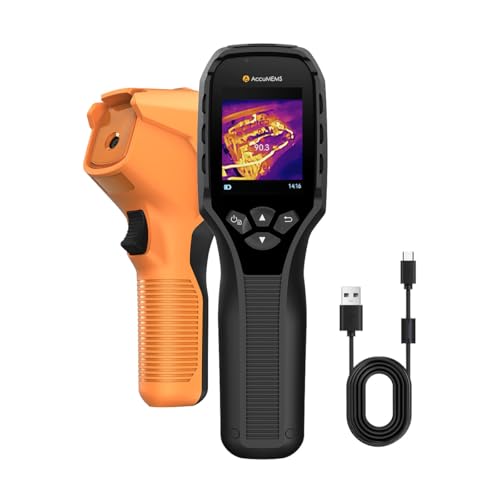
- Thermal imaging plus thermometer and hot/cold/center spot modes
- -4°F to 1022°F range with adjustable emissivity and distance
- Up to 14 hours of operation with configurable temperature alarms
Best For: DIY automotive inspections and mobile heat troubleshooting
Best High-Detail Inspection Value
Flagfront YXI96 Thermal Camera

- 240×240 super-resolution imaging with a 25Hz refresh rate
- -4°F to 1022°F measurement range and temperature alarms
- Rated for 6.6-foot drops with IP54 dust/water resistance
Best For: Detailed handheld vehicle and circuit inspections
Best for Comfort
EVIL ENERGY Car Thermal Camera

- 656-foot thermal detection with a 256×192 sensor
- AI alerts for pedestrians, vehicles, and nine animal species
- 12V plug-in installation with a dedicated 6.25-inch display
Best For: Road awareness during nighttime and low-visibility driving
Best Value Phone Camera
REVASRI 320×240 Thermal Camera
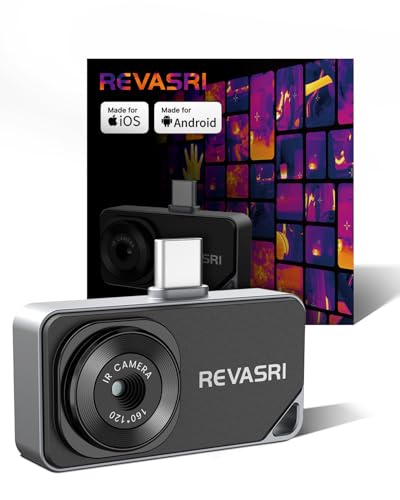
- 320×240 super-resolution output with 25Hz refresh
- -4°F to 842°F measurement range
- Works with iOS, Android, and Windows systems
Best For: DIY automotive troubleshooting and flexible phone-based inspections
Best Entry-Level iPhone Pick

- 240×180 Super Resolution from 80×60 native IR
- MSX blends thermal and visual image details
- 1.5-meter drop protection for jobsite use
Best For: Basic automotive inspections with an iPhone 15 or newer
Best Detail Upgrade
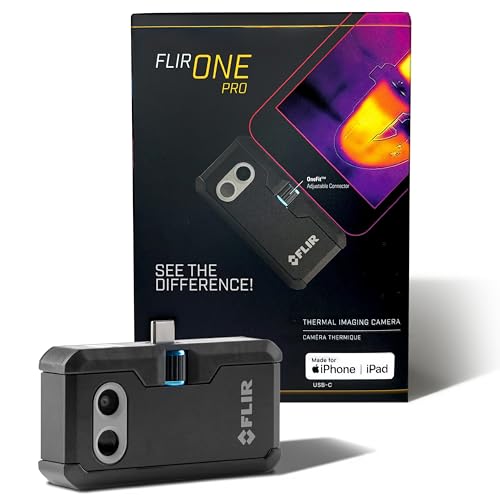
- 480×360 Super Resolution from 160×120 native IR
- MSX enhances thermal images with visual detail
- 1.5-meter drop protection and inspection guides
Best For: Higher-detail automotive inspections using a compatible iPhone
Best All-Around Handheld – MILESEEY TR10 Thermal Imaging Camera
For shoppers comparing budget thermal imaging cameras for cars, the MILESEEY TR10 is a practical handheld option for checking engine components, electrical connections, and other automotive heat patterns. Its 192 × 192 sensor, 25Hz refresh rate, and broad temperature range support clear, responsive inspections without requiring a phone.
Best For: DIY automotive troubleshooting and general-purpose thermal inspections.
Pros:
- 192 × 192 infrared resolution with a smooth 25Hz refresh rate.
- Measures from -4°F to 1022°F with stated accuracy of ±2°C.
- Adjustable emissivity, high/low temperature alarms, and automatic hot-spot readings.
- 8-hour battery life, 8GB storage, and a 6.6-foot drop-tested design.
Cons:
- It is a standalone handheld camera rather than a vehicle-mounted system.
- Connectivity is listed as wired, so it may be less convenient for wireless sharing.
The TR10 balances useful resolution, temperature controls, durability, and long runtime. It is a strong fit when you want one affordable tool for car diagnostics and broader home or workshop checks.
Best Phone-Connected Option – RISION Magic Thermal Camera
Among budget thermal imaging cameras for cars, the RISION Magic stands out for smartphone-based analysis. Its USB-C connection, AI-enhanced image fusion, and app tools can help identify overheated wires, terminals, and mechanical components with more context than a basic thermal view.
Best For: Drivers and technicians who want detailed phone-based automotive diagnostics.
Pros:
- Works with iOS, Android, and Windows devices through USB-C; Mac is not supported.
- AI-assisted visible and thermal image fusion helps pinpoint specific problem areas.
- 25Hz imaging, a 52° × 39° field of view, and a -4°F to 1112°F range.
- App supports spot, line, area, threshold, graph, and report analysis without registration.
Cons:
- Its native sensor is 160 × 120, with the 320 × 240 output produced through QuadIR upscaling.
- It requires a compatible phone or Windows device for operation and analysis.
- Mac devices are not supported.
The RISION Magic is appealing if you prefer app-driven inspection tools and shareable analysis rather than a dedicated handheld screen. Confirm device compatibility before buying, especially if you use a Mac.
Best for Detailed Workshop Analysis – FOXWELL RT280 Thermal Imaging Camera
The FOXWELL RT280 is a capable choice for budget thermal imaging cameras for cars when you want a dedicated display plus PC analysis. It combines a 2.8-inch-class handheld viewing experience, TISR-enhanced detail, targeting aids, and inspection software for documenting automotive findings.
Best For: Home mechanics and workshop users who need stored images and Windows-based reports.
Pros:
- 320 × 240 LCD output with TISR-enhanced effective resolution up to 240 × 180.
- 25Hz imaging, 50° × 38° field of view, and automatic high/low/center temperature readings.
- Windows software supports point, line, area, 2D/3D analysis, and automatic reports.
- Includes laser targeting, LED light, 8GB storage, 6.6-foot drop resistance, and IP54 protection.
Cons:
- PC analysis software is for Windows and is not compatible with Mac.
- The listed temperature accuracy is ±3.6°F / ±2%, which is less precise than some specialized instruments.
- Its feature set may be more than necessary for occasional visual checks.
With onboard storage, targeting aids, and report-oriented software, the RT280 is suited to repeat inspections and documentation. It makes the most sense for users who will take advantage of its Windows analysis workflow.
Best for Night Driving – Robofinity InsightDrive Thermal Camera
Unlike handheld budget thermal imaging cameras for cars, the Robofinity InsightDrive is designed as a vehicle-mounted thermal night-vision system. It combines a front-mounted camera, app controls, and AI alerts to help detect vehicles, pedestrians, and animals during driving in darkness or challenging weather.
Best For: Drivers seeking forward-facing thermal hazard detection for nighttime and poor-weather travel.
Pros:
- Claims thermal hazard detection up to 656 feet, or 200 meters.
- Designed to operate in darkness, rain, snow, fog, and glare.
- AI recognition identifies vehicles, pedestrians, and animals and provides collision-risk alerts.
- Plug-and-play installation, iOS/Android app customization, 720p video, and included 32GB card.
Cons:
- It is intended for road monitoring, not close-up engine or component temperature diagnosis.
- The 40-degree field of view is narrower than some handheld inspection cameras.
- At 1.65 kg, it is substantially less portable than a small handheld imager.
The InsightDrive is the specialized pick in this group for forward visibility while driving. Choose it over a handheld model only if night-road awareness and automated hazard alerts matter more than workshop diagnostics.
Best Balanced Handheld Pick – GT14S Thermal Imaging Camera
For shoppers comparing budget thermal imaging cameras for cars, the GT14S offers a practical mix of handheld convenience, temperature measurement, and broad inspection coverage. Its thermal view, spot modes, adjustable settings, and alarms make it useful for checking automotive components and spotting unusual heat during troubleshooting.
Best For: DIY automotive inspections, mobile troubleshooting, and users who want long battery life in a compact handheld camera.
Pros:
- Combines thermal imaging with center, hot, and cold spot readings plus thermometer mode.
- Measures from -4°F to 1022°F and supports adjustable emissivity and distance settings.
- 50° field of view, configurable temperature alarms, and seven color palettes support fast scanning.
- 2500mAh battery provides up to 14 hours of continuous operation.
Cons:
- It is a handheld inspection tool rather than a dedicated in-vehicle night-vision system.
- The supplied notes do not specify image or display resolution.
The GT14S is a strong general-purpose choice when your priority is diagnosing heat differences around a car rather than monitoring the road while driving. Its extended runtime and compact design are particularly useful for repeated inspections.
Best High-Detail Inspection Value – Flagfront YXI96 Thermal Camera
The Flagfront YXI96 is a compelling option among budget thermal imaging cameras for cars when clearer handheld imaging is important. Its 240×240 super-resolution enhancement, 25Hz refresh rate, temperature alarms, and wide field of view are suited to checking vehicles, circuits, and other heat-related problems.
Best For: Car owners and home inspectors who want a detailed handheld thermal image with durable, portable construction.
Pros:
- 240×240 super-resolution imaging is designed to capture more visible detail.
- 25Hz refresh rate supports a smoother inspection experience.
- Measures from -4°F to 1022°F with stated accuracy within 2%.
- 6.6-foot drop resistance and IP54 dust/water resistance add durability.
Cons:
- It provides six color palettes, fewer than the GT14S in this roundup.
- The supplied details do not state battery runtime.
Choose the YXI96 if image detail and rugged portability matter more than documented battery endurance. Its temperature alarm and vehicle-inspection positioning make it a practical diagnostic camera for automotive heat checks.
Best for Comfort – EVIL ENERGY Car Thermal Camera
Unlike handheld inspection cameras, the EVIL ENERGY system is designed specifically for drivers seeking budget thermal imaging cameras for cars. It combines a front-mounted thermal camera, dedicated 6.25-inch display, AI target recognition, and audible and visual alerts to help identify pedestrians, vehicles, and animals in darkness or low visibility.
Best For: Drivers who want dedicated thermal night vision for commutes, highway travel, off-road use, or poor-visibility conditions.
Pros:
- 256×192 sensor claims detection up to 656 feet, beyond typical headlight reach.
- AI recognizes pedestrians, vehicles, and nine listed animal species with color-coded alerts.
- 12V cigarette-lighter power enables an installation without wire cutting, with the kit designed for about 10 minutes.
- IP67 protection and an operating range of -20°C to 70°C support all-weather use.
Cons:
- The product has a one-month warranty according to the supplied details.
- Image sharpness may gradually decrease between automatic shutter calibrations, which occur every three minutes.
- Its 40° field of view is narrower than the two handheld cameras’ stated 50° view.
The EVIL ENERGY system is the clearest fit for active night-driving awareness rather than engine-bay diagnosis. Its plug-in installation and integrated display simplify setup, but buyers should account for the stated shutter-calibration behavior and short warranty.
Best Value Phone Camera – REVASRI 320×240 Thermal Camera
For shoppers comparing budget thermal imaging cameras for cars, the REVASRI stands out as a versatile phone-connected option. Its 320×240 super-resolution output, 25Hz refresh rate, and broad -4°F to 842°F measurement range make it practical for spotting temperature anomalies during automotive troubleshooting.
Best For: DIY vehicle diagnostics, automotive troubleshooting, and buyers who want broad phone and computer compatibility.
Pros:
- Supports USB-C phones, tablets, and computers across iOS, Android, and Windows systems.
- Offers 320×240 super resolution, 25Hz refresh, 40mK sensitivity, and nine color modes.
- Includes high/low temperature alarms, temperature tracking, 15x electronic zoom, and picture-in-picture viewing.
- Runs directly from the connected device and has IP54 protection plus 1-meter drop protection.
Cons:
- Requires downloading the dedicated Camera+ app.
- USB-C compatibility may require an appropriate connection for some devices.
The REVASRI offers an unusually broad feature set for a compact phone-powered imager. It is a strong budget pick when flexibility, high-temperature measurements, and rugged everyday handling matter more than a standalone display.
Best Entry-Level iPhone Pick – FLIR ONE Thermal Camera
Among budget thermal imaging cameras for cars, the FLIR ONE is a compact choice for iPhone 15 and newer users. It plugs into a USB-C charging port and combines 80×60 native infrared capture with 240×180 Super Resolution and MSX image enhancement for clearer inspection imagery.
Best For: iPhone 15-and-newer owners who want a compact thermal tool for basic automotive and household inspections.
Pros:
- Connects directly to iPhones with USB-C, including iPhone 15 and newer models.
- Uses Vivid IR Super Resolution to upscale images to 240×180.
- FLIR MSX merges thermal and visual images to add real-time detail.
- Offers inspection guides in the FLIR ONE app and 1.5-meter drop protection.
Cons:
- Compatibility is limited to supported USB-C iPhones rather than Android devices.
- Its native infrared resolution is 80×60, lower than the displayed Super Resolution figure.
- Temperature accuracy is specified within particular ambient and scene ranges.
This FLIR ONE is a sensible entry point for iPhone users who value portability and guided inspections. Its automotive applications are broad, though buyers should confirm phone compatibility and understand the stated accuracy conditions.
Best Detail Upgrade – FLIR ONE Pro Thermal Camera
For buyers seeking more detail from budget thermal imaging cameras for cars, the FLIR ONE Pro raises the phone-connected resolution to 480×360 from 160×120 native IR. It is designed for iPhone 15 and newer models and adds FLIR MSX image blending for easier interpretation of automotive temperature patterns.
Best For: iPhone users who want higher-resolution thermal imagery for automotive troubleshooting and other detailed inspections.
Pros:
- Provides 480×360 Super Resolution from 160×120 native infrared capture.
- FLIR MSX combines thermal and visual imagery to enhance real-time details.
- Includes step-by-step inspection guides in the FLIR ONE app.
- Built for jobsite use with a 1.5-meter drop rating.
Cons:
- Designed for iPhone 15 and newer devices with USB-C, limiting compatibility.
- Temperature accuracy is specified only within the listed ambient and scene ranges.
- Requires the connected phone and FLIR app for operation and viewing.
The FLIR ONE Pro is the strongest detail-oriented option in this group. Its higher Super Resolution can help when examining smaller automotive heat differences, while the app guidance and rugged construction support practical field use.
How We Picked These Budget Thermal Imaging Cameras for Cars
We focused on cameras that are practical for common automotive checks rather than laboratory-grade applications. Our comparison considers infrared resolution, enhanced-image resolution, refresh rate, temperature measurement, display or phone compatibility, controls, portability, and vehicle-specific features such as night vision or hotspot tracking.
Higher resolution can make small hot spots easier to identify, while features such as emissivity adjustment, center-spot readings, and hot-and-cold tracking improve interpretation. We also included a range of formats, from handheld cameras with built-in screens to compact smartphone accessories and dedicated automotive night-vision devices.
Quick Comparison
| Type | Best For | Main Advantage | Potential Limitation |
|---|---|---|---|
| Handheld thermal camera | General diagnostics | Built-in screen and controls | Bulkier than phone accessories |
| Smartphone attachment | Portable inspections | Easy storage and sharing | Requires compatible phone |
| Automotive thermal night vision | Driving visibility | Designed for vehicle use | Less versatile for workshop checks |
| Higher-resolution imager | Detailed component inspection | Clearer separation of small heat sources | Usually costs more |
Key Buying Factors for Budget Thermal Imaging Cameras for Cars
Resolution and Image Enhancement
Native infrared resolution matters most when inspecting small components, connectors, fuses, and narrow temperature differences. Super-resolution or TISR processing can make images look sharper, but it does not replace higher native sensor resolution. A 240 × 240 or 320 × 240 sensor is generally more informative than a basic low-resolution sensor for close automotive work.
Temperature Accuracy and Measurement Controls
Look for live temperature readings, adjustable emissivity, center-spot measurement, and hot- or cold-spot tracking. Shiny metal can reflect surrounding heat and produce misleading results, so a camera with better measurement controls is more useful than one offering only a colorful image.
Refresh Rate, Focus, and Operating Range
A 25Hz camera provides smoother viewing when scanning moving hands, belts, fans, or a vehicle in operation. Check the focus method and temperature range as well. Fixed-focus cameras are quick, while adjustable focus can reveal more detail at different distances.
Connectivity and Power
Phone-based cameras are compact and convenient for saving reports, but confirm the connector and operating-system requirements before buying. USB-C iPhone accessories may support newer models only. Standalone cameras avoid phone compatibility issues and are often easier to use while working under a hood.
Who Should Buy Which Budget Thermal Imaging Cameras for Cars?
Choose a handheld model if you want a self-contained tool for engine-bay troubleshooting, brake checks, HVAC work, or electrical inspections. Choose a smartphone attachment if portability, image sharing, and app-based controls matter most. A vehicle-focused thermal night-vision camera is better for drivers who primarily want improved awareness after dark. For diagnosing small hot spots or comparing several components, prioritize higher native resolution and reliable temperature controls over cosmetic image enhancement.