Compact thermal imaging cameras can reveal overheating components, cooling-system problems, electrical faults, and hidden temperature differences that ordinary cameras miss. The best choice depends on resolution, portability, measurement features, and how often you plan to use it.
We compared 10 promising options for automotive inspections, garage diagnostics, roadside checks, and broader household or professional tasks. Below, you’ll find practical advice for choosing the right camera without paying for features you do not need.
Best 10 Compact Thermal Imaging Cameras for Cars Picks for 2026
Best Overall

- 320×240 display with TISR enhancement
- High/low temperature alarms and laser targeting
- 8GB storage with Windows PC analysis
Best For: Automotive engine checks and detailed workshop diagnostics
Best High-Resolution Option

- AI-enhanced 640×480 thermal output
- Thermal and 2MP visual camera in one unit
- Wi-Fi app streaming with five viewing modes
Best For: Mobile professionals needing visual and thermal confirmation
Best Phone-Compatible Pick

- USB-C works with iOS, Android, and Windows
- 320×240 QuadIR imaging at 25Hz
- App provides fusion and detailed temperature analysis
Best For: Smartphone-based automotive repairs and live diagnostics
Best Budget-Friendly Standalone

- 240×240 TISR-enhanced thermal output
- Up to 15 hours of rated battery life
- Standalone design with alerts and automatic photos
Best For: DIY automotive checks and routine troubleshooting
Long-Range Driving Safety
InsightDrive Automotive Thermal Camera

- Detects road hazards up to 656 feet
- AI recognizes vehicles, pedestrians, and animals
- Front-mounted system with app customization
Best For: Drivers seeking dedicated thermal night vision for cars, trucks, SUVs, or RVs
Portable Inspection Power

- Enhanced 240x240 TISR thermal resolution
- Up to 24 hours of battery life
- Temperature alarms and measurement controls
Best For: Portable vehicle and equipment inspections requiring long runtime
Lightweight Diagnostic Scanning
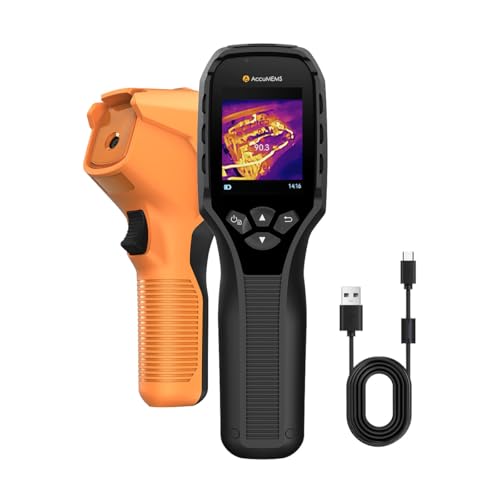
- Lightweight 240 g handheld design
- 50° field of view with thermal and thermometer modes
- Up to 14 hours of operation with temperature alarms
Best For: Mobile DIY automotive diagnostics and broad surface scanning
Best Smartphone Add-On

- 192x192 infrared resolution with a 50° field of view
- USB-C plug-and-play smartphone operation
- -4°F to 752°F range in a 0.48-ounce body
Best For: Portable automotive checks using a compatible smartphone
Best Connected Standalone Camera
FLIR C3-X Compact Thermal Camera
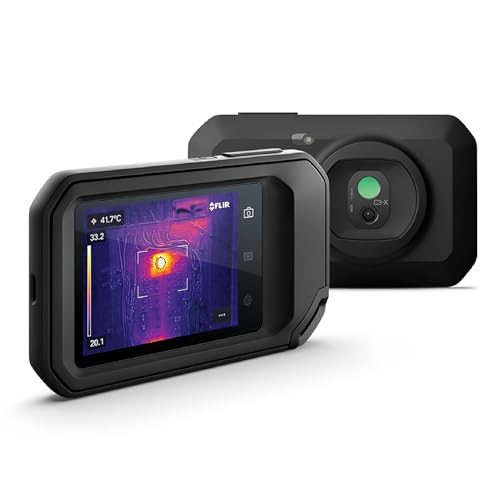
- 128x96 thermal imaging with 12,288 thermal pixels
- MSX enhances visual detail in thermal images
- Wi-Fi and Ignite support sharing and reports
Best For: Documented automotive diagnostics and professional inspections
Best Diagnostic Multitool
Goldeep Ti-1 Thermal Imaging Multimeter

- Thermal camera and full multimeter in one device
- -4°F to 1022°F range with 25Hz imaging
- Stores up to 8,000 images with temperature alerts
Best For: Automotive electrical diagnostics requiring thermal and meter tests
Best Overall – FOXWELL RT280
For buyers comparing compact thermal imaging cameras for cars, the FOXWELL RT280 offers a practical handheld format with a 320×240 display, enhanced 240×180 TISR imaging, and automotive engine inspection support. Its alarms, laser targeting, and rugged housing make it suitable for troubleshooting in busy workshop conditions.
Best For: Automotive engine checks, mechanical fault diagnosis, and buyers who want onboard storage and PC-based reporting.
Pros:
- 320×240 LCD with 240×180 TISR-enhanced effective resolution
- Measures from -4°F to 1022°F with high/low alarms
- Stores more than 20,000 images and videos on 8GB eMMC
- Drop-resistant, IP54-rated body with laser pointer and LED light
Cons:
- Included PC analysis software is for Windows and is not compatible with Mac
- Its handheld design is less pocket-sized than plug-in phone cameras
The RT280 is a strong all-around choice when detailed readings, extensive storage, and professional-style Windows reporting matter more than the smallest possible form factor.
Best High-Resolution Option – TT27D Dual-Lens WiFi
The TT27D is a compelling choice among compact thermal imaging cameras for cars if you want thermal and visible-light views together. Its dual-lens design, AI-enhanced 640×480 UIRA-IR output, touchscreen, and Wi-Fi app connectivity support fast visual confirmation of potential faults.
Best For: Professionals who want dual-camera inspection, app-based monitoring, and multiple image display modes.
Pros:
- AI-enhanced 640×480 thermal output with a 2MP visual camera
- Five viewing modes, including fusion, picture-in-picture, and blending
- Wi-Fi streaming and remote control through the AccuHeat app
- Pocket-sized 8-ounce design with a 3.5-inch touchscreen
Cons:
- 4GB storage holds fewer files than the FOXWELL RT280
- Some advanced scene and analysis features may require learning the app workflow
With its combination of enhanced resolution, visible imagery, and wireless control, the TT27D is well suited to buyers who want more context than a thermal-only camera provides.
Best Phone-Compatible Pick – RISION Magic Thermal Camera
The RISION Magic takes a phone-connected approach to compact thermal imaging cameras for cars. It uses USB-C with iOS, Android, and Windows devices, while its fusion view combines the phone’s visible image with thermal data to help pinpoint overheated wires, terminals, and mechanical components.
Best For: Smartphone users who want portable automotive troubleshooting with live analysis and report tools.
Pros:
- USB-C compatibility with iOS, Android, and Windows devices
- 320×240 QuadIR-enhanced output with a 25Hz refresh rate
- Broad -4°F to 1112°F measurement range and adjustable emissivity
- App includes spot, line, area, threshold, PIP, and graph analysis
Cons:
- Mac devices are not supported
- Requires a compatible connected device instead of operating as a standalone camera
The RISION Magic is a flexible option for technicians who already rely on a smartphone or Windows device and want detailed app-based analysis without carrying a larger handheld imager.
Best Budget-Friendly Standalone – TOPDON TC004 Mini
The TOPDON TC004 Mini is a straightforward standalone choice for compact thermal imaging cameras for cars. Its 240×240 TISR-enhanced image, automatic temperature warnings, long rated runtime, and pocket-friendly design cover everyday checks without requiring a phone or computer during use.
Best For: DIY users and technicians who want a simple standalone camera for engine, electrical, leak, and machinery checks.
Pros:
- 128×128 thermal imaging enhanced to 240×240 with TISR
- Measures -4°F to 842°F and identifies high, low, and center temperatures
- Up to 15 hours of runtime with automatic photo capture for alerts
- IP54-rated, drop-resistant mini body with 512MB storage
Cons:
- Offers five color palettes, fewer than the other cameras listed here
- Charging cable is included, but a charging head is not
- Product documentation is provided electronically rather than as a paper manual
The TC004 Mini makes sense when portability, simple controls, and extended battery life are priorities. It is less feature-rich than the dual-lens and app-analysis alternatives, but it is easy to carry for routine automotive checks.
Long-Range Driving Safety – InsightDrive Automotive Thermal Camera
For drivers comparing compact thermal imaging cameras for cars, the Robofinity InsightDrive is the most vehicle-focused option here. It combines thermal night vision, AI-assisted recognition, and a front-mounted 720p display system designed to identify road hazards in darkness and difficult weather.
Best For: Drivers who want long-range thermal hazard detection, including support for commutes, off-road trips, SUVs, trucks, and RVs.
Pros:
- Detects hazards up to 656 feet, according to the supplied specifications.
- Thermal imaging is designed to work in darkness, rain, snow, fog, and glare.
- AI recognition identifies vehicles, pedestrians, and animals, with customizable alerts through an iOS/Android app.
- Plug-and-play installation, lifetime OTA updates, a 32GB card, and a 6.25-inch IPS touch display are included.
Cons:
- At 1.65 kg, it is substantially heavier than handheld thermal imagers.
- Its hood or front-grille mounting makes it less flexible for general inspection work.
- It requires app connectivity for customization and uses a relatively narrow 40-degree field of view.
The InsightDrive is the clearest choice when the priority is automotive night-vision assistance rather than temperature diagnostics. Its vehicle-specific mounting, alert features, and extended detection range make it practical for drivers who want a dedicated front-facing system.
Portable Inspection Power – AMPBANK H128 Thermal Camera
The AMPBANK H128 is a handheld alternative for shoppers evaluating compact thermal imaging cameras for cars. Rather than mounting in a vehicle, it is built for portable inspection work, combining enhanced 240×240 TISR resolution, temperature measurement, alarms, and a long-lasting rechargeable battery.
Best For: Vehicle owners, technicians, and inspectors who need a portable camera for checking heat differences and abnormal temperature sources around a car or other equipment.
Pros:
- TISR technology increases displayed thermal resolution from 128×128 to 240×240.
- Offers up to 24 hours of continuous operation from its rechargeable battery.
- Provides 0.1°C temperature resolution with readings specified within ±2%.
- IP65 protection, 6.56-foot drop resistance, temperature alarms, and a tripod mount support practical inspections.
Cons:
- It is a general-purpose handheld imager, not a dedicated automotive dashcam or driving-alert system.
- The supplied details do not specify vehicle mounting or an in-car display.
- Its approximately 1.03-pound weight may be less convenient for prolonged handheld use than lighter models.
The H128 makes sense when you want to investigate vehicle components, brakes, electrical areas, or other heat-related issues while parked. Its measurement controls and unusually long battery rating give it more inspection utility than a car-only night-vision camera.
Lightweight Diagnostic Scanning – GT14S Thermal Imaging Camera
For buyers seeking compact thermal imaging cameras for cars without a permanent installation, the GT14S offers a lightweight handheld design. It combines full-screen thermal viewing, thermometer mode, edge enhancement, adjustable measurement settings, and high/low temperature alarms for scanning vehicle components and other surfaces.
Best For: Mobile inspections where low weight, broad coverage, temperature readings, and extended handheld operation matter.
Pros:
- Weighs about 240 g and uses a balanced, non-slip handheld design.
- Supports a -4°F to 1022°F measurement range and NETD below 50mK.
- Provides thermometer mode, center/hot/cold spot readings, seven color palettes, and adjustable emissivity and distance settings.
- A 50-degree field of view, custom alarms, and up to 14 hours of battery life support efficient scanning.
Cons:
- It is handheld and does not include the vehicle-specific mounting or driving alerts of a dedicated automotive system.
- Its 14-hour battery rating is shorter than the AMPBANK H128’s supplied rating.
- The product details do not specify an included memory card or smartphone connectivity.
The GT14S is a strong middle ground for DIY automotive troubleshooting and general inspections. Its low weight and wide viewing angle make it easy to move around a vehicle, while thermometer mode and alarms add useful diagnostic context.
Best Smartphone Add-On – GOYOJO GW192A Thermal Imager
For shoppers comparing compact thermal imaging cameras for cars, the GOYOJO GW192A is a particularly portable option that connects directly to compatible smartphones. Its 192×192 infrared resolution, 50° field of view, and broad temperature range make it suited to quick checks around engines, electrical components, and other hard-to-reach areas.
Best For: Smartphone users who want a pocket-sized thermal camera for automotive troubleshooting and general inspections.
Pros:
- USB-C plug-and-play design requires no separate battery or pairing.
- 192×192 infrared resolution and a 50° field of view support detailed scans.
- Measures from -4°F to 752°F with stated ±2% accuracy.
- Very compact 1.77 x 0.43 x 1.34-inch design weighs 0.48 ounces.
Cons:
- Compatibility is specified for Android and iPhone 15/16/17 series devices, so buyers should verify their phone connection.
- It depends on a compatible smartphone for the display and app experience.
The GW192A stands out when minimum size and smartphone convenience matter most. It is a practical choice for mobile automotive checks, though a standalone camera may be preferable if you do not want to use a phone.
Best Connected Standalone Camera – FLIR C3-X Compact Thermal Camera
The FLIR C3-X is a strong choice among compact thermal imaging cameras for cars when you want a dedicated handheld unit rather than a phone attachment. Its 128×96 thermal imaging, MSX image enhancement, Wi-Fi, and FLIR Ignite connectivity are useful for identifying, documenting, and sharing automotive diagnostic findings.
Best For: Technicians and inspectors who need a standalone camera with enhanced image interpretation and cloud-based reporting.
Pros:
- True 128×96 thermal imaging provides 12,288 thermal pixels.
- Patented MSX technology adds visual detail to thermal images.
- Wi-Fi and FLIR Ignite support direct image uploads and professional reports.
- Measures temperatures from -4°F to 572°F and includes a 2-10 warranty.
Cons:
- Its 6.72-ounce weight is substantially higher than a smartphone plug-in module.
- The fixed-focus design may offer less flexibility for varying working distances.
The C3-X is better suited to repeatable inspections and documentation than casual spot checks. MSX and Ignite make it especially appealing when readable images and shareable reports are part of the workflow.
Best Diagnostic Multitool – Goldeep Ti-1 Thermal Imaging Multimeter
Among compact thermal imaging cameras for cars, the Goldeep Ti-1 is aimed at buyers who want thermal visualization and electrical testing in one device. It combines a 96×96 infrared camera with 240×240 TISR resolution, a 50° field of view, 25Hz refresh rate, and a full digital multimeter for automotive and electrical troubleshooting.
Best For: Automotive users and technicians who need thermal scans alongside voltage, current, resistance, continuity, and diode testing.
Pros:
- Combines thermal imaging and auto-ranging multimeter functions in one tool.
- Supports a wide -4°F to 1022°F temperature range for hotter components.
- 25Hz refresh rate, 50° field of view, and automatic hot/cold spot detection aid live diagnostics.
- 512MB storage can hold up to 8,000 images, with eight color palettes and temperature alerts.
Cons:
- The 2-in-1 design may be more capability than needed for users seeking only thermal imaging.
- The supplied notes do not specify the device’s physical dimensions or weight.
The Ti-1 is the most versatile option here for fault-finding workflows that move between heat patterns and electrical measurements. Its unusually broad temperature range and integrated meter make it a compelling workshop tool, provided you want both functions.
How We Picked the Best Compact Thermal Imaging Cameras for Cars
We focused on the features that matter during real automotive inspections: infrared resolution, image enhancement, temperature-measurement tools, display or phone compatibility, battery life, portability, and overall versatility. Models with TISR or similar image-enhancement processing can produce clearer images than their native sensor resolution suggests, while dual-lens and dashcam-style designs may suit different inspection habits.
We also considered whether each camera is useful beyond vehicles. Electrical troubleshooting, HVAC checks, plumbing inspections, and general home maintenance can make a compact thermal camera more valuable over time.
Quick Comparison
| What to Compare | Why It Matters |
|---|---|
| IR resolution | Higher resolution helps distinguish nearby components and small hot spots. |
| Temperature range and accuracy | Important for checking engines, wiring, brakes, batteries, and cooling systems. |
| Image enhancement | MSX, TISR, QuadIR, and edge-enhancement systems can improve visual context. |
| Form factor | Phone attachments are easy to carry; standalone cameras are usually simpler to operate with gloves. |
| Battery and connectivity | Longer runtime and Wi-Fi or app support help with extended inspections and reporting. |
Key Buying Factors for Compact Thermal Imaging Cameras for Cars
Resolution and Image Clarity
For basic overheating checks, a 192 × 192 or 240 × 240 sensor may be sufficient. Choose 320 × 240 or higher when you need to identify smaller connectors, fuse-box hot spots, battery terminals, or individual engine components from a greater distance.
Measurement Features
Look for adjustable emissivity, center-spot readings, hot and cold spot tracking, and a broad temperature range. These tools make readings more useful, but thermal cameras are diagnostic aids—not substitutes for a multimeter, pressure gauge, or manufacturer service procedure.
Display, Phone Support, and Durability
A standalone LCD is convenient in a workshop or roadside situation. Phone-based cameras are often smaller and easier to store, but compatibility, permissions, app quality, and phone-case fit can affect usability. For vehicle work, a rugged body, straightforward controls, and a secure grip are valuable.
Specialized Extras
Dual-lens designs, night-vision features, Wi-Fi, image recording, and integrated multimeters can expand a camera’s usefulness. However, prioritize reliable thermal performance before paying extra for accessories or secondary functions.
Who Should Buy Which Compact Thermal Imaging Cameras for Cars?
Choose a phone-connected model if you want the smallest option for occasional checks and already carry a compatible device. A compact standalone camera is a better fit for frequent garage work, especially when you want immediate viewing without an app.
Higher-resolution models suit technicians diagnosing detailed electrical or mechanical problems. Long-battery options are preferable for inspections away from a workshop, while models with multimeter functions can appeal to users who want one tool for both thermal and electrical testing. For broad home-and-auto use, prioritize accurate measurements, flexible image modes, and dependable software over the highest headline resolution.