Compact automotive inspection cameras make it easier to see inside engines, HVAC ducts, cylinders, drain lines, and other hard-to-reach spaces without major disassembly.
We compared ten promising borescopes and endoscopes for mechanics, technicians, DIY vehicle owners, and anyone who needs a clearer view in confined areas.
Best 10 Compact Automotive Inspection Cameras Picks for 2026
Best Slim Articulating Pick
FOXWELL 2-Way 220° Articulating Borescope

- 0.24-inch probe reaches tight openings
- 220° articulation with 5.3-foot gooseneck
- 1080p display, 32GB storage, and 5–7-hour battery
Best For: Detailed automotive inspections in narrow, hard-to-reach spaces
Best Ergonomic Option
Teslong Articulating Borescope for Mechanics

- 4.5-inch IPS display with 1080p video
- Two-way articulation and five-foot gooseneck
- One-handed joystick control with adjustable LEDs
Best For: Portable automotive and HVAC inspections with simple controls
Best Premium Slim Probe
FOXWELL Y400 Articulating Borescope

- 6.2mm probe fits narrow inspection points
- 220° steering with responsive thumb wheel
- HD screen, 4x zoom, 32GB storage, and IP67 probe
Best For: Professional engine and component inspections through very small openings
Best Long-Reach Value
Teslong Borescope Camera with Light

- 16.5-foot semi-rigid cable for extended reach
- Eight LEDs with 4.3-inch display and 1.5x zoom
- Includes hook, magnet, side mirror, and 24-month warranty
Best For: Long-run automotive, plumbing, and HVAC inspections
Best Overall
Teslong Articulating Dual-Lens Borescope

- Two-way articulation with front and side cameras
- 4.5-inch IPS display with no app required
- Adjustable LED lighting and microSD recording
Best For: Mechanics and DIY users needing versatile confined-space inspections
Best for Reach
DXZtoz 220° Articulating Inspection Camera

- 220-degree articulation for navigating around obstacles
- 5.5-foot IP67 waterproof and oil-resistant probe
- 1080p capture, zoom, lighting, and inspection accessories
Best For: Mechanics needing extended reach and flexible engine access
Best for Narrow Access
Teslong TD500 Dual-Lens Borescope

- Slim 6.5mm articulating probe for tighter spaces
- Forward- and side-view cameras improve perspective
- 5-inch IPS screen with included storage and accessories
Best For: Users inspecting narrow automotive, HVAC, and household spaces
Best Dual-View Choice
DEPSTECH DS300 Dual-Lens Inspection Camera
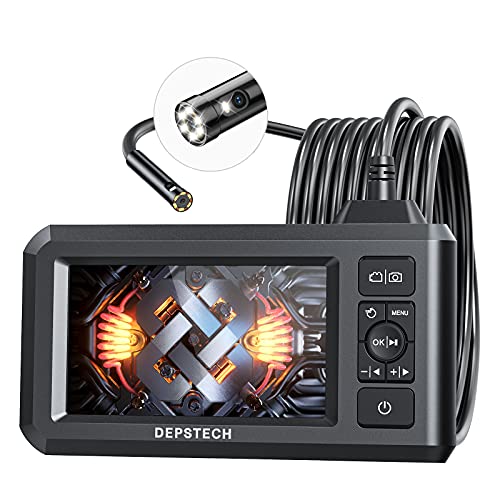
- Front and side cameras with split-screen options
- 16.5-foot semi-rigid IP67 cable
- 1080p video and approximately four-hour battery life
Best For: Mechanics and DIY users needing long-reach, multi-angle inspections
Best Large-Screen Option
TGJOR 5-Inch Dual-Lens Borescope

- Large 5-inch HD display
- Dual-lens front and side viewing
- 16.4-foot IP67 waterproof probe
Best For: Live inspections where a larger screen matters more than recording
Best Articulating Pick
Acoath 210-Degree Articulating Borescope

- 210-degree two-way articulation
- Dual-lens 1080p inspection with included 32GB card
- Slim 0.33-inch IP67 waterproof probe
Best For: Close-range automotive inspections requiring precise camera positioning
Best Slim Articulating Pick – FOXWELL 2-Way 220° Articulating Borescope
For compact automotive inspection cameras that can reach restricted areas, the FOXWELL combines a 0.24-inch probe with 220° two-way articulation. Its 1080p imaging, built-in display, onboard storage, and long battery life make it suited to detailed inspections without Wi-Fi or a phone app.
Best For: Mechanics and technicians inspecting spark plug holes, engines, ducts, valves, and other tight spaces.
Pros:
- Ultra-slim 0.24-inch probe reaches narrow openings.
- 220° articulation and a 5.3-foot semi-rigid gooseneck improve positioning.
- 1080p display, 2x/4x zoom, 32GB storage, and 5–7-hour battery support detailed field work.
- IP67 protection, six adjustable LEDs, and overheat shutdown add practical durability.
Cons:
- The extensive controls and articulation may be more than needed for simple inspections.
- Its automatic shutdown at 158°F limits use in very hot spaces.
This is a strong choice when access and control matter more than a basic camera setup. The slim probe and articulating tip help reduce repositioning and disassembly during automotive diagnostics.
Best Ergonomic Option – Teslong Articulating Borescope for Mechanics
The Teslong is one of the more practical compact automotive inspection cameras for users who want a dedicated screen and straightforward operation. Its two-way articulating probe, 4.5-inch IPS display, semi-rigid cable, and built-in lighting help simplify inspections in confined areas.
Best For: Automotive, HVAC, and household inspections where one-handed control and clear on-device viewing are important.
Pros:
- Two-way articulation helps maneuver around complex spaces.
- 4.5-inch IPS screen provides sharp 1080p viewing without an app.
- Five-foot semi-rigid gooseneck holds its shape for controlled positioning.
- Built-in adjustable LEDs, 32GB storage, and approximately five-hour battery life support extended jobs.
Cons:
- The probe is described as two-way 210° articulation, less than some 220° alternatives.
- Its 2MP still resolution and 1.5x digital zoom offer less enlargement than higher-zoom models.
A centrally positioned joystick and rear photo button make this model appealing for fast, one-handed work. It balances portability and control well for routine automotive inspections.
Best Premium Slim Probe – FOXWELL Y400 Articulating Borescope
The FOXWELL Y400 is designed for compact automotive inspection cameras buyers who need to get through especially narrow access points. Its 6.2mm probe, 220° steering, HD IPS screen, and 4x zoom provide a capable setup for examining engine components and other hidden areas.
Best For: Automotive professionals checking spark plug holes, cylinder walls, valve seats, gasket areas, and other confined components.
Pros:
- 6.2mm ultra-slim probe reaches spaces that bulkier scopes may not.
- Responsive thumb-wheel control provides 220° two-way steering.
- HD IPS display, six adjustable LEDs, and 2x/4x zoom support close visual checks.
- IP67 protection, 32GB storage, and 5–7-hour runtime suit demanding field work.
Cons:
- Automatic overheat shutdown at 158°F can interrupt inspections in hot areas.
- Its advanced steering and diagnostic features may exceed the needs of casual DIY users.
Choose the Y400 when probe diameter and precise tip control are top priorities. It offers a focused combination of narrow access, articulation, lighting, and recording without relying on wireless connectivity.
Best Long-Reach Value – Teslong Borescope Camera with Light
For buyers comparing compact automotive inspection cameras with longer reach, this Teslong pairs a 16.5-foot semi-rigid cable with a dedicated 4.3-inch screen. It is less focused on tip articulation than the other models, but its long cable, adjustable lighting, and included accessories make it versatile for automotive, plumbing, and HVAC work.
Best For: DIYers and technicians inspecting long runs, larger cavities, pipes, ducts, and automotive areas where cable length matters.
Pros:
- 16.5-foot semi-rigid cable offers substantial reach and holds its shape.
- Eight adjustable LEDs, a 78° viewing angle, and 1.5x zoom improve visibility.
- 4.3-inch display, photo/video capture, and IP67 water resistance support practical inspections.
- Hook, magnet, side mirror, and a 24-month warranty add useful value.
Cons:
- The 8mm probe is wider than the ultra-slim probes on the FOXWELL models.
- Battery life is approximately three hours.
- SD card storage is supported, but the card is not included.
This model makes the most sense when reach and included accessories outweigh the need for a very thin probe or articulating tip. Its long cable is particularly useful for inspections extending well beyond the immediate work area.
Best Overall – Teslong Articulating Dual-Lens Borescope
For compact automotive inspection cameras that balance control, visibility, and portability, the Teslong articulating borescope is a strong all-around choice. Its dual lenses, 5-foot semi-rigid probe, and built-in lighting help you inspect tight automotive spaces without constantly repositioning the cable.
Best For: Mechanics and DIY users inspecting engines, HVAC systems, walls, and other confined areas.
Pros:
- Two-way articulation and front- and side-view cameras improve access around obstacles.
- 4.5-inch IPS screen provides a clear live view without requiring an app.
- Adjustable LED lighting helps illuminate dark inspection areas.
- Includes photo and video capture, microSD support, and a carrying case.
Cons:
- 720p video resolution is lower than some competing models.
- The listed weight is about 1.44 kg, so it may not be ideal for extended handheld use.
The Teslong stands out when one-handed control and flexible viewing angles matter most. It is a practical pick for routine automotive troubleshooting and general inspection work.
Best for Reach – DXZtoz 220° Articulating Inspection Camera
If you need compact automotive inspection cameras with extra reach and strong articulation, the DXZtoz AGC430N is designed for challenging access points. Its 220-degree steering lens, 5.5-foot gooseneck probe, and 8.5mm camera make it useful for looking around bends and into engine components.
Best For: Automotive mechanics who need extended reach, adjustable viewing angles, and accessory-assisted inspections.
Pros:
- 220-degree two-way articulation helps the camera look around obstacles.
- 5.5-foot waterproof, oil-resistant probe supports automotive and wet-area work.
- 1080p capture, 8X digital zoom, and eight adjustable LED lights provide detailed viewing.
- Includes hook, magnet, side mirror, 32GB card, rechargeable battery, and protective case.
Cons:
- The 4.3-inch screen is smaller than the display on some alternatives.
- Its many accessories and longer probe may be more than needed for simple inspections.
With the longest stated probe and broadest articulation in this group, the DXZtoz is particularly compelling when access is the main challenge. It also offers a useful accessory kit for retrieving or positioning objects.
Best for Narrow Access – Teslong TD500 Dual-Lens Borescope
The Teslong TD500 is a useful option among compact automotive inspection cameras when a slimmer probe and dual viewing angles are priorities. Its 6.5mm articulating probe can help reach narrow spaces, while the forward- and side-view cameras let you change perspectives without removing the scope.
Best For: Automotive, HVAC, and general inspection tasks requiring a relatively narrow dual-camera probe.
Pros:
- 6.5mm probe diameter is suited to tighter access points.
- Dual cameras provide forward and side views for checking corners and surfaces.
- 5-inch IPS screen offers a clear, dedicated viewing display.
- Includes 32GB microSD storage, hook, magnet, Type-C cable, and carrying case.
Cons:
- The listed focus is manual, which may require more adjustment during inspections.
- Its 720p/1080p capture options may require choosing the setting suited to the task.
The TD500 is a sensible fit for users who want a narrow probe without giving up the convenience of dual-camera viewing. Its dedicated screen and included accessories make it ready for routine inspection work.
Best Dual-View Choice – DEPSTECH DS300 Dual-Lens Inspection Camera
For compact automotive inspection cameras that can show more than one angle, the DEPSTECH DS300 combines front and side lenses with a 4.3-inch IPS display. Its 16.5-foot semi-rigid cable, adjustable lighting, and 1080p video make it practical for looking around engine compartments, ducts, and other confined areas.
Best For: Mechanics and DIY users who want dual-lens viewing, photo and video recording, and a long reach.
Pros:
- Switches between front and side cameras, with split-screen viewing and a wider-angle mode.
- Records 1080p video and 2MP images to supported microSD media.
- 16.5-foot semi-rigid cable, IP67 waterproofing, and a 180-degree rotating camera orientation.
- Built-in battery provides approximately four hours of continuous use.
Cons:
- The package does not include a TF card.
- The relatively long cable may be more than needed for short inspections.
The DS300 is a versatile pick when reach and viewing flexibility matter. Its dual-camera design can reduce repositioning during automotive inspections, while the built-in screen keeps operation independent of a phone or app.
Best Large-Screen Option – TGJOR 5-Inch Dual-Lens Borescope
This TGJOR model is a straightforward choice among compact automotive inspection cameras, offering a large 5-inch display, dual-lens switching, and a 16.4-foot waterproof probe. It is designed for real-time inspection work in automotive, plumbing, HVAC, and other wet or confined environments.
Best For: Users who prioritize a larger viewing screen and simple plug-and-play operation over recording features.
Pros:
- 5-inch HD screen with a claimed 170-degree viewing angle.
- Front and side lenses switch instantly for greater inspection flexibility.
- 16.4-foot semi-rigid cable with IP67 waterproofing and eight adjustable LEDs.
- USB-C charging and a 2,000mAh battery provide approximately three to four hours of runtime.
Cons:
- It cannot take pictures or record videos.
- Fixed-focus operation limits flexibility compared with autofocus models.
Choose this scope when live viewing is the priority. The large screen and long, waterproof probe are useful for tracing problems, but the lack of image and video capture makes it less suitable for documenting repairs.
Best Articulating Pick – Acoath 210-Degree Articulating Borescope
For compact automotive inspection cameras that need precise directional control, the Acoath articulating borescope adds two-way 210-degree articulation and dual-lens viewing. Its slim 0.33-inch probe, 5-foot semi-rigid cable, and built-in display suit tight automotive spaces where steering the camera is more useful than maximizing cable length.
Best For: Automotive and mechanical inspections involving bends, obstructed angles, and close-range components.
Pros:
- Two-way 210-degree articulation provides a 420-degree range of motion.
- Dual front and side cameras offer 70-degree and 60-degree viewing angles.
- Captures 1080p photos and video using the included 32GB TF card.
- Includes eight adjustable LEDs, IP67 waterproofing, and a protective carrying case.
Cons:
- The 5-foot cable offers less reach than the longer-probe options in this roundup.
- The articulated design and accessories contribute to a listed weight of approximately 570 grams.
The Acoath stands out for maneuverability rather than maximum reach. Its articulation can help position the lens around corners, while the included storage card and case make it ready for documented inspections out of the box.
How We Picked the Best Compact Automotive Inspection Cameras
We focused on the features that matter most during real inspections: probe diameter, articulation range, image resolution, lighting, cable length, screen quality, waterproofing, and overall handling. Models with two-way articulation can make it easier to steer around bends, while dual-lens designs may provide a forward view plus a useful side or rear perspective.
We also considered practical details such as built-in displays, photo and video capture, memory-card support, battery convenience, and whether the camera is suited to automotive work or broader industrial tasks. A high specification is helpful, but it is not a substitute for a probe that fits the access point and remains manageable in tight spaces.
Quick Comparison
| Feature | Why It Matters | Best For |
|---|---|---|
| Two-way articulation | Steers the lens around bends | Engine bays, HVAC, and complex assemblies |
| Dual lenses | Provides additional viewing angles | Checking walls, pipes, and surrounding components |
| Ultra-slim probe | Fits smaller openings | Spark-plug holes and narrow automotive passages |
| Long cable | Reaches deeper areas | Drain lines, ducts, and larger machinery |
| Waterproof construction | Handles damp or dirty environments | Automotive fluids, plumbing, and industrial inspections |
Key Buying Factors for Compact Automotive Inspection Cameras
Probe Diameter and Cable Length
Measure the access hole before buying. A slimmer probe offers more access, but larger probes may provide a sturdier cable or a larger camera assembly. Choose enough cable to reach the inspection area without excessive slack.
Articulation and Control
Two-way articulation is valuable when the camera must look behind components or follow a curved passage. Check how far the tip bends and whether the controls are easy to operate while holding the display.
Image Quality and Lighting
1080p-class video can provide a useful level of detail, but lighting is equally important. Adjustable LEDs help prevent dark areas and glare. Dual-lens models can be especially useful when you need to inspect both the target and nearby surfaces.
Screen, Recording, and Durability
A built-in IPS display keeps the system self-contained, while recording and memory support help document findings. For damp environments, look for a suitably sealed probe and follow the manufacturer’s limits; waterproofing does not necessarily make the entire device waterproof.
Who Should Buy Which Compact Automotive Inspection Cameras?
Choose an ultra-slim articulating model for narrow engine or mechanical access points. A dual-lens camera is a better fit when viewing direction changes frequently or side inspection matters. For HVAC, plumbing, and deeper industrial work, prioritize cable length, lighting, and probe durability. DIY users may prefer a straightforward built-in-screen model, while professional technicians should emphasize articulation precision, reliable controls, recording capability, and serviceable construction.