Inspecting brake lines, suspension components, leaks, and hidden fasteners is easier when you can see the problem without dismantling half the vehicle. The best compact underbody inspection cameras combine a flexible probe, useful lighting, clear video, and enough reach for difficult spaces.
This roundup compares 10 options with features such as articulating tips, dual-lens viewing, waterproof probes, adjustable LEDs, and built-in screens or phone connectivity. Use the guide below to match the camera’s design and image quality to your typical inspection work.
Best 10 Compact Underbody Inspection Cameras Picks for 2026
Best Articulating Pick
Teslong Articulating Borescope

- Two-way 210° steering
- 4.5-inch IPS screen
- IP67 probe with 5-foot cable
Best For: Maneuverable standalone automotive and HVAC inspections
Best Phone-Connected Option
DEPSTECH 2K Dual-Lens Endoscope

- 2560×1440 2K video
- Front and side cameras
- 5-meter IP67 semi-rigid cable
Best For: Detailed phone-based inspections in narrow or curved spaces
Best Steering Control
DXZtoz 220° Articulating Borescope

- 220° two-way articulation
- 4.3-inch IPS monitor
- Oil-resistant IP67 probe
Best For: Steerable engine, HVAC, and mechanical inspections
Best Simple Standalone Value

- No app or phone required
- 16.5-foot semi-rigid cable
- IP67 probe with built-in LCD
Best For: Live DIY, vehicle, pipe, and HVAC inspections
Dual-View Detail
DEPSTECH DS300 Dual-Lens Borescope
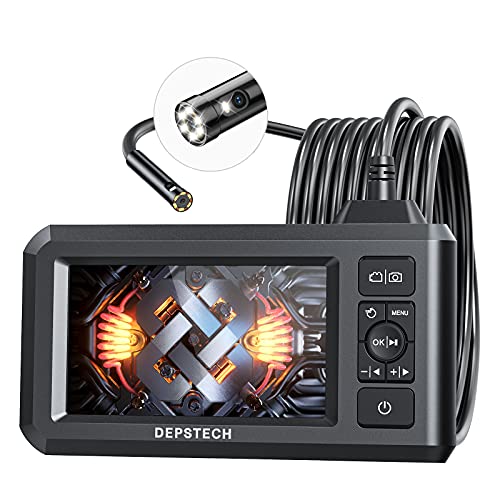
- Dual-lens and split-screen viewing
- 4.3-inch screen with 1080P video
- 16.5-foot IP67 semi-rigid probe
Best For: Automotive, HVAC, plumbing, and machinery inspections
Phone-Ready Reach
Ditomil 1920P Smartphone Endoscope

- 1920P resolution with a 7.9mm probe
- Adapters for iOS and Android phones
- 16.4-foot IP67 cable with eight LEDs
Best For: Phone-based home, automotive, and plumbing inspections
Simple Screen Operation
TGJOR 5-Inch Dual-Lens Borescope

- 5-inch screen with 170-degree viewing
- Dual-lens front and side inspection
- 16.4-foot IP67 probe with eight LEDs
Best For: Live automotive, plumbing, sewer, and HVAC inspections
Screen-Ready Pick
MugEasy 16.5FT Inspection Camera

- 4.3-inch IPS screen with 1920x1080P real-time viewing
- 16.6-foot cable with eight adjustable LEDs
- IP67 probe; no app or Wi-Fi required
Best For: DIYers and technicians who want a standalone display
Versatile Dual-Lens Pick

- Dual-lens 2MP camera with 1920x1440 capture
- 16.4-foot semi-rigid cable and adjustable LEDs
- Connects to iOS and Android devices
Best For: Smartphone users handling varied maintenance inspections
Simple Smartphone Pick
Kinpthy 16.4FT Single-Lens Camera
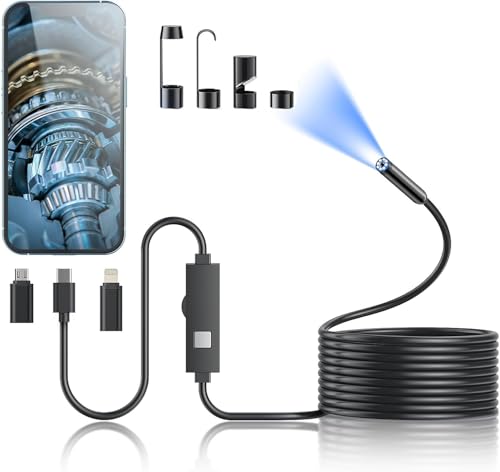
- 1920x1440 photo and video capture
- 16.4-foot semi-rigid cable with 7.9mm probe
- IP67 design with iOS and Android support
Best For: General DIY inspections using a smartphone or tablet
Best Articulating Pick – Teslong Articulating Borescope
For compact underbody inspection cameras that need to navigate around components, the Teslong stands out with two-way articulation, a semi-rigid probe, and a dedicated screen. Its 5-foot gooseneck and one-handed controls are practical for automotive, HVAC, and household inspections.
Best For: Mechanics and DIY users who want a maneuverable inspection camera with a built-in display and no app requirement.
Pros:
- Two-way 210° articulation helps steer the view around obstacles.
- 4.5-inch IPS screen provides clear viewing in bright or dim conditions.
- IP67 waterproof probe, adjustable LEDs, 32GB card, and carrying case add versatility.
Cons:
- The 5-foot probe may be shorter than some deep-access alternatives.
- Its 2MP camera is less detailed than some newer 2K phone-connected models.
The Teslong is a strong choice when positioning control and simple standalone operation matter more than maximum resolution. The articulating tip can make awkward underbody or engine inspections easier to manage.
Best Phone-Connected Option – DEPSTECH 2K Dual-Lens Endoscope
The DEPSTECH NTC55 is one of the more capable compact underbody inspection cameras for users who prefer viewing and recording on a phone. Its 2K image, slim 7.9mm probe, dual lenses, and 5-meter cable are designed for detailed access in narrow or curved spaces.
Best For: Users who want high-resolution phone viewing, front-and-side perspectives, and a long semi-rigid cable.
Pros:
- 2K resolution offers 2560×1440 video and 3.69MP still images.
- Dual front and side cameras provide broader 360° inspection coverage.
- IP67 protection, adjustable LEDs, and a 5-meter cable suit damp and hard-to-reach areas.
Cons:
- Requires the DEPSTECHCAM app and a compatible phone with OTG support.
- Phone compatibility depends on the included Type-C or Lightning connection and device software.
Choose this model if recording detail and switching viewpoints are priorities. It is particularly useful for inspecting long passages, though the app-based setup is less immediate than a borescope with its own monitor.
Best Steering Control – DXZtoz 220° Articulating Borescope
Among compact underbody inspection cameras, this DXZtoz model emphasizes directional control. Its 220° two-way steering, 5.5-foot gooseneck, and built-in 4.3-inch monitor help users guide the camera around obstacles without relying on a smartphone.
Best For: Automotive and mechanical inspections requiring a steerable probe, close focusing, and standalone operation.
Pros:
- 220° two-way articulation helps look around turns and obstacles.
- 8 high-intensity LEDs, 8× digital zoom, and a 1–15cm focal range support close inspection.
- IP67, oil-resistant probe includes hook, magnet, side mirror, case, and 32GB card.
Cons:
- The 8.5mm probe is not as slim as the DEPSTECH’s 7.9mm camera.
- Image capture is listed as 1080p/2MP rather than 2K resolution.
This is a practical fit for mechanics who value precise steering and a dedicated screen. The accessories and oil-resistant, waterproof probe also make it well suited to engine and wet-work inspection tasks.
Best Simple Standalone Value – Daxiongmao 1080P Borescope
The Daxiongmao offers a straightforward approach to compact underbody inspection cameras: power it on, use the built-in screen, and inspect without Wi-Fi, an app, or a phone. Its 16.5-foot semi-rigid cable and IP67 probe provide useful reach for vehicles, walls, pipes, and HVAC work.
Best For: DIY users who want an uncomplicated inspection tool with long cable reach and live viewing.
Pros:
- Built-in 4.3-inch LCD works without a smartphone or driver software.
- 16.5-foot semi-rigid cable provides substantial reach.
- IP67 waterproof probe, eight adjustable LEDs, and hook, magnet, and mirror accessories are included.
Cons:
- It cannot take pictures or record videos.
- The 8mm probe and 1080p output offer less detail than some newer 2K options.
- Battery life is listed at approximately 3.5 hours.
This model makes sense when live inspection is the main goal and saved images are unnecessary. Its long cable and simple screen-based operation are useful for broad access, while the lack of recording limits documentation-focused work.
Dual-View Detail – DEPSTECH DS300 Dual-Lens Borescope
For compact underbody inspection cameras, the DEPSTECH DS300 stands out with dual lenses, a built-in screen, and a long semi-rigid cable. Its front- and side-view cameras help you inspect automotive components, pipes, ducts, and other tight spaces without repeatedly repositioning the probe.
Best For: Mechanics, HVAC technicians, plumbers, and DIY users who want dual-angle viewing with a dedicated display.
Pros:
- Dual-lens design with front, side, and wider-angle viewing modes.
- 4.3-inch IPS screen shows 1080P video and 2MP images.
- 16.5-foot semi-rigid cable, IP67 waterproofing, and adjustable LED lighting.
- Built-in battery runs for about four hours and includes hook and magnet accessories.
Cons:
- Micro SD card is not included.
- The front and side cameras have relatively short fixed focal ranges.
The DS300 is a practical choice when viewing angle flexibility matters more than phone connectivity. Its screen, rotating camera orientation, and durable probe make it well suited to detailed inspections in confined or dark areas.
Phone-Ready Reach – Ditomil 1920P Smartphone Endoscope
This Ditomil model is a flexible option among compact underbody inspection cameras, using a smartphone connection instead of a built-in monitor. Its 7.9mm probe, 16.4-foot semi-rigid cable, and high-resolution image support inspections inside engines, pipes, ducts, walls, and other narrow spaces.
Best For: Homeowners, mechanics, and plumbers who prefer viewing inspections on an iOS or Android phone.
Pros:
- 1920P image resolution helps reveal cracks, leaks, rust, and damage.
- Works with Type-C, Micro-USB, and Lightning connections using the included adapters.
- IP67 waterproof 7.9mm probe with eight adjustable LED lights.
- Includes a hook, magnet, side-view mirror, and protective cap.
Cons:
- Requires a compatible phone and app rather than offering a dedicated display.
- The single-lens design does not provide instant front/side camera switching.
- No warranty is specified in the supplied product details.
Choose this endoscope when phone-based viewing and broad device compatibility are priorities. The narrow waterproof probe and long cable make it useful for reaching deep areas, while the accessory kit adds flexibility for retrieving small objects.
Simple Screen Operation – TGJOR 5-Inch Dual-Lens Borescope
The TGJOR G50 is a straightforward choice among compact underbody inspection cameras, combining a large 5-inch display with dual-lens viewing. It operates without an app or Wi-Fi, so you can switch between front and side views while inspecting drains, engines, ducts, and other difficult-to-reach areas.
Best For: Mechanics, plumbers, and DIY users who want a stand-alone inspection camera for live viewing.
Pros:
- 5-inch HD screen with a 170-degree viewing angle.
- Dual lenses allow quick switching between front and side views.
- 16.4-foot semi-rigid probe is IP67 waterproof and has eight adjustable LEDs.
- Plug-and-play operation with a 2,000mAh battery rated for three to four hours.
Cons:
- Does not take pictures or record video.
- The fixed-focus range is limited to approximately 1.2 to 4 inches.
- Its live-view-only design is less suitable when inspection documentation is required.
The G50 makes sense for users who need immediate visual diagnosis rather than saved files. Its large screen, dual lenses, waterproof probe, and app-free operation provide convenient live inspection in wet or confined environments.
Screen-Ready Pick – MugEasy 16.5FT Inspection Camera
For compact underbody inspection cameras, this MugEasy model is a practical choice when you want a dedicated screen instead of a phone connection. Its 4.3-inch IPS display, 16.6-foot semi-rigid cable, adjustable lighting, and short 7.9mm probe suit vehicle, pipe, wall, and sewer inspections.
Best For: DIYers and technicians who prefer an all-in-one inspection camera with no app or Wi-Fi setup.
Pros:
- 4.3-inch IPS screen displays 1920x1080P images in real time.
- Eight adjustable LED lights and IP67 water resistance support dark or wet work areas.
- Long semi-rigid cable and short lens help with confined, angled spaces.
- Includes hook, magnet, side mirror, and Type-C cable.
Cons:
- Cannot take or store photos.
- Its 7.9mm probe may not fit the narrowest openings.
The built-in display keeps operation simple and avoids using or dirtying a smartphone. Choose it when immediate viewing matters more than saving inspection media.
Versatile Dual-Lens Pick – Aocath Dual-Lens Borescope
This Aocath model is among the more versatile compact underbody inspection cameras because its dual-lens design can provide different inspection perspectives in tight areas. It connects to iOS and Android devices through the SUP-ANESOK app and combines a 16.4-foot semi-rigid cable with adjustable lighting.
Best For: Smartphone users inspecting vehicles, pipes, HVAC systems, walls, and other confined areas.
Pros:
- Dual-lens 2MP camera captures 1920×1440 images and video.
- Works with iOS 9.0+ and Android 7+ devices through the app.
- IP67 waterproof probe can operate up to 3.28 feet underwater for one hour.
- Includes magnet, hook, mirror, protective cap, and multiple connectors.
Cons:
- Requires app installation and a compatible smartphone or tablet.
- The probe is not heat-resistant, so engines must cool before inspection.
- Care is needed around sharp protrusions to avoid damaging the waterproof layer.
Its dual-lens layout and broad device compatibility make this a flexible option for varied maintenance tasks. It is best suited to buyers comfortable using a phone or tablet as the viewing screen.
Simple Smartphone Pick – Kinpthy 16.4FT Single-Lens Camera
The Kinpthy single-lens model offers a straightforward option among compact underbody inspection cameras. Its 7.9mm probe, 16.4-foot semi-rigid cable, adjustable LEDs, and smartphone connectivity are useful for looking inside vehicle areas, pipes, walls, and wiring.
Best For: Buyers who want an affordable-style phone-connected camera for general DIY inspection work.
Pros:
- Captures 1920×1440 photos and video with a 2MP camera.
- Supports iOS 9.0+ and Android 7+ devices through the SUP-ANESOK app.
- IP67 waterproof design supports underwater use up to 3.28 feet for one hour.
- Includes Android, Lightning, and Type-C connectors plus inspection accessories.
Cons:
- Single-lens design provides less viewing flexibility than a dual-lens model.
- Fixed focus and no zoom limit image-adjustment options.
- Requires a compatible smartphone or tablet for viewing.
This is a sensible general-purpose choice when photo and video capture are important and a phone is already part of your inspection setup. The single-lens configuration keeps the design uncomplicated while retaining useful reach and water resistance.
How We Picked These Compact Underbody Inspection Cameras
We focused on features that matter during real automotive and mechanical inspections: probe flexibility, cable length, image resolution, lighting control, waterproofing, viewing angles, and ease of use. Articulating models can help steer around suspension parts and frame members, while dual-lens cameras may reduce the need to reposition the probe. We also considered whether each design is practical for checking confined, dirty, or poorly lit areas.
Resolution claims are only part of the picture. A camera with effective illumination, a responsive display, and a probe that holds its shape can be more useful than a higher-resolution model that is difficult to control.
Quick Comparison
| Feature | Why It Matters | Best For |
|---|---|---|
| Articulating probe | Helps direct the camera around obstacles | Complex automotive access points |
| Dual-lens design | Provides forward and side or rear viewing options | Faster general inspections |
| Built-in screen | Works without a phone or app | Workshops and roadside use |
| Phone-connected design | Can simplify storage and sharing | Occasional inspections and documentation |
| Waterproof probe | Handles damp or contaminated areas more safely | Undercarriages, drains, and engine bays |
Key Buying Factors for Compact Underbody Inspection Cameras
Probe Control and Reach
Choose a rigid or semi-rigid cable that is long enough to reach the inspection area without becoming difficult to guide. For suspension, exhaust, and body cavities, an articulating tip can provide substantially better control than a fixed probe.
Image, Lighting, and Viewing Angle
Look for adjustable LEDs and a camera that maintains a usable image in dark spaces. Dual-lens models are convenient when you need to switch between a forward view and a view along the probe. Remember that advertised resolution does not guarantee equal clarity in shadows, glare, or dirty areas.
Water Resistance and Durability
An IP-rated probe is valuable for damp underbody work, but the rating generally applies to the probe rather than the entire camera or display. Keep connectors, controls, and phone ports away from water, and clean the probe after exposure to oil, mud, or chemical residue.
Display, Power, and Storage
A built-in monitor is usually the simplest choice for quick diagnostics. Phone-based units may be lighter and easier to share, but they depend on compatibility, an app, and a charged phone. Check battery life, charging type, image storage, and whether still photos or video can be saved.
Who Should Buy Which Compact Underbody Inspection Cameras?
Choose an articulating borescope if you regularly work around engine components, suspension assemblies, HVAC systems, or other obstructed areas. Choose a dual-lens camera for versatile inspections where changing perspective saves time. Choose a built-in-screen model for dependable workshop or roadside use without app setup. Choose a longer waterproof probe when inspecting frames, pipes, drains, or deep underbody spaces.
For occasional home maintenance, prioritize simple controls, adequate lighting, and a comfortable cable length over advanced specifications. Professional users should place greater emphasis on probe control, durability, repeatable image quality, and easy recording for inspection notes.