Fast home 3D printing has moved well beyond slow prototyping. Today’s best machines can deliver strong speeds, better automation, and cleaner results without demanding constant tuning.
This roundup focuses on fast 3D printers for home use that make sense for real buyers: easy setup, dependable first layers, useful safety features, and enough build quality to keep pace with everyday printing.
Best 10 Fast 3d Printers for Home Use Picks for 2026
Fast CoreXY Starter
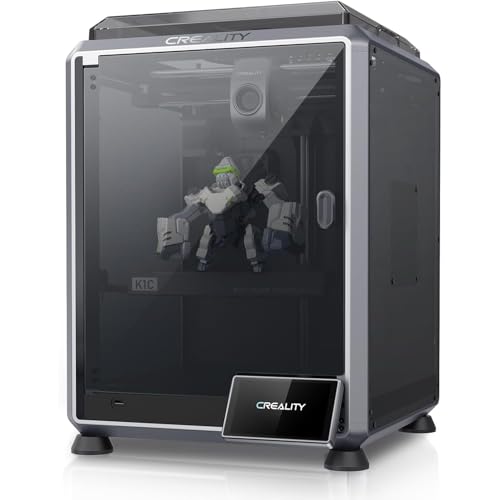
- 600mm/s CoreXY speed
- AI camera monitoring
- Quiet mode with filtration
Best For: Home users who want speed, smart monitoring, and carbon fiber support.
Ready-to-Use Speed Pick

- 500mm/s enclosed CoreXY
- Auto bed leveling
- Up to 16 colors with AMS
Best For: Beginners who want a fast enclosed printer with simple setup.
Multicolor Powerhouse

- 600mm/s print speed
- Up to 16-color printing
- Large 10.24-inch build volume
Best For: Home users who want fast, multicolor printing with a roomy build area.
Fast All-Rounder

- 600mm/s travel speed
- Heats to 200°C in 35 seconds
- Pressure-based auto leveling
Best For: Home users who want quick printing, easy setup, and wide material support.
4-Color Speed Multicolor Pick

- Native 4-color printing, expandable to 19 colors
- Up to 600mm/s with reduced purge waste
- AI monitoring plus LeviQ 3.0 auto leveling
Best For: Families and home makers who want fast multicolor printing
Ready-to-Print Speed Builder
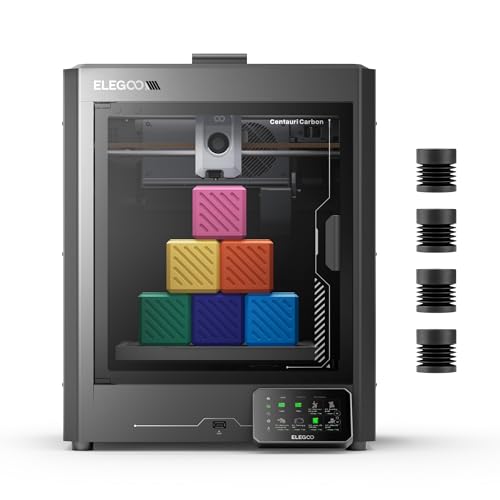
- Fully assembled and pre-calibrated
- Up to 500mm/s with CoreXY motion
- 320°C nozzle for advanced filaments
Best For: Beginners and makers who want fast setup and advanced-material support
CoreXY Color Sprint

- Up to 4-color printing with a compact footprint
- CoreXY speed up to 600mm/s
- 1-click auto leveling with app monitoring
Best For: Hobbyists wanting fast multicolor printing and easy controls
Multicolor Speed Pick
Flashforge AD5X multicolor 600mm/s printer

- 600mm/s CoreXY motion with vibration compensation
- 4-color direct printing for gradients and multi-color models
- Auto leveling plus magnetic PEI plate for easier starts
Best For: Creative home users who want fast multicolor printing
Quiet Enclosed Choice
FLASHFORGE AD5M Pro quiet 600mm/s printer

- 600mm/s CoreXY printing with one-click auto-leveling
- Enclosed body with HEPA13 and activated carbon filtration
- Supports PLA, ABS, PETG, TPU, and CF blends
Best For: Shared home spaces where quiet, enclosed fast printing matters
Fast CoreXY Starter – Creality K1C
If you want fast 3d printers for home use without giving up convenience, the Creality K1C is built around speed and simple operation. Its CoreXY motion system, 600mm/s top speed, and one-tap auto calibration make it a strong fit for makers who want quick prints with less setup friction.
Best For: Home users who want a fast, quiet printer with AI monitoring and support for carbon fiber filaments.
Pros:
- CoreXY design with up to 600mm/s printing and 20000mm/s² acceleration
- One-tap auto calibration helps simplify bed leveling
- AI camera adds real-time monitoring and time-lapse capture
- Quiet mode and activated carbon filtration suit home spaces
Cons:
- Carbon fiber support is a plus, but it may be more printer than a casual beginner needs
- Weight and footprint may be bulky for very tight desks
Overall, the K1C balances speed, automation, and material flexibility in a way that makes sense for a home workshop. It is a practical pick if you want fast turnaround and useful smart features in one machine.
Ready-to-Use Speed Pick – Bambu Lab P1S
For fast 3d printers for home use, the Bambu Lab P1S stands out as a ready-to-use enclosed CoreXY machine. With 500mm/s printing, 20000mm/s² acceleration, and a setup process that can take about 15 minutes, it is aimed at users who want speed without a complicated start.
Best For: Beginners and home makers who want a fast enclosed printer with easy setup and multi-color potential.
Pros:
- Up to 500mm/s printing with high acceleration for quick jobs
- Enclosed design helps with advanced filament printing
- Automatic bed leveling supports reliable first layers
- Can support up to 16 colors with AMS
Cons:
- Carbon/glass fiber reinforced polymers are noted as not recommended
- Multi-color printing requires the separate AMS connection
The P1S is a strong home-use option if you value speed, enclosure, and an easier path to successful prints. It is especially appealing for people who want a cleaner, more guided printing experience.
Multicolor Powerhouse – Creality K2 Combo
If your goal is fast 3d printers for home use with more creative flexibility, the Creality K2 Combo brings speed and multicolor printing together. It combines a 600mm/s printing rate, smart auto leveling, and chamber AI monitoring with support for up to 16 colors through the CFS system.
Best For: Home users who want fast printing, larger build volume, and multicolor capability in one setup.
Pros:
- Up to 600mm/s printing speed with 20000mm/s³ acceleration
- Supports up to 16 colors with the CFS system
- AI camera helps monitor failures and printing issues
- Large 10.24 x 10.24 x 10.24 inch build volume
Cons:
- Multicolor printing depends on the CFS setup
- May be more machine than someone only printing simple single-color parts needs
The K2 Combo is a feature-heavy option that makes sense when speed and variety both matter. It is a compelling home printer if you want to reduce model splitting and print bigger, more ambitious projects.
Fast All-Rounder – Flashforge Adventurer 5M Pro
For buyers comparing fast 3d printers for home use, the FlashForge Adventurer 5M Pro offers speed, stability, and convenience in a compact package. Its 600mm/s travel speed, 20,000mm/s² acceleration, quick-heating nozzle, and pressure-based auto leveling make it a practical choice for frequent printing.
Best For: Home users who want a fast, stable printer with quick setup and broad material compatibility.
Pros:
- Up to 600mm/s speed with 20,000mm/s² acceleration
- Nozzle heats to 200°C in just 35 seconds
- Pressure-based auto leveling removes manual Z-axis calibration
- Supports PLA, ABS, PETG, ASA, TPU, PC, PLA-CF, and PETG-CF
Cons:
- Advanced materials still depend on proper nozzle and platform maintenance
- Smaller 220 x 220 x 220 mm build size may limit larger projects
The Adventurer 5M Pro is a well-rounded speed option for home users who want quick turnaround without a complicated workflow. It pairs fast motion with useful smart controls, making it easy to recommend for everyday printing.
4-Color Speed Multicolor Pick – Anycubic Kobra X
If you want fast 3d printers for home use with a big creative upside, the Anycubic Kobra X stands out for its native 4-color setup and support for up to 19 colors with additional ACE 2 Pro units. It combines 600mm/s printing, reduced purge waste, and a ready-to-print design that aims to make multicolor projects less of a hassle for everyday makers.
Best For: Home users, families, and makers who want multicolor printing with strong speed and easy setup.
Pros:
- Native 4-color printing, expandable up to 19 colors with 4 ACE 2 Pro units
- Up to 600mm/s speed with filament waste reduction and shorter travel paths
- LeviQ 3.0 auto bed leveling with 49-point calibration for easier first layers
- AI monitoring, app control, and a roomy 260 x 260 x 260 mm build volume
Cons:
- 4-color and 19-color expansion may be more than basic single-color users need
- Requires compatible ACE 2 Pro expansion units for the full color range
The Kobra X is geared toward users who want speed, automation, and multicolor output in one home-friendly package. If you value creative flexibility as much as print time, it offers a compelling blend of both.
Ready-to-Print Speed Builder – ELEGOO Centauri Carbon
For buyers comparing fast 3d printers for home use, the ELEGOO Centauri Carbon focuses on speed and simplicity right out of the box. It arrives fully assembled and pre-calibrated, then adds a CoreXY motion system, 500mm/s print speeds, and an enclosed chamber for printing advanced materials with less setup friction.
Best For: Beginners and experienced users who want an assembled, high-speed printer that handles advanced materials.
Pros:
- Fully assembled and pre-calibrated for out-of-the-box use
- CoreXY design reaches up to 500mm/s with 20,000mm/s² acceleration
- 320°C nozzle and enclosed chamber support carbon fiber reinforced filament
- Built-in camera, auto bed leveling, and rigid die-cast aluminum frame
Cons:
- Build volume is moderate at 256 x 256 x 256 mm
- Weighs 38.5 pounds, so it is less lightweight than some home printers
This is a strong choice if you want a fast, stable printer that minimizes setup headaches. Its material support and monitoring features make it especially appealing for users who want more than just basic PLA printing.
CoreXY Color Sprint – FLASHFORGE AD5X
The FLASHFORGE AD5X is aimed at shoppers looking for fast 3d printers for home use that still keep multicolor printing simple. With CoreXY motion, up to 600mm/s speed, and 1-click auto leveling, it pairs rapid printing with user-friendly features like remote monitoring and automatic filament handling.
Best For: Home makers and hobbyists who want high-speed, multicolor printing with easy operation.
Pros:
- Supports up to 4 colors simultaneously for vivid multicolor prints
- CoreXY design reaches up to 600mm/s with 20,000mm/s² acceleration
- 1-click auto leveling and vibration compensation simplify setup and improve quality
- 300°C direct-drive extruder, remote app control, and multiple nozzle size options
Cons:
- 220 x 220 x 220 mm build volume is smaller than some competing home printers
- Full multicolor capability depends on the printer’s 4-color system
The AD5X balances speed, convenience, and creative output better than many home machines in its class. If you want a compact printer that can move quickly without giving up easy day-to-day operation, it is an attractive option.
Speed-First CoreXY Pick – Creality K1C 600mm/s fast home printer
If you want fast 3D printers for home use, the Creality K1C is built for quick turnaround without giving up too much convenience. Its CoreXY motion system, 600mm/s top speed, and 20,000mm/s acceleration are aimed at users who want compact, high-speed printing with auto leveling and a pre-assembled setup.
Best For: Home makers who want a compact, ready-to-run fast printer with carbon-fiber filament support.
Pros:
- Up to 600mm/s printing with CoreXY design and strong vibration resistance
- One-tap auto calibration and pre-assembled setup make it easy to start
- Supports PLA, PETG, TPU, ASA, and carbon-fiber filaments with a hardened nozzle
- AI camera, silent mode, and carbon filter add useful home-friendly features
Cons:
- Build volume is limited to 220 x 220 x 250mm
- Best speed-focused performance will matter more than maximum print size
The K1C stands out if your priority is printing quickly in a home setup while still keeping the machine compact and easier to live with. It mixes speed, automation, and material flexibility in a way that fits hobbyists who value convenience and performance.
Multicolor Speed Pick – Flashforge AD5X multicolor 600mm/s printer
The Flashforge AD5X is a strong option for fast 3D printers for home use when you want speed plus color flexibility. It combines a 600mm/s CoreXY platform with auto leveling, a magnetic PEI plate, and a 4-color direct printing system for more creative projects and less manual filament swapping.
Best For: Users who want fast home printing with multicolor output and easy first-layer setup.
Pros:
- 600mm/s CoreXY printing with vibration compensation and linear rails
- 4-color direct printing via IFS system for gradients and multi-color models
- Auto leveling, filament runout sensor, and PEI spring steel plate support easier printing
- 300°C all-metal hotend handles PLA, PETG, TPU, ABS, nylon, and carbon-fiber-ready materials with an enclosure kit
Cons:
- Carbon-fiber use requires an enclosed chamber kit
- Multicolor features add complexity compared with a basic single-color printer
This model makes sense if your home projects need more than speed alone. Its combination of multicolor printing, app connectivity, and high-temperature capability gives it broad appeal for creative makers and practical prototyping.
Quiet Enclosed Choice – FLASHFORGE AD5M Pro quiet 600mm/s printer
For fast 3D printers for home use in shared spaces, the FLASHFORGE AD5M Pro focuses on speed, quiet operation, and cleaner indoor use. It offers a 600mm/s high-speed CoreXY design, one-click auto-leveling, an enclosed body, and a dual filtration system for home or classroom settings.
Best For: Home users who want a quiet, enclosed printer with fast output and safer indoor operation.
Pros:
- 600mm/s high-speed CoreXY structure for quick printing
- Fully enclosed design with HEPA13 and activated carbon filtration
- One-click auto-leveling reduces setup and first-layer hassle
- Supports multiple nozzle sizes and materials including PLA, ABS, PETG, TPU, and CF blends
Cons:
- Standard mode is 50dB, so it is quiet but not silent
- Enclosed design may be more machine than casual users need
The AD5M Pro is a practical pick if you want speed but also care about noise and air quality at home. Its mix of enclosure, filtration, and flexible nozzle options makes it a balanced choice for family spaces and frequent use.
How We Picked the Best Fast 3d Printers for Home Use
We prioritized printers that combine speed with practical ownership. That means reliable auto leveling, consistent extrusion at higher print speeds, enclosed or semi-enclosed designs where useful, and features that reduce setup time for home users.
We also looked at build volume, noise, material support, multicolor options, and how beginner-friendly the overall ecosystem is. For Fast 3d Printers for Home Use, raw speed matters less if the printer is hard to calibrate or inconsistent on everyday parts.
Quick Comparison
If you want the simplest path to fast, low-friction printing, choose a model with strong automation and a proven ecosystem. If you want maximum flexibility, look for a printer with higher nozzle temperatures, a rigid CoreXY frame, and broader filament support. Multicolor systems are appealing for display pieces, but they add complexity, so they are best for buyers who will actually use them.
Key Buying Factors for Fast 3d Printers for Home Use
Speed Versus Real-World Quality
Advertised speeds are only part of the story. Check whether the printer can maintain quality at useful speeds, especially on perimeters, overhangs, and small detailed parts.
Automation and Ease of Setup
Auto leveling, input shaping, built-in cameras, and guided calibration can save a lot of time. These features are especially valuable if you want a machine that is ready for frequent home use rather than constant adjustment.
Enclosure and Temperature Capability
An enclosed design helps with noise control and temperature stability. Higher nozzle temperatures expand material options, which is important if you plan to print tougher plastics or functional parts.
Build Size and Workflow
Choose a build volume that fits your typical projects. A compact printer may be ideal for household tools, miniatures, and accessories, while a larger machine makes sense for helmets, functional prototypes, and larger assemblies.
Software, Ecosystem, and Support
Friendly software, ready-made profiles, and active community support make a big difference. For many buyers, a strong ecosystem is what turns a fast machine into a dependable household tool.
Who Should Buy Which Fast 3d Printers for Home Use?
Beginners should favor printers with one-click setup, strong auto calibration, and a straightforward app or slicer workflow. Makers who want reliable speed and fewer compromises should look at enclosed CoreXY models with good thermal control. If you want eye-catching models or multi-part color output, choose a multicolor system, but only if you are comfortable with extra setup and material management. For the best balance, pick the printer that matches your most common projects instead of chasing the highest spec sheet number.