When it comes to setting up a reliable PC networking solution, choosing the right Power over Ethernet (PoE) adapter is essential for your devices’ performance. With various options available, from high wattage outputs to compliance with industry standards, knowing what to look for can make all the difference. Let’s explore the top PoE adapters that can enhance your network’s power and connectivity, ensuring you make the best choice for your setup.
TRENDnet Gigabit Power Over Ethernet Plus Injector (TPE-115GI)

If you’re looking for a reliable PoE adapter that can efficiently power devices like surveillance cameras or access points, the TRENDnet Gigabit Power Over Ethernet Plus Injector (TPE-115GI) is an excellent choice. This compact injector supplies up to 30W of power and supports distances up to 100 meters, ensuring connectivity without compromising performance. With full duplex speeds of 2Gbps, it easily handles your network demands. Its wall-mountable design offers flexible installation, while auto-sensing technology delivers the correct wattage for your devices. Plus, with a solid 4.7-star rating from over 1,300 users, you can trust its reliability and effectiveness.
Best For: Users seeking a reliable and efficient PoE injector for powering devices like surveillance cameras and access points.
Pros:
- Compact and wall-mountable design allows for flexible installation in various environments.
- Auto-sensing technology automatically delivers the correct wattage for connected PoE and PoE+ devices.
- High customer satisfaction with a 4.7-star rating from over 1,300 reviews, indicating reliability and effectiveness.
Cons:
- Limited mounting provisions noted by some users, which may affect installation options.
- Only one PoE port might limit connectivity for users needing to power multiple devices simultaneously.
- Tech support availability is limited to normal business hours, which may not suit all users.
TP-Link PoE+ Injector Gigabit (POE160S)

The TP-Link PoE+ Injector Gigabit (POE160S) is an excellent choice for users looking to power non-PoE devices like access points and IP cameras without the hassle of replacing existing networking equipment. With a power budget of up to 30W and a transmission distance of 100 meters, it delivers reliable performance. Its plug-and-play design means you can get started quickly without complex setups. Plus, with gigabit speed and compatibility with IEEE 802.3at/af devices, it’s perfect for expanding your network in large areas. Users appreciate its easy installation and effective power supply, earning it a solid 4.7 out of 5 stars.
Best For: Users looking to power non-PoE devices like access points and IP cameras in areas without power outlets.
Pros:
- Plug and Play: Easy installation with no software or configuration required.
- High Power Output: Delivers up to 30W for PoE+ devices, supporting a wide range of applications.
- Gigabit Speed: Ensures high-speed connectivity with 1× Gigabit Ethernet Input and Output ports.
Cons:
- Limited to 30W: May not support devices requiring higher power consumption.
- Non-POE Devices Only: Specifically designed for converting non-PoE devices, so it won’t work with already PoE-enabled devices.
- Dependence on Cable Quality: Performance can vary based on the quality of Ethernet cables used over longer distances.
Active PoE Splitter 48V to 5V USB Type A Female

Power your devices seamlessly with the Active PoE Splitter 48V to 5V USB Type A Female, ideal for anyone needing to connect equipment like tablet PCs or mobile devices to a Power over Ethernet (PoE) network. This compact splitter complies with IEEE802.3af, delivering 5V at 2.4A to your devices. You’ll appreciate its straightforward installation with a PoE switch or injector, and it supports various DC5V gadgets, from cameras to Raspberry Pi units. With a data transfer rate of 10/100Mbps, it efficiently combines power and data, ensuring your devices stay connected and powered without hassle.
Best For: Those looking to power and connect devices like tablet PCs, mobile devices, or security cameras using Power over Ethernet technology.
Pros:
- Complies with IEEE802.3af, ensuring compatibility with a wide range of PoE devices.
- Compact design makes it easy to install in various settings, despite some size limitations.
- High output current of 2.4A supports multiple devices, providing efficient power delivery.
Cons:
- Some users report misleading product descriptions, as it functions more as a power adapter than a true splitter.
- Size limitations may hinder installation in certain junction boxes or confined spaces.
- Requires a PoE switch or injector for operation, which may necessitate additional purchases.
TP-Link PoE Injector (TL-PoE2412G)
Designed for users needing a reliable power source for their passive PoE devices, the TP-Link PoE Injector (TL-PoE2412G) stands out with its plug-and-play functionality. It supports 24V DC passive PoE and delivers data and power over a distance of up to 100 meters. This injector is perfect for devices like IP cameras and wireless access points where outlets are scarce. Weighing just 9.5 ounces and featuring a wall-mountable design, it provides a convenient solution for your networking needs. With an impressive average rating of 4.5 stars, many users appreciate its easy installation and dependable performance.
Best For: Users who need a reliable power source for passive PoE devices like IP cameras and wireless access points in locations without available power outlets.
Pros:
- Plug-and-play design makes installation quick and easy without the need for configuration.
- Supports gigabit speeds for efficient data transmission alongside power delivery.
- Wall-mountable design allows for convenient placement in tight spaces.
Cons:
- Some users report compatibility issues with certain devices.
- Mixed experiences with customer service regarding product returns and support.
- Limited to 24V DC passive PoE, which may not be suitable for all devices.
UCTRONICS PoE Splitter USB-C Adapter
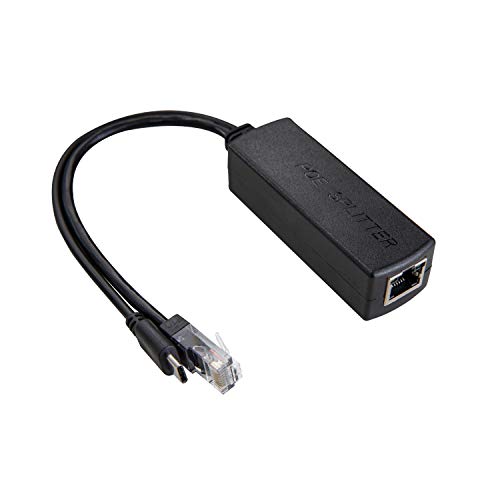
For those looking to streamline their network setup, the UCTRONICS PoE Splitter USB-C Adapter offers a powerful solution by converting a PoE signal into a 5V USB-C power supply and gigabit Ethernet connection. This adapter allows you to power non-PoE devices, like Raspberry Pi 4 and security cameras, while reducing cable clutter. It extends powerlines up to 300 feet and requires an IEEE 802.3af compliant PoE switch or injector. With a maximum output of 2.4A, it’s perfect for low-power applications. Most users rate it highly, appreciating its efficiency and the elimination of separate power supplies.
Best For: The UCTRONICS PoE Splitter USB-C Adapter is best for users looking to power non-PoE devices like Raspberry Pi 4 and security cameras while reducing cable clutter.
Pros:
- Allows for power and data transmission over a single Ethernet cable, simplifying network setups.
- Extends powerlines up to 300 feet, providing flexibility in device placement.
- Highly rated by users for its efficiency in eliminating the need for separate power supplies.
Cons:
- Does not support fast charging protocols like PD or QC, limiting charging speed.
- Non-standard PoE switches may cause overvoltage, risking damage to connected devices.
- Some users have reported RF interference affecting home automation networks.
Gigabit PoE Injector 48V15.4W Power Adapter
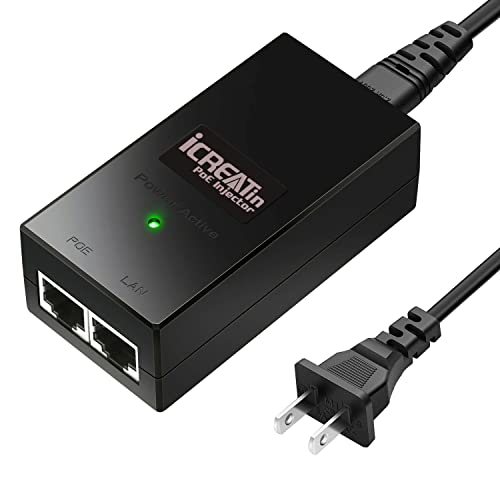
The Gigabit PoE Injector 48V15.4W Power Adapter stands out for its seamless compatibility with various devices, making it an ideal choice for anyone looking to enhance their PC networking setup. This adapter supports IEEE 802.3af, ensuring it works with popular devices like Ubiquiti U-POE-AF and TP-Link TL-POE150S. With one gigabit Ethernet input and output, it delivers full duplex speeds up to 2Gbps. Plus, the plug-and-play installation means you won’t need any complicated configurations. Auto-sensing technology provides up to 15.4W power, accommodating PoE devices up to 328 feet away, making it a reliable solution for your networking needs.
Best For: This product is best for users seeking a reliable and easy-to-install power over Ethernet solution for their networking devices.
Pros:
- Plug-and-play installation allows for quick setup without the need for complex configurations.
- Supports a wide range of devices including popular models from Ubiquiti and TP-Link, enhancing compatibility.
- Delivers power and data over long distances (up to 328 feet), making it versatile for various installation scenarios.
Cons:
- Limited to 15.4W power delivery, which may not be sufficient for higher power PoE devices.
- Requires a compatible non-PoE Ethernet port to function, limiting use with non-PoE setups.
- Only one PoE output, which may not meet the needs of users with multiple PoE devices.
Gigabit 48V 30watt PoE Injector Adapter

A standout feature of the Gigabit 48V 30-watt PoE Injector Adapter is its compatibility with both 802.3af and 802.3at standards, making it an ideal choice for users looking to power multiple devices like IP cameras and access points without the hassle of additional power cabling. With a power output of 30 watts and support for gigabit Ethernet at 10/100/1000Mbps, it delivers reliable performance. Its lightweight design and simple setup process mean you can connect it easily to your network. However, be cautious not to connect non-PoE devices, as this could lead to damage and connectivity issues.
Best For: Users looking to power multiple PoE-compatible devices such as IP cameras and access points without additional power cabling.
Pros:
- Compatible with 802.3af and 802.3at standards, making it versatile for various devices.
- Lightweight design and simple setup process for easy integration into existing networks.
- Cost-efficient solution that eliminates the need for separate power sources for PoE devices.
Cons:
- Potential device failure reported by some users after several months of use.
- Lack of auto-negotiation circuitry may cause issues when connecting non-PoE devices.
- Inconsistent gigabit speed performance, with some devices only recognizing lower speeds (10/100Mbps).
Gigabit PoE Injector Adapter (30W, IEEE 802.3af/at)
Looking for a reliable way to power your network devices? The Gigabit PoE Injector Adapter (30W, IEEE 802.3af/at) is your perfect solution. It effortlessly converts a non-PoE Gigabit port into a PoE+ port, delivering power to devices like Ubiquiti U6 APs and TP-Link models up to 100 meters away. With a compact design and plug-and-play installation, you won’t need any extra configurations or bulky power bricks. Plus, its robust safety features protect against overcurrent and overload, ensuring stable performance. With a solid customer rating of 4.6 out of 5, it’s a trusted choice for reliable networking.
Best For: Users looking to power devices like Ubiquiti access points and PoE cameras efficiently over long distances without complex installation.
Pros:
- Compact design eliminates the need for an external power brick.
- Plug-and-play installation allows for easy setup with no configuration required.
- Robust safety features protect against overcurrent, overload, and overvoltage, ensuring reliable performance.
Cons:
- Limited to PoE+ devices; may not support older or non-PoE devices.
- Operating temperature range is somewhat limited to 0 to 40°C.
- Weight of 6.7 ounces may be considered slightly heavier for portable use.
Gigabit Type C PoE Splitter (TYPEC0503G Black)

For those needing to power USB Type C devices through a Power over Ethernet (PoE) connection, the Gigabit Type C PoE Splitter (TYPEC0503G Black) is an excellent choice. It efficiently converts 48V PoE to USB C 5V/3A, delivering up to 15W. This splitter supports gigabit speeds up to 1000Mbps, making it compatible with various network rates. With plug-and-play functionality and auto-detection, you won’t face any complex setups. Safety features like short circuit and overvoltage protection guarantee your devices remain secure. Rated 4.5 stars by over 1,600 users, it’s a reliable solution for powering non-PoE devices effortlessly.
Best For: Those looking to power USB Type C devices via PoE connections without complicated setups.
Pros:
- Supports gigabit transmission speeds up to 1000Mbps for fast data transfer.
- Easy plug-and-play functionality eliminates the need for complex configurations.
- Multiple safety features protect devices from short circuits and overvoltage.
Cons:
- Limited to 15W maximum output, which may not be sufficient for high-power devices.
- Requires a compatible PoE injector or switch for operation, adding to setup costs.
- May not support some legacy devices that require specific power settings.
Active PoE Power Over Ethernet Splitter Adapter (2 Pack)

Streamlining your networking setup has never been easier with the Active PoE Power Over Ethernet Splitter Adapter (2 Pack). This adapter converts 48V to 12V, delivering up to 1.2A while supporting 10/100Mbps data transmission. You’ll appreciate its plug-and-play design, making it perfect for non-PoE devices like surveillance cameras or VoIP phones, especially where power outlets aren’t available. With a 100m maximum transmission distance, it simplifies your installation by using a single cable for both power and data. Just verify compatibility with IEEE 802.3af equipment for peak performance and enjoy hassle-free networking.
Best For: Individuals and businesses needing to power non-PoE devices like surveillance cameras and VoIP phones in areas without electrical outlets.
Pros:
- Plug-and-play design simplifies installation and eliminates the need for complex configurations.
- Supports long-distance transmission up to 100m, allowing flexible placement of devices.
- Compatible with IEEE 802.3af/at standards, ensuring reliable performance with various PoE equipment.
Cons:
- Heating concerns reported by some users may affect long-term reliability.
- Not compatible with non-PoE switches or devices, limiting usability in certain setups.
- Voltage instability can occur without load, requiring a minimum load for stable operation.
Factors to Consider When Choosing Poe Adapters for Pc Networking
When choosing PoE adapters for your PC networking needs, you’ll want to take into account several key factors. Think about power output specifications, compatibility with your devices, and how easy the installation and setup will be. Additionally, pay attention to the supported standards and the design of the adapter to make sure it fits your setup.
Power Output Specifications
Choosing the right power output specifications is vital for selecting PoE adapters for your PC networking needs. The power output typically ranges from 15.4W (IEEE 802.3af) to 30W (IEEE 802.3at), which directly affects compatibility with your devices. Confirm the adapter’s output voltage meets your requirements—common outputs are 5V for low-power devices and 48V for standard applications. Also, check the maximum current; some adapters can deliver up to 2.4A, essential for devices with higher power demands. Keep distance capabilities in mind, as most PoE adapters support up to 100 meters (328 feet), impacting installation flexibility. Finally, consider adapters with auto-sensing technology, which adjusts power output for connected devices, improving efficiency and reducing potential damage.
Compatibility With Devices
To guarantee seamless operation of your network devices, it’s crucial to take into account compatibility when selecting a PoE adapter. First, confirm the adapter complies with the specific PoE standard your devices require, such as IEEE 802.3af for 15.4W devices or IEEE 802.3at for 30W devices. Next, verify that the power output matches your devices’ requirements; underpowered devices may not function properly. Additionally, check the voltage compatibility, especially for PoE+ devices that typically need 44V to 54V. Make certain the adapter supports the necessary data transmission speeds, like gigabit speeds, for peak performance. Finally, assess the maximum transmission distance, ideally up to 100 meters, to effectively power devices located far from the power source.
Installation and Setup Ease
Installation and setup can be a breeze if you pick the right PoE adapter. Look for options with a plug-and-play design that require no configuration, making it easy to get started. Adapters with auto-sensing technology are essential, as they automatically provide the correct wattage to your connected devices, simplifying your setup even further. Compact and wall-mountable designs help you save space and reduce clutter, fitting seamlessly into your setup. Make sure your adapter supports a maximum transmission distance of up to 100 meters (328 ft) to avoid signal loss. Finally, check for user-friendly quick installation guides included in the package, which can make the process smooth, especially if you aren’t tech-savvy. Choose wisely, and enjoy effortless networking!
Supported Standards and Protocols
When selecting a PoE adapter for your PC networking needs, understanding the supported standards and protocols is vital. Look for adapters that comply with IEEE 802.3af, which delivers up to 15.4W, or IEEE 802.3at, providing up to 30W for devices requiring more power. Confirm the adapter supports the necessary voltage output, typically ranging from 44V to 54V for PoE applications. Additionally, check the adapter’s data transmission capabilities; most support gigabit speeds (10/100/1000Mbps) for peak network performance. Compatibility with your devices’ power requirements is critical, as PoE+ adapters can power devices exceeding the basic PoE standard. Finally, keep in mind that the maximum transmission distance for PoE is generally up to 100 meters (328 feet), affecting your network layout.
Form Factor and Design
Choosing the right form factor and design for your PoE adapter can make a significant difference in your networking setup. You’ll find options ranging from compact designs perfect for tight spaces to larger models packed with extra features or ports. If flexibility is key, consider wall-mountable adapters that optimize both space and accessibility. Smaller adapters often fit easily into junction boxes, while bulkier units might limit your placement options. Look for designs that offer plug-and-play setups to simplify installation; this can save you time and hassle. Additionally, lightweight models are great for portability and ease of handling, making installation a breeze. Overall, selecting the right form factor guarantees your PoE adapter meets your specific needs effectively.