The best commercial-grade ultrawide editing monitors give creative professionals more room for timelines, reference windows, color tools, and multitasking without the distraction of multiple bezels. This roundup compares 10 wide-screen displays ranging from practical 34-inch WQHD models to expansive 49-inch dual- or 5K2K-resolution options.
We focus on the specifications that matter for editing and office production, including resolution, panel technology, connectivity, refresh rate, HDR support, ergonomics, and workspace efficiency. Match the monitor to your software, computer, desk, and color requirements before buying.
Best 10 Commercial-Grade Ultrawide Editing Monitors Picks for 2026
Best for Docking and Multitasking
Samsung 49-inch Dual QHD Business Ultrawide

- 49-inch 5120x1440 workspace
- USB-C with 90W charging
- 120Hz with HDR 400
Best For: Editors and business users needing expansive multitasking and integrated connectivity
Best Balanced Workstation
LG 34-inch UltraWide IPS Monitor

- 34-inch 3440x1440 IPS panel
- USB-C with up to 96W charging
- 99% sRGB and 100Hz
Best For: Creative and hybrid work in a more compact ultrawide setup
Best for Color Precision
INNOCN 49-inch Flat Mini LED Ultrawide

- 5120x1440 flat 32:9 display
- 96% Adobe RGB and ΔE below 2
- Mini LED with 1000-nit HDR
Best For: Color-conscious editors and designers needing a flat, expansive canvas
Best for High-Resolution Editing
M² Vision 40-inch 5K2K Ultrawide

- 5120x2160 5K2K resolution
- USB-C with 65W charging
- 120Hz IPS display with HDR
Best For: Content creators wanting detailed vertical workspace and laptop connectivity
Best All-Around Choice

- 3440×1440 VA display with 99% sRGB and 95% DCI-P3
- USB-C connectivity with up to 65W power delivery
- 120Hz refresh rate and ComfortView Plus
Best For: Photo and video editing, multitasking, and laptop users
Best IPS Value
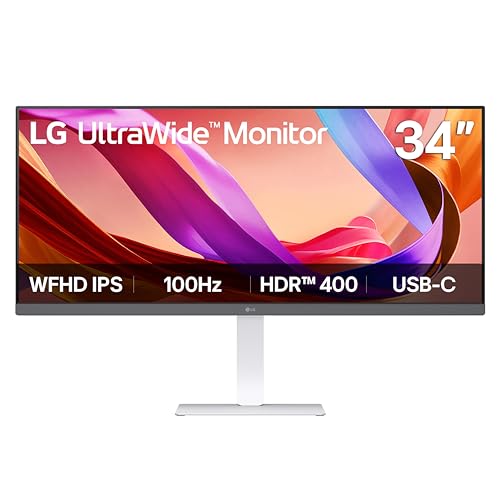
- 34-inch IPS display with 99% sRGB coverage
- DisplayHDR 400 and 100Hz refresh rate
- USB-C, DisplayPort, and HDMI connectivity
Best For: Multitasking, office work, and everyday creative projects
Best Smart Features

- 3440×1440 curved VA display with 99% sRGB
- webOS streaming and cloud-app access
- AirPlay 2, HDR10, and multiple ports
Best For: Home offices combining editing, streaming, and multimedia
Best Value 49-Inch
INNOCN 49C1G 144Hz Super Ultrawide

- 49-inch 32:9 curved VA display
- 144Hz refresh with HDR400 and Adaptive-Sync
- USB-C 65W, PIP/PBP, and broad port selection
Best For: Multitaskers seeking a wide dual-FHD workspace
Best Balanced Work Monitor

- 34-inch 3440 x 1440 curved VA display
- USB-C with up to 65W power delivery
- Ergonomic stand, PBP, and Reader Mode
Best For: Office and creative users wanting sharper WQHD detail
Best High-Resolution 49-Inch

- 49-inch 5120 x 1440 dual-QHD display
- 120Hz refresh with 1ms response and HDR400
- USB-C 65W, PIP/PBP, and adjustable stand
Best For: Editors needing maximum width with sharper detail
Best for Docking and Multitasking – Samsung 49-inch Dual QHD Business Ultrawide
For commercial-grade ultrawide editing monitors, this Samsung combines a spacious 49-inch Dual QHD canvas with practical business connectivity. Its 32:9 1000R curve, USB-C hub, and 90W charging support make it well suited to editing workflows that involve multiple applications and devices.
Best For: Editors and business users who want a single expansive workspace with built-in docking features.
Pros:
- 5120×1440 Dual QHD resolution provides room for timelines, panels, and side-by-side windows.
- USB-C supports up to 90W charging, alongside DisplayPort, HDMI, USB, and Ethernet connectivity.
- 120Hz refresh rate, HDR 400 support, built-in speakers, and a height-adjustable stand add everyday versatility.
Cons:
- The 32:9 curved format requires substantial desk width and may not suit users who prefer a flat display.
- HDR 400 and the listed 0.72 color-gamut figure are less targeted toward demanding reference-grade color work.
This is a strong productivity-focused choice when workflow efficiency, screen real estate, and one-cable laptop connectivity matter more than specialized color-grading features.
Best Balanced Workstation – LG 34-inch UltraWide IPS Monitor
This LG is a practical entry in the commercial-grade ultrawide editing monitors category for smaller workstations. Its 34-inch 3440×1440 IPS panel, 99% sRGB coverage, USB-C connectivity, and 21:9 layout support comfortable multitasking without the footprint of a 49-inch model.
Best For: Creative professionals and hybrid workers who want a manageable ultrawide for editing, documents, calls, and media.
Pros:
- IPS WQHD resolution and 99% sRGB coverage support consistent everyday creative and office work.
- USB-C provides display, data, and up to 96W laptop charging through one cable.
- 100Hz refresh rate, HDR10, built-in speakers, reader mode, and adjustable stand improve daily usability.
Cons:
- The 3440×1440 workspace is substantially smaller than the 49-inch Dual QHD alternatives for complex timelines.
- Its 300-nit brightness and 1000:1 contrast ratio are aimed at general use rather than demanding HDR mastering.
Choose this model when you need a versatile, comfortable editing display with strong laptop integration but do not need the extreme width or higher-end HDR hardware of larger options.
Best for Color Precision – INNOCN 49-inch Flat Mini LED Ultrawide
Among commercial-grade ultrawide editing monitors, the INNOCN stands out for its flat screen and stated color-focused specifications. The 49-inch 5120×1440 panel combines 100% sRGB, 95% DCI-P3, 96% Adobe RGB, factory-tested ΔE below 2, and Mini LED local dimming.
Best For: Photo editors, video editors, graphic designers, and architects who prioritize a flat, expansive canvas and broad color coverage.
Pros:
- Flat 32:9 design keeps lines straight, which can benefit precision-oriented visual work.
- Factory-tested ΔE below 2 and coverage of sRGB, DCI-P3, and Adobe RGB support color-conscious workflows.
- 1760 local dimming zones and 1000-nit peak HDR brightness provide strong stated HDR capability.
- 165Hz refresh rate and FreeSync support add smooth motion for fast content and gaming.
Cons:
- The VA panel lists a 170-degree viewing angle, narrower than the IPS alternatives.
- Connectivity is listed around DisplayPort and HDMI, without the USB-C docking and charging features offered by some competitors.
- The included manufacturer warranty is one year.
Its combination of a flat geometry, wide gamut, high stated brightness, and very large workspace makes it the most specification-driven option here for color-sensitive editing, assuming your setup does not require USB-C laptop docking.
Best for High-Resolution Editing – M² Vision 40-inch 5K2K Ultrawide
This M² Vision offers a high-resolution alternative among commercial-grade ultrawide editing monitors. Its curved 40-inch IPS display delivers 5120×2160 detail in a 21:9 format, while USB-C with 65W charging supports a cleaner MacBook or laptop editing setup.
Best For: Video editors and content creators who want sharp 5K2K workspace density, laptop charging, and a familiar 21:9 layout.
Pros:
- 5120×2160 resolution provides greater vertical workspace and fine detail than standard 3440×1440 ultrawides.
- USB-C supports video and up to 65W charging for a single-cable laptop connection.
- 120Hz refresh rate, Adaptive Sync, HDR support, and a height-adjustable stand suit mixed work and entertainment.
- The IPS panel lists 99% color gamut and 2000:1 contrast.
Cons:
- The glossy finish can be less forgiving in brightly lit editing rooms.
- Its 21:9 width offers less horizontal space than the 32:9 49-inch models.
- The listed one-year manufacturer warranty is relatively limited.
This is a compelling fit when vertical resolution is especially valuable for editing interfaces and detailed content, though its glossy screen and narrower aspect ratio should be considered before buying.
Best All-Around Choice – Dell 34 S3425DW
The Dell S3425DW is a strong fit for shoppers seeking commercial-grade ultrawide editing monitors with a detailed 3440×1440 workspace, broad color coverage, and convenient USB-C connectivity. Its curved VA panel combines 99% sRGB, 95% DCI-P3, and a 3000:1 contrast ratio for vivid, deep-looking images.
Best For: Photo and video editing, business multitasking, and users who want one-cable laptop connectivity.
Pros:
- Sharp 3440×1440 resolution with 21:9 workspace
- 99% sRGB and 95% DCI-P3 coverage
- USB-C supports display connectivity and up to 65W power delivery
- Height adjustment, built-in speakers, and ComfortView Plus
Cons:
- 300-nit brightness may be modest for very bright rooms
- VA viewing characteristics may be less consistent than IPS for color-critical angles
With its high contrast, wide color gamut, ergonomic stand, and USB-C convenience, the S3425DW is a well-rounded option for demanding desk-based editing and productivity.
Best IPS Value – LG 34U530A-W UltraWide
The LG 34U530A-W brings an IPS panel and spacious 21:9 layout to the commercial-grade ultrawide editing monitors category. Its 34-inch 2560×1080 screen provides room for multiple windows, while 99% sRGB coverage, DisplayHDR 400, and a versatile adjustable stand support everyday creative work.
Best For: Multitasking, entry-level editing, office workflows, and users who prefer IPS viewing angles.
Pros:
- IPS panel with 178-degree viewing angles
- 99% sRGB coverage and VESA DisplayHDR 400
- USB-C, DisplayPort, and HDMI connectivity
- Height, tilt, and swivel adjustments with built-in speakers
Cons:
- 2560×1080 resolution is less detailed than QHD ultrawide models
- 5ms response time is less responsive than the Dell option
- 1000:1 contrast is more limited than the VA alternatives
This LG is a practical productivity monitor with useful ergonomics and connectivity, though its lower resolution makes it better suited to general editing and multitasking than high-detail creative work.
Best Smart Features – LG 34SR60QC-W Smart Monitor
The LG 34SR60QC-W adds streaming and smart-monitor functionality to a 3440×1440 ultrawide display. For buyers comparing commercial-grade ultrawide editing monitors, its 34-inch curved VA panel offers 99% sRGB coverage, HDR10, built-in webOS, and a broad selection of wireless and wired entertainment features.
Best For: Home-office users who want editing space, streaming apps, and a flexible multimedia display.
Pros:
- Detailed 3440×1440 QHD ultrawide resolution
- 99% sRGB coverage with HDR10 support
- Built-in webOS for streaming and cloud productivity apps
- AirPlay 2, HomeKit, Bluetooth, two HDMI ports, and three USB ports
Cons:
- 100Hz refresh rate is lower than the Dell model
- VA panel and 300-nit brightness may not suit demanding color-critical environments
- Its smart features are less relevant if you only need a conventional editing monitor
This LG stands out when entertainment and smart connectivity matter alongside editing space. Its QHD resolution and color coverage are capable, while webOS makes it more self-contained than a standard monitor.
Best Value 49-Inch – INNOCN 49C1G 144Hz Super Ultrawide
For shoppers comparing commercial-grade ultrawide editing monitors, the INNOCN 49C1G delivers a very wide 32:9 workspace at a relatively practical 3840 x 1080 resolution. Its VA panel, 144Hz refresh rate, USB-C connectivity, and split-screen support make it useful for multitasking, content creation, and mixed work-and-gaming setups.
Best For: Multitaskers who want a large dual-FHD workspace with fast refresh and extensive connectivity.
Pros:
- 49-inch 32:9 curved display provides substantial horizontal workspace.
- 144Hz refresh rate, 1ms response time, Adaptive-Sync, and HDR400 support.
- USB-C offers up to 65W power delivery, with DisplayPort, HDMI, USB-A, and RJ45 connectivity.
- PIP/PBP support enables viewing two input sources simultaneously.
Cons:
- 3840 x 1080 resolution provides less vertical detail than a dual-QHD ultrawide.
- VA panel and 99% sRGB coverage may be less suited to color-critical work than a professional wide-gamut display.
The 49C1G is a strong productivity-focused choice when screen width, connectivity, and smooth motion matter more than maximum pixel density. Its adjustable stand and 1800R curve also help make the large panel easier to position for long sessions.
Best Balanced Work Monitor – LG 34WR55QK-B WQHD UltraWide
The LG 34WR55QK-B is a sensible option among commercial-grade ultrawide editing monitors for office work, multimedia, and general creative tasks. Its 3440 x 1440 resolution gives a useful balance of workspace and sharpness, while USB-C, ergonomic adjustment, and LG’s OnScreen Control software support a streamlined desk setup.
Best For: Home-office and creative users who want a sharper 34-inch ultrawide with practical productivity features.
Pros:
- 34-inch 21:9 WQHD resolution provides more vertical detail than a 1080p ultrawide.
- USB-C supports up to 65W power delivery for compatible laptops.
- OnScreen Control and PBP help organize multiple windows or input sources.
- Height- and tilt-adjustable stand, Reader Mode, HDR10, and up to 99% sRGB coverage.
Cons:
- 100Hz refresh rate and 5ms response time are less performance-oriented than the INNOCN alternatives.
- The 34-inch panel offers less total width than a 49-inch 32:9 monitor.
This LG is the most conventional and balanced pick of the group. It trades extreme width and gaming speed for higher WQHD pixel density, useful ergonomics, and a feature set that fits business, editing, and everyday multimedia work.
Best High-Resolution 49-Inch – INNOCN 49C1R 5K2K Ultrawide
For buyers prioritizing workspace and detail, the INNOCN 49C1R stands out among commercial-grade ultrawide editing monitors with its 5120 x 1440 dual-QHD resolution. The 49-inch 32:9 VA panel combines a broad editing canvas with 120Hz motion, USB-C connectivity, HDR400, and PIP/PBP support.
Best For: Editors and multitaskers who need maximum horizontal space with substantially sharper detail than a dual-FHD display.
Pros:
- 5120 x 1440 dual-QHD resolution offers extensive workspace and higher detail.
- 120Hz refresh rate, 1ms response time, Adaptive-Sync, and HDR400 support.
- USB-C provides up to 65W power delivery, alongside DisplayPort, HDMI, USB, and RJ45 connectivity.
- 1800R curvature, adjustable stand, built-in speakers, and PIP/PBP functionality.
Cons:
- Its 49-inch size requires substantial desk space.
- VA technology and 99% sRGB coverage may not meet the needs of specialized wide-gamut color workflows.
The 49C1R is the strongest choice here for combining an expansive canvas with useful pixel density. It is especially compelling when a single monitor must replace two displays, provided the desk and computer can comfortably accommodate its size and resolution.
How We Picked These Commercial-Grade Ultrawide Editing Monitors
We selected displays that offer a useful combination of screen area, resolution, connectivity, and professional usability. The lineup includes 34-inch monitors for conventional desks, 40-inch 5K2K models for sharper vertical detail, and 49-inch super-ultrawides that can replace two side-by-side displays.
Resolution and panel type received priority because editing benefits from both workspace and fine detail. We also considered USB-C availability, refresh rates, HDR support, built-in speakers, VESA compatibility, height adjustment, and features such as eye-comfort modes or integrated smart functionality. Product specifications can vary by retailer and region, so verify current details before purchase.
Quick Comparison
- Best for maximum multitasking: 49-inch 32:9 models with dual QHD or 5K2K resolution.
- Best balance of workspace and desk size: 34-inch WQHD ultrawide monitors.
- Best for fine timeline and image detail: 40-inch 5K2K displays.
- Best for straightforward office editing: 34-inch IPS or VA models with USB-C and 100Hz refresh rates.
- Best for media-focused setups: Smart monitors with built-in streaming and speakers.
Key Buying Factors for Commercial-Grade Ultrawide Editing Monitors
Resolution and Aspect Ratio
A 3440 x 1440 34-inch display is a strong all-purpose choice, while 5120 x 1440 49-inch models provide two-QHD-style work areas. A 5120 x 2160 40-inch monitor adds substantially more vertical pixels, which can help with photo work, documents, and tall editing interfaces.
Panel Type and Color
IPS panels typically offer consistent viewing angles and are often preferred for collaborative creative work. VA panels can provide stronger contrast, particularly in darker scenes. Check the stated color gamut, factory calibration, HDR rating, and your software’s color-management requirements rather than assuming HDR certification alone guarantees professional color accuracy.
Connectivity and Computer Compatibility
USB-C can simplify laptop setups by carrying video, data, and sometimes power. Confirm the monitor’s USB-C wattage, DisplayPort version, HDMI inputs, and whether your computer supports the required resolution and refresh rate. A suitable dock or graphics output may be necessary for 5K2K or 49-inch displays.
Ergonomics and Desk Planning
Check stand height adjustment, tilt, VESA support, curve radius, and the monitor’s width and depth. A 49-inch display needs substantial desk space, while a curved screen can make the edges easier to view. Leave room for speakers, storage, and comfortable viewing distance.
Who Should Buy Which Commercial-Grade Ultrawide Editing Monitors?
Choose a 34-inch WQHD model if you want a manageable upgrade from a standard monitor and need a versatile screen for editing, productivity, and general office work. Choose a 49-inch model if replacing a dual-monitor setup is the priority and your computer can drive its resolution reliably. A 40-inch 5K2K display is the better fit for editors who value both expansive width and high vertical sharpness, especially for detailed image or video work.
For laptop-based workflows, prioritize USB-C power delivery and one-cable connectivity. For color-critical production, plan to use a hardware colorimeter and verify the monitor’s gamut and calibration performance. Finally, select the highest resolution and screen size your desk, graphics hardware, and budget can support comfortably.