A rackmount NAS can turn a home office into a more organized, resilient workspace by centralizing files, backups, media, and shared applications in one accessible system.
This roundup compares compact NAS units, higher-capacity storage servers, and compatible rack enclosures so you can match drive bays, networking, noise, and expansion potential to your setup.
Best 10 Rackmount NAS Systems for Home Offices Picks for 2026
Best Performance Pick

- Quad-core Intel CPU with 8GB RAM
- Dual 2.5GbE and two M.2 slots
- 4K output and USB 3.2 Gen 2
Best For: Fast file sharing and media-focused home offices
Best Compact Enclosure
18U Wall Mount Server Rack Cabinet

- 24-inch-deep 19-inch rack enclosure
- Fan, shelves, PDU, and cable management included
- Wall-mount or freestanding installation
Best For: Organizing NAS and network gear in a home office
Best Space-Saving NAS

- Compact 327.5 mm rack depth
- Four bays with over 601/516 MB/s throughput
- Dual 1GbE with optional 10GbE upgrade
Best For: Compact rack storage with future network expansion
Best Home Lab Rack

- 22U, 32-inch-deep floor cabinet
- Cooling fans, PDU, shelf, and cable brushes
- Locking door with 1,600-pound static capacity
Best For: Growing home labs with multiple rack devices
High-Speed Office Storage

- Eight-bay short-depth rackmount NAS
- Dual 2.5GbE networking
- NVMe slots and 4K HDMI output
Best For: Home offices needing expandable capacity and faster file transfers
Complete Home Lab Enclosure
Sysracks 18U Server Rack Cabinet
- 18U floor-standing, 32-inch-deep cabinet
- Cooling fans, PDU, and fixed shelf included
- Locking glass door with removable side panels
Best For: Organizing NAS, networking, UPS, and AV equipment
Compact Rack Performance

- Four-bay 1U diskless NAS
- Over 2,000 MB/s sequential read claimed
- PCIe expansion for 10GbE/25GbE or M.2
Best For: Home offices wanting compact storage with upgrade potential
Rack Foundation

- 1,600-lb static load capacity
- Cooling fans and included 8-outlet PDU
- Locking glass door with removable side panels
Best For: Home labs and offices installing multiple rack-mount devices
Power User
TrueNAS Mini R 12-Bay Storage Server

- 12 hot-swap SATA bays in a rackmount chassis
- 32GB ECC RAM and dual 10GbE networking
- Supports ZFS features, VMs, and multiple protocols
Best For: Advanced offices needing expandable, high-performance storage
Compact Choice
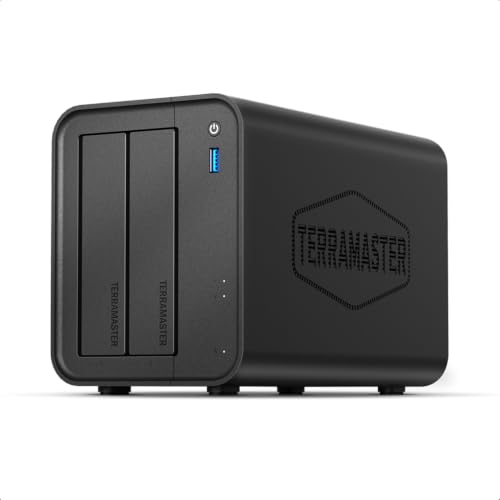
- 2.5GbE networking with quad-core Intel processing
- 4K media support and quiet 19dB(A) operation
- Two bays support up to 60TB and TRAID arrays
Best For: Quiet, compact home-office storage and media use
Best Performance Pick – QNAP TS-464eU-8G-US
For home offices that need fast shared storage, the QNAP TS-464eU-8G-US is a capable choice among rackmount NAS systems for home offices. Its quad-core Intel processor, 8GB of RAM, dual 2.5GbE ports, and four-bay diskless design support demanding file transfers and flexible storage expansion.
Best For: Home offices and small teams handling large files, media libraries, and multiple connected devices.
Pros:
- Dual 2.5GbE ports can accelerate network file sharing and large transfers.
- Two M.2 PCIe Gen 3 x1 slots support cache acceleration or SSD storage pools.
- Multiple USB 3.2 Gen 2 ports provide up to 10Gb/s transfer speeds.
- HDMI 1.4b supports 4K output at 30Hz, with real-time transcoding support.
Cons:
- Diskless design requires separate drive purchases.
- Short-depth 1U rack format may offer less internal room than larger chassis.
The TS-464eU-8G-US stands out when network speed and expansion options matter. It is especially practical for buyers who want a compact rackmount NAS with strong connectivity and multimedia capabilities.
Best Compact Enclosure – 18U Wall Mount Server Rack Cabinet
The Sysracks 18U cabinet is an equipment enclosure rather than a NAS itself, making it useful for organizing rackmount NAS systems for home offices alongside switches, patch panels, and other network hardware. Its 24-inch overall depth, cooling fan, shelves, and PDU support a tidy deployment.
Best For: Home offices that need a lockable, wall-mounted or freestanding rack for NAS and networking equipment.
Pros:
- Universal 19-inch rack compatibility accommodates NAS units, switches, and patch panels.
- Top-mounted fan and ventilated construction promote airflow.
- Includes two vented shelves, casters, leveling feet, PDU, and cable-entry brushes.
- Locking tempered-glass door and removable side panels improve access control and maintenance.
Cons:
- Its 20-inch usable mounting depth may limit compatibility with deeper equipment.
- Wall-mounted capacity is listed at 133 pounds, so equipment weight must be planned carefully.
- At 55 pounds, the cabinet itself may require substantial installation support.
This cabinet is a practical foundation for a small home-office rack. Verify the NAS depth and total equipment weight before choosing wall mounting, particularly when adding shelves or multiple devices.
Best Space-Saving NAS – Synology RackStation RS422+
The Synology RackStation RS422+ is a compact four-bay, diskless NAS suited to home offices that want rack integration without a deep chassis. With sequential read/write throughput listed above 601/516 MB/s and dual 1GbE ports, it offers a balanced platform for shared storage and network resilience.
Best For: Space-conscious home offices needing a compact four-bay rackmount NAS with upgrade potential.
Pros:
- Short 327.5 mm depth with handles installed helps conserve rack space.
- Four-bay design provides room for a larger storage setup.
- Dual 1GbE ports support failover and load balancing.
- Optional plug-and-play modules enable a 10GbE RJ-45 network upgrade.
Cons:
- Diskless configuration requires separate storage drives.
- Standard networking is 1GbE unless upgraded with an optional module.
- Rackmount dimensions may be less suitable for buyers without existing rack equipment.
The RS422+ is a sensible pick when rack depth is limited. Its compact design and upgradeable networking make it a flexible option, although buyers seeking built-in 10GbE will need to budget for the add-on module.
Best Home Lab Rack – 22U Home Server Rack Cabinet
The Sysracks 22U floor-standing cabinet gives rackmount NAS systems for home offices room to grow. Its 32-inch depth, adjustable rails, active cooling, locking glass door, and included PDU and shelf make it suitable for a broader home-lab or small-office equipment installation.
Best For: Home labs and offices with multiple NAS, networking, UPS, or AV components to house together.
Pros:
- 22U capacity and 32-inch depth accommodate a range of rack equipment.
- Integrated cooling fans and ventilation openings support airflow.
- Includes an 8-outlet PDU, fixed shelf, casters, leveling feet, and cable brushes.
- Locking tempered-glass door and removable side panels aid security and maintenance.
Cons:
- Its 49-inch height and 68-pound cabinet weight require significant floor space.
- Floor-standing design is less suitable for compact offices with limited room.
- The large capacity may be excessive for a single small NAS installation.
This rack is best viewed as a long-term home-lab platform rather than a minimal NAS enclosure. It makes sense when you expect to add networking, power, storage, or AV equipment over time.
High-Speed Office Storage – QNAP TS-864eU-8G-US
For home offices needing rackmount NAS systems for home offices, the QNAP TS-864eU-8G-US combines eight drive bays with dual 2.5GbE networking. Its Intel Celeron processor, built-in 8GB memory, and NVMe support make it suited to file sharing and larger media workflows.
Best For: Home offices and small teams that need eight-bay storage, faster-than-gigabit file transfers, and media handling in a short-depth rackmount design.
Pros:
- Eight-bay rackmount chassis provides room for a larger storage setup.
- Dual 2.5GbE ports support faster file sharing across compatible devices.
- Dual M.2 PCIe Gen 3 x1 slots support cache acceleration or SSD storage pools.
- HDMI 1.4b supports 4K output at 30Hz, with real-time transcoding capability.
Cons:
- Drives are not included.
- The 8GB RAM is onboard and non-expandable.
- Its benefits depend on compatible 2.5GbE networking and storage hardware.
This QNAP is a strong fit when capacity and network speed matter more than expandability. The short-depth rackmount format and three-year warranty add practical value for a dedicated home-office setup.
Complete Home Lab Enclosure – Sysracks 18U Server Rack Cabinet
The Sysracks 18U cabinet is a practical companion for rackmount NAS systems for home offices, providing a floor-standing enclosure for NAS units, routers, switches, UPS equipment, and AV hardware. It includes cooling, power distribution, and basic cable-management accessories.
Best For: Home-office or homelab users building a centralized, secure rack for NAS and networking equipment.
Pros:
- 18U, 32-inch-deep design accommodates standard 19-inch rack equipment.
- Integrated cooling fans and ventilation openings support active airflow.
- Includes an eight-outlet PDU, fixed shelf, casters, leveling feet, and mounting hardware.
- Locking tempered-glass door and removable side panels aid security and maintenance.
Cons:
- This is a rack cabinet, not a NAS server.
- At 150 pounds and 42 inches tall, it requires substantial floor space.
- The included shelf may be unnecessary if all equipment is rack-mounted.
Choose this cabinet when the goal is a complete, organized home-office rack rather than storage hardware alone. Its depth, airflow features, and included PDU make it a useful foundation for a multi-device setup.
Compact Rack Performance – Synology RackStation RS826+
The Synology RackStation RS826+ is a compact four-bay choice among rackmount NAS systems for home offices. It is designed for office-wide file sharing, syncing, and backups, while its PCIe slot provides a path to optional faster networking or M.2 storage expansion.
Best For: Home offices that want a 1U, four-bay NAS with strong throughput and options for future network or storage upgrades.
Pros:
- Reported sequential throughput reaches over 2,000 MB/s read and 1,300 MB/s write.
- Four built-in 1GbE ports support network connectivity and aggregation options.
- PCIe 3.0 expansion supports optional 10GbE/25GbE NICs or M.2 NVMe adapter cards.
- Can expand to eight drive bays with a Synology RX426 expansion unit.
Cons:
- Drives are not included.
- The base system uses 1GbE ports; faster networking requires an optional card.
- Expansion to eight bays requires a separate RX426 unit.
The RS826+ suits buyers who prefer a compact 1U footprint but do not want to give up upgrade options. Its four-bay starting point is manageable for a home office, while the expansion slot and optional external unit support future growth.
Rack Foundation – 22U Deep Home Server Cabinet
For home offices building around rackmount NAS systems for home offices, the Sysracks 22U cabinet provides the enclosure and infrastructure needed to organize servers, NAS units, networking gear, and AV equipment. Its 39-inch depth, active cooling, and included PDU make it suited to a more substantial equipment installation.
Best For: Home labs, studios, and small offices that need a secure floor-standing rack for multiple rack-mount devices.
Pros:
- Supports up to 1,600 pounds of static load.
- Includes cooling fans, an 8-outlet PDU, fixed shelf, and mounting hardware.
- Locking glass door, removable side panels, casters, and leveling feet support access and cable management.
Cons:
- At 230 pounds and 39 inches deep, it requires significant floor space.
- It is a cabinet for housing equipment, not a NAS server itself.
This is a strong choice when your NAS is part of a larger home-office rack. Its capacity and included accessories offer room to expand, but smaller setups may not need such a large enclosure.
Power User – TrueNAS Mini R 12-Bay Storage Server
The TrueNAS Mini R is a purpose-built rackmount NAS systems for home offices option for users who need substantial storage, fast networking, and ZFS-based capabilities. It arrives diskless, with 12 hot-swap bays, ECC memory, dual 10GbE ports, and a short rail kit for compatible racks.
Best For: Advanced home offices, developers, surveillance users, and small businesses needing expandable rack-mounted storage and virtualization features.
Pros:
- Provides 12 hot-swap 3.5-inch SATA drive bays and built-in RAID support.
- Includes 32GB ECC RAM, an eight-core Intel Atom CPU, and dual 10GbE ports.
- Supports SMB, NFS, iSCSI, and S3, along with VMs, plugins, and cloud synchronization.
- Includes IPMI remote management and a short rail kit for 19- to 26.6-inch rack depths.
Cons:
- Diskless design means drives must be purchased separately.
- Its advanced feature set may be more than a basic file-sharing setup requires.
With its drive count, ECC memory, 10GbE connectivity, and TrueNAS software ecosystem, the Mini R is designed for demanding storage projects. Budget separately for disks and confirm rack depth before installation.
Compact Choice – TerraMaster F2-425 2-Bay NAS
Although it is tabletop rather than rack-mount, the TerraMaster F2-425 can complement rackmount NAS systems for home offices as a compact secondary or standalone storage device. Its two bays, 2.5GbE connection, 4K media support, and quiet 19dB(A) operation suit smaller workspaces.
Best For: Home-office users who want a quiet, compact NAS for file storage, backups, photo management, and media streaming.
Pros:
- Intel quad-core processing and 4GB RAM support multitasking and 4K H.265 decoding.
- 2.5GbE networking enables faster transfers and concurrent user access.
- Supports up to 60TB across two bays, with TRAID, CloudSync, and TerraSync features.
- Tool-free drive trays and 19dB(A) operation are practical for quiet rooms.
Cons:
- It is a two-bay tabletop NAS, not a rack-mount unit.
- Diskless configuration requires separate hard drives.
The F2-425 is a sensible space-saving option when a full rack cabinet or 12-bay server is unnecessary. Choose it for straightforward home-office storage and multimedia use, but not when native rack mounting is essential.
How We Picked These Rackmount NAS Systems for Home Offices
We focused on storage platforms and rack accessories suited to home offices, small studios, and serious homelabs. The selection considers drive-bay count, rack height, chassis depth, memory, networking, operating-system flexibility, backup features, and expansion potential. Because a rackmount NAS is only part of a complete installation, the roundup also includes 18U and 22U enclosures with shelves, power distribution, ventilation, and locking doors.
Products listed as diskless require separately purchased drives. Confirm drive compatibility, supported RAID or storage pools, and warranty requirements before buying.
Quick Comparison
- Compact 1U storage: The QNAP TS-464eU-8G-US and Synology RS422+ suit shallow racks and smaller offices.
- More bays and faster networking: The QNAP TS-864eU-8G-US provides eight bays and dual 2.5GbE connectivity.
- Enterprise-style flexibility: The TrueNAS Mini R emphasizes ZFS, higher memory, many drive bays, and 1/10GbE networking.
- Rack infrastructure: The 18U and 22U cabinets provide room for a NAS, switch, UPS, patch panel, and accessories.
- Entry-level desktop option: The TerraMaster F2-425 is a two-bay NAS for lighter storage demands, though it is not a traditional rackmount chassis.
Key Buying Factors for Rackmount NAS Systems for Home Offices
Bay Count and Redundancy
Two bays can cover basic mirrored storage, while four bays offer a better balance of capacity, redundancy, and future upgrades. Choose six, eight, or 12 bays if you manage large media libraries, surveillance footage, virtual machines, or multiple backup targets.
Rack Size, Depth, and Noise
Measure usable rack depth, not just the cabinet’s advertised depth. Short-depth NAS units are easier to install in compact enclosures. Fans and server-grade components can be audible, so a locking floor cabinet or a separate utility area may be preferable for quiet offices.
Networking and Performance
Gigabit Ethernet is adequate for routine documents and backups, but 2.5GbE or 10GbE can substantially improve large-file transfers when the NAS, switch, and client devices support the same standard. CPU and RAM also matter for containers, indexing, encryption, and multiple users.
Software, Backups, and Data Protection
Compare the vendor operating system, snapshot support, cloud synchronization, user permissions, remote-access controls, and backup destinations. RAID is not a backup: maintain at least one separate, tested copy of important files.
Who Should Buy Which Rackmount NAS Systems for Home Offices?
Choose a compact QNAP or Synology 1U model if you need dependable shared storage in a shallow rack. Choose the eight-bay QNAP if you want more capacity and faster everyday transfers. Choose the TrueNAS Mini R if you understand ZFS and want substantial hardware flexibility. Choose an 18U or 22U cabinet when your installation also needs a UPS, network switch, patch panel, or room to grow. Choose the TerraMaster for a simpler two-drive setup when rack mounting is not essential.