The best network video recorders for home offices make it easier to centralize camera feeds, store footage locally, and manage security without relying entirely on cloud subscriptions. The right model depends on camera count, resolution, storage needs, and whether you want an integrated PoE switch.
This roundup covers compact NVRs for small workspaces, expandable systems for larger properties, and hybrid recorders that support multiple camera types. Use the buying guide below to narrow your options by installation style, capacity, and long-term flexibility.
Best 10 Network Video Recorders for Home Offices Picks for 2026
Best Reolink Starter NVR
RLN8-410 8-Channel PoE Recorder
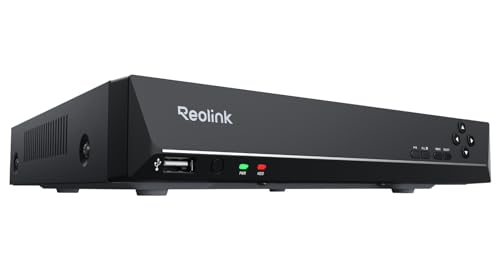
- Eight-channel recording for compatible Reolink cameras
- One-cable PoE setup with runs up to 330 feet
- Supports up to 16TB across internal and eSATA storage
Best For: Smaller Reolink PoE camera systems in home offices
Best Hybrid Upgrade NVR
101AV 16-Channel Hybrid DVR/NVR

- Combines analog and IP camera inputs
- Includes a 2TB HDD with support for up to 8TB
- Offers motion alerts, remote access, and USB backup
Best For: Home offices upgrading mixed or legacy camera systems
Best ANNKE PoE Efficiency NVR
12MP 8-Channel H.265+ Recorder

- Supports compatible ANNKE cameras up to 12MP
- H.265+ helps reduce storage and bandwidth needs
- One-cable PoE setup with support for 2.5- and 3.5-inch drives
Best For: ANNKE camera systems needing high-resolution, efficient recording
Best High-Capacity Reolink NVR
RLN16-410 16-Channel PoE Recorder

- Supports up to 16 simultaneous Reolink camera recordings
- Two internal HDD bays support up to 8TB each
- PoE setup and free local or remote viewing apps
Best For: Expandable Reolink systems covering larger home-office properties
Best Plug-and-Play Pick
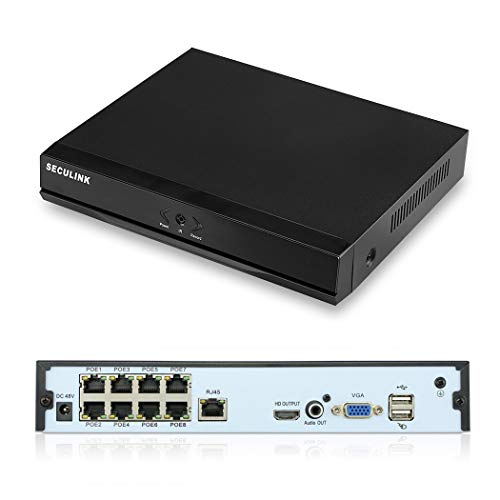
- 4K recording on all eight channels
- Built-in eight-port PoE switch
- XMEYE remote viewing and motion alerts
Best For: Home offices building an eight-camera PoE system
Best Expandable Option

- Expandable from eight to 16 channels
- Remote viewing without a monthly fee
- H.265+ helps conserve storage
Best For: Growing systems with users comfortable configuring cameras
Best Compact Four-Camera Pick

- Four 4K/8MP camera inputs
- Automatic camera discovery
- TDSEE remote viewing and alerts
Best For: Smaller home offices using up to four cameras
Compact Reolink Option

- Four PoE channels with support for up to 8TB HDD storage
- Local AI search for people, vehicles, and events
- 24/7 recording and no subscription requirement
Best For: Small offices committed to Reolink cameras
Expansion-Ready Choice
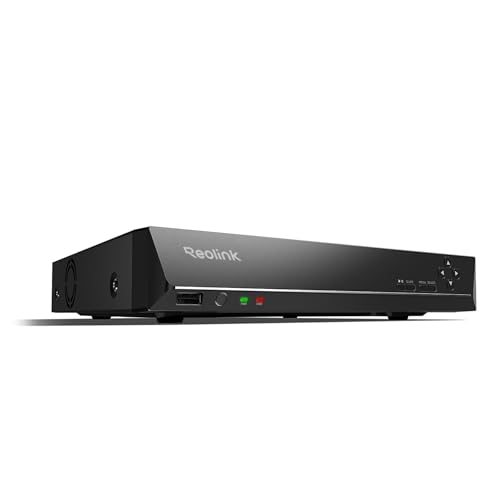
- 16-channel recorder with pre-installed 4TB HDD
- Supports 24/7 recording and an additional 8TB HDD
- PoE setup plus Reolink app and remote access support
Best For: Larger offices building a Reolink-only camera system
Best Reolink Starter NVR – RLN8-410 8-Channel PoE Recorder
For home offices needing a straightforward camera hub, the REOLINK RLN8-410 is one of the more focused network video recorders for home offices. It supports up to eight Reolink PoE cameras, with one Ethernet cable carrying power and data, and can operate as an independent local system.
Best For: Home offices building an eight-camera Reolink PoE system with optional 24/7 recording and remote viewing.
Pros:
- Supports up to eight cameras recording simultaneously.
- PoE setup uses one Ethernet cable per compatible camera, with runs up to 330 feet.
- Supports one internal HDD up to 8TB plus an external eSATA HDD up to 8TB.
- Reolink apps and clients provide local and remote access without monthly fees.
Cons:
- Hard drives are not included.
- Compatibility is limited to supported Reolink cameras and excludes 4G LTE models.
- Camera and NVR compatibility should be checked and firmware may need updating.
The RLN8-410 is a sensible choice when you want a dedicated, expandable Reolink system rather than a recorder designed for mixed camera brands. Its eight-channel limit suits smaller installations, while the optional internal and external storage gives recording capacity room to grow.
Best Hybrid Upgrade NVR – 101AV 16-Channel Hybrid DVR/NVR
The 101AV 16CH Hybrid HD recorder is a flexible option among network video recorders for home offices that already use analog cameras or want to combine older and newer equipment. It supports multiple analog formats alongside IP cameras, includes a 2TB hard drive, and offers local and remote monitoring.
Best For: Home offices transitioning from analog surveillance to a mixed analog-and-IP camera system.
Pros:
- Supports combinations of up to 16 analog and eight IP cameras, or up to 16 IP cameras depending on the configuration.
- Includes a 2TB HDD and supports one SATA drive up to 8TB.
- Works with TVI, CVI, AHD, 960H/composite, and IP video formats.
- Provides motion detection, email notifications, USB backup, and remote viewing through apps and CMS software.
Cons:
- Maximum recording resolution and frame rates vary by input format.
- It is a hybrid DVR/NVR rather than a dedicated PoE NVR, so camera power and wiring may require additional equipment.
- Its broad format support can make setup more involved than a single-brand PoE system.
This 101AV model stands out for compatibility rather than a simple all-PoE installation. It is particularly useful if replacing existing cameras would be costly, but buyers should plan around the specific mix of analog and IP inputs and the recorder’s format-dependent resolution limits.
Best ANNKE PoE Efficiency NVR – 12MP 8-Channel H.265+ Recorder
The ANNKE 12MP 8CH PoE NVR is designed for a compact, high-resolution camera setup. As network video recorders for home offices, it offers one-cable PoE installation, 24/7 recording support, H.265+ compression, and remote access through ANNKE’s free apps, but it is best matched with ANNKE cameras.
Best For: Home offices using compatible ANNKE IP cameras that want high-resolution recording and efficient storage use.
Pros:
- Supports compatible ANNKE cameras up to 12MP, including 4K, 8MP, 5MP, 4MP, and 3MP models.
- H.265+ can reduce storage use by up to 75% compared with H.264 while preserving image quality, according to the supplied specifications.
- PoE carries power and data through one cable, with up to 30W output power.
- Supports 2.5-inch and 3.5-inch hard drives and free remote-viewing apps.
Cons:
- No hard drive is included.
- The NVR itself has no built-in AI; AI features depend on compatible ANNKE cameras.
- Third-party camera compatibility should be confirmed with ANNKE support.
For an ANNKE-centered installation, this recorder offers a useful balance of resolution, storage efficiency, and simple cabling. Its main limitation is ecosystem dependence, so verify camera compatibility before choosing it for a mixed-brand home-office setup.
Best High-Capacity Reolink NVR – RLN16-410 16-Channel PoE Recorder
For a larger home-office property or a system expected to expand, the REOLINK RLN16-410 provides more camera capacity than typical compact network video recorders for home offices. It supports up to 16 Reolink PoE cameras, dual internal drives, and local or remote access without a monthly app fee.
Best For: Larger Reolink PoE installations that need up to 16 cameras and room for substantial local storage.
Pros:
- Supports up to 16 cameras recording simultaneously.
- Two internal HDD bays support drives up to 8TB each, for up to 16TB of listed capacity.
- PoE carries camera power and data over one cable, with cable runs up to 330 feet.
- Integrates compatible Reolink camera detection features and offers free local and remote viewing apps.
Cons:
- Hard drives are not included.
- It is designed for Reolink security cameras and excludes 4G LTE cameras.
- Its 16-channel capacity may be unnecessary for a small office with only a few cameras.
The RLN16-410 is the stronger long-term pick when a home-office surveillance system may grow beyond eight cameras. Dual drive support is especially useful for larger recording workloads, but the Reolink ecosystem and required separate hard drives should factor into the purchase.
Best Plug-and-Play Pick – 4K 8-Channel PoE NVR
For home offices that need a straightforward surveillance setup, this 4K 8-channel PoE network video recorder for home offices combines recording, networking, and camera power in one unit. Its built-in eight-port PoE switch helps simplify installation, while ONVIF support provides flexibility when choosing compatible IP cameras.
Best For: Home offices, small businesses, and users building an eight-camera PoE system with remote access.
Pros:
- Supports up to 8MP/4K recording across all eight channels.
- Built-in eight-port PoE switch sends power and data over one Ethernet cable.
- XMEYE app supports remote live viewing, playback, and system management.
- Motion zones, push notifications, and email alerts help flag activity.
Cons:
- Hard drive is not included, so storage must be added separately.
- Camera compatibility is centered on ONVIF-compatible IP cameras.
This is a practical choice when easy PoE wiring and high-resolution recording matter most. Keep in mind that you will need to supply a compatible HDD before it can record footage.
Best Expandable Option – Hiseeu 4K 8-Port PoE NVR
This Hiseeu model is a flexible option for home offices that may grow beyond eight cameras. It includes eight PoE ports and can expand to 16 channels through an additional PoE switch, while H.265+ compression helps reduce storage use. However, setup with third-party cameras may require manual configuration.
Best For: Users planning an expandable surveillance system and comfortable configuring compatible third-party cameras.
Pros:
- Supports up to 16 channels when paired with a PoE switch.
- Can handle up to 16 4K/8MP cameras according to the supplied specifications.
- Guard Live and Guard Station enable remote viewing without a monthly fee.
- H.265+ compression can save hard-drive storage space.
Cons:
- Third-party cameras are not fully plug-and-play and may need IP changes and Virtual Host setup.
- No hard drive is included, and recording playback requires an added HDD.
- Expansion requires a separate PoE switch, which is not included.
The Hiseeu stands out for expansion potential and remote access, but it is better suited to buyers willing to handle network configuration. Budget separately for both storage and any switch needed for more than eight cameras.
Best Compact Four-Camera Pick – Tenda 4K N3L-4H NVR
For a smaller home office, the Tenda N3L-4H is a compact four-channel network video recorder for home offices that supports up to 4K/8MP network cameras. Automatic camera discovery, ONVIF compatibility, H.265+ compression, and app-based alerts make it a convenient fit for modest surveillance systems.
Best For: Home offices needing coverage for up to four network cameras with simple setup and remote monitoring.
Pros:
- Supports up to four 8MP/4K network camera inputs.
- Automatically searches for and connects to cameras on the network.
- H.265+, H.265, and H.264 support broadens camera and compression options.
- TDSEE app provides remote viewing and phone notifications; cloud storage is available with a three-month free trial.
Cons:
- Four channels provide less capacity than the eight-channel alternatives.
- Hard drive is not included.
- Cloud storage is offered with a three-month free trial, so continued use may require an additional arrangement.
This Tenda is a sensible choice when four cameras are enough and ease of setup is a priority. Its storage-management features and remote app access add useful convenience, while the three-year manufacturer warranty is a notable benefit.
High-Capacity Pick – Hiseeu 12MP 16CH PoE NVR
For home offices that need room to expand, this Hiseeu recorder is one of the more flexible network video recorders for home offices. It supports up to 16 PoE cameras, resolutions up to 12MP, and up to 12TB of storage, though the hard drive is not included.
Best For: Home offices needing many camera channels, high-resolution recording, and local storage without a monthly fee.
Pros:
- Supports up to 16 cameras and resolutions up to 12MP.
- PoE carries power and data over one Ethernet cable, with runs up to 330 feet.
- H.265+ compression helps extend recording time while preserving video quality.
- Human and vehicle detection, remote viewing, and smart playback are available with compatible Hiseeu cameras.
Cons:
- Hard drive is not included.
- Third-party camera compatibility is limited, and human or vehicle detection requires Hiseeu PoE cameras.
The Hiseeu is a strong expansion-oriented choice when a home office needs 16 channels and substantial storage capacity. Confirm camera compatibility before buying, and budget for a surveillance hard drive.
Compact Reolink Option – REOLINK RLN4E 4CH PoE NVR
The REOLINK RLN4E is a compact choice among network video recorders for home offices, offering four PoE channels, local recording, and remote access. It supports up to 8TB of internal HDD storage, but both the HDD and microSD card must be purchased separately.
Best For: Small home offices that need a straightforward Reolink-only system with continuous local recording.
Pros:
- Supports 24/7 recording to a compatible surveillance-grade HDD.
- PoE simplifies installation by carrying power and data over one cable.
- Local AI video search can help find people, vehicles, or events without manually scrubbing footage.
- Recording can continue without internet access, while remote viewing and multi-user access are supported.
Cons:
- Supports only four PoE channels, with capacity for up to six cameras when adding two compatible Wi-Fi cameras.
- Works only with Reolink IP cameras.
- HDD and microSD card are not included.
With its smaller channel count and local AI search, the RLN4E suits a focused office setup rather than a large property. It is particularly practical if your cameras are already part of the Reolink ecosystem.
Expansion-Ready Choice – REOLINK RLN16-410 16CH NVR
For larger home offices or properties, the REOLINK RLN16-410 provides 16 channels and a pre-installed 4TB hard drive. It is among the network video recorders for home offices worth considering when you want centralized PoE recording and room to add cameras within the Reolink ecosystem.
Best For: Home offices planning a larger Reolink camera installation with 24/7 recording and built-in storage.
Pros:
- Manages up to 16 Reolink cameras simultaneously.
- Includes a 4TB HDD for 24/7 recording, with support for adding an extra 8TB HDD.
- PoE plug-and-play setup uses one Ethernet cable for power and data, with runs up to 330 feet.
- Works with Reolink detection features, free apps, and local or remote access without monthly fees.
Cons:
- Works only with Reolink IP cameras.
- Expansion features and detection functions depend on compatible Reolink cameras.
The RLN16-410 offers a useful balance of capacity and convenience because it includes storage while leaving room for additional cameras and an extra drive. Its Reolink-only compatibility is the main limitation to verify before committing.
How We Picked the Best Network Video Recorders for Home Offices
We compared these 10 recorders by channel capacity, camera-resolution support, PoE connectivity, storage configuration, codec support, compatibility, and ease of expansion. We also considered whether each unit is better suited to a small home office, a multi-room property, or a mixed camera installation.
Because specifications and included accessories can vary by seller, confirm the listing details for hard-drive capacity, camera compatibility, included power supplies, and remote-access features before ordering.
Quick Comparison
- Four-channel models: Best for a small office or a few entry points, with less unused capacity and a smaller footprint.
- Eight-channel models: A practical middle ground for offices, garages, entrances, and shared spaces.
- 16-channel models: Better for larger homes, multiple buildings, or buyers planning to add cameras later.
- PoE NVRs: Simplify installation by carrying power and data over compatible Ethernet cables.
- Hybrid DVR/NVR systems: Useful when combining older analog cameras with newer IP cameras.
Key Buying Factors for Network Video Recorders for Home Offices
Channel Count and Expansion
Choose more channels than you currently need if you expect to add cameras. An eight-channel NVR is often a sensible choice for a typical home office, while a 16-channel unit provides room for exterior coverage, multiple floors, and future upgrades.
Resolution and Recording Bandwidth
Check the maximum supported camera resolution and total recording bandwidth, not just the headline “4K” or “12MP” label. Higher-resolution cameras use more storage and network capacity, particularly when several cameras record continuously.
PoE Ports and Network Layout
Built-in PoE ports can reduce cable clutter and avoid buying a separate switch. If cameras will be installed farther away, verify Ethernet distance limits and consider whether an external PoE switch or network infrastructure will be required.
Storage and Retention
Some products include a hard drive, while others require one separately. Estimate retention using camera count, resolution, frame rate, motion activity, and recording schedule. H.265 support can reduce storage use compared with older compression standards.
Compatibility and Remote Access
ONVIF support may help with third-party cameras, but compatibility is not always universal. Confirm supported protocols, app availability, user permissions, notifications, and secure remote-access options before committing to a mixed-brand setup.
Who Should Buy Which Network Video Recorders for Home Offices?
Small home-office users should consider a four-channel recorder when only a few cameras are needed. Most homeowners will find eight channels offer a useful balance of cost, capacity, and expansion. Large properties or growing systems should choose a 16-channel model to avoid replacing the recorder later. DIY installers may prefer an integrated PoE NVR, while upgraders with existing analog cameras should look closely at hybrid support. Finally, buyers who want predictable local recording should prioritize a model with an appropriately sized hard drive or budget for a compatible replacement drive.