Finding hidden problems inside engines, HVAC systems, cylinders, and other tight vehicle spaces is easier with the right inspection camera. The best professional automotive inspection cameras combine a clear display, useful probe articulation, strong lighting, and a durable design that can handle workshop conditions.
This roundup compares 10 standout options across dual-lens designs, slim probes, 360-degree articulation, recording features, and waterproof construction so you can choose a camera suited to your diagnostic workflow.
Best 10 Professional Automotive Inspection Cameras Picks for 2026
Best Articulating Control
Teslong 2-Way Articulating Borescope

- Two-way 210° probe articulation
- 4.5-inch IPS display with no app required
- 1080p recording, 32GB card, and IP67 probe
Best For: Mechanics needing controlled one-handed inspections
Best Dual-Lens Reach
FOXWELL 2-Way Articulating Borescope
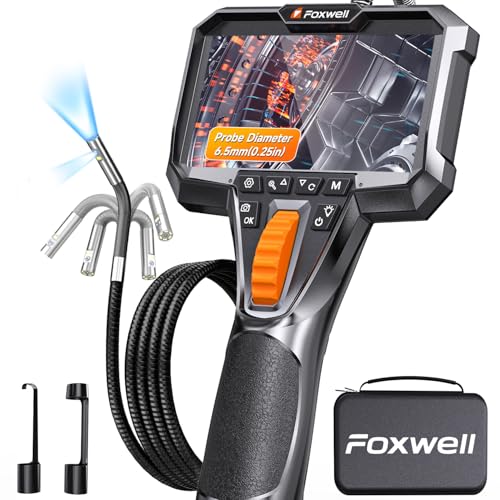
- Slim 6.5mm probe for narrow openings
- Front-and-side dual-lens viewing
- IP67 probe with heat protection
Best For: Tight automotive and HVAC diagnostics
Best Autel Compatibility
Autel MaxiVideo MV108S Inspection Camera

- 1920×1080 video with a 2MP camera
- 39.5-inch semi-rigid, 8.5mm probe
- Works with listed Autel scanners and PCs
Best For: Autel-equipped automotive repair shops
Best Full-Direction Coverage
ROVE RS4 360° Articulating Borescope

- Four-way 360° joystick articulation
- Slim 6.2mm probe with 1.6m reach
- Six-hour replaceable battery and 32GB card
Best For: Complex inspections requiring maximum probe control
Best Long-Reach Option
Teslong 5-Inch Dual Lens Borescope

- Dual forward and side-view cameras
- 16.5-foot semi-rigid cable
- IP67 probe with adjustable LED lighting
Best For: Extended automotive, HVAC, plumbing, and wall inspections
Best for Tight Access
ROVE RS2 Articulating Borescope

- Slim 6.2mm articulating probe
- Two-way 210-degree tip movement
- 1080p capture with included 32GB card
Best For: Confined engine, pipe, and mechanical inspections
Best Articulating Dual-Lens Pick
Teslong TD500 Articulating Borescope

- 6.5mm articulating dual-camera probe
- Five-inch IPS screen with LED lighting
- 32GB card and carrying case included
Best For: Flexible automotive, HVAC, and industrial inspections
Most Flexible Pick
DXZtoz 220° Articulating Borescope

- 220° two-way steering for tight turns
- 1080p display with 8X zoom and adjustable LEDs
- IP67 probe with accessories and 32GB card
Best For: Mechanics needing precise camera positioning around engine components
Best Dual-Lens Design
FOXWELL Y406D Articulating Borescope

- 220° articulation with front and side cameras
- Slim 6.5 mm probe for narrow access points
- 2X/4X zoom, IP67 protection, and 32GB storage
Best For: Professionals needing broad visibility in tight automotive spaces
Best Value Feature Set
Acoath Dual-Lens 1080p Borescope

- 210° articulation with front and side lenses
- 4.3-inch IPS screen and adjustable eight-LED lighting
- 32GB card, case, accessories, and 24-month warranty
Best For: General automotive and maintenance inspections with dual-lens coverage
Best Articulating Control – Teslong 2-Way Articulating Borescope
For professional automotive inspection cameras users who need controlled access in confined spaces, the Teslong combines a two-way articulating probe with a semi-rigid 5-foot gooseneck. Its standalone 4.5-inch IPS display and built-in lighting make it practical for automotive, HVAC, and general inspection work without relying on a phone app.
Best For: Mechanics and inspectors who value one-handed articulation, direct screen viewing, and a shape-holding probe.
Pros:
- Two-way 210° articulation helps navigate complex inspection areas.
- 4.5-inch IPS screen provides sharp viewing without an app.
- 1080p video, 32GB microSD storage, and IP67 waterproofing support field use.
- Adjustable probe LEDs and a centrally placed joystick improve operation in dark, tight spaces.
Cons:
- Two-way articulation offers less directional coverage than four-way models.
- The 5-foot probe may be limiting for especially deep or expansive areas.
This is a well-rounded choice when precise two-way steering and a comfortable handheld design matter more than maximum articulation range. Its included storage, carrying case, and approximately five-hour battery life make it convenient for mobile inspections.
Best Dual-Lens Reach – FOXWELL 2-Way Articulating Borescope
The FOXWELL is a strong option among professional automotive inspection cameras for tight diagnostic work. Its ultra-slim 6.5mm probe, dual-lens design, and 220° articulation help users inspect forward and side views in spark plug holes, cylinders, pipes, and other restricted areas with less disassembly.
Best For: Automotive, HVAC, and plumbing professionals who need narrow access plus front-and-side camera views.
Pros:
- 6.5mm probe reaches spaces that thicker inspection cameras may not fit.
- Dual-lens imaging allows quick switching between front and side views.
- HD IPS display, adjustable LEDs, and one-touch photo and video capture support detailed diagnosis.
- IP67 protection and heat shutdown add safeguards for wet, oily, or hot work areas.
Cons:
- It uses two-way rather than four-way articulation.
- At 2.44 pounds, it is heavier than some compact inspection cameras.
Choose the FOXWELL when viewing angle flexibility and a slim probe are central to the job. Its built-in 32GB storage and USB-C transfer make documentation straightforward, while the optional retrieval tips add usefulness for recovering small parts.
Best Autel Compatibility – Autel MaxiVideo MV108S Inspection Camera
For shops already using compatible Autel scanners, the MV108S is a practical professional automotive inspection camera that plugs directly into supported diagnostic tools or a PC. Its 8.5mm camera head, 39.5-inch semi-rigid cable, 1920p video, and eight LEDs are suited to engine cylinders, vehicle components, pipes, and other confined areas.
Best For: Autel scanner owners who want an integrated borescope for visual diagnosis and recorded inspection evidence.
Pros:
- 1920×1080 video and a 2MP camera improve visibility over the older MV108 version.
- 39.5-inch semi-rigid cable holds its shape while reaching difficult areas.
- IP67 waterproof design and eight bright LEDs support dark or damp inspections.
- Plug-and-play operation works with numerous listed Autel scanners and PCs.
Cons:
- It requires a compatible Autel scanner or PC for operation rather than including a standalone display.
- The 8.5mm probe is less slim than the probes on some newer articulating models.
- The cable is flexible but does not provide articulated tip control.
The MV108S makes the most sense as an extension of an existing Autel diagnostic setup. It offers strong image resolution and useful cable reach, but buyers should verify scanner compatibility and account for the need for a host device.
Best Full-Direction Coverage – ROVE RS4 360° Articulating Borescope
The ROVE RS4 stands out among professional automotive inspection cameras for its four-way, 360° articulation. Its slim 6.2mm probe, 4.3-inch IPS display, dual lighting system, and 1080p recording help inspectors cover bends and engine-access points that are difficult for fixed or two-way scopes to reach.
Best For: Mechanics and technicians inspecting engine cylinders, HVAC ducts, pipe bends, and other areas requiring broad directional control.
Pros:
- Four-way articulation provides true 360° envelope coverage.
- 6.2mm, 1.6-meter probe reaches narrow openings while holding its shape.
- Separate probe and work lights offer four brightness levels.
- 5000mAh replaceable battery runs for up to six hours and includes a 32GB microSD card.
Cons:
- The four-way control system may be more than needed for simple straight-line inspections.
- Its 4.3-inch screen is slightly smaller than the Teslong’s 4.5-inch display.
This is the strongest fit when maneuverability is the deciding factor. The slim probe, long reach, replaceable battery, temperature shutdown, and included case make the RS4 especially well suited to demanding inspection shifts.
Best Long-Reach Option – Teslong 5-Inch Dual Lens Borescope
For professional automotive inspection cameras that also handle walls, HVAC ducts, and plumbing, the Teslong NTS300 combines a dual-lens probe with a long 16.5-foot semi-rigid cable. Its built-in screen and adjustable lighting make it practical for inspections without relying on a phone or app.
Best For: Mechanics and technicians who need extended reach for engine bays, ducts, pipes, and wall cavities.
Pros:
- Switchable forward- and side-view cameras provide more inspection angles.
- 16.5-foot semi-rigid, 8mm cable reaches deep spaces while holding its shape.
- Five-inch IPS display, seven adjustable LEDs, and IP67 waterproof probe support dark or wet inspections.
- Includes a 5000mAh battery, carrying case, hook, magnet, and mirror.
Cons:
- 720p video capture is less detailed than the 1080p models in this roundup.
- The 8mm probe may not fit openings designed for slimmer inspection cameras.
- Charging takes approximately five hours.
The NTS300 is a strong choice when reach and versatility matter more than maximum image resolution. Its long cable and dual-camera design are particularly useful for broad automotive and maintenance work.
Best for Tight Access – ROVE RS2 Articulating Borescope
The ROVE RS2 is one of the more maneuverable professional automotive inspection cameras, pairing a slim 6.2mm probe with two-way 210-degree articulation. Its 1080p recording, built-in display, and included 32GB card make it well suited to documenting findings in tight engine and mechanical spaces.
Best For: Mechanics inspecting spark plug holes, engine internals, narrow pipes, and other confined areas.
Pros:
- 6.2mm waterproof probe fits openings that may reject thicker 8mm scopes.
- Two-way 210-degree articulation helps steer around corners.
- Captures 1080p photos, video, and audio with 20–100mm focus and 2x/4x zoom.
- Includes a 32GB microSD card and provides up to four hours of battery life.
Cons:
- The 1.6m cable is considerably shorter than the long-reach scope in this roundup.
- Tip articulation is two-way; the probe is rotated by hand to view other sides.
- The display is 4.3 inches, smaller than the five-inch screens on the Teslong models.
The RS2 stands out when access and documentation are priorities. Its slim, articulating probe can reach challenging automotive locations while producing higher-resolution recordings for sharing or reviewing later.
Best Articulating Dual-Lens Pick – Teslong TD500 Articulating Borescope
The Teslong TD500 is a practical choice among professional automotive inspection cameras when you want both probe articulation and dual viewing modes. Its 6.5mm probe, five-inch IPS screen, and included storage support detailed inspections in engine, HVAC, and industrial spaces.
Best For: Automotive and industrial users who need flexible positioning plus forward- and side-view inspection.
Pros:
- Dual forward-facing and side-view cameras improve visibility around corners.
- Articulating probe bends and rotates to navigate challenging access points.
- Six-plus-one LED lighting, a five-inch IPS screen, and IP67 waterproofing support dark or wet work areas.
- Includes a 32GB microSD card, accessories, charging cable, and carrying case.
Cons:
- The supplied specifications list 720p and 1080p modes rather than a single clearly stated capture resolution.
- Manual focus and manual exposure may require more adjustment during inspections.
- The notes do not specify battery runtime.
The TD500 balances access and viewing flexibility in a compact inspection tool. It is especially appealing for users who prefer switching between lenses while steering an articulating probe through tight automotive spaces.
Most Flexible Pick – DXZtoz 220° Articulating Borescope
For mechanics comparing professional automotive inspection cameras, the DXZtoz stands out for its 220° two-way articulation. The steerable 8.5 mm probe, 1080p video, 4.3-inch IPS display, adjustable LEDs, and close 1–15 cm focus range are well suited to looking around engine components and other confined spaces without relying on a phone app.
Best For: Automotive technicians who need controlled steering around obstacles and close-up engine inspection.
Pros:
- 220° two-way articulation helps position the camera around tight turns.
- 8.5 mm probe, 8X digital zoom, and 1080p capture support detailed viewing.
- IP67 waterproof, oil-resistant probe with hook, magnet, mirror, case, and 32GB card included.
- Built-in 4.3-inch display and rechargeable battery work without an app.
Cons:
- The 5.5-foot probe may be more reach than needed for very short inspections.
- Its 8.5 mm diameter may not fit openings suited to slimmer probes.
The key buying advantage is the steering control: it can make awkward engine, HVAC, and mechanical inspections faster than a fixed camera. Choose it when directional flexibility matters more than having the thinnest possible probe.
Best Dual-Lens Design – FOXWELL Y406D Articulating Borescope
The FOXWELL Y406D is a strong choice among professional automotive inspection cameras when viewing direction matters. Its 6.5 mm probe combines 220° articulation with front and side lenses, while the HD IPS display, zoom levels, adjustable lighting, and built-in storage support detailed inspections in narrow or complex areas.
Best For: Professionals inspecting spark-plug openings, cylinders, valves, pipes, HVAC spaces, and other narrow passages.
Pros:
- Dual front-and-side cameras reduce the need to reposition the probe.
- Ultra-slim 6.5 mm probe reaches spaces larger scopes may miss.
- 2X and 4X zoom help examine cracks, corrosion, buildup, and fittings.
- IP67 protection, adjustable LEDs, 32GB storage, and USB-C transfer add practical convenience.
Cons:
- The supplied notes do not specify the display size or cable length.
- Its 70°C heat-protection shutdown may limit use around very hot components.
This model prioritizes viewing coverage and access: the side camera can reveal surfaces that a forward-only lens might miss. It is especially appealing when a slim probe and quick front/side switching can reduce disassembly time.
Best Value Feature Set – Acoath Dual-Lens 1080p Borescope
The Acoath combines several useful features for buyers evaluating professional automotive inspection cameras: 210° two-way articulation, front and side lenses, a slim 0.33-inch probe, 1080p capture, and a dedicated 4.3-inch IPS screen. Its semi-rigid 5-foot cable holds its shape while the IP67 rating supports inspections in wet or oily areas.
Best For: Automotive, HVAC, pipe, wall, and mechanical inspections requiring dual-lens coverage and a semi-rigid probe.
Pros:
- Front and side cameras switch with one button for broader inspection coverage.
- 210° articulation and a 420° motion range help navigate complex spaces.
- Eight adjustable LEDs, 1080p imaging, and a 4.3-inch IPS display support dark-area viewing.
- Includes a 32GB card, protective case, hook, magnet, mirror, and 24-month warranty.
Cons:
- The 5-foot cable provides less reach than some longer inspection scopes.
- The 0.33-inch probe is slim, but not as narrow as the FOXWELL’s 6.5 mm probe.
This is a practical all-around option for users who want dual-lens viewing without giving up a semi-rigid cable or standalone screen. Its included accessories and longer warranty further strengthen its appeal for routine shop and maintenance work.
How We Picked the Best Professional Automotive Inspection Cameras
We focused on features that directly affect automotive inspections: probe diameter, articulation range, camera resolution, display quality, lighting, waterproofing, recording capability, and ease of use. The selection includes compact cameras for narrow passages, dual-lens models for forward and side visibility, and highly articulated designs for navigating around bends.
We also considered practical workshop details, including built-in or included storage, screen size, cable flexibility, battery convenience, and whether the camera is suitable for inspecting engines, HVAC ducts, walls, cylinders, and other enclosed areas.
Quick Comparison
| What to Compare | Best For |
|---|---|
| Probe diameter | Reaching narrow ports, spark-plug openings, and confined spaces |
| Articulation | Steering the camera around corners and viewing sidewalls |
| Dual lenses | Switching between forward and side-facing inspection views |
| Screen and resolution | Spotting deposits, cracks, leaks, and wear clearly |
| IP rating and build | Working around oil, coolant, moisture, and debris |
| Recording and storage | Documenting findings for service records or customer reports |
Key Buying Factors for Professional Automotive Inspection Cameras
Probe Size and Flexibility
A thinner probe can reach deeper and fit through smaller openings, but it may be less rigid. Match the diameter to your typical access points, such as injector bores, spark-plug holes, transmission areas, or HVAC passages.
Articulation and Field of View
Two-way articulation is useful for routine directional adjustments, while four-way or 360-degree systems provide better control in complex spaces. Dual-lens cameras can reduce the need to reposition the probe when inspecting walls, valves, or cylinder interiors.
Image, Lighting, and Display
Higher resolution helps distinguish fine damage from normal residue, but lighting control is equally important. Adjustable LEDs can reduce glare on metal surfaces. A dedicated IPS screen is often more convenient in a busy shop than relying on a separate phone.
Durability and Documentation
Look for a waterproof probe, sealed controls, and a cable that can tolerate repeated handling. Photo and video recording, removable storage, and easy file transfer are valuable when inspections need to be shared or retained.
Who Should Buy Which Professional Automotive Inspection Cameras?
Choose a slim probe if you regularly inspect restricted openings or small engine components. A dual-lens model is a strong all-purpose choice when you need both forward and side views. Select a four-way articulating camera when navigating complicated routes matters most. For general garage work, a 1080p model with a built-in screen, adjustable lighting, and recording support should provide a practical balance of usability and cost.
Professional technicians who document findings should prioritize reliable storage and a clear display, while occasional DIY users may get better value from a simpler two-way camera. Before buying, confirm the probe diameter, articulation method, screen controls, battery arrangement, and water-resistance details match your actual inspection tasks.