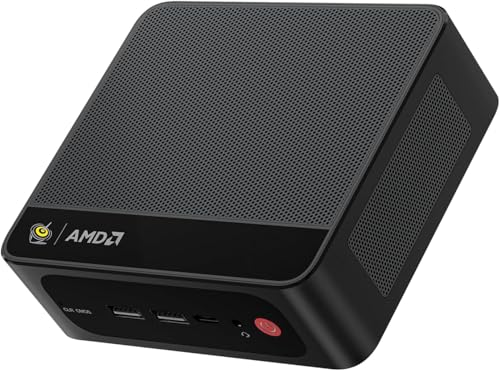
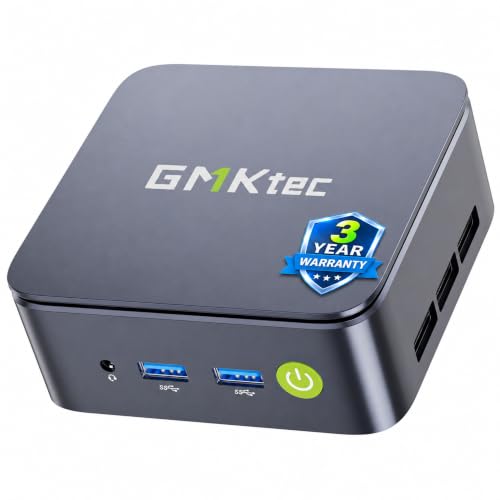
If your desk needs more screen space without the bulk of a full tower, a compact PC can be the smartest upgrade you make. The best mini PCs for 3 monitor productivity give you enough display support, speed, and connectivity to keep work flowing.
This roundup focuses on practical multi-display mini PCs for office work, content creation, remote work, and light multitasking, with options ranging from value picks to premium AI-ready systems.
Best 10 Mini PCs for 3 Monitor Productivity Picks for 2026
Best for 3-Monitor Power Users
- Supports up to four 8K displays
- Ryzen AI 9 HX 370 for heavy multitasking
- Includes 32GB DDR5 RAM and 1TB SSD
Best For: Professionals building a compact triple-screen workstation for demanding productivity and AI tasks.
Best Triple-Display Value
- Triple 4K display support for productive multi-monitor setups.
- Upgradeable RAM and SSD for better long-term flexibility.
- Compact, quiet Windows 11 Pro mini PC for office use.
Best For: Office and home-office users who want an affordable triple-monitor mini PC.
Best for Small Spaces
BOSGAME E5 Ryzen 5300U Mini PC
- Triple-display 4K@60Hz output for three-monitor desks
- 16GB RAM and 1TB SSD included
- Dual 2.5GbE LAN adds wired network flexibility
Best For: Budget-minded buyers who want a compact three-monitor productivity PC.
Best for Quad-Display Value
- Supports up to four displays for easy 3-monitor workflows
- Ryzen 5 7430U with 16GB RAM for smooth office multitasking
- Upgradeable RAM and SSD for future flexibility
Best For: Home office buyers who want a compact, upgradeable mini PC for multi-monitor productivity.
Best 4K Triple-Display Value
- Triple 4K display support for productive multi-monitor desks
- Ryzen R2544 is a step up from basic entry-level mini PCs
- Upgradeable RAM and storage help extend its lifespan
Best For: People who want an affordable mini PC for a three-monitor office setup.
Best for 4-Display Multitasking
- Supports up to 4 displays for multi-monitor workflows
- Ryzen 5 7430U with 16GB RAM for office productivity
- 1TB NVMe SSD and expansion options for bigger storage needs
Best For: Home office users and multitaskers who want a compact mini PC with strong multi-display support.
Best for Wired Multi-Display Desks
- 16GB dual-channel RAM and 512GB SSD for smooth office multitasking
- Two HDMI 2.0 ports support dual 4K@60Hz displays
- Includes Wi‑Fi 6, Bluetooth 5.2, and 2.5GbE
Best For: Office users who want a compact, budget-friendly desktop for everyday productivity and dual-screen setups.
Best for Simple Dual-Screen Work
- Ryzen 3 3200U with 16GB RAM for light multitasking
- 500GB PCIe SSD for quick everyday responsiveness
- Dual HDMI, Wi-Fi 6, and Bluetooth 5.2 for easy setup
Best For: Budget-minded buyers who need a compact mini PC for everyday work and dual-monitor productivity.
Best Dual-Display Value
- 16GB RAM and 500GB SSD for snappy everyday use
- Dual HDMI output for practical multi-screen setups
- WiFi 6 and Bluetooth 5.2 for modern connectivity
Best For: Budget buyers who need a compact mini PC for light productivity and dual-monitor work.
Best for Triple Displays – ACEMAGICIAN M1 Ryzen 7 Mini PC
If you want one of the more capable mini pcs for 3 monitor productivity, the ACEMAGICIAN M1 is built around a Ryzen 7 7735HS, Radeon 680M graphics, and triple 4K display support. It pairs solid multitasking performance with fast wired and wireless connectivity, making it a practical fit for busy desks, content work, and mixed office setups.
Best For: Users who need a compact Windows mini PC that can drive three monitors while staying responsive for office work, light creative tasks, and multitasking.
Pros:
- Supports triple display output over HDMI, DisplayPort, and USB-C
- Ryzen 7 7735HS and 24GB LPDDR5 handle multitasking well
- 2.5G LAN, WiFi 6, and Bluetooth 5.2 for flexible connectivity
- Fast 512GB PCIe SSD with room to expand storage later
Cons:
- Not intended for heavy AAA gaming or demanding workstation loads
- Storage expansion is DIY and requires an added SSD
- Triple-monitor use depends on matching cables and display inputs
For buyers comparing mini pcs for 3 monitor productivity, this model stands out by combining enough CPU headroom, integrated graphics, and display flexibility to keep a three-screen setup productive without taking over your desk.
Best for 3-Monitor Power Users – GEEKOM A9 Max AI Mini PC
If you want mini pcs for 3 monitor productivity without giving up workstation-level speed, the GEEKOM A9 Max is a strong fit. Its Ryzen AI 9 HX 370 chip, Windows 11 Pro, and flexible display outputs make it a practical choice for multi-display office setups, creative work, and heavy multitasking.
Best For: Professionals who need a compact PC for triple-screen workflows, AI-assisted tasks, and demanding productivity apps.
Pros:
- Supports up to four 8K displays, making triple-monitor setups easy to run.
- Fast Ryzen AI 9 HX 370 performance handles multitasking, editing, and AI workflows.
- Includes 32GB DDR5 RAM, 1TB SSD, Wi-Fi 7, and dual 2.5GbE for a modern desk setup.
- Windows 11 Pro and USB4/HDMI 2.1 ports add flexibility for business users.
Cons:
- Premium specs mean it will cost more than basic office mini PCs.
- Overkill if you only need simple web, email, and document work.
For buyers comparing mini pcs for 3 monitor productivity, this model stands out because it combines serious display support with high-end CPU and graphics headroom. It’s better suited to power users than casual home-office shoppers, but that’s exactly what makes it so compelling.
Best Triple-Display Value – GEEKOM Air12 Mini PC
If you’re comparing mini pcs for 3 monitor productivity, the GEEKOM Air12 is a practical entry point thanks to its triple-display support, compact footprint, and business-friendly Windows 11 Pro setup. It’s not a high-end creator machine, but it’s well suited to office multitasking, dashboards, web apps, and light analytical work where space and power draw matter.
Best For: Office workers, home-office users, and small businesses that want a compact PC for triple-monitor setups without paying for a premium workstation.
Pros:
- Supports up to three 4K displays, making it a strong fit for productivity-focused desk setups.
- Dual-slot RAM and SSD design lets you upgrade beyond the included 8GB/256GB.
- Quiet cooling, Wi‑Fi 6, and Windows 11 Pro make it easy to deploy for work.
- Very compact chassis saves desk space at front desks, classrooms, and offices.
Cons:
- Pentium-class performance is fine for productivity, but not ideal for heavy creative or CPU-intensive workloads.
- Base configuration may feel limited if you plan to run many apps or browser tabs at once.
For buyers prioritizing mini pcs for 3 monitor productivity, this model stands out more for value, flexibility, and display support than raw speed. If your workflow is mostly email, spreadsheets, browsers, and remote work tools, it covers the essentials well.
Best for Small Spaces – BOSGAME E5 Ryzen 5300U Mini PC
If you want mini pcs for 3 monitor productivity without jumping to a pricey workstation, the BOSGAME E5 is a practical fit. Its Ryzen 3 5300U chip, 16GB RAM, and 1TB SSD give it enough headroom for office apps, browser-heavy workflows, and light creative tasks, while the triple-display outputs make multi-screen setups easy to manage.
Best For: Budget-minded buyers who need a compact desktop that can run three monitors for everyday productivity, remote work, and light multitasking.
Pros:
- Triple 4K@60Hz display support via HDMI, DisplayPort, and USB-C
- 16GB DDR4 memory and 1TB PCIe SSD included out of the box
- Dual 2.5GbE LAN plus multiple USB ports for a flexible desk setup
- Compact Ryzen 5000-series build with room to expand storage up to 4TB
Cons:
- Ryzen 3 5300U is better for productivity than demanding creative workloads
- Wi-Fi 5 is older than the latest wireless standards
- No dedicated GPU for heavier graphics tasks or modern gaming
Overall, the BOSGAME E5 stands out as a strong value pick for mini pcs for 3 monitor productivity, especially if you care more about usable ports and a ready-to-go storage/RAM configuration than raw performance.
Best for Quad-Display Value – GEEKOM A5 Ryzen 5 Mini PC
If you want mini pcs for 3 monitor productivity without jumping to a bulky tower, the GEEKOM A5 is a practical fit. Its Ryzen 5 7430U, 16GB of RAM, and quad-display support make it a sensible office machine for spreadsheets, browser tabs, video calls, and light creative work.
Best For: Home office users, small-business setups, and multitaskers who need a compact PC that can drive multiple monitors and still handle everyday work smoothly.
Pros:
- Supports up to four displays, making 3-monitor productivity easy to set up
- Ryzen 5 7430U and 16GB RAM handle office multitasking, streaming, and light editing well
- Expandable storage and memory add long-term flexibility
- Windows 11 Pro and WiFi 6 make it ready for work right out of the box
Cons:
- Integrated Radeon Vega graphics are fine for casual gaming, not heavy 3D work
- Best value comes from its productivity features rather than raw performance
Overall, the A5 stands out as a strong compact pick for mini pcs for 3 monitor productivity because it combines broad display support, upgrade headroom, and business-friendly features in one affordable-size desktop.
Best 4K Triple-Display Value – ACEMAGIC K1 Ryzen Mini PC
If you want mini pcs for 3 monitor productivity without stepping up to a larger tower, the ACEMAGIC K1 is built around a Ryzen R2544 chip and Radeon graphics that can drive a triple-screen desk setup while keeping everyday office work responsive. It’s a practical fit for spreadsheets, browser-heavy workflows, video calls, and light creative tasks.
Best For: Office workers, students, and home users who want affordable triple-monitor support with solid everyday performance.
Pros:
- Supports up to three 4K displays via HDMI, DisplayPort, and USB-C
- Ryzen R2544 offers better headroom than basic entry-level mini PCs
- USB-C, multiple USB 3.2 ports, Wi-Fi, and Gigabit Ethernet for flexible setups
- Upgradeable RAM and storage make it easier to grow over time
Cons:
- 8GB RAM and 256GB SSD are modest for heavier multitasking
- Wi-Fi 5 and Bluetooth 4.2 are serviceable, but not the newest standards
- Not ideal for demanding gaming or advanced creative workloads
For shoppers comparing mini pcs for 3 monitor productivity, this ACEMAGIC model stands out as a balanced value pick: enough display support and connectivity for a multi-screen workspace, with room to upgrade later if your workload grows.
Best for 4-Display Multitasking – GEEKOM A5 Ryzen 5 Mini PC
If you need mini pcs for 3 monitor productivity, the GEEKOM A5 is a practical pick thanks to its Ryzen 5 7430U, 16GB RAM, and ability to drive up to four 4K displays. It’s built for home office work, spreadsheets, video calls, and light creative tasks, while the 1TB NVMe SSD gives you plenty of fast local storage to keep projects moving.
Best For: Home office users and multitaskers who want a compact PC with real multi-display flexibility and room to expand later.
Pros:
- Supports up to 4 displays, making it well suited to multi-monitor productivity setups
- Ryzen 5 7430U and 16GB RAM handle everyday office work smoothly
- 1TB NVMe SSD plus expansion options for heavier file storage needs
- 3-year warranty adds uncommon long-term peace of mind
Cons:
- Not intended for demanding gaming or heavy 3D workloads
- RAM is upgradeable, but the base configuration may still feel modest for power users
- Bulkier than ultra-tiny fanless mini PCs
For buyers comparing mini pcs for 3 monitor productivity, the A5 stands out for its display support, storage capacity, and business-friendly warranty. It’s a balanced choice when you want dependable day-to-day performance without paying for workstation-class hardware.
Best for Wired Multi-Display Desks – GMKtec G3 Pro i3 Mini PC
If you want a compact desktop that can handle everyday office tasks and dual-screen setups, this GMKtec model is a practical option to consider for mini pcs for 3 monitor productivity. It pairs 16GB of dual-channel RAM with a 512GB SSD, plus Wi‑Fi 6, Bluetooth 5.2, and 2.5GbE for a flexible work-from-home or small office setup.
Best For: Budget-conscious buyers who need a small, wired productivity PC for browser work, documents, and a dual-monitor desk.
Pros:
- 16GB dual-channel memory and 512GB SSD help keep light multitasking responsive
- Two HDMI 2.0 ports support 4K@60Hz displays for dual-screen productivity
- 2.5GbE, Wi‑Fi 6, and Bluetooth 5.2 provide strong connectivity options
- Compact size and multiple USB ports make it easy to fit into a tidy desk setup
Cons:
- Only has two HDMI outputs, so true three-monitor use needs additional adapter support
- Core i3-10110U is fine for office work, but not ideal for demanding creative workloads
- Integrated graphics are best suited to productivity rather than heavy visual tasks
This is a sensible pick if your priority is efficient everyday work rather than raw performance. For mini pcs for 3 monitor productivity, it makes more sense as a value-focused desk machine with strong connectivity than as a high-end multi-display powerhouse.
Best for Simple Dual-Screen Work – Beelink SER3 Mini PC
If you want an affordable, compact system for mini pcs for 3 monitor productivity, the Beelink SER3 is worth a look for lighter office tasks, web apps, and media work. Its Ryzen 3 3200U, 16GB of RAM, and 500GB SSD help it stay responsive, while the dual HDMI outputs make it easy to run a practical two-screen setup.
Best For: Buyers who need a small, budget-friendly mini PC for everyday multitasking, light productivity, and dual-display workflows.
Pros:
- Ryzen 3 3200U with 16GB RAM handles basic multitasking smoothly
- 500GB PCIe SSD gives you solid everyday storage and boot speed
- Dual HDMI, Wi-Fi 6, and Bluetooth 5.2 add flexible connectivity
- Compact footprint makes it easy to tuck behind a desk or monitor
Cons:
- Not a true fit for heavy triple-monitor productivity, since it only supports dual display
- 2-core processor is best for light workloads, not demanding creative apps
- Integrated graphics are fine for basics, but not for serious gaming or rendering
For shoppers comparing mini pcs for 3 monitor productivity, this Beelink model is more of a dual-screen budget option than a full triple-display workhorse. It makes sense if your priority is low-cost, compact productivity rather than maximum monitor count or high-end performance.
Best Dual-Display Value – Beelink SER3 Mini PC
If you want an affordable option for mini pcs for 3 monitor productivity, the Beelink SER3 is a practical pick for basic office work, web apps, and everyday multitasking. Its Ryzen 3 3200U, 16GB of RAM, and fast SSD give it enough responsiveness for two-screen workflows, though it is better suited to lighter productivity than demanding creative work.
Best For: Budget-conscious buyers who need a compact Windows mini PC for everyday productivity, dual-display setups, and light multitasking.
Pros:
- 16GB RAM and a 500GB SSD help keep apps and files moving smoothly.
- Dual HDMI output supports efficient multi-monitor workspace setups.
- Compact footprint fits neatly on a desk or behind a monitor.
- WiFi 6 and Bluetooth 5.2 add modern wireless convenience.
Cons:
- Ryzen 3 3200U is entry-level for heavy multitasking or large workloads.
- Only dual-display output, so it is not ideal for true three-monitor use.
- Integrated graphics are fine for light visuals, not intensive creative tasks.
For shoppers comparing mini pcs for 3 monitor productivity, this model stands out more as a low-cost dual-monitor workstation than a high-end multi-screen powerhouse. It makes sense if you value space-saving design and solid everyday responsiveness over maximum display support.
How We Picked the Best Mini PCs for 3 Monitor Productivity
We prioritized mini PCs that are relevant for triple-screen workflows, not just general-purpose compact desktops. That means checking display outputs, graphics capability, processor class, RAM capacity, storage, upgradeability, and overall value for everyday productivity.
We also looked for models that can handle common work setups like spreadsheets, browser-heavy multitasking, dashboards, video calls, and light creative tasks without feeling cramped.
Quick Comparison
For basic office use, lower-cost systems can be enough if they support three displays and have at least 16GB of memory. For smoother multitasking and longer useful life, Ryzen 5/Ryzen 7 and newer Intel business chips are stronger bets. At the high end, AI-focused processors and faster memory/storage make sense if you run heavier apps or want more headroom.
Key Buying Factors for Mini PCs for 3 Monitor Productivity
Display Output Support
Triple-monitor support is the first filter. Look for clear specifications around HDMI, DisplayPort, USB-C, or other video outputs, and confirm whether all three displays can run at your target resolution and refresh rate.
CPU and Real-World Multitasking
A mini PC for 3 monitor productivity should have enough CPU power to keep multiple apps responsive at once. For most buyers, modern 4-core or better chips are the minimum; 6-core and 8-core processors offer a more comfortable experience if you use lots of tabs, communication apps, and cloud tools.
Memory and Storage
Memory matters more than many shoppers expect. 16GB is the practical starting point, while 32GB is better for heavier multitasking or long-term use. SSD storage improves boot times and app launches, and upgradeable designs are a plus.
Connectivity and Desk Setup
Fast Wi-Fi, Ethernet, and enough USB ports help make a triple-monitor desk feel seamless. If you plan to dock peripherals, check port placement and whether the mini PC can stay cool under sustained loads.
Who Should Buy Which Mini PCs for 3 Monitor Productivity?
Budget shoppers and home-office users can choose entry-level triple-display systems for email, documents, web apps, and meetings. Power users who keep many windows open should lean toward Ryzen 7, AI-capable, or higher-memory models. If your priority is quiet, compact reliability for workstations or shared office spaces, business-oriented mini PCs with upgrade options are usually the safest choice.
In short, the best Mini PCs for 3 Monitor Productivity balance display support, enough CPU headroom, and memory that won’t bottleneck your day. Pick the lightest system that comfortably matches your workload, then favor upgradeability if you want it to last.