If your desktop is running out of USB-C ports, a PCIe upgrade is the cleanest way to add faster, more reliable connectivity. The right card can improve transfers for SSD enclosures, docks, and everyday peripherals.
Below, we focus on speed, port layout, controller design, and OS support so you can pick a PCIe USB C expansion card that fits your build without wasting lanes or money.
Best 10 Pcie USB C Expansion Card Picks for 2026
Best for Dual USB-C Expansion
GLOTRENDS U3142C 2-Port 10Gb PCIe Card
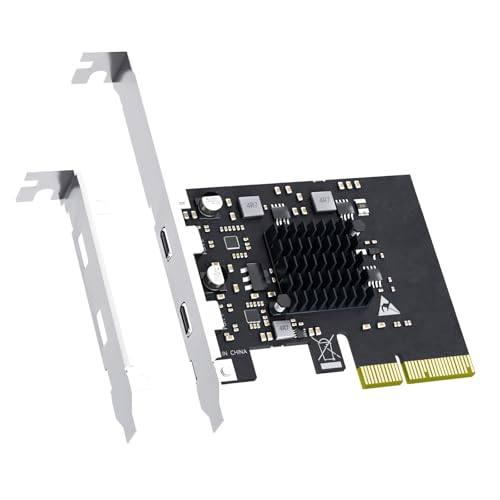
- Adds two USB-C ports at 10Gbps each
- Up to 5V/2A per port for bus-powered gear
- Includes low-profile bracket and broad OS support
Best For: Desktop users who want two fast USB-C ports for storage, cameras, and general expansion.
Best High-Port Pick
ELUTENG 8-Port PCIe USB 3.2 Card

- 8 total ports with 6 USB-A and 2 USB-C
- USB 3.2 Gen2 up to 10Gbps theoretical speed
- Independent power modules and protection for stability
Best For: Desktop users who want a high-port-count PCIe USB expansion card with both USB-A and USB-C.
Best for High-Port Expansion
GLOTREND U6A2C 8-Port PCIe USB Card

- Adds 2 USB-C and 6 USB-A ports from one PCIe x1 slot
- Works well on Windows and most Linux systems
- Self-powered and easy to install in standard cases
Best For: Users who want maximum port expansion with a simple PCIe x1 install.
Best for Mixed Internal + External Expansion
5-Port USB PCIe Card 10Gbps USB-C

- 10Gbps USB 3.1 Gen 2 support
- USB-C, USB-A, and internal header expansion
- SATA power for stable high-load use
Best For: Desktop users who need both fast external ports and an internal USB header from one card.
Best for High-Power USB-A
GLOTREND U3057 7-Port PCIe USB Expansion Card

- 7 USB-A ports from a single PCIe x1 slot
- Power management for higher-draw peripherals
- Works well with Windows and most Linux setups
Best For: Desktop and server users who need dependable multi-port USB expansion for powered peripherals.
Best for Front-Panel Expansion
6-Port USB PCIe Card with USB-C

- 2 USB-C and 2 USB-A ports plus front-panel support
- 5Gbps speeds for everyday transfers
- No extra power adapter needed
Best For: Desktop users who want flexible rear and front-panel USB expansion.
Best for Mixed USB Devices

- 2x USB-C and 2x USB-A at 10Gbps
- Dual controllers help spread bandwidth
- SATA power support for stronger output
Best For: Desktop users who want a versatile mix of fast USB-C and USB-A ports.
Best for Easy Expansion
USB PCIE Card 5-Port (3x USB-C, 2x USB-A)

- Adds 3 USB-C and 2 USB-A ports in one card
- 5Gbps USB 3.0 speeds for everyday transfers
- PCIe slot-powered and broadly compatible
Best For: Desktop users who want an easy internal USB port upgrade without extra power cables.
Best for Multi-Port Expansion
PCIe to USB 3.2 Gen 2 Card, 7 Ports

- 7 external USB ports for more desktop connectivity
- Up to 20Gbps total bandwidth across the card
- No external power adapter needed
Best For: Desktop users who want lots of USB-A and USB-C ports in one internal expansion card.
Best for Dual USB-C Ports – 10Gbps PCIe USB-C Expansion Card
If you need a pcie usb c expansion card that adds fast, modern ports to a desktop, this 2-port PCIe 3.0 x4 adapter is a practical upgrade. It delivers up to 10Gbps on a single port, supports a low-profile bracket, and is a strong fit for fast storage and other data-heavy peripherals.
Best For: Desktop users who want two USB-C ports for SSD enclosures, backups, and other high-speed USB 3.2 Gen 2 devices.
Pros:
- Two USB-C ports with up to 10Gbps bandwidth on one port
- PCIe 3.0 x4 design with support for x4, x8, and x16 slots
- Includes low-profile bracket, screws, and a mini screwdriver
- Backup SATA power connection helps stabilize high-draw devices
Cons:
- Not compatible with PCIe x1 or x2 slots
- Older PCIe 2.0 systems may see reduced throughput
- Data-only ports, so it will not provide display output or charging-focused features
This pcie usb c expansion card is a solid fit if your priority is dependable, high-speed data transfer rather than extra features. It stands out for dual-port flexibility and sensible power support, making it an easy recommendation for storage workflows and desktop upgrades.
Best for Dual USB-C Expansion – GLOTRENDS U3142C 2-Port 10Gb PCIe Card
If you need a pcie usb c expansion card that adds two fast, modern ports without overcomplicating your build, the GLOTRENDS U3142C is a practical option. It uses a PCIe x4 interface, delivers 10Gbps per port, and is designed to stay stable with higher-demand peripherals like NVMe enclosures and industrial cameras.
Best For: Desktop users who want two USB-C ports, solid 10Gbps performance, and broad OS compatibility in a straightforward add-in card.
Pros:
- Adds two USB-C ports with USB 3.2 Gen 2 speeds up to 10Gbps each
- Separate power management supports up to 5V/2A per port for bus-powered devices
- Works with Windows, Linux, and macOS; includes regular and low-profile brackets
- Self-powered design and quality components help keep transfers stable
Cons:
- Requires an open PCIe x4 slot, so it is not ideal for very compact systems
- Windows 7 needs a driver, which adds setup steps for older PCs
- Not a USB4 or Thunderbolt solution for users needing maximum bandwidth
For users who mainly want reliable dual USB-C expansion, this pcie usb c expansion card covers the essentials well: good speed, decent power delivery, and wide compatibility. It is a strong fit for content creators, workstation upgrades, and anyone replacing limited onboard ports.
Best High-Port Pick – ELUTENG 8-Port PCIe USB 3.2 Card
If you need a pcie usb c expansion card that adds a lot of connectivity in one slot, this ELUTENG board is built for desktop users who want both USB-A and USB-C support. It combines 6 Type-A ports and 2 Type-C ports, with independent power handling and USB 3.2 Gen2 support for fast everyday transfers.
Best For: Desktop builders and power users who want multiple front- and rear-facing USB ports from a single PCIe slot.
Pros:
- 8 total ports: 6 USB-A and 2 USB-C for flexible device support
- USB 3.2 Gen2 design with up to 10Gbps theoretical transfer speeds
- Independent power modules and protection features help improve stability
- Aluminum alloy construction aids heat dissipation
Cons:
- Requires an available PCIe slot in a desktop PC
- Speed and stability depend on motherboard support and case airflow
- May be more ports than casual users actually need
Overall, this pcie usb c expansion card stands out for sheer port count and a practical mix of USB-A and USB-C, making it a strong pick for users who regularly connect multiple peripherals. It is especially useful when you want more external connections without adding a separate hub.
Best for High-Port Expansion – GLOTREND U6A2C 8-Port PCIe USB Card
If you need a pcie usb c expansion card that adds a lot of ports without complicating the build, the GLOTREND U6A2C is a practical option. It uses a PCIe x1 slot to bring 2 USB-C and 6 USB-A ports to a desktop, server, or NAS, with USB 3.2 Gen 1 speeds and broad Windows/Linux support.
Best For: Desktop and server users who want lots of USB ports, including a couple of USB-C connections, from a single PCIe x1 card.
Pros:
- 8 total ports, including 2 USB-C and 6 USB-A
- Plug-and-play on modern Windows and most Linux systems
- Self-powered design with no extra power connection required
- Per-port power management helps with stable multi-device use
Cons:
- USB 3.2 Gen 1 tops out at 5Gbps
- Not compatible with Mac OS
- Standard bracket may not fit slim cases
Overall, this pcie usb c expansion card is a strong fit if your priority is port count and straightforward installation rather than cutting-edge USB speeds. It’s especially useful for builds that need to connect several peripherals at once while keeping the setup simple.
Best for Mixed Internal + External Expansion – 5-Port USB PCIe Card 10Gbps USB-C
If you want a pcie usb c expansion card that does more than add one front-facing USB-C port, this 5-port option stands out with a mix of external and internal connections. It combines 10Gbps USB 3.1 Gen 2 support with two USB-A ports, one USB-C port, and an internal header for adding extra front-panel USB capacity.
Best For: Desktop builders and upgraders who need both fast external USB ports and internal header expansion from a single PCIe card.
Pros:
- 10Gbps USB 3.1 Gen 2 support for fast SSDs and other high-speed devices
- Includes both USB-C and USB-A ports plus an internal 5Gbps header
- SATA power input helps maintain stable performance with bus-hungry peripherals
- Low-profile bracket included for more case compatibility
Cons:
- Needs a PCIe 3.0 x4 slot for best performance
- External ports are shared through a hub, so bandwidth is not fully dedicated per port
- Performance may drop on PCIe 2.0 systems
This pcie usb c expansion card is a practical pick if you need a flexible upgrade rather than a single-purpose add-in card. It is especially useful for systems that need both modern USB-C connectivity and extra internal USB header support in one install.
Best for High-Power USB-A – GLOTREND U3057 7-Port PCIe USB Expansion Card
If you need a pcie usb c expansion card alternative that prioritizes lots of dependable USB-A connections, the GLOTREND U3057 is built for desktops, servers, and NAS setups that run multiple peripherals at once. It installs through a PCIe x1 slot, supports up to 7 ports, and is designed to handle higher-power devices more reliably than basic hub-style add-ons.
Best For: Builders and system admins who want a self-powered 7-port expansion card for cameras, VR gear, storage enclosures, and other USB-heavy workflows.
Pros:
- 7 USB-A ports on a PCIe x1 card for dense I/O expansion
- 2-group power management helps support higher-draw devices
- Plug-and-play on modern Windows and most Linux systems
- Standard-profile bracket fits full-size desktop cases and servers
Cons:
- No USB-C ports, so it may not suit USB-C-only accessories
- Not compatible with Mac OS
- Standard bracket only, so it is not ideal for slim cases
For buyers focused on stable, multi-device USB expansion, this card makes more sense than a simple external hub. It is especially practical when you need a pcie usb c expansion card-style solution for a workstation or server, but can work with USB-A peripherals only.
Best for Front-Panel Expansion – 6-Port USB PCIe Card with USB-C
If you need a practical pcie usb c expansion card for adding both USB-C and USB-A ports to a desktop, this 6-port adapter is built for straightforward expansion. It supports PCIe x1 installation, includes an internal 19-pin connector and Type-E front-panel option, and is aimed at users who want flexible port placement without a separate power brick.
Best For: Desktop PC owners who want rear and front-panel USB-C/USB-A expansion from a single PCIe card.
Pros:
- Gives you 2 USB-C and 2 USB-A external ports, plus internal front-panel connectivity
- Up to 5Gbps transfer speed for everyday file copies and device syncing
- No extra power adapter required; draws power directly from the PCIe slot
- Compatible with Windows and Linux, with driver-free support on newer systems
Cons:
- 5Gbps is useful, but not as fast as USB 3.2 Gen 2 or higher cards
- Windows 7/XP need a manual driver install
- Included accessory set is basic, so plan on simple installation only
For shoppers who want a flexible pcie usb c expansion card with both rear I/O and front-panel support, this model covers the essentials well. It is a sensible choice if you want more modern ports without adding complexity or extra power cables.
Best for Mixed USB Devices – StarTech 4-Port USB PCIe Card
If you need a pcie usb c expansion card that handles both modern and legacy peripherals, this StarTech 4-port add-in card is a strong fit. It gives you two 10Gbps USB-C ports and two 10Gbps USB-A ports, so you can connect fast storage, docks, and everyday accessories from a single PCIe slot.
Best For: Desktop and server users who want a balanced mix of USB-C and USB-A at full 10Gbps speeds.
Pros:
- Four 10Gbps ports total, with both USB-C and USB-A coverage
- Dual controllers help maintain better bandwidth across mixed devices
- SATA power support can boost output when motherboard power is limited
- Works with Windows, Linux, and macOS for broad compatibility
Cons:
- Requires a full-profile PCIe slot, so it is not for compact builds
- Performance is best on PCIe 3.0 systems
- No USB Power Delivery or DisplayPort alt mode support
This is a practical pcie usb c expansion card for buyers who care more about dependable high-speed connectivity than flashy extras. If your goal is to add a versatile mix of ports for external drives and accessories, it offers one of the most well-rounded layouts in this category.
Best for Easy Expansion – USB PCIE Card 5-Port (3x USB-C, 2x USB-A)
If you need a practical pcie usb c expansion card to add more front- and rear-panel connectivity, this 5-port internal card is a straightforward upgrade. It installs in a PCIe x1 slot, draws power from the slot, and adds three USB-C ports plus two USB-A ports for everyday peripherals and fast file transfers.
Best For: Desktop users who want a simple plug-and-play way to expand USB-C and USB-A ports without adding an external hub.
Pros:
- Adds 3 USB-C ports and 2 USB-A ports in one internal card
- Supports up to 5Gbps USB 3.0 transfer speeds for faster data moves
- Works with a wide range of PCIe slots and supports Windows and Mac systems
- No extra power supply required for basic installation
Cons:
- USB-C ports do not support Thunderbolt devices
- Windows 7/XP may require driver installation
- Speed depends on connected devices and system configuration
As a pcie usb c expansion card, this model makes the most sense for users who want a budget-friendly, internal way to add multiple modern ports for accessories, storage, and peripherals. It is not the most advanced option, but it covers the basics well for a clean desktop upgrade.
Best for Multi-Port Expansion – PCIe to USB 3.2 Gen 2 Card, 7 Ports
If you need a practical pcie usb c expansion card that adds a lot of rear-panel connectivity at once, this PCIe USB 3.2 Gen 2 card is built for desktop upgrades. It delivers seven external ports, including both USB-A and USB-C, with up to 20Gbps total bandwidth for fast storage transfers and everyday peripherals.
Best For: Desktop users who want a high-port-count USB expansion card for drives, accessories, and mixed USB-A/USB-C devices without relying on a hub.
Pros:
- 7 external ports: 4 USB-A and 3 USB-C
- Up to 10Gbps per port, with 20Gbps total bandwidth
- No external power adapter required
- Works with Windows, macOS, and Linux setups
Cons:
- Data transfer only; no video output or Thunderbolt support
- Not intended for USB-C PD fast charging
- Rear USB-A orientation may make some plugs less convenient
This is a solid choice if you want a straightforward pcie usb c expansion card that prioritizes port count, stability, and broad compatibility over advanced charging or display features.
How We Picked the Best Pcie USB C Expansion Card
We prioritized Pcie USB C Expansion Card options that offer a practical mix of speed, port count, controller quality, and system compatibility. We also looked for clear USB standards, sensible rear-panel layouts, and support for common desktop use cases like external SSDs, capture devices, hubs, and VR accessories.
Quick Comparison
For most users, the best choice depends on whether you need maximum per-port speed, more total ports, or broader compatibility. Some cards focus on 10Gbps USB-C performance with fewer ports, while others add multiple USB-A connections for legacy accessories and front-panel headers for case wiring.
Key Buying Factors for Pcie USB C Expansion Card
USB Standard and Speed
Check whether the card supports USB 3.2 Gen 1, USB 3.2 Gen 2, or higher aggregate bandwidth. If you plan to use fast SSD enclosures, aim for 10Gbps ports at minimum. More ports do not matter if the controller cannot sustain the workload you expect.
PCIe Lane Requirements
Match the card to your motherboard’s available slot and lane width. Many USB expansion cards use a PCIe x4 interface or fit in x4, x8, or x16 slots. A card can physically fit even if it does not get full bandwidth, so confirm your board layout before buying.
Port Mix and Front-Panel Support
Decide whether you need USB-C only, a mixed USB-C and USB-A layout, or internal headers for the front of your case. A Pcie USB C Expansion Card with internal connectors can be useful if your tower has unused front-panel ports or USB-C case wiring.
Operating System Compatibility
Windows support is usually straightforward, but macOS and Linux compatibility can vary by controller and driver support. If you are building outside Windows, verify compatibility before purchase rather than assuming every card will work the same way.
Power Delivery and Real-World Use
These cards typically expand data ports, not laptop-style charging. If you need to power bus-hungry devices, look for auxiliary power input and understand the limits of the card’s design. For storage and peripherals, stability matters more than marketing claims.
Who Should Buy Which Pcie USB C Expansion Card?
Choose a 10Gbps USB-C-focused card if your main priority is fast external storage. Pick a higher-port-count model if you need to connect many everyday devices and want to reduce reliance on hubs. If you use older accessories, a mixed USB-A and USB-C card is usually the best value. For creators and power users, the smartest Pcie USB C Expansion Card is the one that matches your slot, your operating system, and the devices you actually plug in most often.