Choosing a network video recorder is about more than counting camera channels. Storage capacity, PoE support, recording resolution, bandwidth, remote access, and ecosystem compatibility all affect how well a surveillance system performs over time.
We compared 10 premium network video recorders ranging from compact eight-channel units to high-capacity enterprise platforms. This roundup helps you match each option to your camera count, retention needs, installation plans, and preferred security ecosystem.
Best 10 Premium Network Video Recorders Picks for 2026
High-Capacity Expansion Pick

- Manages up to 36 Reolink IP cameras
- Supports up to 48TB across three HDD bays
- Requires external PoE switches and separate HDDs
Best For: Large Reolink camera systems needing expandable storage
Large-Scale Monitoring Pick
64CH 32MP Network Video Recorder

- Supports 64 IP camera channels
- Handles up to 32MP decoding and 400Mbps bandwidth
- Includes four SATA and one eSATA storage interfaces
Best For: Large, high-resolution surveillance installations
Ready-to-Use AI Pick

- Includes a 4TB pre-installed HDD
- Supports 16 channels and up to 12MP streams
- Offers PoE setup, motion detection, and remote access
Best For: ANNKE home or business systems needing included storage
UniFi Ecosystem Pick
Ubiquiti UniFi Protect UNVR-Pro

- Integrates with the UniFi Protect application
- Supports systems with up to 60 cameras
- Stores footage locally with remote access
Best For: UniFi users wanting centralized local video storage
High-Capacity Choice

- 32-channel 4K/12MP recording support
- Up to 64TB across four SATA drives
- PoE, AI integration, and RTSP/ONVIF support
Best For: Large-scale expandable PoE surveillance systems
Enterprise-Ready Pick
Ubiquiti Enterprise Network Video Recorder
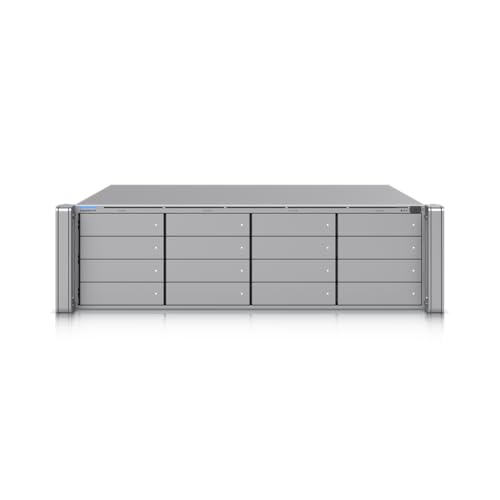
- Supports 16 HDDs or SSDs
- Includes 10Gb network connectivity
- Dual hot-swap PSUs add redundancy
Best For: Professional Ubiquiti surveillance infrastructure
Integrated System Pick
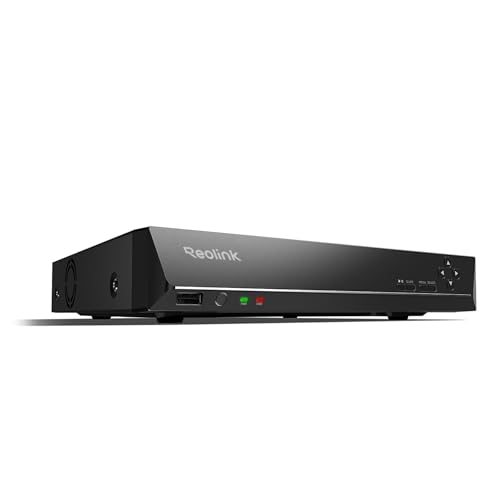
- Supports up to 16 Reolink cameras
- Includes a 4TB hard drive
- PoE setup and no-subscription remote apps
Best For: Reolink-based home and small-business systems
Professional UniFi Choice

- Four camera channels
- Ethernet and USB connectivity
- Compact 2-pound design
Best For: UniFi Protect users with a four-camera setup
Plug-and-Play 8-Channel Pick

- Eight Reolink camera channels
- Pre-installed 2TB hard drive
- PoE and 24/7 recording
Best For: Reolink owners building an eight-camera PoE system
Best Simple Pick

- 16 camera channels
- Supports H.264 and H.265 formats
- HDMI and VGA outputs
Best For: Larger wired camera installations needing 16 channels
High-Capacity Expansion Pick – Reolink RLN36 36CH NVR
For buyers seeking premium network video recorders for a larger Reolink camera system, the RLN36 offers centralized management for up to 36 IP cameras. It provides three drive bays and up to 48TB of potential storage, but requires external PoE switches and Reolink cameras.
Best For: Large Reolink-based installations that need high camera capacity and expandable local storage.
Pros:
- Supports up to 36 Reolink IP cameras.
- Three HDD bays support up to 16TB each, for up to 48TB total.
- Includes human and vehicle detection integration, two-way audio support, and USB 3.0 backups.
Cons:
- Works only with Reolink IP cameras.
- Has no built-in PoE ports; external PoE switches are required.
- HDDs are not included.
The RLN36 is a strong capacity-focused choice when you already use Reolink cameras and are comfortable building the network around separate PoE switches and storage drives.
Large-Scale Monitoring Pick – 64CH 32MP Network Video Recorder
This 64-channel recorder is aimed at buyers comparing premium network video recorders for centralized, high-resolution surveillance. Its 400Mbps incoming and outgoing bandwidth, multi-resolution decoding, and multiple display outputs suit demanding multi-camera monitoring environments.
Best For: Large installations requiring 64 channels, high-resolution decoding, and multi-monitor viewing.
Pros:
- Supports up to 64 IP camera channels and decoding up to 32MP.
- Provides 400Mbps incoming and outgoing bandwidth.
- Offers four SATA interfaces, one eSATA interface, and dual 4K or single 8K display output.
Cons:
- Has no built-in PoE ports.
- Hard drives are not included.
- Comes with a one-year warranty.
With broad channel capacity and strong video-output flexibility, this NVR is best suited to larger deployments where storage planning, camera compatibility, and external PoE infrastructure are already part of the installation.
Ready-to-Use AI Pick – ANNKE 16CH 12MP NVR
For a more accessible entry into premium network video recorders, the ANNKE 16-channel model includes a pre-installed 4TB hard drive and supports up to 12MP streams. Its built-in PoE connectivity simplifies installation with compatible ANNKE cameras.
Best For: Home or business users who want a 16-camera ANNKE system with included storage and straightforward PoE setup.
Pros:
- Includes a pre-installed 4TB HDD and supports up to 16TB.
- Supports 16 channels and up to 12MP streams.
- Provides 24/7 recording, motion detection, remote access, and H.265+ compression.
Cons:
- AI camera compatibility is limited to ANNKE models.
- AI features are supported on up to four channels.
- Broader camera compatibility is not assured outside the listed ANNKE ecosystem.
The included drive and PoE-oriented setup make this a practical choice for a contained ANNKE installation, especially when you value remote viewing and reduced storage use from H.265+ compression.
UniFi Ecosystem Pick – Ubiquiti UniFi Protect UNVR-Pro
The UNVR-Pro is a strong option among premium network video recorders for users already building around UniFi Protect. It stores footage locally, supports remote access without a cloud-storage requirement, and can accommodate systems with up to 60 cameras.
Best For: UniFi Protect users who want local video storage and centralized management for a larger camera deployment.
Pros:
- Works with the UniFi Protect application.
- Supports systems with up to 60 cameras.
- Stores footage locally and provides remote access to streams and recordings.
Cons:
- Designed around the UniFi Protect ecosystem.
- The supplied details list 8TB of storage but do not specify expansion or included drive configuration.
- Does not list built-in PoE ports.
The UNVR-Pro makes the most sense for an existing or planned UniFi deployment, where Protect integration and local recording are more important than broad cross-brand camera compatibility.
High-Capacity Choice – HELIX 4K NV3832E 32CH PoE NVR
For buyers seeking premium network video recorders with room to scale, the HELIX NV3832E combines 32-channel IP recording, PoE connectivity, and support for up to four 16TB hard drives. Its 320 Mbps throughput and 4K recording support make it suited to demanding multi-camera installations.
Best For: Large homes, businesses, and integrators building expandable 4K PoE surveillance systems.
Pros:
- Supports up to 32 channels and up to 64TB across four SATA drives, though hard drives are not included.
- Offers 12MP/4K simultaneous recording at up to 30fps with high network throughput.
- Provides PoE plug-and-play setup, RTSP/ONVIF compatibility, AI integration, and no-subscription remote apps.
Cons:
- Storage must be purchased separately.
- Advanced AI features depend on compatible connected cameras.
- Its extensive capacity may be more than smaller installations need.
The HELIX stands out when capacity, throughput, and third-party integration matter. It is a particularly strong fit for users who want a professional platform with NDAA compliance and long-term expansion potential.
Enterprise-Ready Pick – Ubiquiti Enterprise Network Video Recorder
The Ubiquiti ENVR is a premium network video recorder designed for high-capacity deployments that need extensive drive support and fast network uplinks. With space for 16 3.5-inch HDDs or SSDs, it is built for organizations managing substantial video storage requirements.
Best For: Enterprise and professional Ubiquiti surveillance environments requiring high storage capacity and redundant power.
Pros:
- Supports up to 16 3.5-inch HDDs or SSDs for substantial storage expansion.
- Includes two 10G SFP+ uplinks and one 10 GbE RJ45 port.
- Dual hot-swappable power supplies provide power redundancy.
Cons:
- Its enterprise-focused hardware may be excessive for small installations.
- Storage drives are not listed as included in the supplied notes.
- The supplied warranty information specifies six months.
The ENVR is best evaluated as infrastructure for a serious surveillance network rather than a basic plug-and-play recorder. Its drive density, 10Gb networking, and redundant power design favor demanding professional deployments.
Integrated System Pick – REOLINK RLN16-410 16CH NVR
The REOLINK RLN16-410 is a practical option among premium network video recorders for users already invested in Reolink cameras. It supports up to 16 compatible cameras, includes a 4TB hard drive, and offers PoE setup with free local and remote viewing apps.
Best For: Reolink camera owners who want a straightforward 16-camera recording system with included storage.
Pros:
- Manages up to 16 Reolink IP cameras and includes a pre-installed 4TB hard drive.
- PoE uses one Ethernet cable for power and data, with runs up to 330 feet for Reolink PoE cameras.
- Supports 24/7 recording, smart-camera detection features, and remote access without monthly fees.
Cons:
- Works only with Reolink IP cameras according to the supplied notes.
- Storage expansion is limited to adding an extra 8TB hard drive.
- It is less flexible for mixed-brand camera installations.
The RLN16-410 is a sensible all-in-one choice when compatibility with Reolink cameras is the priority. Its included storage and simple PoE design reduce setup friction, but buyers should confirm their cameras are supported before purchasing.
Professional UniFi Choice – UniFi Protect NVR
The Ubiquiti UniFi Protect Network Video Recorder is a compact option for buyers building a premium network video recorders setup around compatible IP cameras. It uses Ethernet connectivity, supports four channels, and includes USB connectivity for a straightforward network-connected installation.
Best For: UniFi Protect users who need a four-channel recorder for a compatible IP-camera system.
Pros:
- Supports up to four camera channels.
- Uses Ethernet connectivity for network video input.
- Compact 2-pound design with USB connectivity.
Cons:
- Storage capacity is not specified in the supplied details.
- The notes do not identify compatibility with third-party camera brands.
This recorder makes the most sense when you are already planning a UniFi Protect installation and do not need more than four camera channels. Confirm camera and storage requirements before buying.
Plug-and-Play 8-Channel Pick – Reolink RLN8-410 NVR
The REOLINK RLN8-410 is a practical choice among premium network video recorders for buyers who want an integrated PoE system. It supports up to eight Reolink IP cameras, includes a pre-installed 2TB hard drive, and offers 24/7 recording with local and remote access through Reolink software.
Best For: Reolink camera owners who want an eight-channel PoE recorder with built-in storage.
Pros:
- Supports up to eight Reolink IP cameras.
- PoE setup carries power and data over one Ethernet cable, up to 330 feet.
- Includes a 2TB hard drive for 24/7 recording and supports an additional drive through eSATA.
- Reolink apps and clients provide local and remote access without monthly fees.
Cons:
- Works only with Reolink cameras and does not support third-party cameras.
- Additional cameras may require checking compatibility and updating firmware.
With built-in storage, PoE connectivity, and an eight-camera limit, the RLN8-410 is a convenient all-in-one choice for a Reolink-based security system. Its brand-specific compatibility is the key buying consideration.
Best Simple Pick – Hikvision DS-7600NI-Q2/P NVR
The Hikvision DS-7600NI-Q2/P Series NVR is designed for larger installations that need up to 16 channels. For buyers comparing premium network video recorders, it offers wired connectivity, HDMI and VGA outputs, and support for MPEG-4, H.264 variants, and H.265 formats.
Best For: Larger wired camera systems requiring 16 channels and flexible video-format support.
Pros:
- Provides 16 camera channels.
- Supports MPEG-4, H.264, H.264+, H.265, and H.265+ formats.
- Offers HDMI and VGA connectivity for display equipment.
- TAA compliant according to the supplied product details.
Cons:
- Does not include a hard drive.
- Only one USB port is listed.
- The supplied details do not specify included storage capacity or camera-brand compatibility.
This Hikvision model is a strong fit when channel capacity matters more than an included hard drive. Plan for separate storage and verify compatibility with the cameras and display equipment in your installation.
How We Picked These Premium Network Video Recorders
We selected models across several practical use cases, including residential systems, small businesses, multi-camera commercial installations, and enterprise deployments. Our comparison focused on channel capacity, supported camera resolution, recording bandwidth, storage expansion, integrated PoE, video outputs, remote-management features, and compatibility with the manufacturer’s cameras and software.
Specifications can vary by firmware, drive configuration, and camera model, so confirm the latest documentation before purchase. A recorder may support a large number of channels but still require careful bandwidth and storage planning when every camera records at high resolution.
Quick Comparison
- Best for expandable Reolink systems: REOLINK RLN36, with high channel capacity for larger compatible installations.
- Best for UniFi Protect users: Ubiquiti UNVR, UNVR-Pro, or ENVR, depending on storage, scale, and deployment requirements.
- Best for compact PoE systems: REOLINK RLN8-410 or RLN16-410 for smaller camera counts.
- Best for high-resolution recording: Hikvision, ANNKE, HELIX, and the 64-channel Hikvision model, subject to camera and bandwidth compatibility.
Key Buying Factors for Premium Network Video Recorders
Channel Count and Expansion
Choose more channels than you currently need if you expect to add cameras. An eight-channel recorder may suit a small property, while 16- and 32-channel models provide useful room for expansion. Large commercial systems may justify 36- or 64-channel hardware.
Resolution, Bandwidth, and Codecs
Check maximum supported resolution and incoming bandwidth, not just the advertised channel count. High-resolution cameras consume more network capacity and storage. H.265 or H.265+ can reduce storage requirements when supported by both the recorder and cameras.
Storage and Retention
Estimate storage from camera count, resolution, frame rate, motion activity, and desired retention period. Confirm whether hard drives are included, how many drive bays are available, and whether the recorder supports surveillance-rated drives. RAID or redundant storage may be important for critical installations.
PoE and Camera Compatibility
Integrated PoE simplifies installation by carrying power and data over one Ethernet cable, but verify the total PoE budget. Also confirm ONVIF support, proprietary feature compatibility, and whether advanced analytics or smart alerts require cameras from the same brand.
Remote Access and Administration
Look for secure mobile and desktop access, user permissions, notifications, playback tools, and dependable firmware support. Enterprise installations may also need centralized management, redundant networking, or integration with broader access-control systems.
Who Should Buy Which Premium Network Video Recorders?
Homeowners and small offices should prioritize simple setup, integrated PoE, and enough storage for their desired retention period. Eight- or 16-channel models are often the most practical.
Growing businesses should choose a recorder with spare channels, higher bandwidth, expandable storage, and strong remote administration. A 32- or 36-channel model can reduce the need for an early replacement.
Enterprise and ecosystem-focused buyers should select hardware that matches their existing cameras, network design, management software, and redundancy requirements. Ubiquiti, Hikvision, and other professional platforms can be compelling when their broader systems fit the installation.